Меню
Соціальні мережі
Розділи
Dec. 25, 2022, 9:25 p.m.
Organizations of the world: World Bank
This article also available in English3085

Image: Intent
For more than nine months, the whole world has been watching Ukraine resist Russian aggression. Influential international organizations have been supporting our country in every possible way, not only since the beginning of the full-scale invasion, but also since 2014, when Russia illegally annexed Crimea and started an armed conflict in Donbas. Sanctions are imposed on the aggressor country, while Ukraine receives humanitarian and financial assistance from the world.
But do all of us understand how these organizations are organized, what functions they perform, and what kind of support Ukrainians can expect?
We have prepared a series of materials explaining which countries are members of various international organizations and what role they play in the world.
In previous issues, we looked at the essence of the work of:
General Assembly,
Security Council,
International Court of Justice,
UNESCO,
UNICEF,
Red Cross,
International Civil Aviation Organization, and others.
General description of the World Bank
The World Bank is an international financial organization that provides loans, credits and grants to countries around the world. The organization declares the goal of its activities to reduce poverty and strengthen the welfare of developing countries. The World Bank is a collective term that refers to two institutions: The International Bank for Reconstruction and Development (IBRD) and the International Development Association (IDA). The World Bank Group, on the other hand, is a somewhat broader concept and includes five organizations at once. In addition to the two mentioned above, the Group includes the International Finance Corporation, the Multilateral Investment Guarantee Agency and the International Center for Settlement of Investment Disputes. The World Bank is believed to include 189 countries that are formally members of the IBRD. The Bank operates in more than 140 countries. The organization is headquartered in Washington, DC.
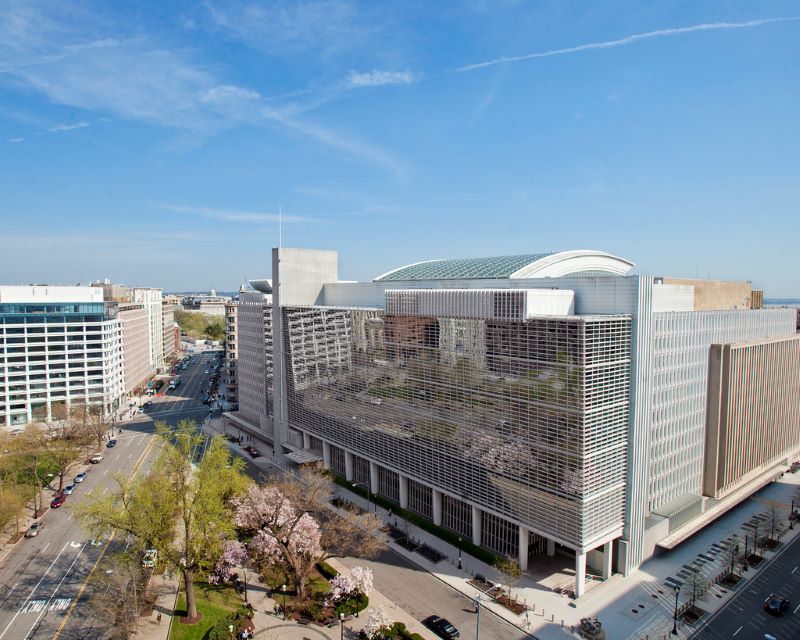
The World Bank headquarters in Washington, DC. Photo: w ww.un.o rg
The organization is headed by a president who is elected for a five-year term. Since April 2019, this position has been held by American economist David Malpass. Except for Bulgarian citizen Kristalina Georgieva, who temporarily served as president from February to April 2019, all other leaders of the organization were of American origin.
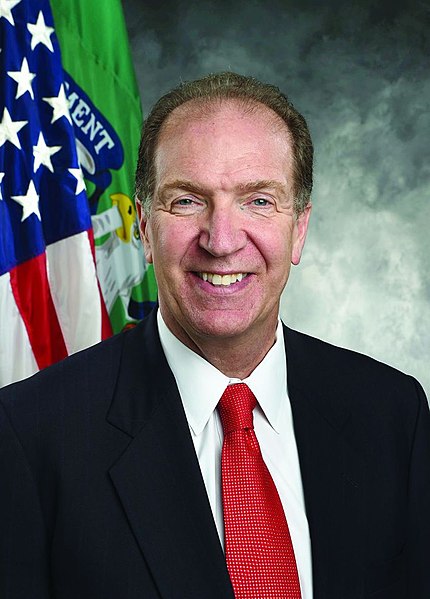
David Maplass official photo/commons.wikimedia.org
The World Bank, like the International Monetary Fund, was created shortly after the Bretton Woods Conference in 1944. It is significant that both organizations were launched on December 27, 1945. They were to become the foundation of the new postwar global economic system. The idea behind the World Bank was to help countries that suffered in World War II. The first chairman of the World Bank was financier Eugene Meyer. Interestingly, in 1968, the Bank was headed by Robert McNamara, who was the US Secretary of Defense during the Cuban Missile Crisis.

Photo: worldbank.org
The governance structure of the World Bank
TheBoard of Governors consists of representatives of all World Bank member countries. Each country has to appoint a governor and an alternate governor. As a rule, finance ministers, central bank governors, or high-ranking officials are appointed. The Council meets once a year, but a special meeting can be called at any time if necessary. The Board's functions include the following: to accept and dismiss members, increase or decrease the share capital, determine the distribution of the Bank's net profit, cancel transactions of the Bank, approve amendments to the Articles of Agreement and increase the number of executive directors.
TheBoard of Directors currently consists of 25 executive directors representing either a single country or a group of countries. Executive Directors are either appointed or elected to the position. The Board of Directors is responsible for the Bank's activities between meetings of the Board of Governors. The Board of Directors usually meets twice a week. Among the functions of the Board are the following: approving loans and guarantees, determining the general principles of the Bank's activities, approving the Bank's budget, and developing strategies for assistance to individual countries.
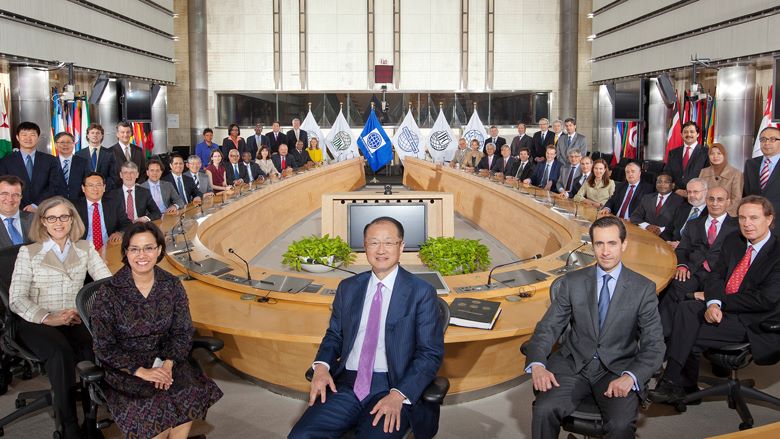
Photo: uztag.info
Membership in the World Bank
Any country that has previously become a member of the International Monetary Fund can become a member of the World Bank. After submitting an application, the Board of Directors determines a certain quota in the Bank's authorized capital for the country, depending on the country's place in the global economy. According to this quota, each country receives a certain number of votes in decision-making.
Activities of the World Bank
The main activity of the World Bank is, obviously, providing financial support to countries around the world. The Bank provides low-interest loans, interest-free loans, and grants for specific projects. The assistance provided by the World Bank is primarily important for developing countries, as they are not always able to receive investments in other ways with a moderate percentage of lending. The World Bank also makes efforts to attract other investors, including governments, commercial banks, credit agencies, and private donors. It should be noted that investments are made in very different areas: education, health, public and regional governance, infrastructure, financial and private sector development, agriculture, environment, and natural resources. As noted in the World Bank's 2022 report, $104.4 billion was provided to partner countries and private companies during the year in the form of loans, grants, equity investments, and guarantees.
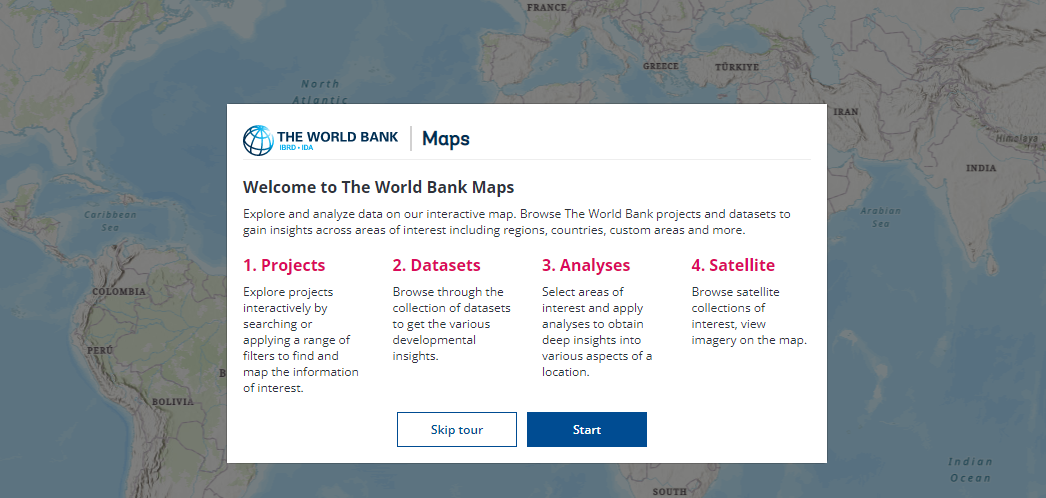
Image: maps.worldbank.org
Working with a particular country, the World Bank develops a development strategy for it. This strategy includes projects and programs that should maximize the impact on poverty alleviation and promote dynamic socio-economic development. As part of this cooperation, the World Bank provides analytical and advisory services to countries. The Bank's research work covers a wide range of areas and issues. Based on these studies, forecasts are made regarding the prospects for economic development in general and the improvement of individual sectors.
The World Bank spends its efforts on education and dissemination of knowledge that helps to solve the problems of countries around the world. In particular, the World Bank Institute works with politicians, businessmen, technical experts, as well as with universities and training centers in different countries. The Institute has launched the B-SPAN Internet portal, which provides regular online broadcasts of seminars, lectures, conferences, and interviews. These events are attended by leading policy makers, experts and practitioners from all important sectors.
Ukraine and the World Bank
Ukraine joined the World Bank in 1992 at the same time as it joined the IMF. The World Bank is Ukraine's second largest creditor after the IMF. Over the years of cooperation, the organization has approved 71 loans for Ukraine totaling more than $14.4 billion and €2.1 billion, of which $12.48 billion and €1.2 billion have been disbursed. The Bank's resources are used to support the state budget, implement institutional and structural reforms, and prepare and implement long-term investment projects.
From the first days of Russia's invasion of Ukraine in 2022, the World Bank began providing active assistance. In March, a support package for Ukraine was approved in the amount of more than €500 million to be allocated to the state budget to cover social and humanitarian expenses. As of December 1, 2022, the IBRD's portfolio in Ukraine consisted of 21 projects totaling $4.07 billion and €1.7 billion. In order to support Ukraine, the World Bank created a Multi-Donor Trust Fund, which has helped secure financial tranches from a number of countries, including the United States, the United Kingdom, Denmark, the Netherlands, and others.
Already in December, the World Bank made several important announcements in the context of assistance to Ukraine. The World Bank's Vice President for Europe and Central Asia, Anna Bjerde, said that by the end of the year the organization would allocate another $1.7 billion to Ukraine. According to Bjerde, more than 50% of all economic assistance provided to Ukraine since the beginning of the war has been channelled through the World Bank. A little later, the World Bank announced the creation of a Trust Fund for Support, Recovery, Rehabilitation and Reform of Ukraine to help the government of the country. Finally, during a meeting between the Ministry of Health and the World Bank, it was announced that the Bank would approve a €100 million loan in December to rebuild hospitals destroyed by Russia.
The World Bank is one of the pillars of the modern global economic system. Over the decades of its existence, the organization has managed to accumulate a large financial potential. The World Bank is able to quickly allocate money to help a particular country using its own financial resources alone. Moreover, the Bank's credibility in the world is so significant that it has the ability to activate cash flows from developed countries under its own guarantees. The number of initiatives, programs, and projects in which the World Bank is regularly involved is impressive. At the same time, criticism of the organization is quite intense and varied. According to critics, the advice provided by the World Bank to creditor countries is more likely to worsen the economic situation than to improve it. It is also noted that the Bank's creditor countries not only fail to overcome poverty, but also the gap between the rich and the poor is significantly widening. Critics argue that the organization is heavily influenced by the United States, which can even block loans and grants to the "wrong" states. And this is not a complete list of criticisms. On the other hand, no one can force a country to borrow money from the World Bank. If the country is not satisfied with the terms of the loan, it can negotiate or look for another source of funding. Nor should we count on the fact that somewhere in the world there are experts who have comprehended the divine truth and are guaranteed to bring any economy off its knees. Such expectations were brilliantly disproved by the financial crisis of 2007-08. The World Bank should be seen for what it is. It is not a source of poverty alleviation, but a global organization with strong financial capabilities and connections. The World Bank is ready to provide financial injections into the economy. However, any investment, even a grant, has its consequences. Therefore, each state must decide for itself whether it is satisfied with the subsequent calculations.