Меню
Соціальні мережі
Розділи
Feb. 24, 2026, 6:44 p.m.
Kakhovka: the story of a meeting on the first day of the full-scale invasion and the uncertainty of the present
This article also available in English9

Photo: Wikipedia
A shallow Dnipro River after the Kakhovka hydroelectric power plant was blown up, a closed embankment covered in weeds, and a few passersby heading to the only market in town. This is how Kakhovka in the Kherson region looks like today. Before the full-scale invasion, it was an ordinary small town on the left bank of the Kherson River. Sunny days, the mighty and wide Dnipro River, the Tachanka bike-rock festival, juicy and delicious watermelons - this is what I associate with my hometown, where I spent most of my childhood.
Kakhovka was also known for its annual Tavrian Games festival, which brought together many famous artists and performers from all over the world every year. With the arrival of the occupiers, the city has changed. It is no longer the bright and cozy Kherson we remember. In order not to forget the history of this city and preserve it for future generations, I will tell you about my own vision of the events of February 24 in Kakhovka, as well as through the prism of my friends and acquaintances who were living, together with me, in the epicenter of the events of that day
It was supposed to be an ordinary Thursday with tests and plans for the weekend.
That morning, like hundreds of times before, I was mechanically packing my textbooks into my backpack. There was only one "problem" in my head: how not to fail algebra. I was putting on my shoes when I received a message from my class teacher:"War has broken out. There will be no classes." I looked at my packed backpack and did not understand what was happening. I did not know that I would never go to my classroom again.
In the evening, the city changed beyond recognition. Instead of yellow minibuses, green armored personnel carriers with the characteristic "Z" symbols on their screen armor were driving down the streets. We did not believe it would last. In the early days, fear gave way to rage. The city center became the "center of resistance": people came out against heavily armed soldiers with only flags and slogans.
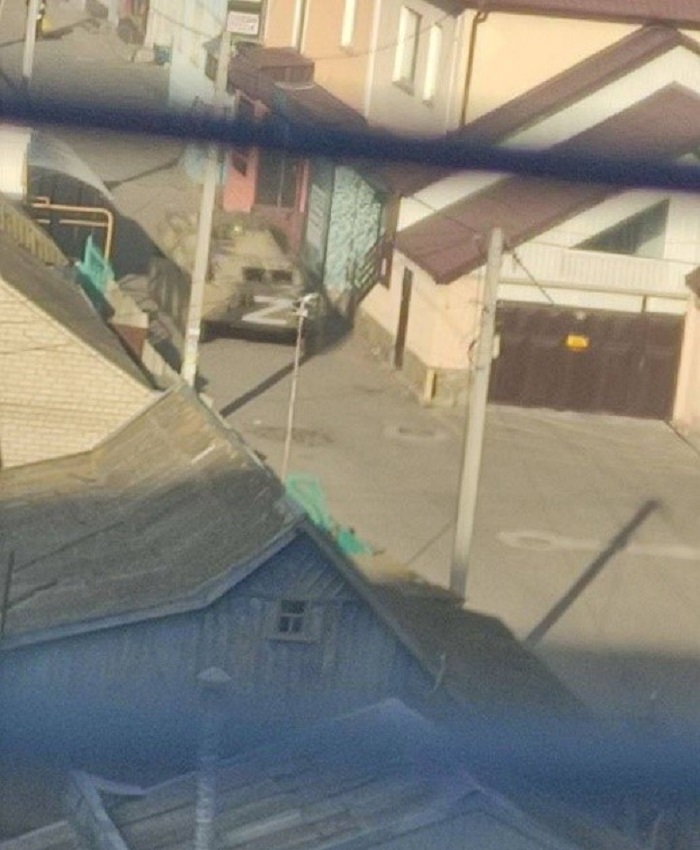
PHOTO courtesy of the author
But the screws were tightening quickly. The euphoria of the protest gave way to a "quest for survival." Communication was cut off, and most people tried to find help from local techies in the market or looked for ways to tweak their phone settings. Eventually, due to the cut-off of logistics routes, food shortages began. Prices skyrocketed, and the last ATB was closed due to lack of goods. Despite this, there were many cases of looting in the early days.
Life went into "silence" mode. Cases of filtering became more frequent. Any photo, any message could become a sentence. People were disappearing. They simply vanished into thin air after checkpoints.
However, I remember the summer of that year the most. I will never forget the day when it hit the ammunition depots in Nova Kakhovka on July 11. The famous work of the then unknown HIMARS. The earth shook and the sky burned for hours, the cannonade of detonating ammunition sounded until the end of the day. It was frightening, but it was also a breath of hope: we are remembered, they are being hit.
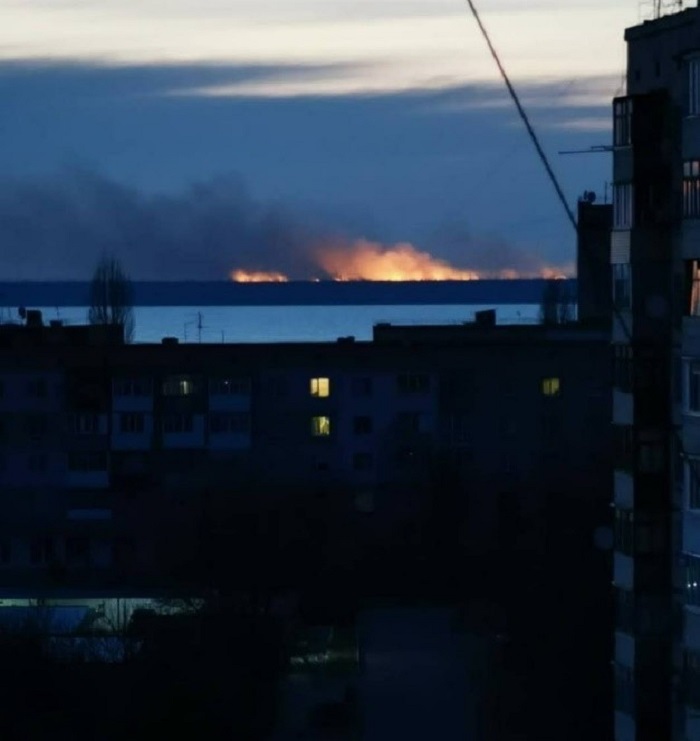
PHOTO courtesy of the author
Fall brought cold and the realization that the situation had reached a dead end. October became a point of no return. The shelling became more frequent. Now it was not somewhere far away, in warehouses. Rockets were exploding right over our heads, over the roofs of our houses. The walls vibrated, and window panes could shatter at any moment.
It made no sense to play Russian roulette, where the life of you and your family was at stake. That evening, to the accompaniment of more explosions, we made a decision. It was a hard decision, but a very necessary one in the situation at the time. We packed our bags and left for the unknown, to our relatives abroad, leaving everything at home except the memory of the morning when I last went to school.
Despite the fact that I was in the occupied city for quite a long period of time, I could not physically remember or miss many moments. My friends who stayed in Kakhovka for some time after me also have a lot of interesting information and memories. That's why I decided to conduct a small survey of those who are already in the government-controlled territory or abroad, those with whom I communicate well and keep in touch to this day.
Volodymyr, Odesa
How did you meet your first day of the full-scale invasion, what did you feel at that moment?
When I woke up, I heard an explosion, and my first thought was: "At least I don't have to go to school". Later, when I came to my senses, I was able to realize the scale of the disaster.
What was your life like during the occupation, what prompted you to leave the city?
Due to the deterioration of my family's health, the departure of the last of my friends, it made little sense to stay alone in the city, there was a great possibility of dying, because only pensioners were given money and were not hired.
How quickly were you able to adapt to the new place, and what was the most difficult thing for you? Did anyone help you? The state, volunteers?
Not so difficult, given that we stayed in Ukraine and not abroad, the hardest part was finding a common language with people and getting used to the constant shelling in Odesa.
Do you keep in touch with relatives, friends, classmates with whom you lived in the city?
Yes, I try to keep in touch with my relatives as much as possible.
Do you ever have sudden memories of the city, nostalgia or a desire to be in Kakhovka again? What do you miss the most?
Of course, because I grew up there, those carefree times when I had family, friends, certain places in the city, such as the pine forest, the arboretum, festivals and people you could only meet there.
How do you feel about the idea of leaving the occupied parts of Ukraine to Russia, if only the war would end sooner?
Rather, I am against it, because without this territory Ukraine loses a lot of things - from the Zaporizhzhia nuclear power plant to fertile lands, and most importantly, the city and the people who live there. Ukraine has to fight, because if we give up these territories, Russia will not stop there.
Bogdan, Germany
How did you meet your first day of the full-scale invasion, what did you feel at that moment?
I woke up and looked at the time on my phone. It was about eight in the morning. I went to my parents to ask why no one had woken me up for school, and my mother said that the war had started. The first three days were the hardest. I heard shots regularly and watched the news all the time. I was afraid and very sad that this was happening to my country, where I had lived all my life.
What was your life like during the occupation, what prompted you to leave the city?
At first, it was hard, I didn't leave the house at all and constantly watched the news. Then I started meeting friends, went for more walks and spent more time actively. I felt a little better, but gradually everyone started to leave. I stayed with a friend who was with me until the end of my departure. Also, from time to time, there were constant arrivals at Russian positions. After the right bank was liberated, Russia began to make provocations. Shooting at civilians with mortars and accusing the Ukrainian Armed Forces of these crimes. The constant mortar attacks were the main reason for our departure.
How quickly were you able to adapt to the new place, what was the most difficult for you? Did anyone help you? The state, volunteers?
When we arrived in Germany, we decided to choose the city of Hoch because our relatives lived there. The hardest part was the language. I couldn't do anything without the help of my relatives. At first we lived with them, then they helped us find an apartment. The first six months were very difficult, but then I was able to adapt to the new place.
Do you keep in touch with relatives, friends, classmates with whom you lived in the city?
I still keep in touch with my relatives who stayed in Kakhovka. The situation there remains the same as when I left. There were no major changes. The only big change there is the complete transition to the Russian ruble.
Do you ever have sudden memories of the city, nostalgia or a desire to be in Kakhovka again? What do you miss the most?
Of course, quite often I miss my hometown, I want to see my friends and acquaintances again. To go for a walk in Kakhovka with my friends and laugh carefree and not know what war is. I really miss talking to my friends in person. Now all my friends are either in Ukraine or in Western Europe. I want to go to the places where I spent my childhood again.
How do you feel about the idea of leaving the occupied parts of Ukraine for Russia, if only the war would end sooner?
It is very difficult to accept that my city will remain with Russia, but if it will save lives of Ukrainians and stop the war, so be it. Unfortunately, Ukraine has to pay a very high and unaffordable price to liberate these territories. But I still have hope that the Ukrainian flag will fly again in the center of my city.
Mykhailo, the Netherlands
How did you meet your first day of the full-scale invasion, what did you feel at that moment?
I met the first day of the full-scale invasion in my bed. At that time, I was very exhausted and wanted to sleep very much, so I didn't even realize what was happening. But while my parents and sister were running around the house, I didn't even realize what was happening.
What was your life like during the occupation, and what prompted you to leave the city?
Life during the occupation was too closed. The only people who left the house were my parents, and we rarely went out because there were Russian soldiers in the city. We were pushed to leave the city by the fact that we would not see our home free soon and that it was too risky for our family to stay in such conditions.
How quickly were you able to adapt to the new place, what was the most difficult for you? Did anyone help you? The state, volunteers?
It was quite easy to adapt to the new place because we had relatives who lived in different cities and people who wanted to help us. So we adapted quite quickly.
Do you keep in touch with relatives, friends, classmates with whom you lived in the city?
I still keep in touch with my relatives and friends who were in Kakhovka. For example, with my cousins who live close to Kakhovka in the village of Liubymivka. I still actively communicate with most of my classmates online.
Do you ever have sudden memories of the city, nostalgia or a desire to be in Kakhovka again? What do you miss the most?
I have a lot of nostalgia for my city, because every time I go to sleep, for some reason my city comes to mind, all my dreams take place there. This was really an important part for me, which, unfortunately, was taken away from me. That's why I have a great desire to be in Kakhovka again. In the Ukrainian one.
How do you feel about the idea of leaving the occupied parts of Ukraine to Russia, if only the war would end sooner?
I cannot comment on this topic because I am not a military man or a person who lives in Ukraine. I don't think I have the right to talk about it.
Mykhailo, Lviv
How did you meet your first day of the full-scale invasion, what did you feel at that moment?
I met the first day of the full-scale invasion in the city of Kakhovka. At the time, I had no idea what was going to happen next and what my future plan of action would be.
What was your life like during the occupation, what prompted you to leave the city?
The first days of the occupation were very stressful and tense. After a month, it became calmer in terms of hostilities, but I realized that I could not stay here.
How quickly were you able to adapt to the new place, what was the most difficult for you? Did anyone help you? The state, volunteers?
I adapted to the new place quite quickly, I was well received by my new classmates and teachers. The state provided payments for IDPs.
Do you keep in touch with relatives, friends, classmates with whom you lived in the city?
Yes, I keep in touch.
Do you ever have sudden memories of the city, nostalgia or a desire to be in Kakhovka again? What do you miss the most?
Of course I do, I often dream about the city and I would like to return to the de-occupied Kakhovka.
How do you feel about the idea of leaving the occupied parts of Ukraine to Russia, if only the war would end sooner?
I believe that it is quite possible to return to the borders of 2022. If not, then I am in favor of a ceasefire and peace as soon as possible so that our people stop dying.
Олександр Моторний