26 October 2026, 18:50
Dartsa Veretyuk: "Losing a loved one doesn't make someone an architect"
Ця стаття також доступна українською
Contemporary Ukrainian commemoration faces a difficult choice: to remain within the comfort zones of post-Soviet mourning or to return to its own tradition of bright and dignified military cemeteries. Why shouldn’t the personal grief of families dictate architectural decisions? How was black granite imposed by the Russian authorities to suppress memory, and why is true military necropolis design always about asceticism, unity, and the preservation of every name? We discuss the conflict between private grief and state policy, the aesthetics of white stone, and the value of true dignity with Darcia Veretyuk—a graphic designer and researcher specializing in death and military commemoration.
Dartsa, you research historical traditions and contemporary forms of honoring the fallen. How did you come to this topic?
No one stumbles upon the topic of burials and military necropolistics by chance. It’s always a very personal entry point: either comrades have died, or a loved one. I’m no exception. Vitaliy Dereh died. He had been fighting since 2014—he left Maidan as part of the first volunteers of the “Aidar” battalion.
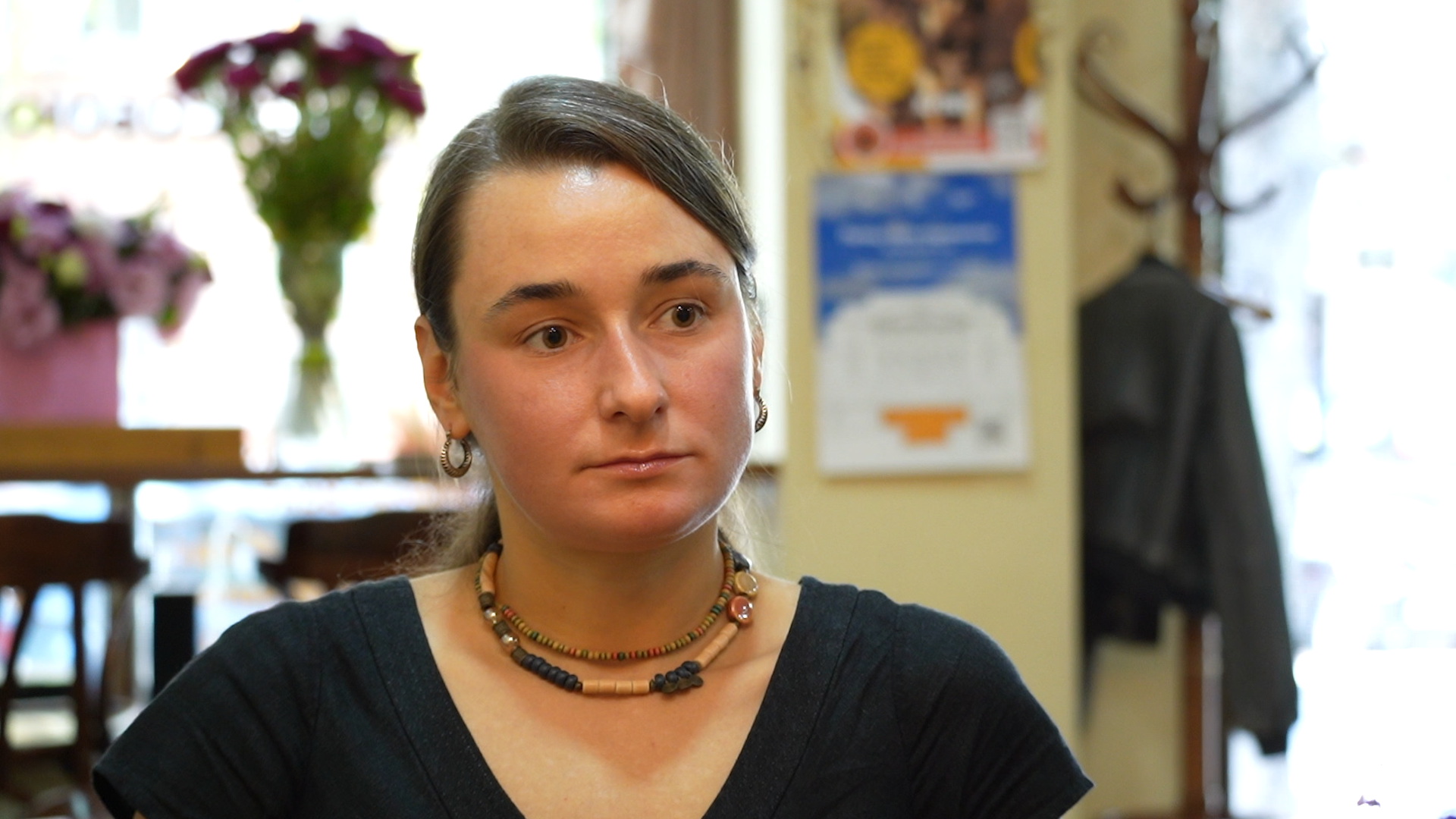
SCREENSHOT: Intent’s YouTube channel
Given his many years of combat experience, the topic of death wasn’t taboo for us. We were aware of the risks. Unfortunately, when it happened, it was precisely this understanding that allowed me to act constructively and address the topic effectively, rather than from a place of boundless grief or emotional breakdown.
What is fascinating about this field, and what is troubling?
What’s fascinating is the global experience. Unfortunately, right now we’re talking more about global necrology than Ukrainian necrology. Here, it’s still a contentious issue. The government cannot decide on the direction of the commemoration system as an institution, and local communities are at a loss: families demand one thing, the central government another, and global experience dictates a third.
I side with proven global practices and organizations that have been operating for over a century—such as the American Board of Military Commemorations (ABMC), the Commonwealth War Graves Commission (CWGC), or the German Volksbund. There’s no need to reinvent the wheel: these institutions have gone through the same process, the same debates, and the same adjustments.
The question has remained the same for centuries: which is more important—the right of an individual family to preserve personal memory, or the right of the state and the nation to honor the magnitude of these events with dignity for centuries to come? This issue has long been resolved worldwide. If the families who, 100 years ago, chose private, non-standardized burials were to see the consequences today, they would change their minds. We are all familiar with Arlington or the Normandy military cemeteries in France—hundreds of thousands of visitors go there every day. The graves of those buried on private plots, however, are still maintained by commissions, but ordinary people do not visit them and are unaware of their existence.
In Ukraine, this conflict is felt particularly acutely.
This is because the state has not yet offered families a high-quality and dignified enough alternative to convince them to choose a national pantheon rather than private memorials. A striking example is Ternopil. When we were creating the first unified, well-maintained section of military graves, the “Pantheon of Heroes,” at the Mykulynets Cemetery, one family began a legal battle against hundreds of other families who had accepted the standardization. This is a telling situation for the entire country. Such conflicts arise in many cities. And above all, I feel sorry for the memory of the fallen soldiers, whose names, in my opinion, are being dishonored by such disputes. A soldier’s surname begins to be associated with scandal rather than with the nation’s struggle for liberation.
But doesn’t the family have the right to grieve and to defend its position in a civilized manner?
That is an indisputable right. While a person is in the acute phase of grief, complex psychological mechanisms are at work. In psychiatry, there is a term called “mourning pleasure.” It sounds cynical, but it’s an accurate description of the state in which one must cry out the pain and live through it.
How we grieve at home or with loved ones is a private matter. But it ceases to be a private matter when it enters the public sphere. A military cemetery is not about personal ambition; it is about the idea of the nation.
When a civilian dies, the family often tries to compensate for the magnitude of the loss with lavish decor and grandeur—as if to say, the bigger the monument and the more money spent, the more deeply the person was loved. At the same time, military necropolis design is about military asceticism and austere forms.
Why has the aesthetic of heavy, black monuments taken such a strong hold in Ukraine?
This is a consequence of 70 years of Soviet occupation. Until the 1920s, cemeteries in Ukraine, as throughout Europe, were bright and filled with greenery—they resembled sculpture parks more than they did gloom and bottomless darkness. Light-colored alluvial rocks were used: limestone, sandstone, shell rock, and marble. Our ancient cemeteries were identical to those in Europe, but they were deliberately destroyed by the Soviet authorities.
This was a deliberate ideological struggle against material culture. In the USSR, they even published works titled “In Granite and Bronze.” The goal was simple: to eradicate European culture and impose Soviet culture. Dark, shiny, heavy, and completely non-tactile surfaces were meant to be oppressive, forcing people to bow their heads and feel like insignificant insects.
Over three generations, this imperial aesthetic has become a “comfort zone.” And when we propose today to move away from the Soviet paradigm toward white, ascetic cemeteries, it’s often met with fierce resistance. People accuse us of promoting a “Western tradition.” That’s nonsense. This is our own native culture, which was simply eradicated from us.
What does quality memorialization mean to you?
Memorialization and commemoration aren’t just about cemeteries. They’re a set of tools: turning sites into museums, annual days of remembrance, moments of silence, memorial steles, and cafes opened in honor of the fallen.
There are wonderful examples in our history. In the past, the families of fallen soldiers funded the creation of hospitals for veterans, schools, and kindergartens. They understood that a person lives on through their deeds and by helping others.
Today, families receive payments from the government. And, to be frank, for many, commemoration ends with the purchase of apartments or cars. It’s hard for families to decide to direct these funds toward something that benefits society. But the name of the fallen will live on as long as it brings practical benefit to others. Even if we erect a statue in a park—in two or three generations, passersby will no longer know who it is. But a school or hospital named after a hero, serving people every day, keeps that memory alive.
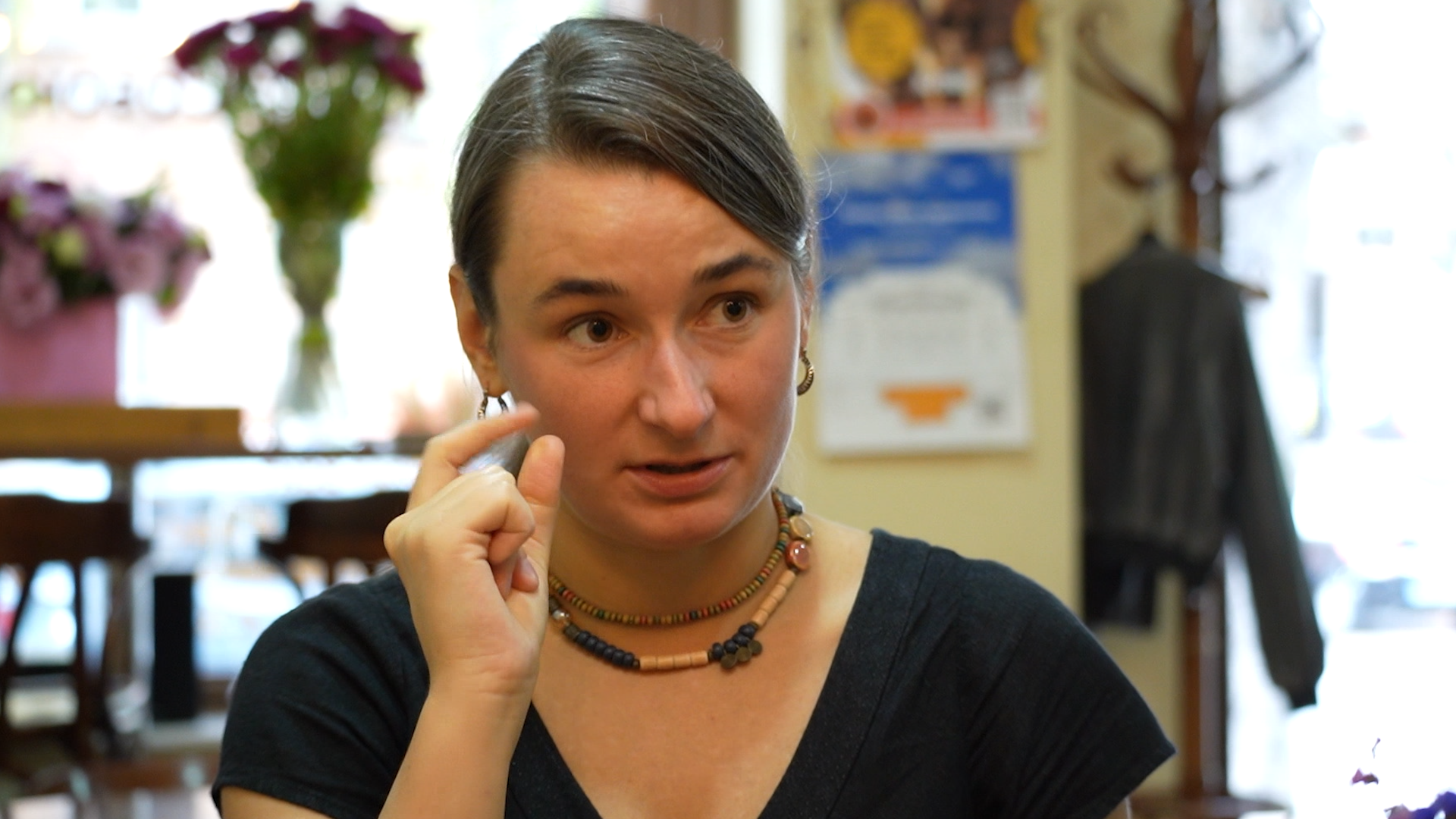
SCREENSHOT: Intent’s YouTube channel
Why has the Cossack cross become the main symbol of modern commemoration of Ukrainian military personnel?
The term “Cossack cross” itself is, to a certain extent, a simulacrum, since there is no single canonical form—each one is unique. But it’s amazing how this works on a subconscious level. Even if a child who hasn’t yet studied history sees a solitary stone cross in a field, they will intuitively say, “That’s a Cossack cross.” It is a profound marker of our material culture.
The form of the equal-armed cross has endured through the centuries. After the era of the Cossacks, it was adopted by the government of the Ukrainian People’s Republic in exile and by Ukrainian veterans’ organizations in Canada (in particular, the Ukrainian Riflemen’s Association, which created the Combatant’s Cross in 1928). The well-known Petliura Cross also has this same shape.
In 1932, artist Mykola Bytynskyi transformed the symbol: he replaced the crown of thorns with a sword. This marked a significant shift in spirit—a move away from passive sacrifice and mourning toward active struggle, readiness for battle, and vengeance.
A defining feature of our history is the thousands of Cossack cemeteries scattered throughout the country. Thanks to Roman Malenkov’s “Ukraine Incognita” project, nearly a thousand of these sites have already been mapped, and there are over 3,500 in total. They are located throughout Ukraine, and 99% of them are made of light-colored stone—limestone and sandstone.
Is there a risk that the Cossack cross will become a mere decorative symbol without any understanding of its origins?
It depends on who is looking at it. A scholar, a child, or a casual passerby will perceive it differently. When I look at an equal-armed cross on a soldier’s grave, I don’t think about Christianity. The cross is a much older, solar proto-symbol that predates any religion. It is humanity’s earliest mark, made by people trying to make sense of their existence in the world.
When we talk about modern military decorations, this form of the equal-armed cross is also present. It is a direct continuation of the traditions of the Ukrainian People’s Republic.
How can we properly combine historical tradition, architectural solutions, and the needs of families in new military cemeteries?
It can’t be done. As long as the war continues and the acute phase of grief persists, society isn’t ready for ideal solutions. Right now, everything is being done according to Soviet templates: with dark, shiny surfaces, lions, and monograms.
When the first wave of families passes away in 20–30 years, all of this will likely be replaced by high-quality, light, and ascetic forms. Unfortunately, we are taking a hybrid approach.
In international practice—whether at the ABMC or the British Commission—families do not participate in the design of war memorials. It sounds harsh, but the loss of a loved one does not make a person an architect. However, in Ukraine, politicians are held hostage by voters and media scandals, so they give in to emotional demands. The only solution in the civilized world is independent state commissions, shielded from political influence. In Ukraine, neither the government nor society is ready for this yet.
Watch the full version of the interview on Intent’s YouTube channel
What could Ukraine learn from European experience right now?
An organizational structure, so as not to reinvent the wheel. There are some positive precedents in Ukraine: the bright, unified sector in Ternopil, and open architectural competitions in Lviv, Uzhhorod, and Vinnytsia. But none of these projects has yet been brought to perfection due to disputes over major monuments or pressure from the “black granite” lobby.
A military necropolis is not just a cemetery. It is a cohesive system: an entrance gate separating the world of the living from the world of the fallen, a wall bearing the names of those missing in action, and a unified vision.
How do civilian cemeteries differ from military ones?
Civilian cemeteries are a biographical mix of styles and private memories. A military cemetery is based on one key feature: uniformity. Even a century from now, a child visiting such a cemetery will notice: all the graves are different, but these are all the same. This is a visual sign that the people buried here gave their lives for something greater than their own personal existence—for the idea of freedom.
Spontaneous memorials—flags in public squares, photographs, banners—are of immense value during times of acute grief, as they serve as markers of collective pain. But they are temporary.
What is the main mistake in memorialization that needs to be corrected right now?
As long as the war continues, our victory is the only prerequisite for creating high-quality memorial design. As long as the fighting continues, there will be no high-quality system.
But if we’re talking about a rule that applies to everyone—architects, officials, designers, and politicians—there’s only one: do your work well. Consider that in a hundred years, your name will either be spoken with respect or remembered with shame in history books. Think about how your name will be remembered in history.