Меню
Соціальні мережі
Розділи
Feb. 17, 2026, 6:43 p.m.
When regions speak together: results of the Forum of Civil Society Organizations
This article also available in English33

PHOTOS: Civic Initiatives of Ukraine
The civil society sector in Ukraine is going through a period of maturation. A full-scale war, the European integration course, and growing demands from communities and international partners have forced civil society organizations to take a fresh look at their role. Previously, many initiatives worked locally and autonomously, but today the need for coordination, joint representation of interests and consolidation of resources is becoming increasingly evident.
It is in this context that the idea of creating the All-Ukrainian Association of Regional NGOs, a platform that should unite active organizations from different regions, strengthen their voice and create conditions for systematic interaction at the national and international levels, emerged at the end of 2025.
Forum in Lviv as a starting point
The impetus for the formation of the association was the Forum of Regional Associations of NGOs held in Lviv at the end of November 2025. The event was initiated by the Civic Initiatives of Ukraine with the support of the National Endowment for Democracy and in partnership with the Hromadske Prostir portal.
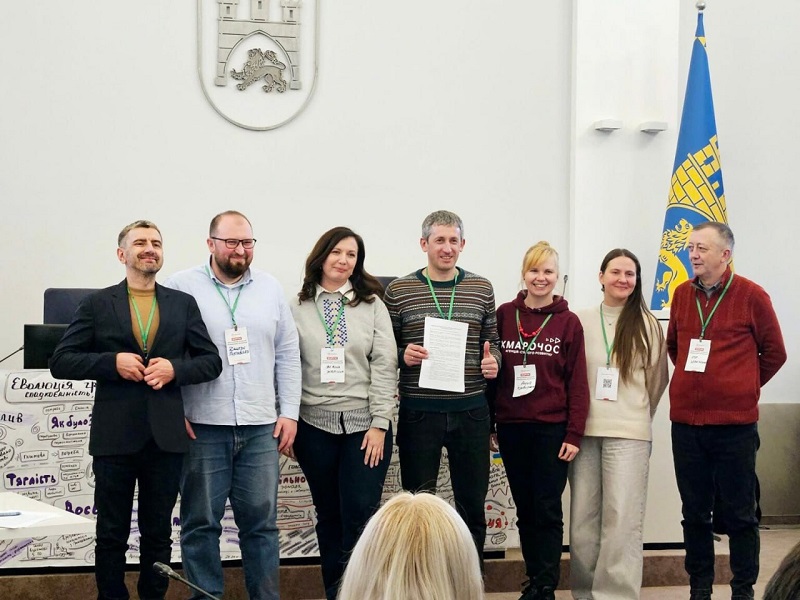
PHOTO: Civic Initiatives of Ukraine
The forum brought together more than a hundred participants from different regions of Ukraine. Representatives from Chernihiv, Chernivtsi, Kirovohrad, Poltava, Zaporizhzhia, and Odesa oblasts - regions with different experiences, contexts, and challenges, but with similar needs for civil society development - joined the discussion.
The key outcome of the Forum was the signing of a memorandum of intent to establish the All-Ukrainian Association of Regional NGOs. The provisions of the document were actively discussed, clarified, and remain open for new regions to join.
Odesa region: an initiative from the region
The delegation from Odesa region was one of the most active at the Forum. It included representatives of ten NGOs that already have experience of cooperation and joint discussions at the regional level.
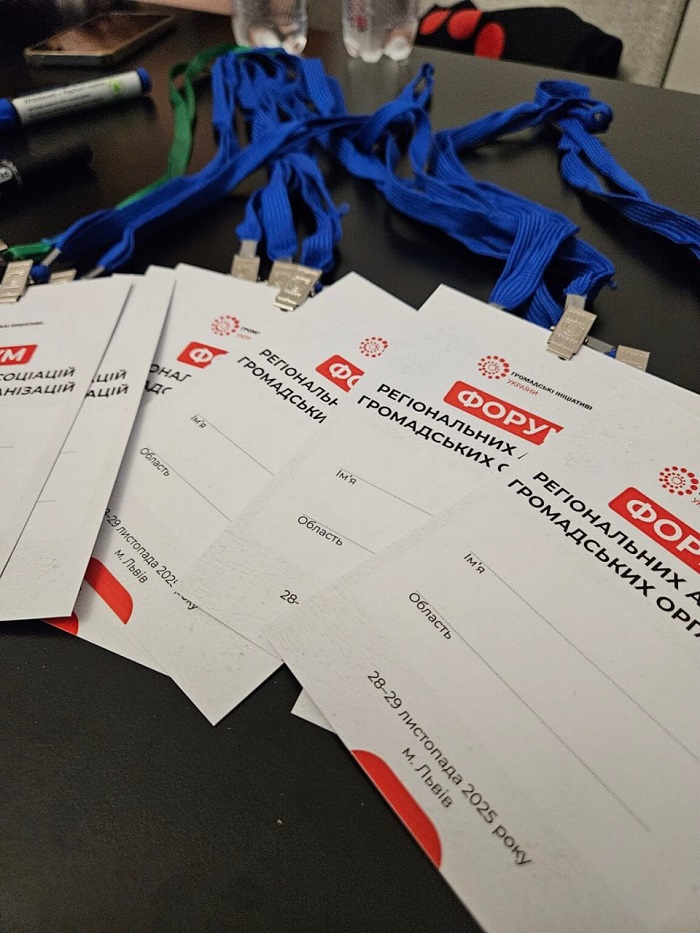
PHOTO: Civic Initiatives of Ukraine
In particular, the following civil society organizations took part in the Forum from Odesa region: "Interested", "Good mood", "Free" space, "F1", "Youth Leadership Academy" (Chornomorsk), "Zaporizhzhia Cossacks", "Safe Link", "International Integration Movement", "DOBRO", "Zmistom", "Mowgli" and the Youth Council at the Znamianske Village Council.
For the Odesa region, participation in the Forum was not limited to an exchange of views. It was after the Forum that the understanding of the need to create a regional association of NGOs was finally formed as the first step towards the region 's inclusion in the all-Ukrainian network.
"For me and for our organization, this is primarily an opportunity. I am convinced that thanks to such unions and associations, we will be able to implement our initiatives at the local level much more effectively. As an organization working to prevent gender-based violence, we focus on working with women and youth. In the future, we plan to develop projects to prevent GBV among young people in the communities of Odesa district. Such opportunities open the way to both the national and international levels, as the issues of human rights protection and support for vulnerable groups are relevant all over the world," Iryna Klevtsevych, project manager of the NGO F1, told Intent.
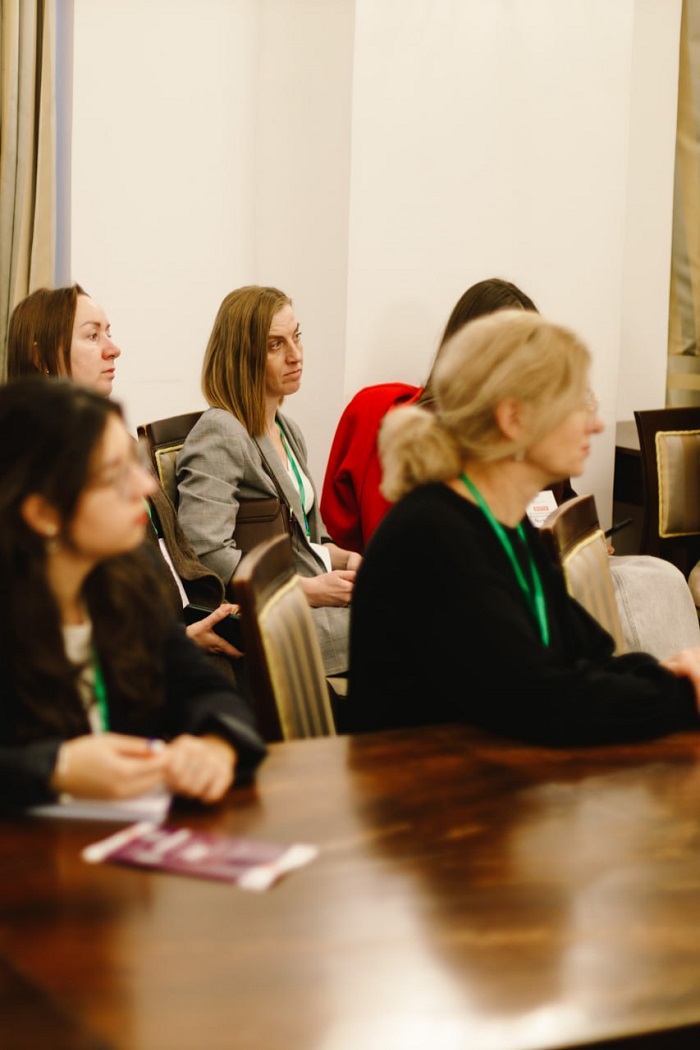
PHOTO: Civic Initiatives of Ukraine
Members of the initiative group emphasize that thousands of NGOs are registered in the region, but much fewer are actually active. Moreover, even among those that are active, there is often a lack of coordination, exchange of experience, and access to mentoring support.
Instructions on how to join the Odesa CSO Association are available here.
Why does the public sector need an association?
The creation of the association is not considered as another organization whose presence in the public sector will be purely formal, but as a tool. First of all, it is intended to strengthen the capacity of the public sector.
The association allows to
- represent the interests of regional CSOs at the national and international levels;
- form a common position in the dialogue with the government, donors, and European partners
- create conditions for mentoring young organizations;
- facilitate partnerships and the implementation of joint projects;
- go beyond regional centers and work with remote communities.
This model is especially important for young and small organizations that find it difficult to enter the national or international level on their own. Within the association, they get access to the experience, contacts, and support of more capable partners.
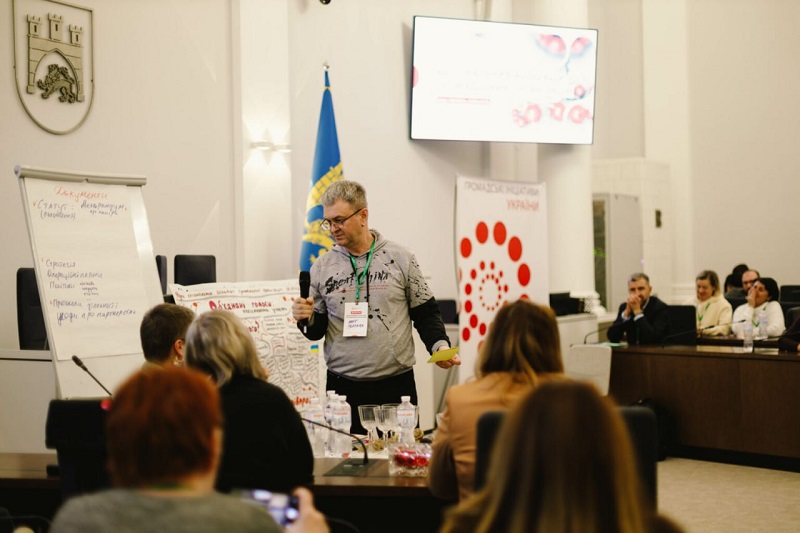
PHOTO: Civic Initiatives of Ukraine
A special emphasis is placed on working with communities in Odesa Oblast. There are dozens of communities outside of Odesa where there are active people and a need for civic initiatives, but a lack of resources, knowledge, and communication.
The Association should become a channel through which opportunities - educational, project, grant - reach such communities. It is not only about funding, but also about the development of youth initiatives, work with vulnerable groups, violence prevention, and social cohesion.
Institutional dimension: how an association changes the rules of the game
One of the key differences between associations and individual organizations is institutional sustainability. It is not only about formal registration, but also about the emergence of clear rules of interaction within the public sector. This is what many regional initiatives lack today.
The Forum participants repeatedly emphasized that the association should become a space where large and small organizations do not compete for donors' attention but complement each other. To this end, transparent decision-making mechanisms, rotating representation, and joint agenda-setting are envisioned.
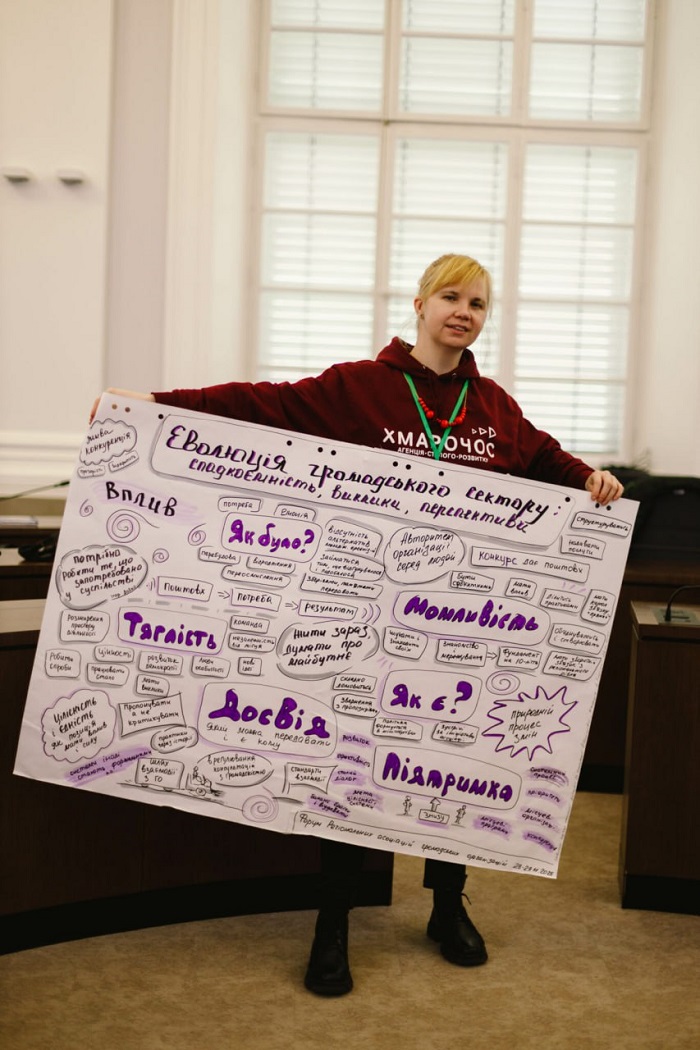
PHOTO: Civic Initiatives of Ukraine
Advocacy is also an important element. When civil society organizations address the authorities individually, their voice is often lost. Instead, an association can act as a consolidated representative of the region, in dialogue with ministries, specialized agencies, and international partners.
European context and international partners
A separate block of discussions at the Forum was devoted to the European experience. Participants had the opportunity to learn about examples of long-term work of associations of civil society organizations in the EU, in particular in Poland, where such associations have been formed for decades.
"For me, the experience of regional associations in Poland was a particularly significant discovery during the forum. How distributed leadership was organized - the board of Polish associations consists of members, and the management and project team of the association consists of employees. In this way, there is no "pulling power" to a few of the most active organizations and the team works for the entire association.
Polish associations organize regular meetings of association members in small towns and villages - this helps to raise the visibility of regional CSOs and shows the involvement of the entire region, not just 1 large regional city.
At the same time, Polish associations have been working towards real influence on the country for 20 years, and now they have representatives in all commissions and bodies that have a significant impact on the country's development.
We still have a long way to go to achieve this influence, but it will be an interesting path," shared her thoughts Olha Konstantinova, Executive Director of the NGO Zmistom.
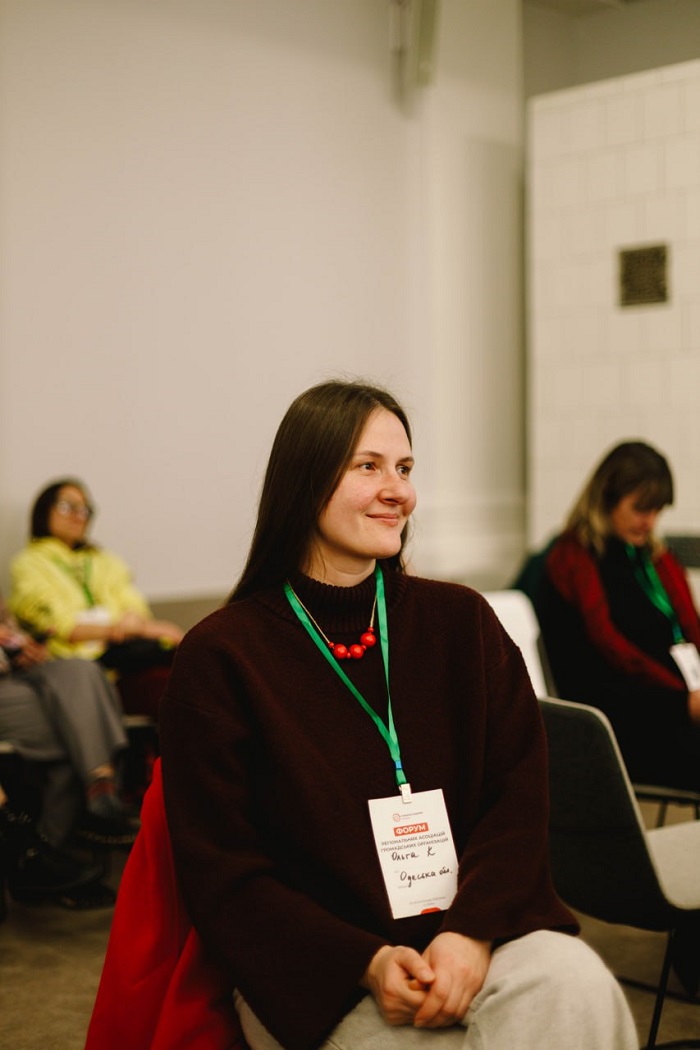
PHOTO: Civic Initiatives of Ukraine
For international donors and institutions, associations are a clear and reliable partner. They simplify communication, allow assessing the capacity of an entire region, and ensure transparency in the use of resources. In this sense, the creation of the All-Ukrainian Association is directly related to Ukraine's European integration course.
The role of regions in the national process
Despite their different experiences and contexts, representatives of the regions that joined the Forum spoke about similar challenges. These include a lack of stable funding, a lack of systematic mentoring, difficulties in interacting with the authorities, and low visibility of regional initiatives at the national level.
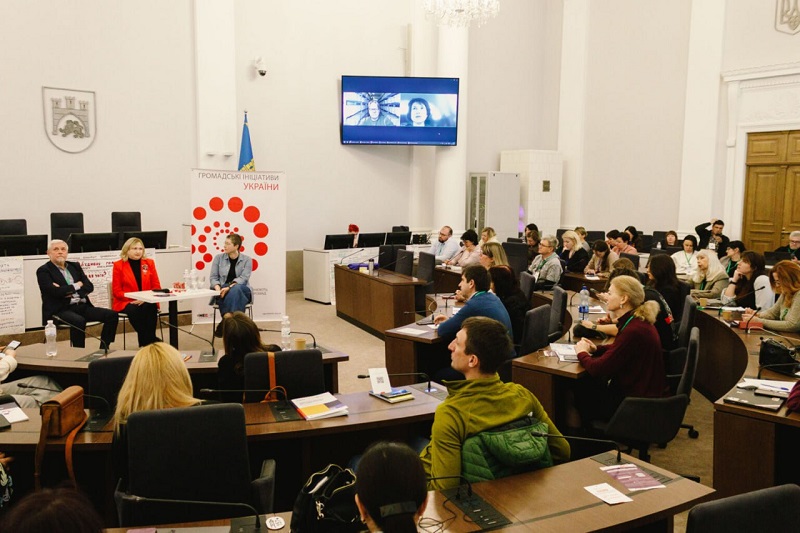
PHOTO: Civic Initiatives of Ukraine
That is why the association model is built from the bottom up: from local associations in the regions to the all-Ukrainian platform. This approach allows preserving regional specifics and at the same time forming a common vision of civil society development.
The role of the public sector is not always obvious to people. Formally, there are three branches of government in the country, and the media, often called the "fourth estate," but there is another important component that works alongside them: civil society. It not only exists, but also regularly proves its effectiveness, especially in crisis situations. In simple terms, the public sector can be compared to the body's immune system: it responds quickly to problems, addresses acute needs, and tests solutions. At the same time, its task is not to replace the state, but to transfer the developed mechanisms to local governments and institutions that should provide sustainable solutions.
Until 2022, people's involvement in systemic civic activities in Ukraine remained low. The full-scale war has changed this situation, but mainly through volunteer initiatives and one-time forms of participation. Ukrainians are willing to donate or help in specific situations, but ongoing civic work for many still remains an additional activity alongside their main job and everyday life. This creates a challenge for the development of the public sector as a sustainable system.
"Our organizations are united by a common set of values and single-mindedness. First of all, we have a clear understanding of the goal. We try to look beyond the horizon and think strategically. It is important for us to find communities that not only constantly plan and talk about future achievements, but are ready to act today.
This is also useful for others, because people usually unite around those who have made a decision to stand up and act despite the difficulties. When we join forces and stand shoulder to shoulder in the face of today's challenges, no "storm" will swallow us up. In such an association, there are no superfluous ones - everyone is important," says Oleksandr Bazhan, representative of the Odesa District of the Zaporizhzhia Cossacks International NGO.

PHOTO: Civic Initiatives of Ukraine
The answer to this challenge is the maturation of the sector itself - the realization of the need for unification, cooperation and long-term planning. Building such a structure requires trust and time, perhaps decades. But it allows a person who wants to get involved, even for a few hours, to clearly understand where to go and how to be useful. In the long run, the mission of many NGOs is not to exist indefinitely, but to solve a specific problem and make sure that the need for their work disappears.
Next steps
The process is currently in its formative stages. In Odesa Oblast, new organizations are being recruited to join the initiative, and a strategic session is being prepared for February-March 2026. Its goal is to jointly define the mission, principles of work, and priorities of the regional association.
"First of all, it's about getting to know each other, synchronizing and networking. I think we will come to joint projects in 2027, and this will be a great result. And this year is needed to build the structure itself. It is very important to get to know each other, because even in Odesa there were many meetings where the public sector participants hardly knew each other. There is a certain core of organizations that regularly participate in clusters and events, but at the same time, many initiatives remain outside these processes, even though they fulfill an extremely important mission for the development of Odesa and Odesa Oblast," says Volodymyr Oros, head of the Dobropil Youth Center DOBRO.
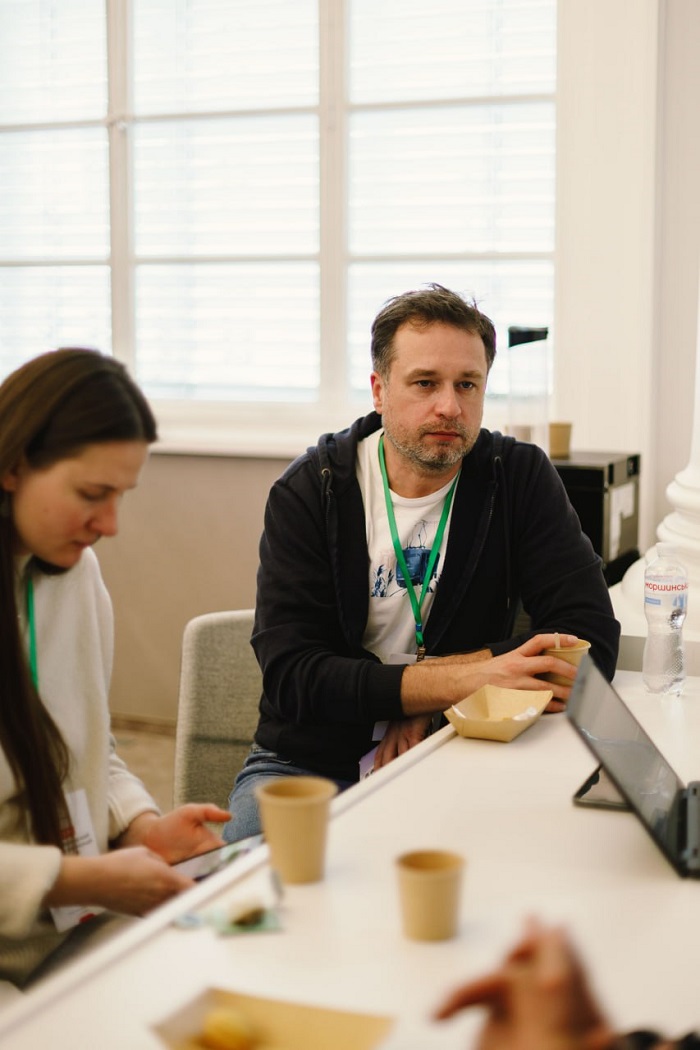
PHOTO: Civic Initiatives of Ukraine
By the fall of 2026, the participants plan to decide on the formalization of the association, develop internal rules, and outline the first joint projects. The possibility of holding the next all-Ukrainian forum, which will allow new regions to join, is also being considered.

PHOTO: Civic Initiatives of Ukraine
The civil society sector is often compared to a first responder system - the part of society that is the first to see problems and look for solutions. But for these solutions to become systemic, cooperation, trust, and unity of effort are needed.