Меню
Соціальні мережі
Розділи
March 15, 2026, 6:47 p.m.
Amazing South: the mystical valley of Crimea
This article also available in English13

IMAGES: Intent
The Valley of the Ghosts is one of the unique natural formations of the Crimean peninsula, which is a picturesque tract with bizarre rocks. This object is one of the most visited attractions in Crimea.
Intent continues the series"Amazing South" with a story about this valley.
The unusual valley is located at the foot of Demerdzhi Mountain near the village of Luchistoye, 15 km from Alushta. Demerdzhi means "smithy" or "blacksmith" in the local dialect, and the mountain itself got its name because the inhabitants of this area have been making weapons and household items for centuries, which they sold to caravans and travelers on their way to the Aluston fortress, the remains of which are now located on the territory of Alushta. Wikipedia claims that the correct name in the Crimean Tatar language is Demirji (from demirci - blacksmith). However, the Demerdzhi variant is the most common in cartographic sources, guidebooks, and literature, which has developed historically in the XX century.
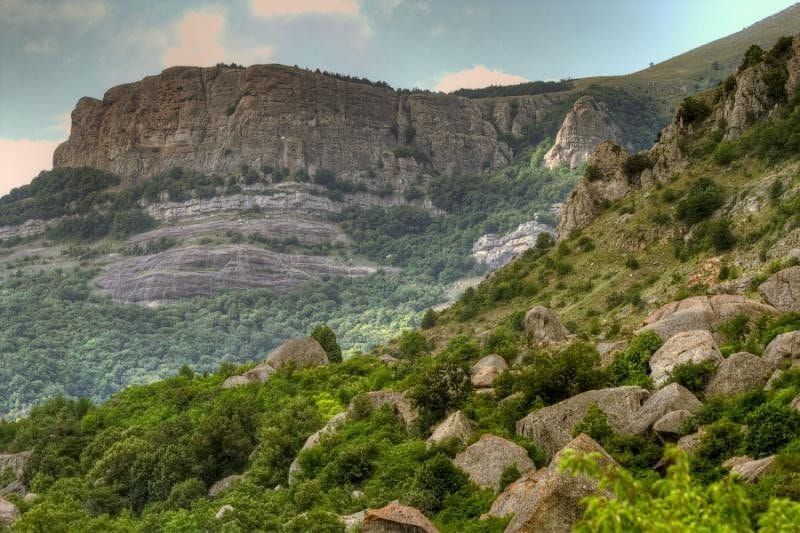
PHOTO: Wikipedia
Previously, this mountain was also called Funa, meaning "smoky" ("steaming"). The Greeks called it that in ancient times because of the constant fog that enveloped the slopes of the massif. It gave the impression that the mountain was on fire.
The mountain range has two peaks, one north and one south. The valley where the ghosts "live" is located on the western slope of the southern ridge of Demerdzhi.
Where did the ghosts come from in the valley?
The ancient Tethys Ocean was on the site of the Crimean Mountains 200 million years ago. Tectonic processes led to the birth of the peninsula. The Demerdzhi mountain range was formed from a conglomerate - compressed sea pebbles. Since its creation, many millennia have passed, during which precipitation, wind gusts, and temperature changes left peculiar marks (imprints).
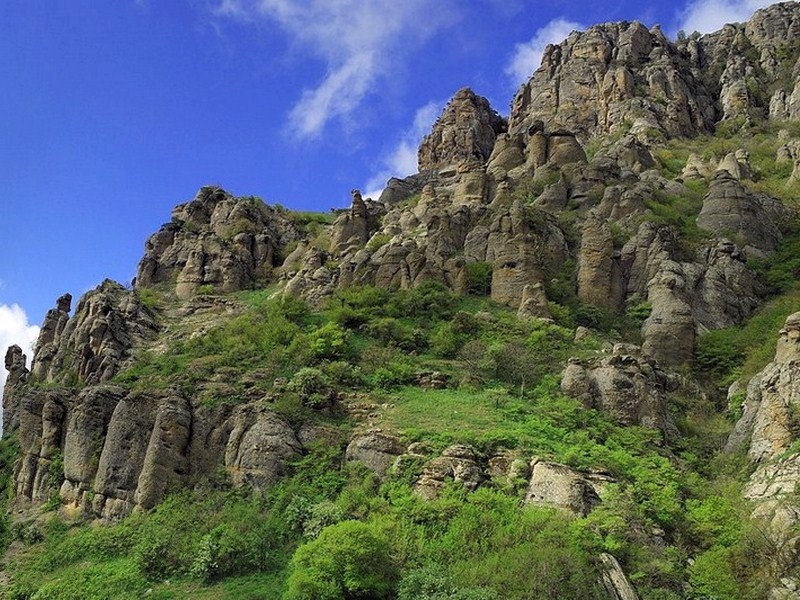
PHOTO: Trails of Ukraine
The conglomerate was changing and collapsing. The outer layers of the massif consisted mainly of limestone, fragments of quartz and siderite accumulated in them, and they were bound by centuries-old silt, which gradually turned into strong cement. As a result of the external impact on the upper layers, unique vertical stone structures were formed, which took on various forms. If you take a closer look at the structure of these formations, you can see many inclusions of stone pebbles.
TheValley of Ghosts has gained popularity precisely because of the unusual giant stone blocks that appear in the form of human silhouettes, animals, idols or mythical creatures. The stone trunks seem to create the illusion of movement - they change their appearance, as if "coming to life" depending on the angle of view, lighting, and time of day. If you turn on your imagination, you can see the face of a young girl, a warrior's head, a devil's finger, and other figures created by natural chaos. Some structures consist of hundreds of tons of rock and look as if they were carved in a stone forge.
Fortress of Funa - the stronghold of the Theodorian principality
Not far from the famous Valley of Ghosts are the ruins of an interesting and little-studied historical landmark, the Funa Fortress, which attracts special attention. It was here that the residence of the princes Theodoro (Theodoro) was located in the Middle Ages. The fortress got its name from the eponymous Funa Mountain (modern-day Demerdzhi), on whose rocky hill it is located.
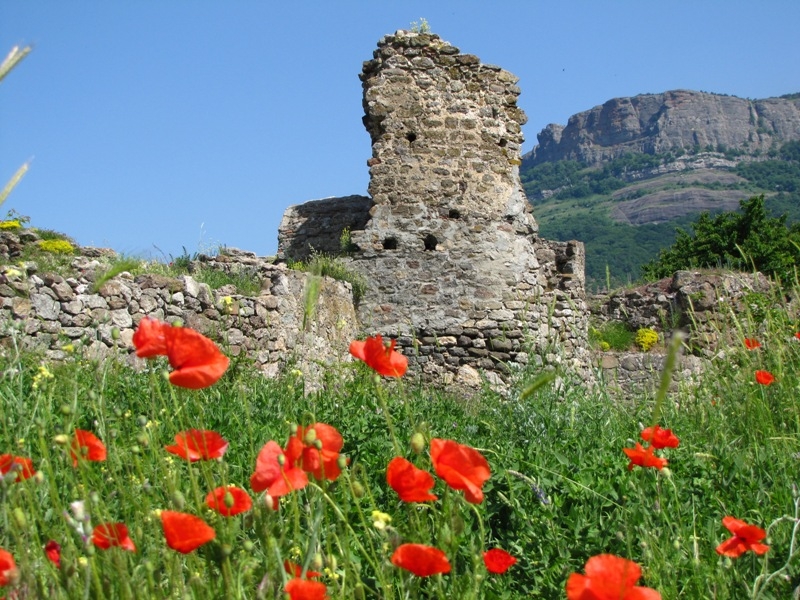
PHOTOS: Trails of Ukraine
The principality of Theodoro was a Christian Orthodox state that combined Greek, Gothic, Alanian, Crimean Tatar traditions, etc. Theodoro was formed by the middle of the fourteenth century from Byzantine possessions. The principality controlled the mountainous regions and part of the southern coast of Crimea and pursued an active foreign policy.
In the Middle Ages, an important trade route passed through this area - the old Silk Road, which connected the southern coast of Crimea with the steppe part of it. The principality conducted successful trade activities, but was in constant conflict with the Genoese for the possession of the southern coast of the peninsula and the Black Sea trade.
The first mention of the Funa fortress dates back to the early fifteenth century (approximately 1422-1423). The fortification was located at a strategically important height and performed the defense functions of the Theodorean Kingdom. The fortress was relatively small - 106 meters long and 56 meters wide. The top offered a wide panorama of the South Coast and the Genoese fortress of Aluston. Thus, Funa resisted the Genoese, who sought to move deeper into the peninsula. Smoke from the fortress was used to signal the coast about the approaching enemy.
In 1423, six months after its construction, Funa was destroyed by a powerful earthquake. Almost 3 years later, the fortress was rebuilt, erecting additional fortifications and strengthening the fortress wall. In 1434, probably the Genoese politician and military leader Carlo Lomellino led a campaign against the Theodorites and destroyed the Funa fortress almost to the ground.
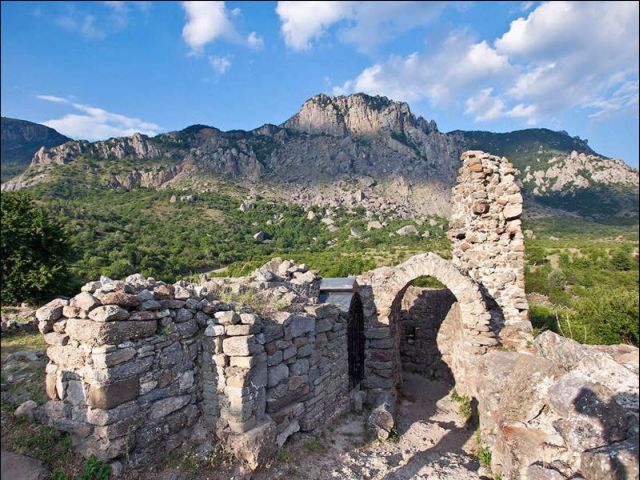
PHOTO: Wikipedia
In 1459, the fortress received a "new life" - Funa was rebuilt and its walls were further strengthened. It lasted until 1475, when the Ottoman Empire invaded the Crimean peninsula, and then lost its strategic importance. Subsequently, the principality of Theodoro was captured by the Turks after a heroic struggle, and the fortress was destroyed again.
Nowadays, Funa works as an open-air museum. On its territory, you can see the remains of the Church of St. Theodore Stratilat, which was built in 1459 along with the next restoration of the fortress. Later, the church was destroyed by the Turkish invaders, but in the XVI century, it was restored and operated until 1778.
In 1927, a strong earthquake struck Crimea, almost destroying many of the peninsula's most prominent monuments, including the Swallow's Nest, Vorontsov Palace, and others. Funa did not escape this fate either, and only the foundation remained. A few years later, the stones were dismantled by local residents to build a village. Now the fortress is being gradually restored. In 100 years, archaeologists have excavated only 30 percent of the territory. The research is ongoing, and the fortress is still full of secrets, mysteries, and future discoveries.
The legend of the Valley of Ghosts
There are many legends in Crimea about the appearance of mysterious and secret places, and the valley with silent stone structures is no exception: it also has its own beautiful legendary story.
One version of the legend says that many centuries ago, when the surroundings of Mount Funa were shaken by numerous wars between separate nomadic tribes, one tribe built a huge forge on top of the cliff. Around the clock, it was used to make swords and daggers for a large number of warriors, and the hot fire of the furnace burned all the vegetation and dried up numerous springs on the slopes of the mountain. In the foothills, fertile gardens and fields began to die from drought. Famine began, claiming the lives of residents of nearby settlements.
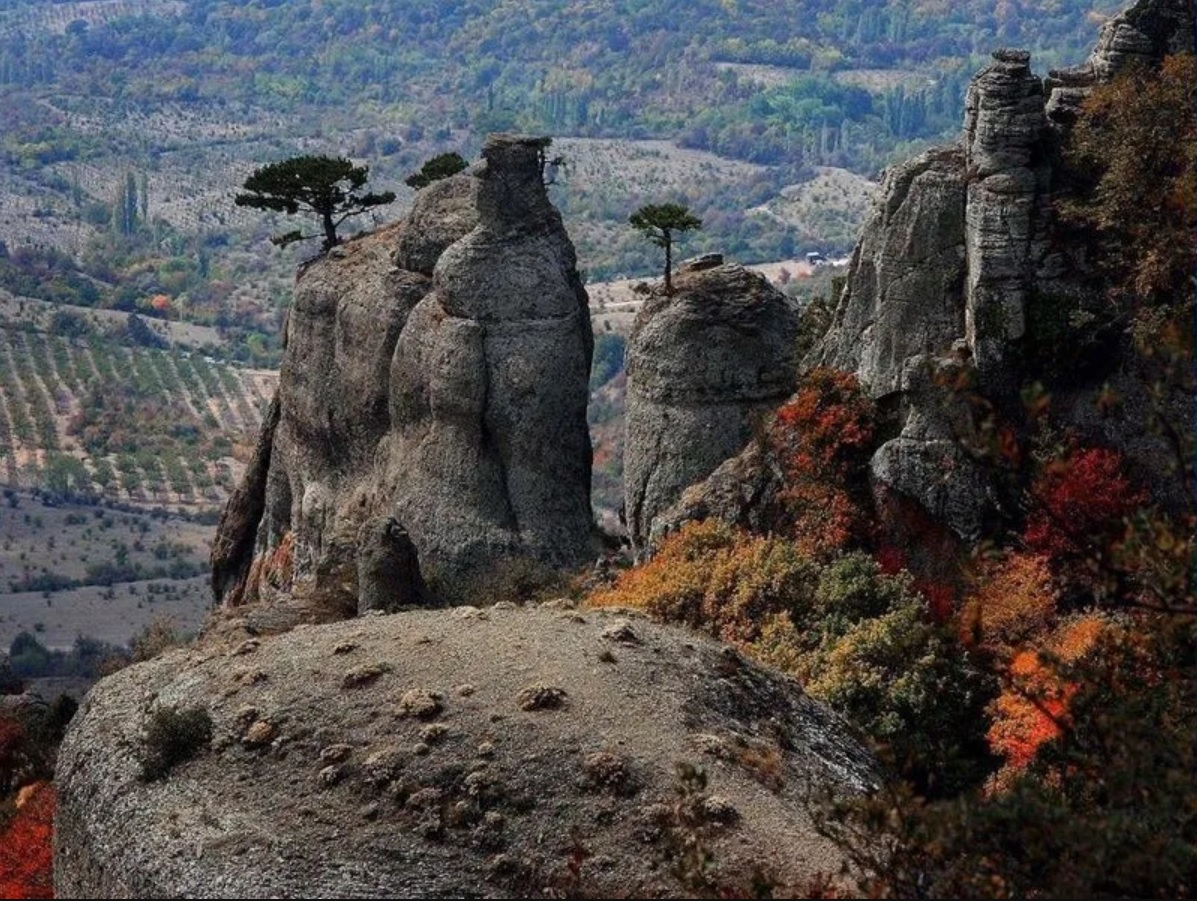
PHOTO: travel.24tv.ua
None of the residents of the neighborhood dared to climb to the top of the mountain and force the nomads to extinguish the flames of the blacksmith's furnace. Only one beautiful and brave girl dared to do so and once climbed to the top, asking the cruel blacksmith of the forge to do so. But he was very angry at the girl's boldness and killed her, plunging his dagger into the heart of the beauty.
Suddenly, the rock split into several parts, huge fragments rolled down the slopes, and hot lava began to erupt from the fissures, melting the stones. The entire peak was enveloped in a dense curtain of smoke, and a powerful earthquake began. When it stopped and the smoke veil cleared, everyone saw the fleeing nomads turn into bizarre stone figures.
This legend did not arise out of thin air and has a basis in fact. Earthquakes on the slopes of Demerdzhi Mountain are quite common. For example, at the end of the XIX century, more than 5 million tons of stone blocks fell on a village at the foot of the mountain and completely destroyed it. The fact that the collapse occurred in the afternoon, when most people were working in the fields, helped to avoid numerous casualties. After this incident, settlements began to be built at a considerable distance from the slopes of the mountain range to avoid the consequences of frequent landslides.
Interesting facts
- In total, more than 120 stone structures of various heights and shapes are scattered in a picturesque mess in the Valley of Ghosts. They seem to be the guardians of the legendary secrets of this extraordinary place;
- Some of the stone natural sculptures are several million years old;
- Rock formations are constantly changing their shape under the influence of erosion - in hundreds of years they will look completely different;
- Many tourists who visit the valley to admire the stone figures give them original names based on their appearance, for example: The Bride Rock, The Sphinx, The Child Rock, The Dwarf, The Devil's Fingers and others;
- One of the most famous natural sculptures in the Valley is a stone pillar called the Giant. It rises 25 meters high and has a diameter of 5 meters. Due to its size, the Giant can be seen from afar - even from the highway, and at close range it looks even more majestic;
- An interesting historical artifact was discovered during the excavations of the ruins of the Funa fortress - a large slab with a Greek inscription dated 1459 with monograms of the rulers of the Theodoro principality and the Byzantine coat of arms in the form of a double-headed eagle;
- On the slopes of Demerdzha, you can observe such a natural phenomenon as the Broken Ghost. It is also called the "mountain ghost". This is a rare atmospheric phenomenon - the observer's shadow on the cloud surface in the direction opposite to the Sun. It is an optical illusion;
- The Valley of Ghosts attracts visitors with many interesting and mysterious places, such as the "Monomakh's Hat" or the "Witches' Gorge";
- In the Valley, there is a stone on which actress Natalia Varley performed the "Song of the Bears" in the movie "The Caucasian Captive, or The New Adventures of Shurik."
- Tourists have the opportunity to take pictures near the "Nikulin nut", from which the famous actor fell during filming and broke his arm.
Getting to the Valley of Ghosts
Ghost Valley is a convenient place in terms of logistics. It is not difficult to get here. However, it is important to understand that Crimea is currently under Russian occupation.
Between the village of Perevalne and the city of Alushta, on the Yalta highway, there is the village of Luchiste. It is the starting point to the Valley of Ghosts and the Funa fortress. The entrance to the valley can be reached by an asphalt road on your own transport, but further travel is prohibited - the relief, size of the area and the protected status of the tract require walking.
Hikers usually start from Alushta, or from the village of Luchiste, a formerly inhabited settlement that was destroyed by a strong earthquake in 1894. It is recommended to wear comfortable shoes and bring enough water and food because the walk can take several hours depending on the starting point.
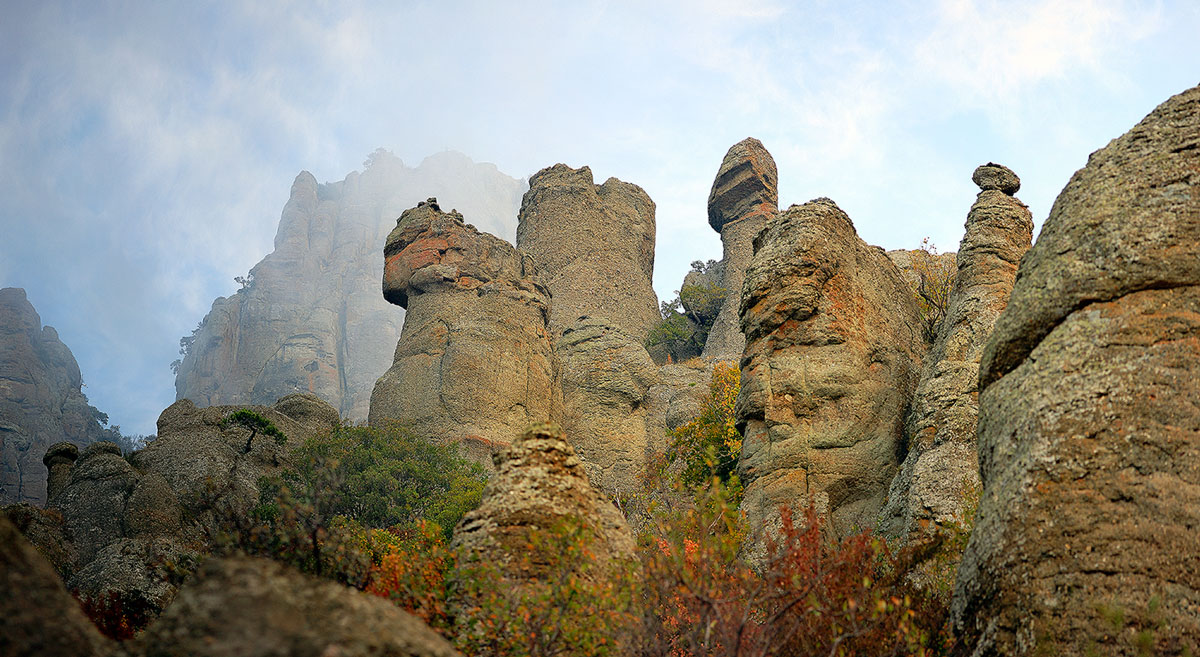
PHOTO: Wikipedia
Horseback riding enthusiasts can enjoy the Demerdzhi stable and horseback riding center in Luchiste village, where individual and group horseback riding is organized. It is also possible to go off-road as part of the excursion program.
There are several routes to get to the Valley of Ghosts:
- The route from the village of Luchiste is a popular and relatively easy way. It takes about 1.5-2 hours to climb the mountain, depending on the physical fitness of the tourists. The path passes through the forest along a well-trodden and marked trail. This route is suitable even for an active walk with children.
- The route from the city of Alushta is difficult and long. It usually takes 4-5 hours. The path allows you to see much more of the natural beauty of Crimea, including waterfalls and picturesque mountain landscapes. This route requires good physical fitness.
In the village of Luchyste, there is a local cheese factory that makes cheese from natural goat's milk, including cheese with Crimean mountain herbs. The cheese factory also offers confiture for cheese: orange, fig, kiwi, lavender. Here you can not only try craft cheese, but also buy your favorite varieties.
Юлія Сичова