Меню
Соціальні мережі
Розділи
April 11, 2026, 7:56 p.m.
From friendship to hatred: the history of Ukrainian-Hungarian relations over 16 years
This article also available in English3

IMAGE: www.slovoidilo.ua
In previous publications, Intent has studied relations between Hungary and Russia, the image of Ukraine in the Hungarian media and the political portrait of Viktor Orban. In continuation of the topic, we offer an analysis of the history of relations between Ukraine and Hungary over the past sixteen years.
It all started positively
The Fidesz party won the parliamentary elections in the spring of 2010, and less than six months later, its leader, Viktor Orban, visited Ukraine. At the time, Orban said:"The European Union must expand and strengthen, and this is only possible together with Ukraine." In addition, he expressed his readiness to assist Ukraine in negotiations with the EU on a free trade area and visa-free regime. "We are not afraid of Ukrainians," Orban said, speaking about the visa-free regime.
However, it is from 2010 that we can start counting the accumulation of contradictions between our countries. It was then that the Hungarian parliament, where the Fidesz party had a majority, passed a law on dual citizenship. In June of the same year, UNIAN published an article "Hungary legalized dual citizenship. Why Is Ukraine Silent?", which quoted the opinion of the head of the Carpathian Center for Polling Studies, Fedir Shandor: "We can definitely say that the adoption of the law on dual citizenship by the Hungarian parliament is a huge danger for Ukraine."
Problems around Ukrainian legislation
Against the backdrop of the Revolution of Dignity and the subsequent occupation of Crimea, Orban took the next step in aggravating relations between Ukraine and Hungary. In May 2014, he spoke in the Hungarian parliament, where he made a number of controversial statements, including the need for autonomy and dual citizenship for Hungarians living in neighboring countries. Here is what he said about Ukraine: "Hungarians from the Carpathian Basin have the right to dual citizenship, community rights and self-government. We will represent this position in international politics." That is, in the context of Ukraine, the conversation has so far been about self-government, not autonomy.
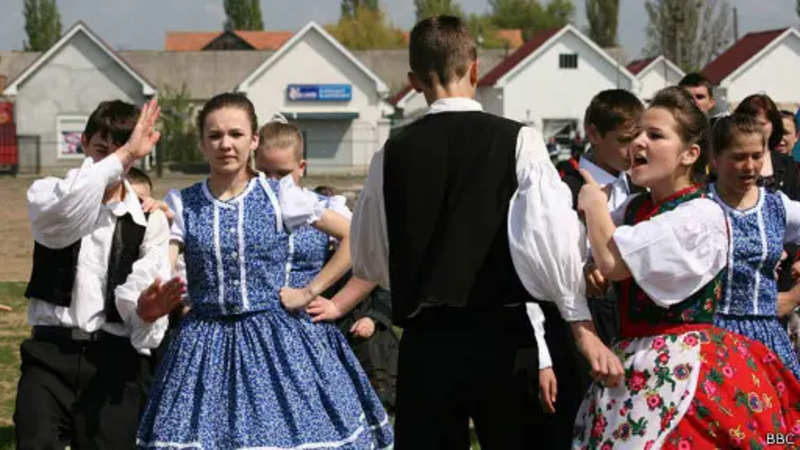
Hungarians are one of the largest minorities in Ukraine. PHOTO: BBC.
On September 5, 2017, the Verkhovna Rada adopted the Law of Ukraine "On Education". It is from this moment that we can start counting the openly hostile position of Hungary towards Ukraine. The main criticism of the Ukrainian law came from Romania and Hungary. But while Romanian diplomacy was constructive and sought to reach a compromise, the Hungarian position was aggressive. Hungarian Foreign Minister Péter Szijjártó said that Budapest would block Ukraine's further European integration and seek to revise the EU-Ukraine Association Agreement.
On September 19, 2017, it became known that the Hungarian parliament passed a resolution condemning the Ukrainian law on education, emphasizing that it grossly violated the rights of Hungarians in Zakarpattia. The day before, Hungary had even complained about Ukraine to the OSCE, the UN, and the EU.
It should be noted that at that time, Hungary had almost entered the election campaign (the elections were held in April 2018). It seems that the inadequate harshness of Orban's and his associates' statements can be linked to this.
The passport scandal
After winning the election, Orban's government, imitating Russia's actions in some former Soviet republics, began issuing passports to ethnic Hungarians. In September 2018, a video was published on the Internet showing Ukrainians being issued Hungarian passports and forced to recite an oath at the Hungarian consulate in Zakarpattia region.
Ukrainians in Zakarpattia received Hungarian passports in 2018 and recited the Hungarian oath. VIDEO: Konstantin
In response, the Ministry of Foreign Affairs of Ukraine offered Hungary to voluntarily withdraw its consul in Berehove, and after the latter refused, expelled him. The next day, the Hungarian Ministry of Foreign Affairs expelled Ukrainian diplomat Dmytro Kerechanyn from the embassy in Budapest.
It is worth noting that the issuance of passports to Ukrainians seemed strange even to Hungarian law enforcement agencies. Already in February 2019, it became known that the Hungarian prosecutor's office opened 370 criminal cases against Ukrainians who had been granted Hungarian citizenship. As it turned out, some Ukrainians had obtained new citizenship without knowing Hungarian.
The 2020 crisis
In 2020, Hungary moved from discussions about culture and education to direct interference in Ukraine's internal affairs. On the day of the elections to local councils in Ukraine, Hungarian Foreign Minister Peter Szijjarto called on Hungarians in Zakarpattia to support the Party of Hungarians of Ukraine. On the same day, the Ukrainian Foreign Ministry announced Budapest's "direct interference" in the Ukrainian electoral process and disrespect for Ukrainian legislation.
The situation took an unexpected turn: On November 21, the deputies of the Syurtyovo village united territorial community sang the Hungarian anthem at their first meeting after taking the oath of office.
It should be noted that in the local elections, the Party of Hungarians of Ukraine won 130 seats, and the Democratic Party of Hungarians of Ukraine won 23 seats. The party received the largest representation in the Berehovo District Council - 42.58%.
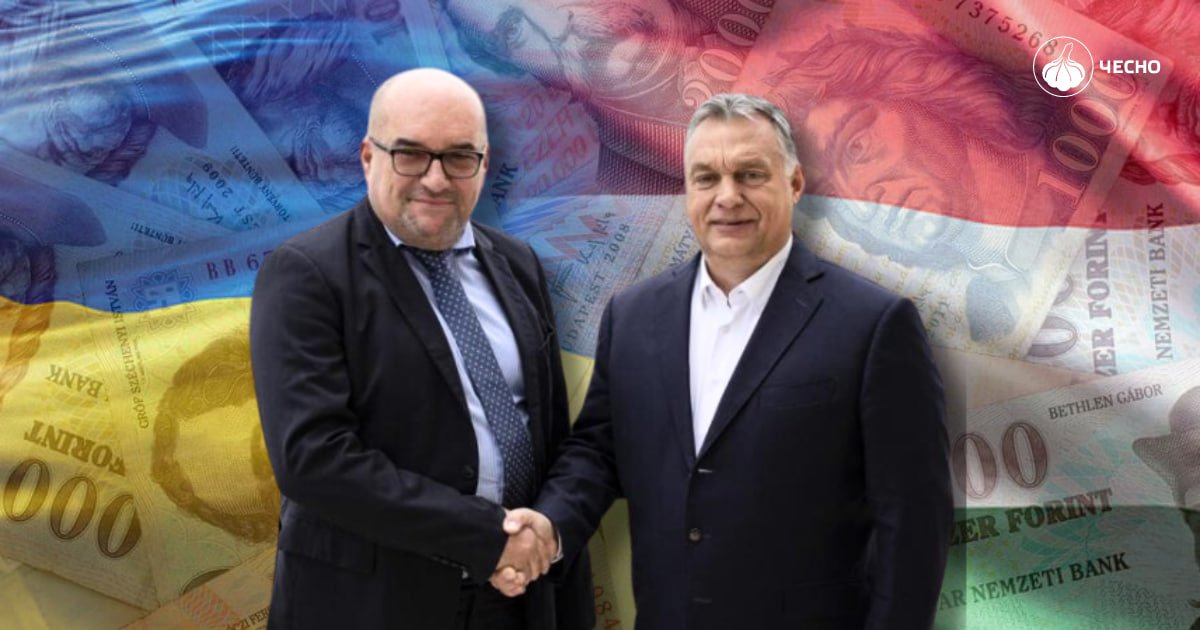
Vasyl Brenzovych and Viktor Orban. Image: CHESNO Movement, www.chesno.org
On November 30, the SBU conducted searches of the leader of the Party of Hungarians of Ukraine, Vasyl (Laszlo) Brenzovych, as well as a number of other people. They were checked for involvement in activities aimed at undermining Ukraine's sovereignty. During the searches, law enforcement officers found a number of printed materials promoting the so-called "Greater Hungary" and the creation of ethnic autonomy in Transcarpathia.
Hungary's actions after the start of the full-scale invasion
The rapprochement between official Budapest and Moscow has been discussed in detail by Intent, but in the context of pressure on Ukraine, it is worth mentioning some significant steps taken by Orban and his associates. A few days after the start of the Russian invasion of Ukraine in 2022, Hungarian President János Áder and Prime Minister Viktor Orbán condemned the invasion and declared their support for Ukraine. However, in the run-up to the 2022 Hungarian parliamentary elections, Orban avoided direct criticism of the Russian president and expressed his opposition to a potential blockade of Russian oil and gas. During the election, Orban and Fidesz portrayed the election as an alternative between peace and war, with Fidesz allegedly favoring peace.
Since the start of the full-scale invasion, Hungary has repeatedly blocked EU aid packages to Ukraine and otherwise obstructed the process. So far, the EU has been unable to override Viktor Orban's veto and has effectively gone into a standby mode until the Hungarian elections on April 12.
Since 2022, Viktor Orban's unfriendly policy has manifested itself not only in public rhetoric and blocking EU steps to help Ukraine. During this time, there have been two incidents that can be considered not just unfriendly, but openly hostile.
On May 9, 2025, the Security Service of Ukraine announced the discovery of a spy network that was conducting reconnaissance in Zakarpattia. The suspects collected information about the military security of Zakarpattia, looked for vulnerabilities in the region's ground and air defense, and studied the socio-political views of local residents.
On March 5, 2026, two vehicles of the collection service of the Ukrainian state-owned Oschadbank, which were regularly transporting foreign currency and precious metals from Raiffeisen Bank (Austria) to Ukraine, were detained in Hungary. According to Oschadbank, the cars were carrying 40 million dollars, 35 million euros and nine kilograms of gold.
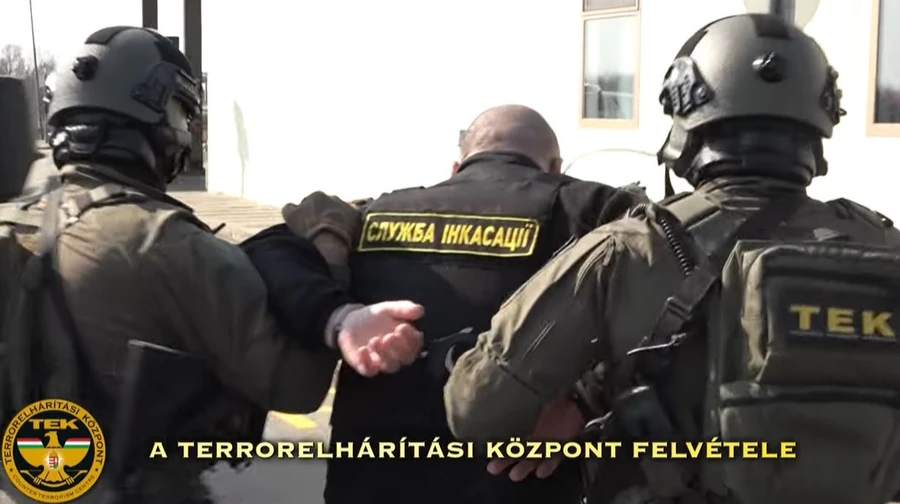
Image: screenshot from the video of Hungarian law enforcement officers
Ukrainian Foreign Minister Andriy Sybiga accused the Hungarian authorities of taking Ukrainian citizens hostage. "In fact, we are talking about Hungary taking hostages and stealing money. If this is the "force" that Mr. Orban spoke about today, then this is the force of a criminal gang. This is state terrorism and racketeering," he wrote in his post on X.
On the eve of the April 12 elections
The pressure on Ukraine did not start immediately. Viktor Orban and his associates went from caring about the humanitarian issues of ethnic Hungarians - citizens of Ukraine - to outright unfriendly actions against our country. Unfortunately, the organizational structure of the European Union is such that it allows Hungarian politicians to significantly harm the interests of our country.
For the domestic consumer, Viktor Orban diligently created an enemy out of Ukraine during the 2026 election campaign. Whether time will smooth this out is an open question. Meanwhile, last weekend at the rallies of Orban's party, Hungarians chanted: "Ruszkik haza" ("Russians, go home"), the slogan of the 1956 Hungarian uprising against Soviet occupation.
On April 12, everything will be in the hands of Hungarian voters. We can only hope that the choice they make on this day will allow our countries to return to the atmosphere of friendship and cooperation that existed in 2010.