Меню
Соціальні мережі
Розділи
Feb. 20, 2026, 6:41 p.m.
The "Exupéry" of our time told why metal birds appeared in Odesa courtyards
This article also available in English32

Guido Heissig and his installation "Touch of the Sky". PHOTO: Nata Chernetska
An international art project "Touch of the Sky" was implemented in Odesa. Its author is Guido Heisig, a pilot with 25 years of experience, an artist and volunteer from Germany, author of the art book Silent Heroes. At his own expense, he initiated the creation and installation of bird sculptures on ancient lattices in city courtyards. It is a symbol of memory of the fallen Ukrainians whose souls, according to the artist, continue to live on.
The project was joined by a soldier of the Armed Forces of Ukraine on leave, sculptor Kyrylo Maksymenko, and photographer Oleksandr Yakymchuk. The installations were placed in the courtyards of the National Scientific Library (13 Pastera St.), the Museum of Western and Eastern Art (9 Italiiska St.), and the Summer Theater of the City Garden, next to the ARTODESA Gallery.
It is worth noting that the library also hosted a presentation of the artist's book Silent Heroes (Art Huss Publishing House), and the museum opened an exhibition of watercolors by Hido Heisig.
Intent talked to the artist about these events.
Reference:
Guido Heissig has been living in Ukraine for over ten years. He met the beginning of the full-scale war in Kyiv, and these events became the impetus for the creation of the book Silent Heroes. This art book is a collection of personal stories and memoirs of different people, reflecting the impact of the war on the lives of ordinary but extraordinary Ukrainians. "They don't feel like heroes, but they are," the author notes. All of his travels and flights are accompanied by a sketchbook in which Guido captures details, stories, and moments that impress and inspire him. Therefore, the texts in the book are supplemented by numerous sketches and sketches that enhance the emotional sound of the narrative.
How did the title of the project "Touch of the Sky" come about - is it an image, a feeling, or a specific moment?
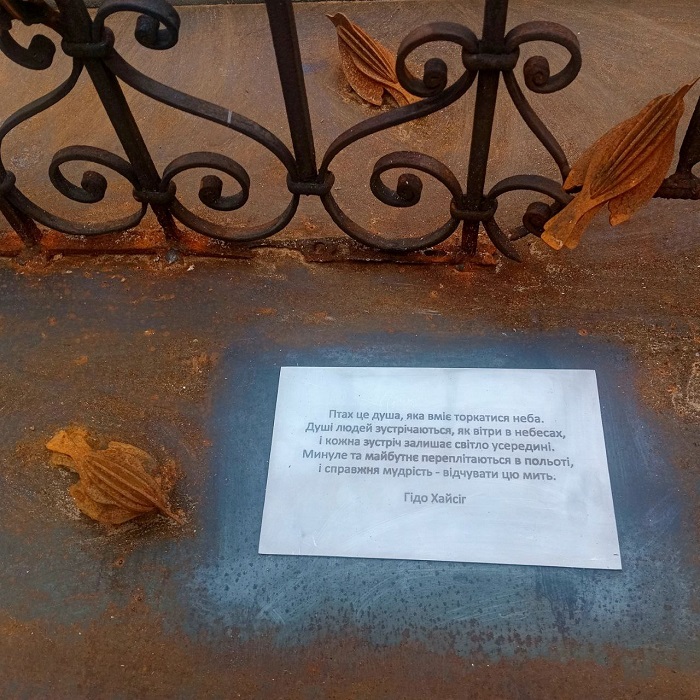
The following inscriptions accompany the installations of Touch of the Sky. PHOTO: Nata Chernetska
The name literally came to me, or rather, from my fairy. You will smile when you read it. I'm smiling too.
Olga Draganova, my old teacher from Ukraine, proved to be a wonderful advisor while I was working on the book.
In the evening, I was sitting in a small restaurant on the shore of Odesa, trying to compose a text for the bird installations, when Kateryna Sokolova, director of the ARTODESA gallery, asked me about the title of the project. Feeling a little overwhelmed, I wrote to Olga, and in a few minutes my fairy answered with two words: "Touch of the Sky". It immediately struck me. "Touch of the Sky" was a magic formula that worked for me and the project. Now you will understand why I sometimes call Olga my fairy.
In general, Touch of the Sky is a modern international cultural project aimed at supporting Ukraine by German friends and raising funds for the treatment and rehabilitation of wounded soldiers at the Unbroken Medical Center.
Here is my text that accompanies this idea:
"A bird is a soul that can touch the sky.
People's souls meet like winds in the sky,
and each meeting leaves a light inside.
The past and the future are intertwined in flight,
and true wisdom is to feel this moment."
Why did Odesa become the city for the realization of this idea?
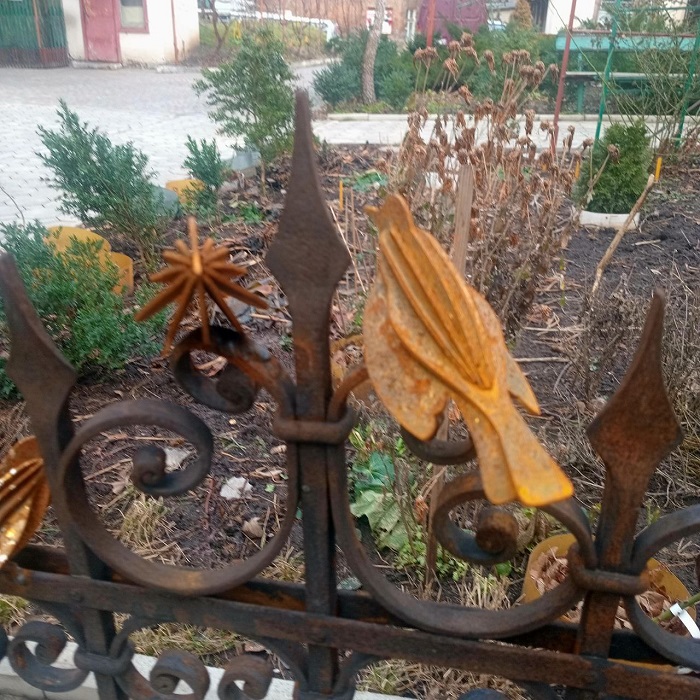
Installation in the courtyard of the National Scientific Library. PHOTO: Nata Chernetska
It was an accident. But perhaps not entirely. I got to know Odesa before the war while traveling. I immersed myself in the extraordinary history of this fascinating city, a melting pot of different cultures and nationalities, with its own identity, specialties, and even its own humor. I saw in this city a small space in which I recognized myself - a pilot who traveled the world with interest. The local people are proud and sometimes a little strange... I fell in love with this city and its inhabitants, and so it was logical to realize the idea of installations here.
Have birds become the main characters in your works?
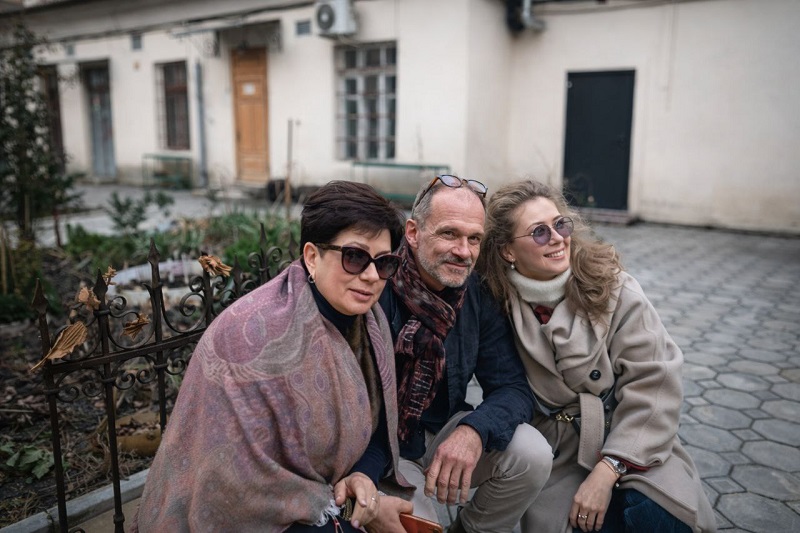
Installation in the courtyard of the National Scientific Library. PHOTO: Nata Chernetska
Let's mentally transport ourselves to the Odesa beach. There is a war going on, it's cold, and above the waves of the sea we are watching a seagull that easily, playfully defies the gusts of wind and disappears with elegance into the sky and on the horizon.
What feelings and emotions does this evoke in you? Of course, everyone has their own individual feelings. Personally, looking at this spectacle, I rejoice in the boundless freedom, this lightness and beauty. Isn't this what we all need here in Odesa, and in the whole wide world?
Why are the birds sitting on the bars?
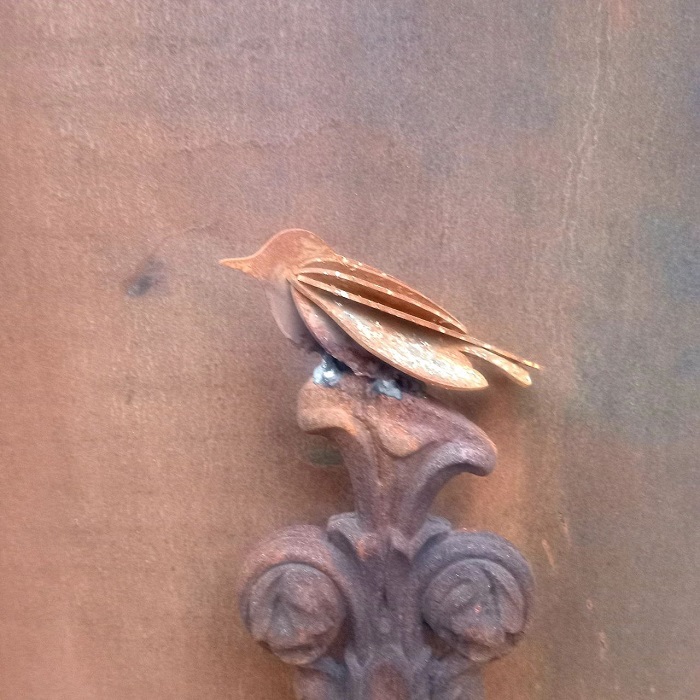
Installations near the ARTODESA gallery. PHOTO: Nata Chernetska
Contrasts and opposites always attract me. I have already installed birds on fences in other cities. A fence is a fenced, closed space. None of this applies to the bird. For a bird, a fence has a completely different function. It's just a place to land, an observation deck. On the one hand, there is captivity, restriction, and on the other hand, freedom and detachment. A symbiosis of two poles. As an artist, I find this interesting.
What does it mean to you to use old, historical bars for this installation?
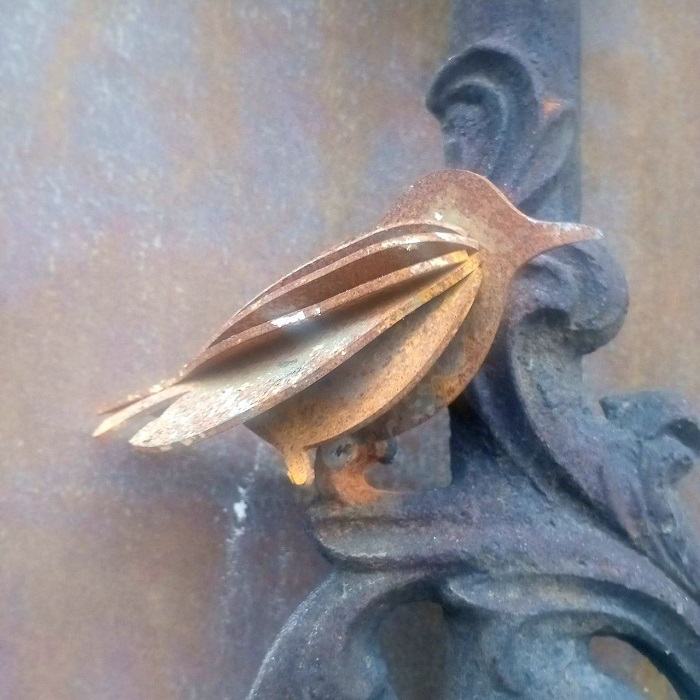
Installations outside the ARTODESA gallery. PHOTO: Nata Chernetska
They tell their own story, they come from their own world, and I'm trying to transfer this aura to a new context. To create a connection, a symbiosis of what was and what is.
Take, for example, the old elements we found at a scrap yard. They once adorned an elegant staircase built at the turn of the century. Later they were removed and thrown away. They lay there forgotten for many years until we found them. We restored them and used them for our installations. From the scrap metal something new is born: beauty-ugly, hope, love-destruction. Art can balance these opposites and inspire the viewer.
How much did Odesa influence the final look of the project?
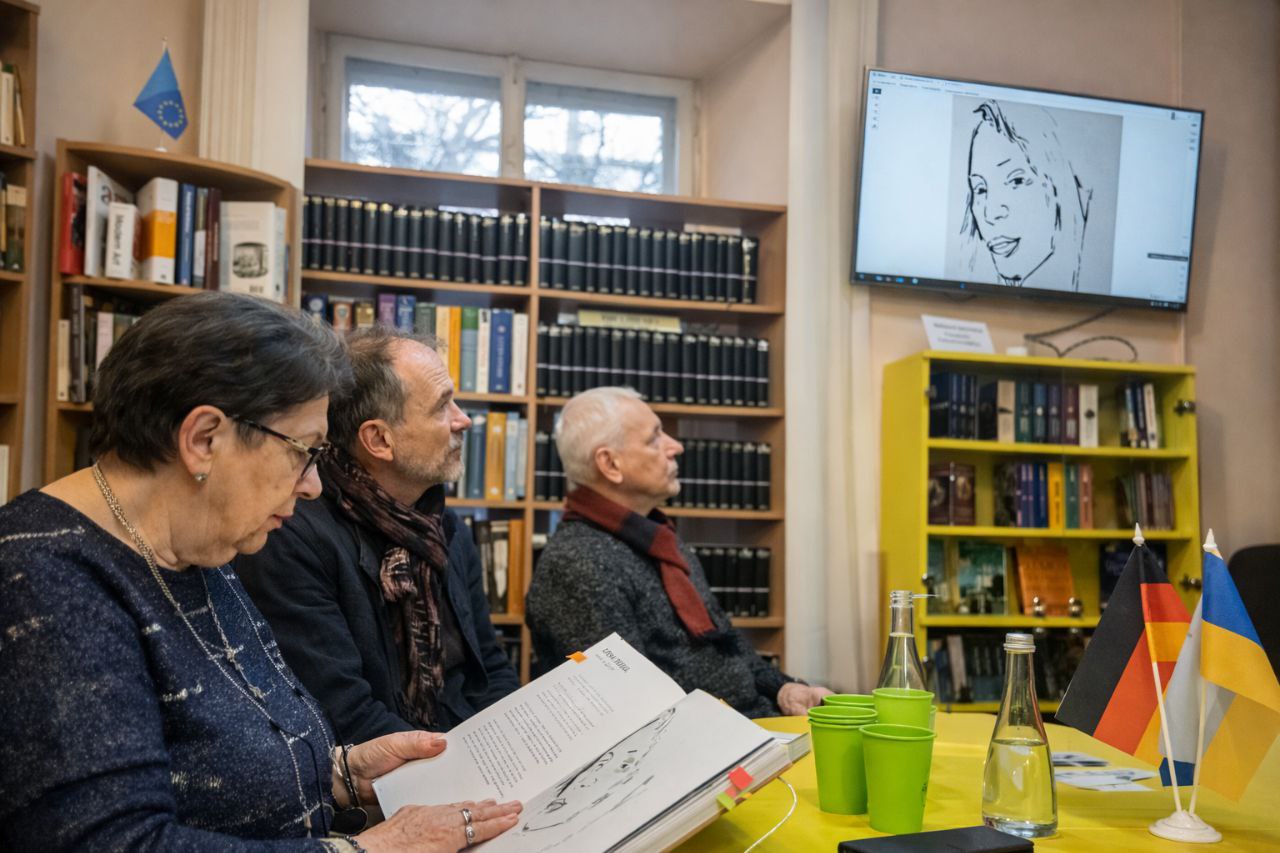
Presentation of Hideo Heisig's art book Silent Heroes. PHOTO: Nata Chernetska
During my many trips to Odesa, I quickly noticed the wrought iron decorative elements. Beautiful balcony ornaments, graceful stair railings, huge gates, and unique fences still define the city's look. Many of these artistic wrought iron ornaments are already affected by rust and are crumbling, like a wilted and dried rose that gives an idea of its former beauty and prosperity. This special charm certainly inspired me.
Does your book Silent Heroes resonate with the sculptural project Touch of Heaven?
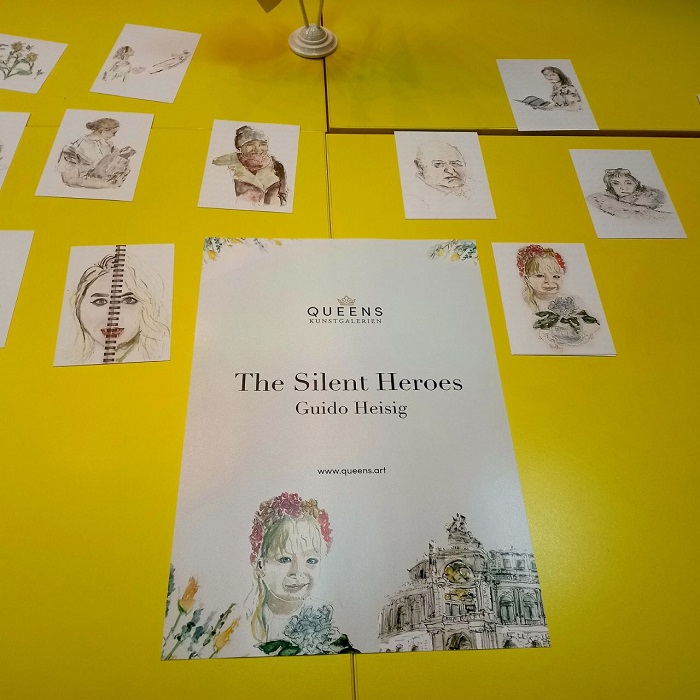
Presentation of Hideo Heisig's art book Silent Heroes. PHOTO: Nata Chernetska
In fact, these are two separate projects. When I wrote the book, I didn't think about installations with birds. However, I really like the word "resonates" that you used in your question. If we consider resonance as a radio wave, that is, as a certain frequency containing certain information, and look at both projects through the eyes of a radio receiver, then indeed in both projects there is a certain coherence of wave and information: hope, love, and humanity.
"Is Silent Heroes more about war, memory, or the inner silence of a person?
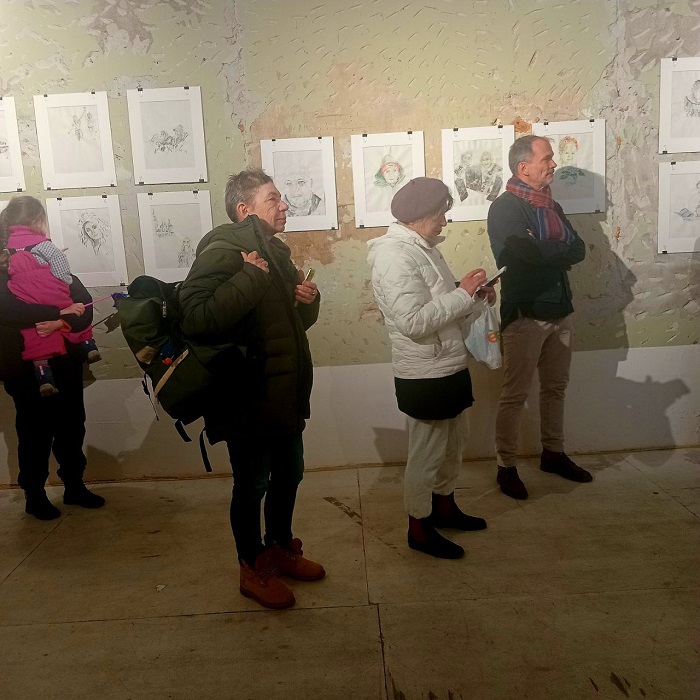
Exhibition of watercolors by Hideo Heisig in Odesa. PHOTO: Nata Chernetska
The book Silent Heroes is not so much about the war. It is dedicated to the personal lives of ordinary Ukrainians whose lives were profoundly changed by the war. Touching texts and drawings reflect the emotions, resilience and hope of these people.
The book is conceived as an art book. Each quiet hero is depicted in the form of a sketch. The book lives through direct communication between the sketch and the viewer, the viewer and the text. The words and sentences are reflected in the facial expressions, eyes, and facial expressions. And vice versa, the sketch is reflected in the text. Drawings convey to the viewer feelings, mood, and an intimate recognition of the experience.
It is not necessary to read the book in the usual sense from beginning to end. The viewer flips through it at random and is guided by the attractiveness of individual portraits.
Volodymyr P. thanked me for the book with the following words: "Gida, I thank you for the book and its characters. Every night before going to bed, I read one of the stories. And they give me strength and courage to continue the next day."
What does it mean to you to be a German artist working in Ukraine?
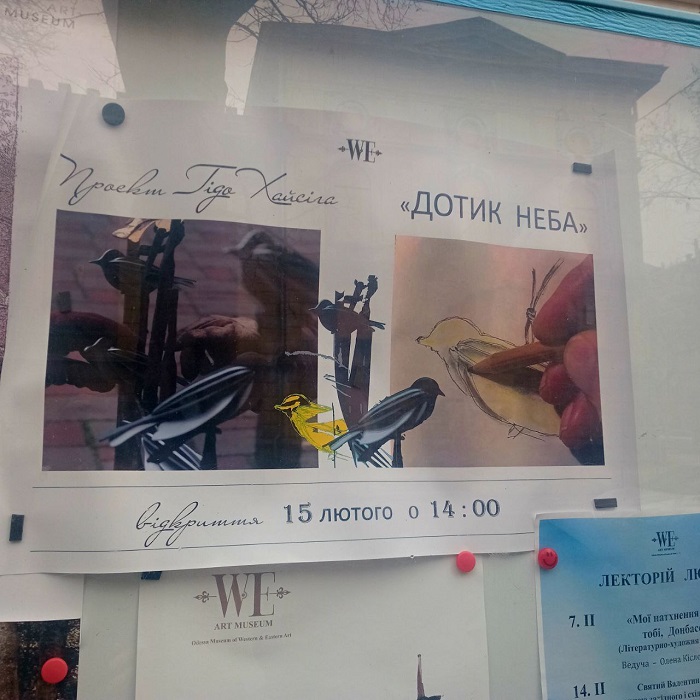
The poster for the Touch of Heaven project. PHOTO: Nata Chernetska
I don't consider myself a German artist. I think art should be free from nationality. I am rather an artist with German roots, which, of course, influenced and shaped me. Art is an expression of certain feelings. These feelings originate in deep experiences that are embodied in one form or another in paintings, sketches or objects. Now I draw inspiration from Ukrainians. The support I receive here in Ukraine is incredible. I am very grateful for it.
Read how Guido Heissig prepared for the project "Touch of the Sky", how his friend, Odesa photographer Oleksandr Yakymchuk, responded to this idea, and how Odesa sculptor Kyrylo Maksymenko joined the project - "Birds are a new beginning of life": artists about the sculpture project in Odesa.
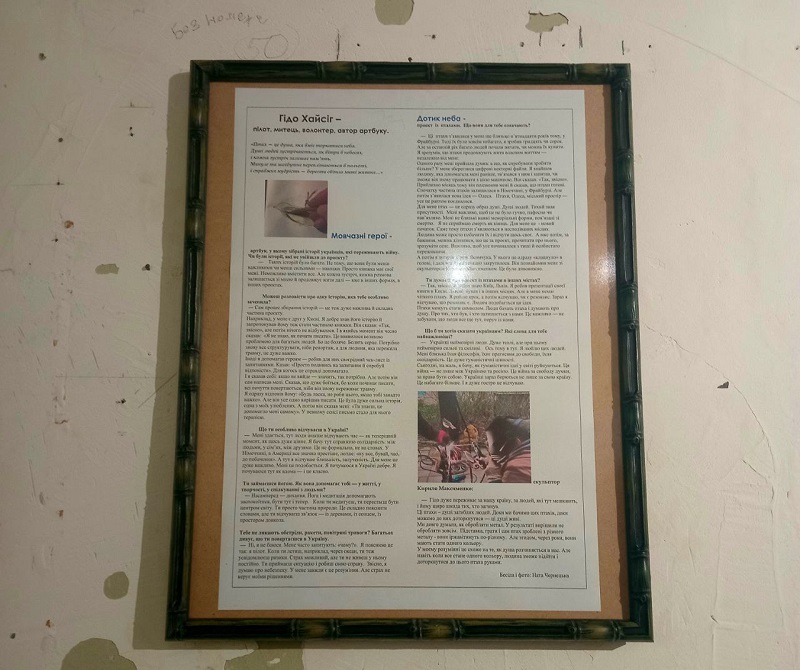
Intent's article at the exhibition at the Museum of Western and Oriental Art. PHOTO: Nata Chernetska