25 July 2026, 18:46
Serhiy Chekh: "If your mind is empty, technique won't help"
Ця стаття також доступна українською

Serhiy Chekh. PHOTO provided by the interviewee
In an era when a flawless digital image can be created with a single click, photographer Serhiy Chekh consciously chooses the path of painstaking manual labor. Combining the engineering mindset of a chemist with the vision of an artist, he creates works using historical techniques, notably oleotype (oil printing), based on mid-19th-century technologies. These works are protected from digital copying by their very physical nature, as no printer can reproduce them and no artificial intelligence algorithm can simulate them.
The interview will explore why “perfect” often means “empty,” how magic is born from creative debates with his wife, Viktoria Sergeeva, and where the line lies between honest war documentary photography and exploiting others’ suffering.
Sergei, if I called you a photographic artist-alchemist, would you take offense? How close is that to your inner sense of self?
I certainly wouldn’t be offended. I suppose you could say that. But there’s one point I often bring up: I don’t really agree with the very definition of “photographic artist.” It’s completely nonsensical. An artist is someone who creates works of art, and to do so, they use certain tools. In this case, photography is exactly the same tool as a paintbrush or a chisel. We don’t say “paintbrush artist” or “marble sculptor.”
For some reason, this misconception has become deeply ingrained in our language. I think it dates back to the Soviet era, when there was an attempt to distinguish between amateur photography as a hobby and professional photography as an official occupation. The result was this awkward hybrid. My colleagues and I try to stick to the terms “photographer-artist” or simply “artist.” Although, in general, I’m pretty laid-back about labels. When creating works, we often combine more than just photographic techniques: we incorporate graphic and sculptural elements and mix different media. And photography here may not be the foundation, but merely a supporting element.
As for alchemy, I’m certainly unlikely to find the philosopher’s stone, but the very principles of alchemy are undoubtedly close to art. There’s this element of transformation and magic in the creation of any work of art.
You are one of the founders of the Odessa School of Alternative Photography. What is its main idea?
To call it a “school” is probably a bit of an exaggeration. Unfortunately, it doesn’t exist as an institution today. There’s a group of enthusiasts. In our current reality, there is no professional support, and there likely never will be. These are people fascinated by the history of photographic processes: how images were produced on glass, what chemicals were used, and how the image took shape.
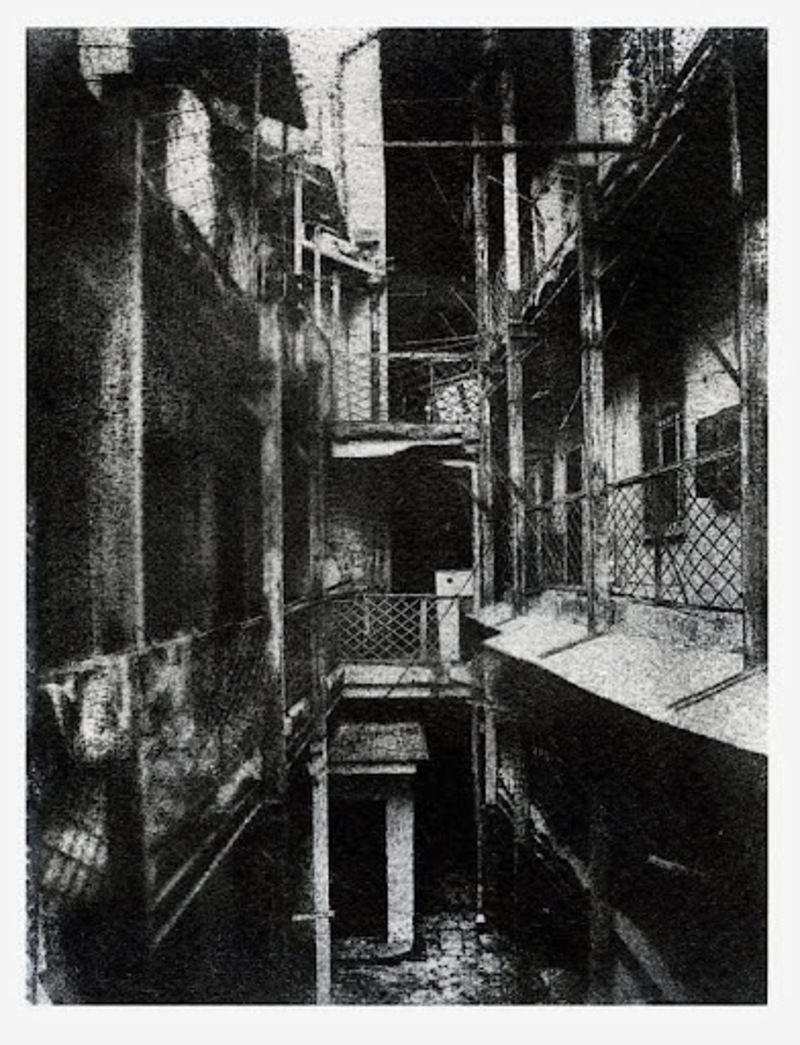
The “Odessa Diary” series. Serhiy Chekh. PHOTO provided by the interviewee
Every historical method is time-consuming and labor-intensive, but it creates a unique, one-of-a-kind image that cannot be precisely replicated using modern digital methods. To put it simply: we could take a Rodin sculpture and print it on a 3D printer. The shape would be very similar, but the feel would be completely different. The effect is exactly the same with historical techniques.
I prefer to use the term “historical printing methods” rather than “alternative photography.” In the era of Soviet amateur photography, there was essentially one standard method: a darkroom, an enlarger, trays of developer and fixer, and a red lamp. Anything that went beyond these boundaries was called “alternative.” Today, that very same method from our youth—with Dad in the bathroom—has itself become “alternative,” because everyone prints from a computer using a printer. My colleagues and I around the world, however, use mid-19th-century technologies, adapting them to modern materials and taking them in new directions.
You’re a chemist by training. How does the exact science help you rethink 19th-century methods?
Understanding how substances work and how reactions occur is the foundation. But in college, one of my professors told me something that has stayed with me: “College doesn’t impart knowledge; college teaches you how to learn.” This systematic approach helps me understand how substances interact, what’s essential, and what’s secondary.
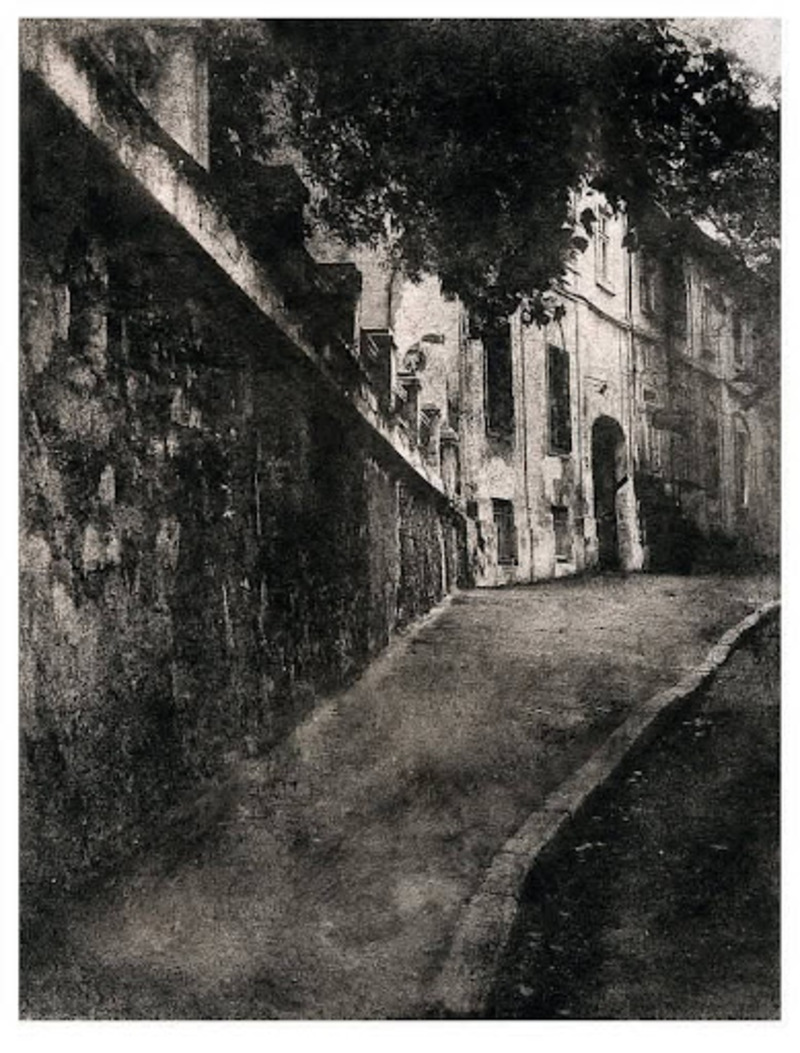
Author: Serhiy Chekh. PHOTO provided by the interviewee
It’s easier for me to grasp this information and convey it to people without professional training. When I conducted workshops on the rare technique of oil printing, I explained everything in simple, everyday language. For many people, chemistry is a source of fear dating back to their school days. But when you talk to people in a normal way, that fear goes away. They begin to understand the sequence of steps. To explain something complex in simple terms, you first have to understand it yourself. That’s where chemistry helps me. After all, I still work in this field; my main work is related to manufacturing technology. I combine an engineer’s mindset with that of an artist.
I read that early in your career, you spent about three years going through tons of paper and gelatin in pursuit of a single perfect piece. What went wrong, and why didn’t you give up?
I still can’t figure out why I didn’t give up. That was around 2005–2006. Sooner or later, every artist reaches a point where they want to push beyond their usual boundaries. I was preparing a piece for a group exhibition, and at some point I realized: I didn’t like what was coming out. I knew what the image was supposed to look like, but I didn’t have the tools to make it happen.
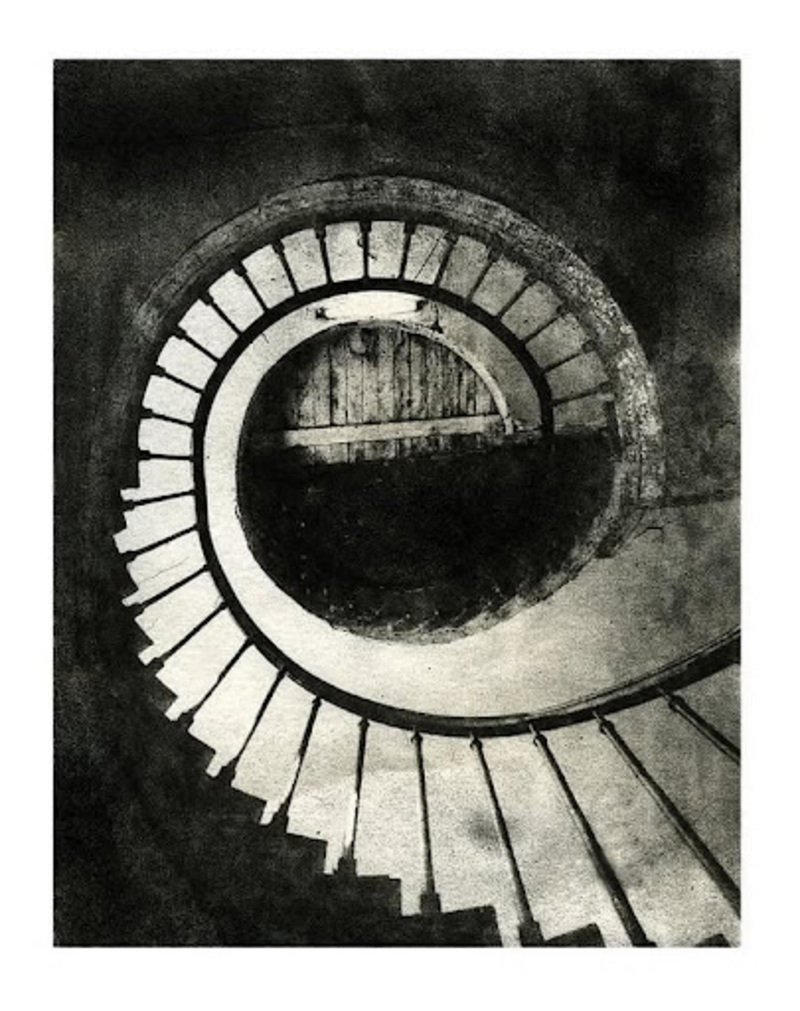
Artist: Serhiy Chekh. PHOTO provided by the interviewee
The internet was very limited in terms of information back then, so I went to the library. In some old books, I suddenly found an image that perfectly matched my vision. At the bottom it said: oleotype or oil print. The description of the process consisted of general phrases: using partially tanned gelatin and applying oil-based printing ink to it. That was it.
That’s where my background in chemistry came in handy. Endless experiments began. What should the gelatin’s density be? What kind of paper? How should I apply it so the layer lies flat, without streaks? Every experiment required time and analysis. It seemed to work, but during printing, the sheet would curl or the gelatin would spread out. There was a huge amount of waste. It took about two years before I managed to produce even a somewhat decent image. It wasn’t until two years later that I found Dr. Ernest Vogel’s *Pocket Guide to Photography*, published in 1941, which contained a brief article with a general description of the method—though it didn’t include an exact formula.
Once the results became consistent, the longest phase began—fine-tuning the image. You can produce an image quickly, but learning to fully control the process—adjusting contrast, brightness, and detail, and making the image soft or sharp—takes years of work and trial and error. By the time my first series, “Odessa Diary,” was released, it was already a fully conscious creation. The method no longer dictated its terms to me; I dictated to the method what I wanted to achieve with it. Today, I’ve mastered about 15 historical printing methods and have developed two more contemporary techniques that preserve this aesthetic.
Tell us briefly: how does oil printing work physically? And where is the line between control and chance?
The oil printing method was discovered by the French researcher Antoine Pointeven. This man did more for photography than Daguerre and Niépce combined, although his name is rarely mentioned.
Here’s how it works. Regular gelatin is applied to the paper in an even layer. Once dry, it can be stored for years. Before printing, the paper is treated with a solution of chromium salts (ammonium or potassium dichromate). This gelatin acquires an amazing property: when exposed to ultraviolet light, it loses its ability to swell in water. We place the negative on the paper and expose it to light. Where there were light areas on the negative, the light hardens the gelatin more strongly. Where there are shadows, the gelatin remains unhardened. After rinsing with water, we obtain an invisible matrix: in some places the gelatin is dry and hard, while in others it is swollen from the water.
Next, we use oil-based printing ink. As is well known, oil and water repel each other. The ink does not adhere to wet gelatin, but it sticks perfectly to the dry (exposed) areas. This is how shadows and halftones are created. Next comes the manual work with a brush or roller. By applying the ink with specific strokes, you can adjust the density and contrast, remove excess ink, or add more.
Oil printing is beautiful in its absolute versatility. On a single sheet, you can let your creativity run wild: make the image soft, airy, and “monotype-like,” or transform it into a stark graphic composed of black and white blocks. It all depends on your hand, your brush, and your experience. It’s impossible to produce two identical prints, so each piece can be considered a monotype. Even your mood affects the result. If I lack inner courage, or if my mind wanders—it’s instantly reflected on the paper. The piece simply doesn’t turn out, and I destroy it.
Modern digital photography is technically flawless, but it often seems empty. Could your work using historical printing methods be called your manifesto against digital idealism?
No, I don’t have a manifesto against “digital.” When it comes to documentary or photojournalistic photography, its purpose is to capture a subject or event as accurately as possible. Technical perfection is essential here. But when we’re talking about a work of art, we’re conveying a feeling. And the dry, razor-sharp clarity of modern optics often gets in the way, stripping the image of its emotional depth.
In the past, manufacturers produced special portrait lenses. From a technical standpoint, they were terrible—soft, “soapy,” with lost detail. But in artistic portraiture, they worked perfectly. Today’s optics are so perfect that they sometimes undermine the artistic vision. People see every pore in a portrait and are put off by it.
I look at a huge number of photographs at exhibitions and online. Absolutely fantastic color, perfect contrast, sunlight, sharpness—but the image itself is missing; it doesn’t grab you. If your mind is empty, technique won’t help.
No camera, no matter how sophisticated, can replace the artist—his soul, his eyes, and his emotions. My manifesto isn’t against digital technology; it’s against the senseless creation of empty images and attempts to succeed solely through the multi-million-dollar engineering solutions from Canon, Nikon, or Sony. The engineers have done a great job, but that doesn’t make a photograph art.
For example, for the “Game of Art” project, we shot with old cameras. Every old lens has its own unique character, and for me, it’s just as much a tool as a paintbrush.
Where is the line between the artist’s control and the moment when the work itself says “enough”? How do you know when a shot is finished?
There’s no universal answer—it’s all about intuition. With experience comes the realization that if you add one more stroke, it will only get worse. Do you remember that wonderful film about Turner? There’s a scene where his painting is already hanging in the gallery, and five minutes before the opening, he walks up, adds a bold red dot, waits a few minutes, and smudges half of it with his finger. That’s it—the work is finished.
It’s a mystical state—knowing when to stop at just the right moment. A friend of mine who’s an artist once said: they can teach you how to paint in school and at art school, but at the academy, they’re supposed to teach you how to add the finishing touch. Every artist goes through three stages: “what?”, “how?”, and “why?”. The “what?” and “how?” stages are mastered quickly thanks to technology and the abundance of information. But the “why?” question is the most difficult. Many artists never even reach that point, remaining in the applied realm, earning money or likes on social media. But when you answer that question for yourself, you also gain an understanding of when to stop.
I can’t help but ask about artificial intelligence. Today, AI can stylize an image to resemble any historical technique in a matter of seconds. Will it ever be able to replace hand-drawn art?
Let’s start with the fact that to work with artificial intelligence, you need to have a well-developed intellect of your own. Second, AI-generated images are simulacra. It’s a different visual language that operates on a completely different ideological foundation—one based on algorithms and mathematical precision. After all, AI doesn’t pull images out of thin air; it analyzes what has already been created by human hands.
A striking example is the practice at Getty Images. There are situations when a client urgently needs a specific photo that isn’t in the database—for example, a snow-capped Kilimanjaro in the middle of summer. Sending a photographer is expensive and time-consuming. In such cases, they run a generation process based on their own vast database of real photographs, and the creators of the source images used are paid a percentage.
AI knows what a cyanotype or an oil print looks like. But it only creates an image that bears a distant resemblance. I had a personal revelation at the Peggy Guggenheim Museum in Venice when I first saw the original of Piet Mondrian’s painting “Ocean.” I’d seen it a million times in art books and reproductions. But when I stood in front of the original, I lost track of time. My wife snapped me out of it by nudging my shoulder—it turned out I’d been standing motionless for forty-three minutes. I simply melted into the moment. That’s the power of the original.
No AI, no matter how amazing the plotter, can reproduce the mark of a human hand. When photography first appeared, painting also struggled with it. But they continued to exist side by side, because they are different media and different languages. I’m pretty good at digital editing myself and use AI for technical, non-critical tasks—for example, to create short promotional videos for social media. It’s a powerful tool, but nothing more.
Once, an acquaintance of mine—a fan of large-format printing—claimed he could reproduce everything I do with my chemicals using a printer. I gave him an oil print and said, “Go ahead.” He disappeared for two weeks. Then he silently returned the original, set down a bottle of beer, and didn’t say a single word. An image formed by paint, a brush, the texture of gelatin, and a dynamic brushstroke—a printer simply cannot physically reproduce it; it’s just designed for something else.
What’s your creative partnership like with your wife, Viktoria Sergeyeva? Do you ever have heated creative disagreements as two self-sufficient artists?
Absolutely! We make an amazing team. Viktoria Mykolayivna likes to joke: “I know the ‘what,’ and you know the ‘how.’” Our ideas come about spontaneously—from conversations, arguments, or looking at something together. They just appear out of thin air, we pick them up, and we start discussing them. We might disagree on the concept. If we hit a dead end, we simply work on two different pieces, each with our own concept. Then we see which option works better within the project.
The main secret to our success is absolute mutual respect for each other’s creative vision. We don’t have labels like “guru” and “non-guru,” “experienced” and “inexperienced.” It’s a purely creative debate from which genuine art is born. I often take charge of the technical side of things, suggesting which method will convey a particular idea more effectively. We don’t get into heated arguments; we debate ideas without ever getting personal.
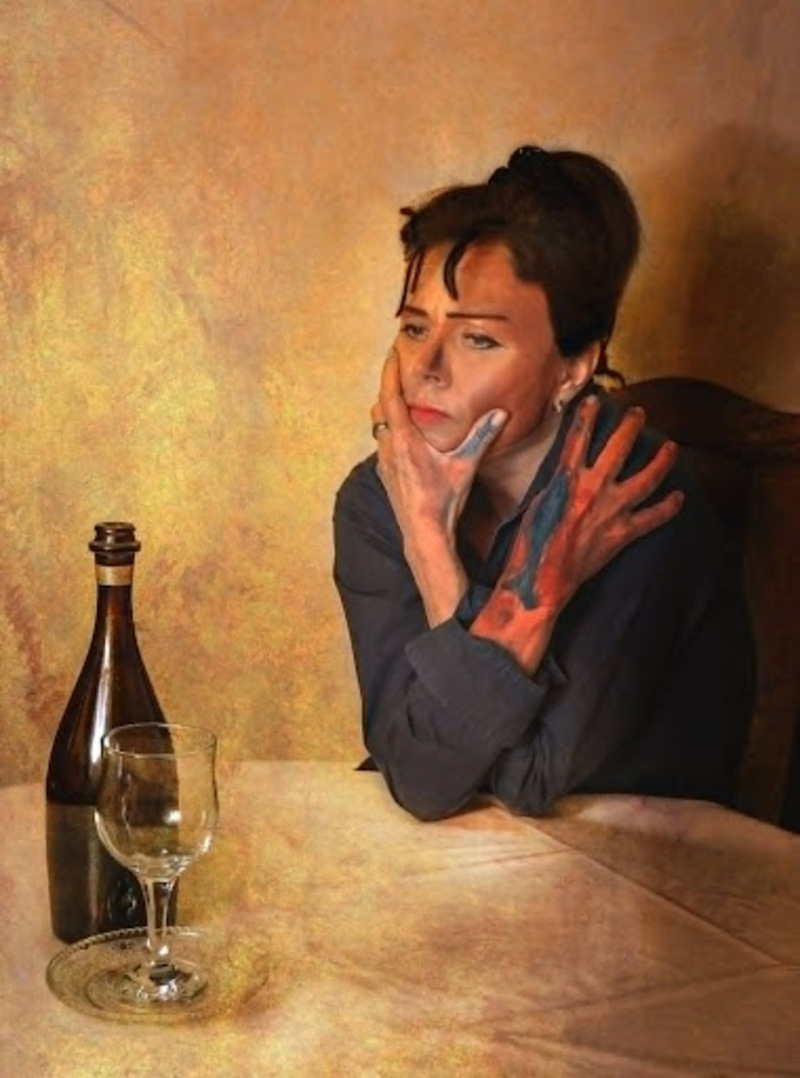
A joint project by Viktoria Sergeyeva and Sergey Chekh, “The Game of Art.” PHOTO provided by the interviewee
We’re conceptually different artists. It’s impossible to confuse our works—they speak different visual languages. And the fusion of these languages produces unique compositions. For her project “Phantoms,” I taught Vika oil printing. And guess what? As an independent artist, she forgot half of my techniques and came up with the other half on her own. As a result, she developed her own, completely recognizable style. Even if I were to print from her negative onto her paper, the two resulting works would be completely different.
How has the current war changed your attitude toward art? Are you interested in war documentary photography?
My project was featured in a group exhibition at “Veteran Hub” on the anniversary of the start of the full-scale war. War is a terrible thing. And in war photography, one thing horrifies me: when some photographers try to aestheticize war. They try to find “beauty” in destroyed buildings, in human suffering, in the bodies of the dead. To me, this is absolutely horrifying and unacceptable.
I know wonderful war photographers who work on the front lines for international news agencies, such as Yefrem Lukatsky and Vlad Krasnoshchok. Their mission is to show the harsh reality and open the world’s eyes to what is happening. They aren’t trying to earn medals or social media fame from this. But when a photographer tackles the theme of war or any other social tragedy and begins to “embellish” it for the sake of views—that’s pure speculation.
For a military exhibition, I created a project titled “Stolen.” It’s not combat footage; it’s portraits of people who wrote on the photos themselves what the war had stolen from them. We’ve started to speak more visually about people and their inner experiences. Although for most of my career I rarely photographed people—I more often captured their traces, their living environments, and objects—my focus has now shifted to people.
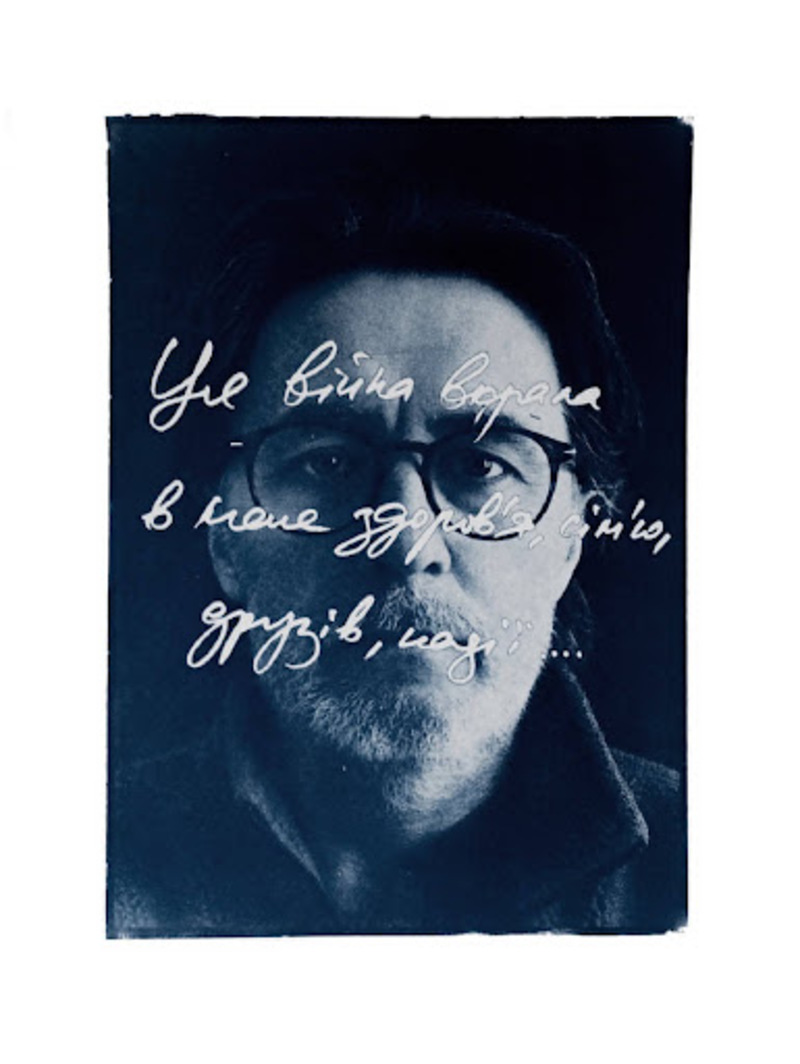
The “Stolen” Project. Serhiy Chekh. PHOTO provided by the interviewee
When we were putting together that war exhibition, I was struck by the number of photos submitted in the “selfie against a backdrop of ruins” style. Why? What are you trying to say with this? That you were there? I have no logical explanation for why someone would press the shutter button and then post it just to boost their reach. This reveals a complete absence of that very question: “Why?”
We need to clearly distinguish between different purposes. There is ruthless, honest journalism, like the work of Sasha Glyadelov. When he shows the front lines, there’s not a trace of false aesthetics. He shows the dirt and blood exactly as they are, so the world can see reality. And this has nothing to do with his artistic work. Every tool and every topic must serve its own conscious purpose.