Меню
Соціальні мережі
Розділи
March 18, 2026, 6:50 p.m.
"I am doing something that no one has done for 100 years," Alexander Friedman
This article also available in English13

Alexander Friedman. Photo: Natalia Dovbysh
While Odesa suffers daily from Russian attacks and the city is debating renaming, local historian Oleksandr Friedman is publishing a whole series of forgotten authors of the nineteenth century. The creator of the Museum of Epigraphy in his own apartment knows why Odesa is irrational and what would surprise Langeron now. While some people are constantly talking about the problems of the city government, Oleksandr Solomonovych only repeats: "And this will pass," and meticulously records the disappearing architectural decor of Kharkiv, Kyiv, Mykolaiv, Kherson, and Odesa.
Oleksandr, tell us about your main project right now. I know that you are releasing a series of books called Odesa through the Eyes of Strangers.
We live at the turn of the century. Everything we were taught and guided by has dissipated "like smoke from white apple trees." Let's take history faculties for example: Russian-language books have been removed, and no Jordan or Strabo have been published in Ukrainian.
But complaining is not my thing. I want to do what we can. History was written by the Reds and the Whites, and these are two different books. Who should we believe? No one. That's why I took up the cause of foreigners. When an American merchant comes here and describes how profitable it is to trade with Odesa or make it a base for trade with Turkey, I believe him. There is no reason for him to lie - he is interested in business. Or a naturalist who studies butterflies, but also describes how much lunch costs here, whether food is available to everyone or only by special order. And historians draw conclusions later. We are creating a textbook.
Several people are currently working on translations of English-language books from the first half of the nineteenth century. There are many books in French, but finding a French-speaking translator is my personal misfortune. So far, it hasn't happened.
How can people find your books? In libraries?
I'm not a businessman, and libraries don't have cash. But there is Ms. Halyna' s Bookstore-Café, a place where Ukrainian books are available in Odesa.
Recently, you initiated the translation of Robert Stevens' Description of Odesa. What new things will local historians find there?
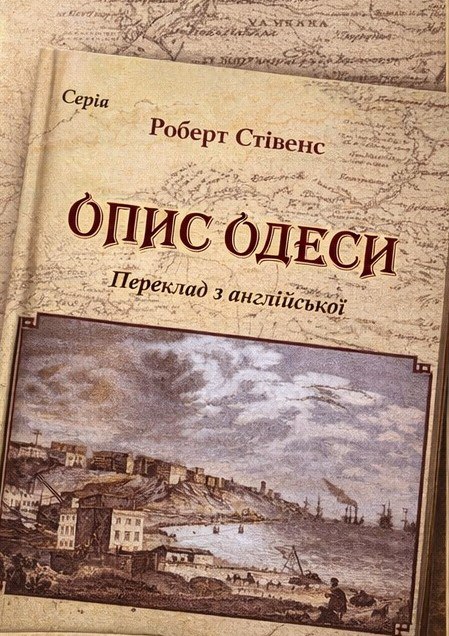
In the photo: The book "Description of Odesa" from the series "Odesa through the Eyes of Strangers"
Everything will be new to them. A person came here and saw and described with a fresh eye what they had never seen before. I see no point in retelling the book.
A book of diaries of the Langeron family doctor is being prepared as part of the series. Why is it interesting?
I haven't read it in the original. I don't know the language. A person in the nineteenth century was in Odesa and wrote his impressions. I can't tell you when it will be published. The book is large, over two hundred pages. I don't know how fast the translator and editor will work. I promise I won't delay it. As soon as I get the text, I'll get to work.
Why hasn't anyone done this before?
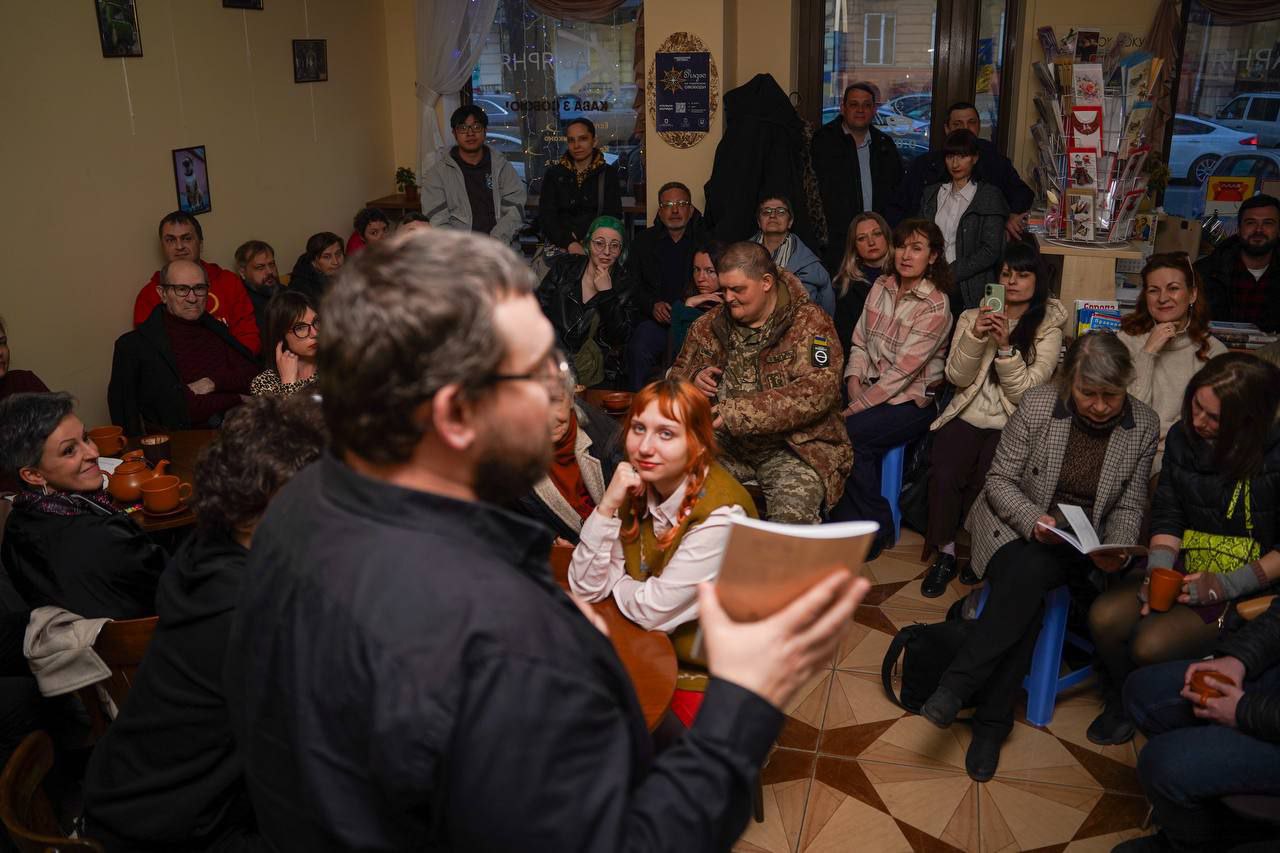
Presentation of the book "Description of Odesa". Photo: Natalia Dovbysh
That's a great question. Ask artificial intelligence. I'll say this: I've published books about Odesa, Kyiv, Mykolaiv, Kharkiv, and I'm currently working on a book about Kherson. No one has done this for the last hundred years. I, a person without a lot of money, am looking for a niche where I don't have to "push elbows". Publishers are fighting for school textbooks, and here is a book that no one knows if anyone will be interested in. But we live in a free world: whoever wants to create, creates.
If Langeron were to walk around Odesa today, what would surprise him the most?
That his garden, Dukovsky, is still standing. Although it no longer has anything to do with the botanical garden Langeron envisioned. In 1920, during a cold winter, Odesa was left without firewood, and the garden was cut down. But it was not rebuilt! This is already happiness. And the garden remained Duke's, although it is now mistakenly called a park. And Gradonachalnytska Street, which leads to it, has already been renamed.
What do you think of the wave of renaming?
I'll say this: a lot of renaming is done incorrectly. Streets are named after heroes whom people simply do not know. And misunderstanding arises. Should we cancel Babel, Paustovsky, Ilf, and Petrov streets in Odesa? This is Odesa, and Odessans grew up with it. But now there is a war. When the war is over, we'll figure it out.
I understand that because of the full-scale invasion, the work on the book about art metal in Kherson has been suspended?
The author of the book, Serhiy Dyachenko, is a Kherson local historian and museum specialist who is now in the Armed Forces. And now he writes to me that he tries to write when he has no orders. I can't rush him, and I can't stop him either. The situation depends on him.
Are there any unique fences in Kherson, by European standards?
Every city has its own face. There is a concept of "complex pattern". I've never been to Kharkiv, but if I'm shown a fence, I can tell Kharkiv from Odesa. Mykolaiv is one hundred percent. Generations of architects and blacksmiths learned from each other. Someone forgot something, another tried as hard as they could, but in the same style. We went through eclecticism, modernism, postmodernism. Only modernism somehow did not touch Odesa. I think that in the 20s nothing was built here.
Why are you so interested in Kharkiv in this series? Last year you published the book Metal in the Architectural Decor of Kharkiv by Natalia Melnyk.
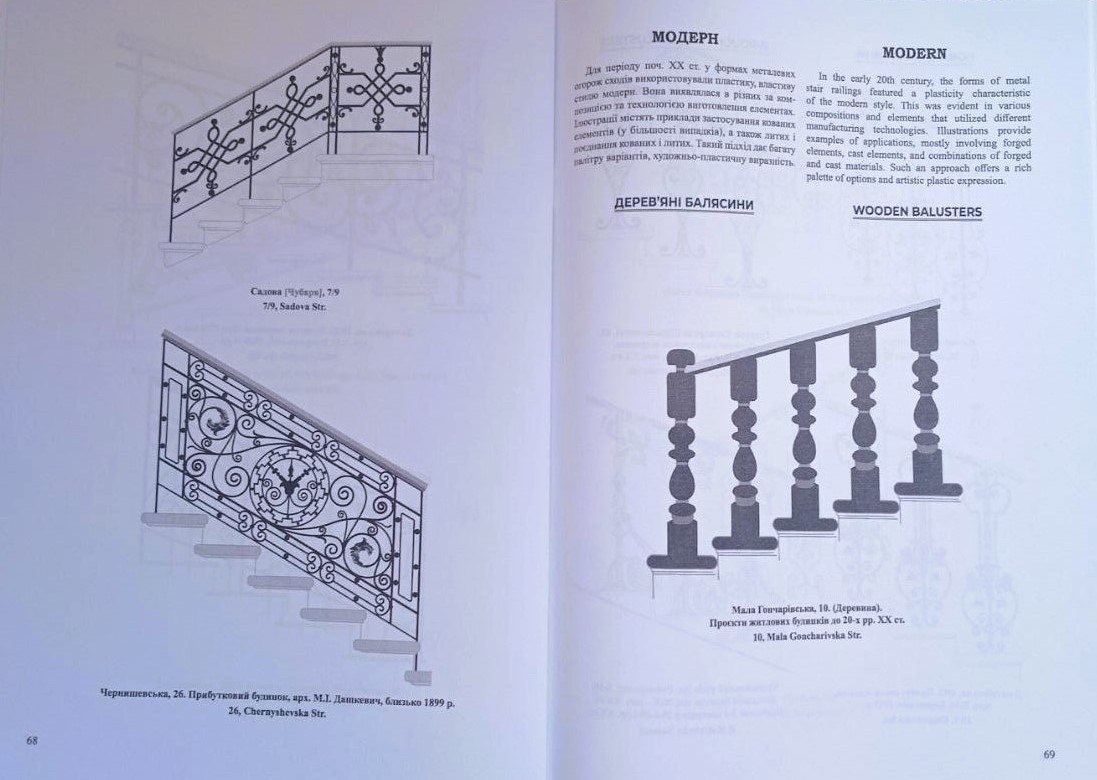
In the photo: the book Metal in the Architectural Decor of Kharkiv.
There were two people who went to Kharkiv on their own. I didn't have to buy them tickets or provide overnight accommodation. I just needed to support them financially. They made three photo shoots, and this formed the basis of the book.
I also went to the match between Odesa's Chornomorets and Kharkiv's Metalist on May 2, 2014. When the confrontation between pro-Ukrainian and pro-Russian activists began on Greek Square, my female companions were crying. I didn't know what to do. I didn't have the strength to fight with people who were equipped, I didn't have the courage. And I had crying women in my arms. We just left. We came to a holiday, and got into this... It was scary.
Before that, I had a feeling that we were already dead, that the city authorities, the police - everyone was against us and waiting for the Russians. That we had already been surrendered, just not yet formalized. And when the pro-Ukrainian forces resisted on May 2, I was encouraged. I realized that I was not alone.
What does the research process look like? How does the book begin?
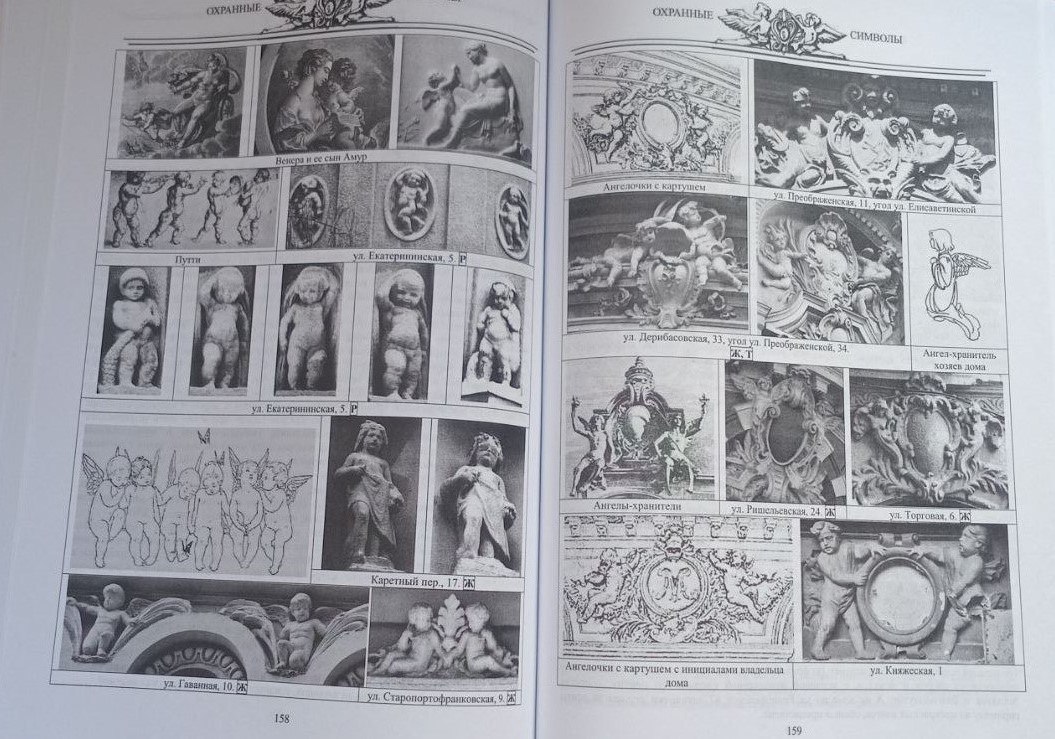
In the photo: the book "Information Code of Odesa Architecture in Symbols"
The book begins with a concept. For example, I want to tell you what kind of gates Odesa has. I take a camera. At first I didn't have one, so I asked my friends for one. Some gave me one, and some said: "I won't trust you with my camera." They would walk with me and take pictures at my request. Then one friend bought a camera, and another gave it to me when he saw how reverent I was about it. And so it went. I published a book about gates, then balconies, then staircase railings, then wells, and so on.
Have there been any cases when a small detail, a plate, or a stamp led to a big research?
I'll tell you about my tragedy. There is a book that has not been published and has been written for 11 years. It is called "Epigraphy of Old Odesa". It's about all the inscriptions and plaques on the walls and facades: "Architect so-and-so", "House of so-and-so", initials on balconies and gates. All this is photographed and drawn. And the author is very picky. For eleven years he hasn't been able to produce a book. Should I scold him for his perfectionism? But I can't tell him tomorrow: "You're free, I'll find another author." There is no such person. He is looking for the truth. And when you're looking for the truth, it doesn't tolerate fuss. For me, it's a tragedy: I'm afraid I won't live to see the book published. And he said: "The book must be good." I don't argue with him.
Do you have a rule: so many sources have to confirm a fact before it gets into the book?
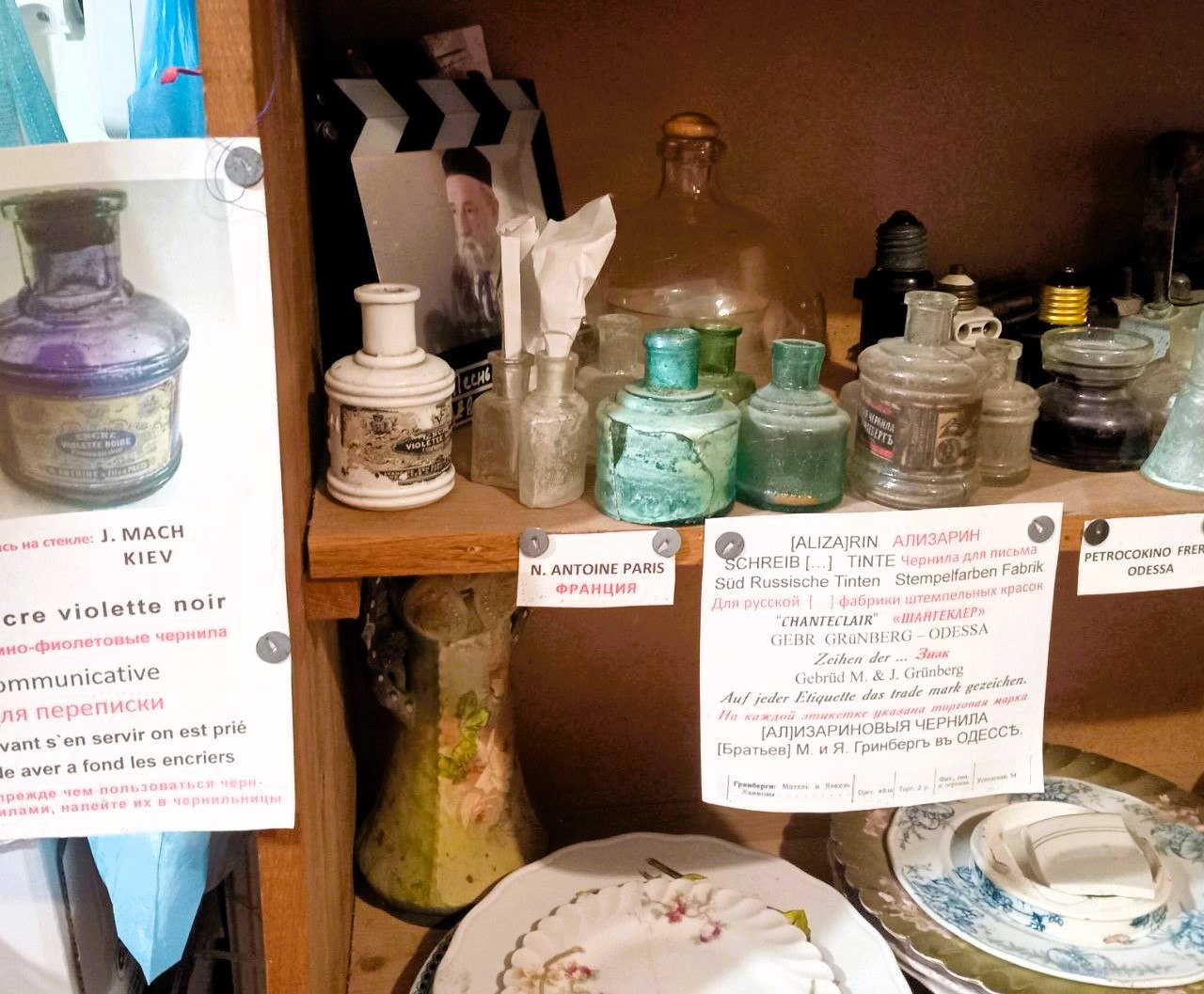
In the photo: Thecollectionof Alexander Friedman
No, I don't. I rely on material culture. I don't believe in sources at all (points to his home collection - ed.). Here, please, is a dish with the inscription that it was made to order by the Stifle brothers from Odesa. This is a material culture that cannot be argued with. The dish is there, it says how it got here, the language tells us where it was made, the surname tells us where the shop was located.
But there are fakes, right?
So what? I show them too. Here is a real plate, and here is a fake. The fake one has the same words written on it, but in bad handwriting. It doesn't change anything. It's like the Chinese sewing pants with the label "Milan" or "Paris". What does this mean? In fact, nothing.
What is more difficult for you: finding material or structuring it into a book?
I don't undertake to structure books. I don't have a single book where I am the author.
Don't tell me. There is one book directly by you.
Yes, I do have one. My assistant and I made a list of addresses: which building, who the architect was. This was back in the very early 2000s. It was an absolutely compilation book, we collected all the information that was already available.
There's a whole story behind it that made an indelible impression on me. Have you heard of Valeriy Netrebsky? He used to give tours. Once I was on such a tour to meet a friend. And I saw two or three elderly intelligent women almost fighting over old crumpled photocopiers with torn out pages that listed architects. I was so impressed that I realized that people needed this information. And then we put the book together in pieces and published it.
How quickly is Odesa losing this "stone text"?
We lose about ten gates a year. Since 2010, when we started collecting material, we have lost about 150 gates. Sometimes they don't disappear completely: for example, one gate out of three. Someone will cut out a piece of the pattern with a grinder and adapt it somewhere.
What should be done to preserve this layer?
It doesn't depend on the city hall, which we are scolding. It depends on the mindset and conscience of the citizens. One person sees an old manhole in the yard and thinks: "Let me steal it, it's an antique". And another: "I need to replace it, it's rusty." It is not in our power to change the mindset of the townspeople.
Do you see the tiles lying there (points to the yard - ed.)? I have no place to put them. They are in piles on the veranda. I wake up, open the door, and there are two or three tiles with inscriptions or stamps on the threshold. Someone brings them in. They still do. I don't know their names. These are people for whom history is important, but they don't know what to do with it. They know that someone collects it, brings it, and leaves it. They don't even need to be thanked. The main thing for them is that it is preserved.
When did you realize that your collection had turned into a museum?
In the photo: Alexander Friedman's collection
At the moment when I didn't know where to put it. But every cloud has a silver lining. A neighbor lived diagonally across the hall from me, a bit unusual. He walked around naked, with long hair, a guitar over his shoulder, and sang songs. The students called him Diogenes. He was very devout, constantly burning small candles all over the apartment. He had many cats. Several times there were fires, but they were extinguished with fire extinguishers. Once it caught fire so badly that firefighters came and started extinguishing it with fire extinguishers. The water went to the neighbors. My wallpaper started falling off. This was the reason to make repairs. And I had already done the repairs with the museum in mind.
I had book shelves. Before that, I had an English-language archaeological publishing house and a large library of archaeological books. At first I gave away my home library to make room for the archaeological library, and then I was free from the archaeological library for a whole year to make the museum.
For so long?
I set myself a task: not a single book should be disposed of. Each one must find its user. I gave them to the university library, the library of the archaeological museum, the Hrushevsky library, and gave some to teachers. The books were not lost, but the collection was scattered. And the wife of one of the professors, Serhii Shevtsov, almost killed me: she was already suffering from the fact that her husband brings a lot of books home, and then I added more.
Tell us about the new exhibits. Where did they come from?
From Starokonka. There is a woman there who stands at the market every weekend. Once a month or so, she says: "There's Odesa, come here." I come and always leave with a plate or dish.
Does she know what you need?
I know who to go to. And she knows the people who bring things for sale. In my youth, they were called "old-timers". You could buy a vest from them, which, if darned, could still be worn. Nowadays, times are different. Now people don't even steal underwear from the ropes - no one needs it.
Have you found anything in garbage dumps, in destroyed houses?
In 2015-2016, when the houses started falling down because they were no longer monitored, repaired, or maintained, I used to walk through the ruins. I always took two or three bags with me. And what's strange is that I was afraid of the guards, but there were people in the rubble who were digging through the garbage in search of something just like me.
What will happen to your museum?
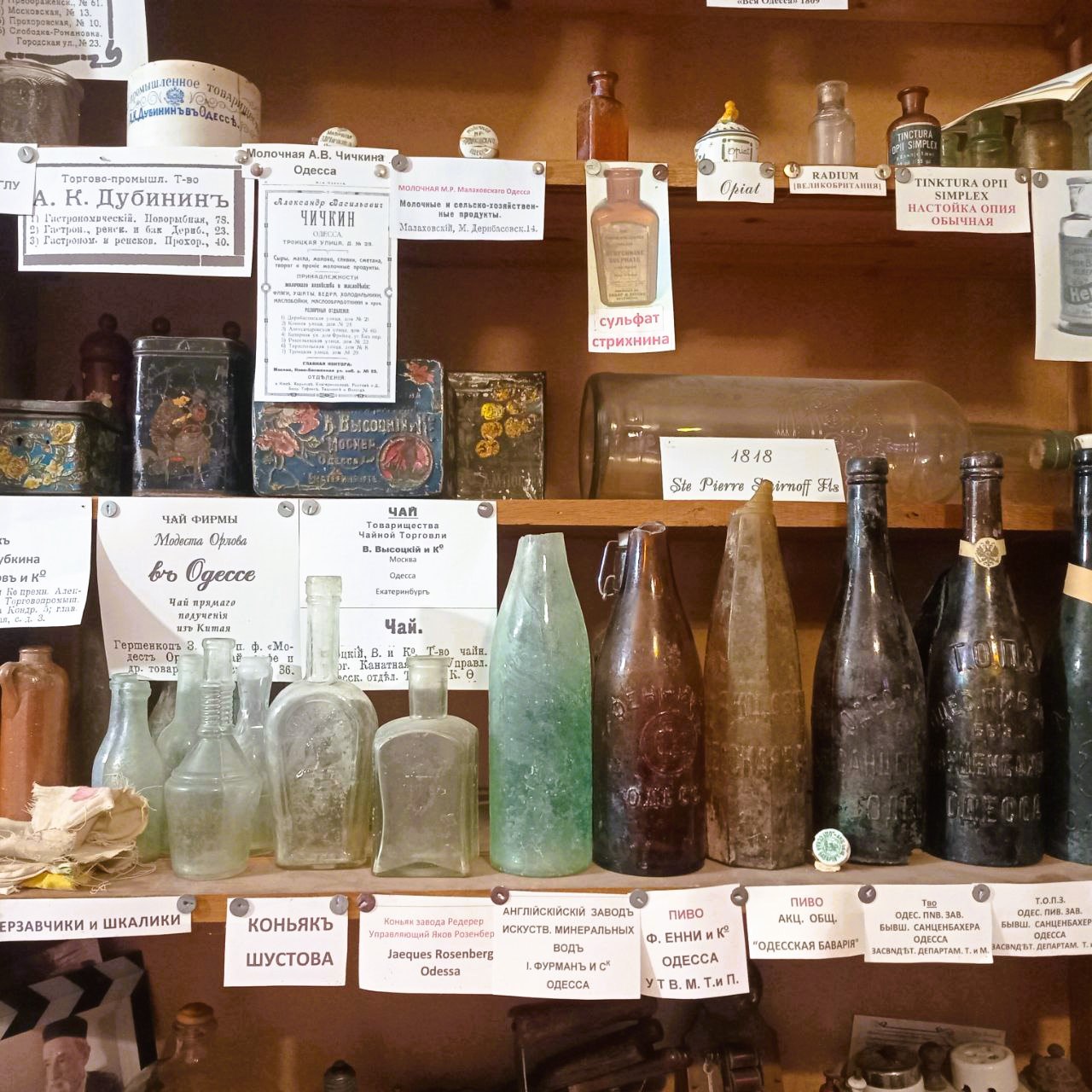
In the photo: Collection of Alexander Friedman
I am concerned about the problem of the will. Where will it all go? If a collector takes it and resells it, that's half the battle. But what if they dump it in a garbage truck? I don't know what happens. It's useless to talk to officials. They say: "We need an order from above." But I can't get in touch with those who give orders.
There was one museum. I showed them everything, they liked everything. But they said: "There are several unoccupied apartments next to our museum. If you bought one of them in our favor, we would house your collection together with our patrons." But I am not an oligarch.
In America, I saw the museum of a rich man. He collected his collection without sparing any money. And when he got old, he donated it to the city. But in addition to the collection, he bought a building and put a huge amount of money in the bank to maintain the museum and pay salaries.
Do you think your collection should be purchased by a local history museum?
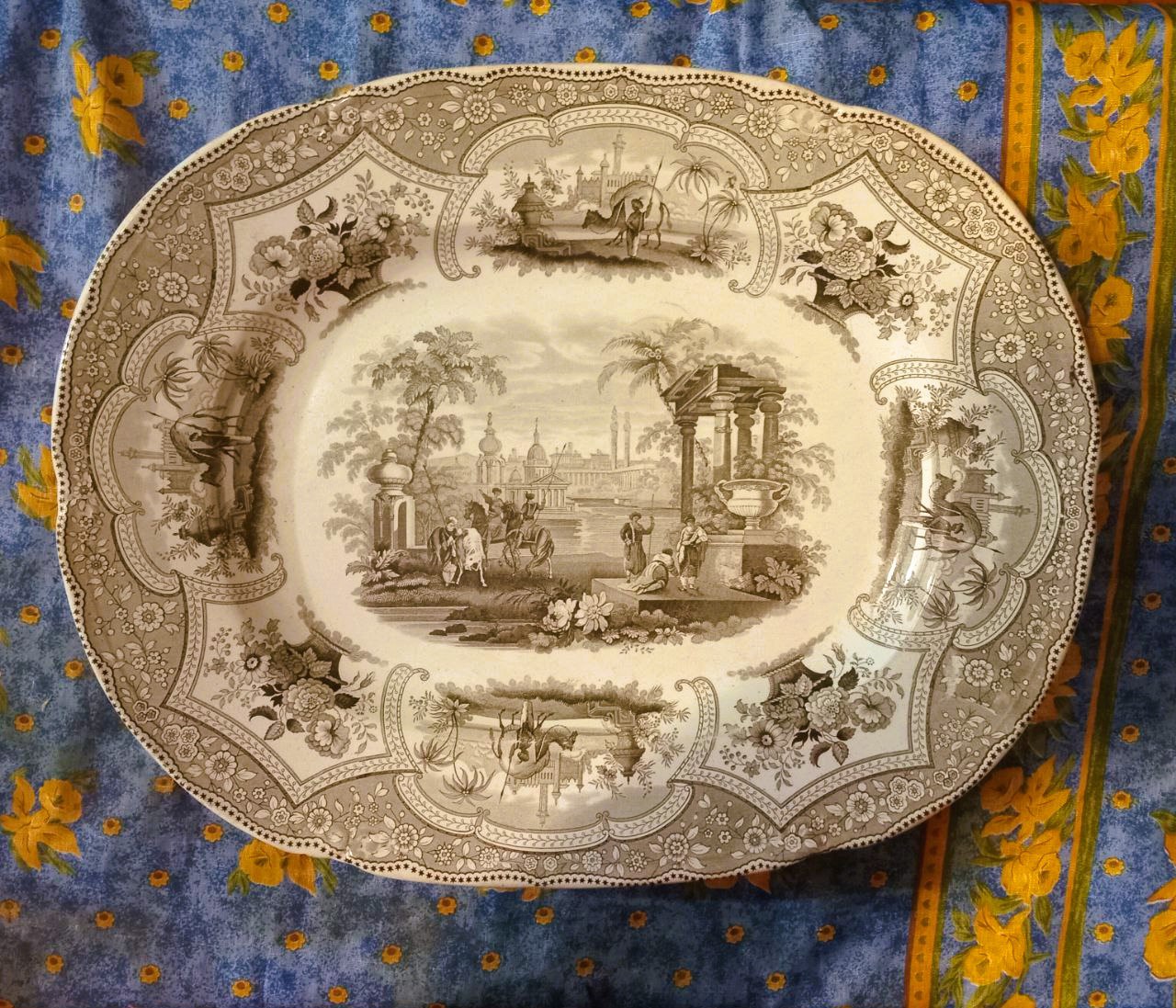
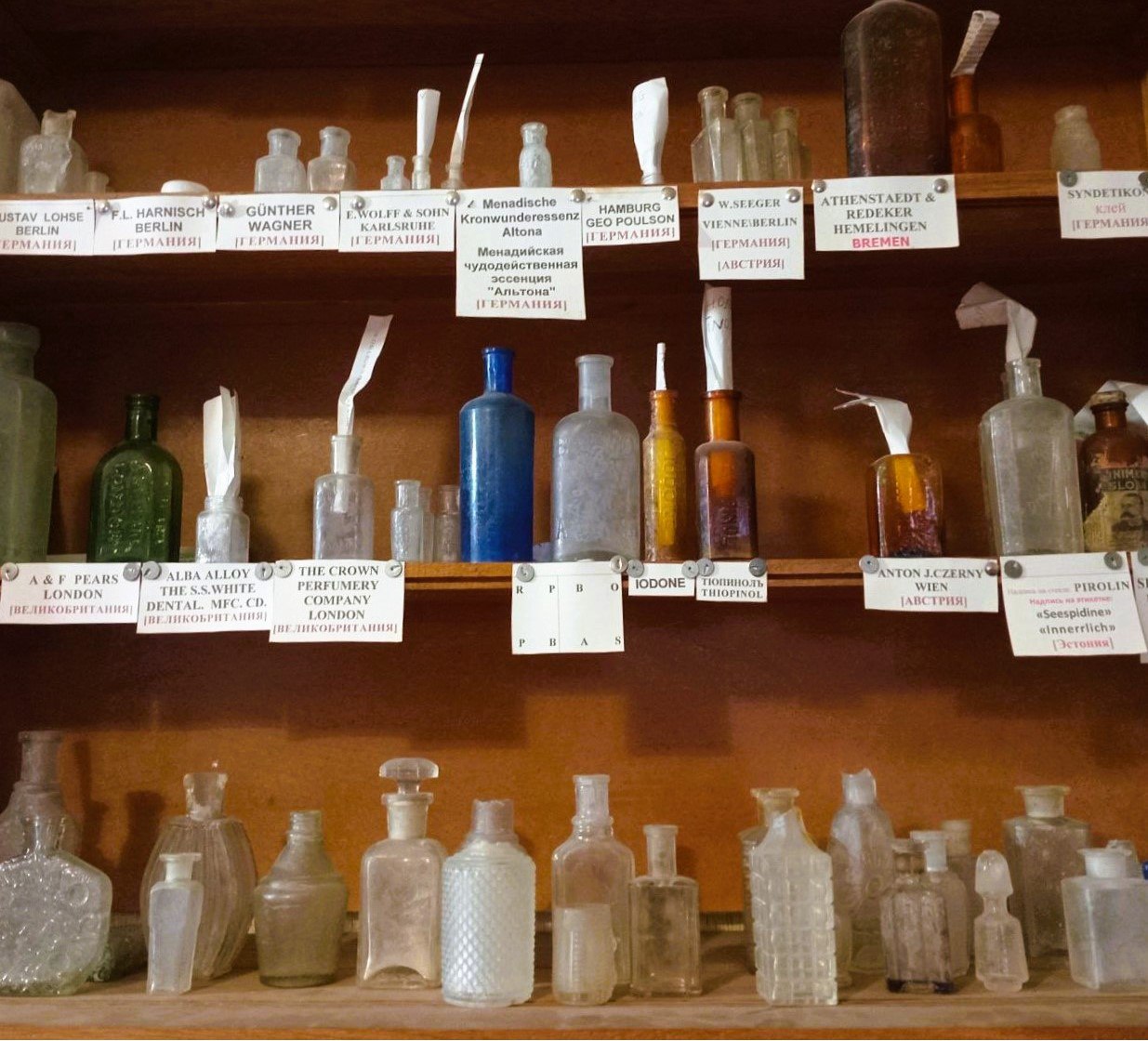
In the photo: The collectionof Oleksandr Friedman
Where do they get the money from? I don't want it to be put into the funds. I want it to be on display. Look, these are all pharmacies (points to his collection - ed.). Each bottle has a piece of paper with the name of the pharmacy owner on it. What will happen if you store this in the basement? Who needs it?" (points to the plates - ed.). Here are plates from one shop, here from another. They should be on stands so that you can see the front side and the seal on the back. And they will lie in the tables.
What do you get pleasure from?
When a book is published, I get an erotic thrill. When it's available, and a person can come and take all the balconies of Odesa to their home. I am proud of this. I have a different sense of fame than others. People are proud of awards and medals. I appreciate what I have done. I don't need applause. For me, "honoring" is when people read my books.
Although my work here is almost invisible. The drawings were made by a computer graphic artist, the book was written by a scientist, and printed by a printer. And the only thing I did was put it all together. But that doesn't stop me from getting high.
What still surprises you about Odesa?
I am always surprised. There are streets that are designed for walking. Dvoryanska (now renamed Zmiienka - ed.), Kniazivska (now Markevycha), two blocks from Koblevska (Zelena) to Soborna Square. Nothing needs to be added to them. Buildings, architectural monuments, and it doesn't matter what century. The plane trees, chestnuts, grapes that twine around the walls are all my little world where I feel good. The shopping area is full of shops, I don't want to walk. But there is one block, from Sofiivska (Korovytskoho) to Zhvanetskyi (VMS) Boulevard, where you can wander aimlessly. Odesa is irrational.
A foreigner comes here: "Oh, I've been to Odesa, it's so gorgeous!" I ask: "What did you see? You were in Milan, Paris, Prague. What did you find here?" He said: "I didn't see, I felt." I am a sandpiper praising his swamp. But what did he feel? Perhaps there is some kind of aura that moves you to tears? And the sculptures on the facades do not depend on this?
What other city would you like to "read" in the same way as Odesa?
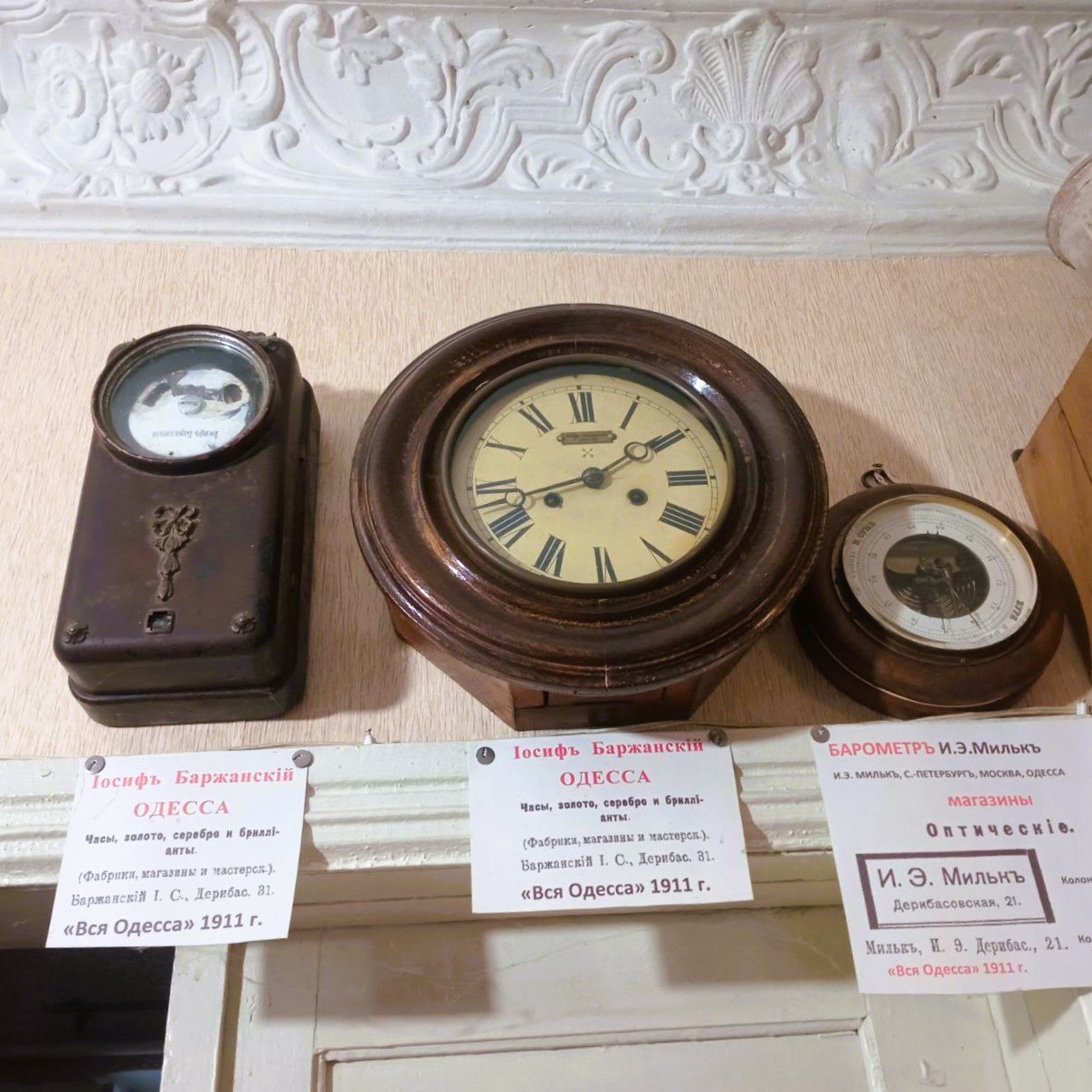
In the photo: Collection of Alexander Friedman
I will never have such cities again. To photograph and publish them, yes. You know, a person lives in a village, thinks about moving to a district center, then to a region, then to the capital, then to Paris, London, New York. And all the time there is a place to move. But living in Odesa, I have no desire to change my mind. I am lucky. Maybe it's presumptuous, but I'm not drawn anywhere. I went to America to visit my family. Everything was fine, but I wanted to go home all the time.