Меню
Соціальні мережі
Розділи
Oct. 16, 2025, 1:04 p.m.
"We focused on being useful," Pastor Alexander Gross
This article also available in English115

Pastor Alexander Gross. PHOTO: Intent/Author Natalia Dovbysh
St. Paul's Church in Odesa is not only an important building for the city, but also the main church of the Lutheran community. We talked to Pastor Oleksandr Gross, who spoke about current challenges, Lutherans in Odesa, the functions of the church and the state, and his vision for the future. Watch the full version and read a short version of the interview on Intent about support, faith, and humanity.
Watch the full interview on Intent's YouTube channel
How has the understanding of pastoral ministry changed for you personally since the outbreak of war?
The outbreak of war has changed many things, in fact. First, some of the people from our communities went abroad, and very often these are middle-aged people - the most active members of the churches; people who were serving; or those on whom I also had the opportunity to lean on in my pastoral ministry or delegate certain powers and tasks to them. To be left without them was a little harder, and, of course, it affected my ministry. I had to start from scratch in certain things. It affected me in a certain sense, because I started to look at what war is in general in a different way, because it became closer than it was. It affected me and my family, because my children went abroad and we were left without them. So, it 's a complex of different things that changed many elements of my life.
Were there moments when you doubted your mission as a pastor, and what helped you to keep going?
There were no such moments because I had previously experienced various moments of crisis in my life, in my ministry, and I had already had such experience, probably, how to react in critical situations, how to go through it. And having a good experience with the Lord, his faithfulness, his closeness, especially in such difficult moments, I just relied on him in everything I did, in the way I lived, and together with him I went through these difficulties that exist.
What exactly supports you in your daily ministry: prayer, family, community?
Of course, my wife, who is by my side. These are people, of course, whom you serve when you serve God. Of course, prayer - you can't do without it - because it is the main hope and strength that comes from the Lord. We rely on the small successes that come, on the joy that comes from people receiving help.
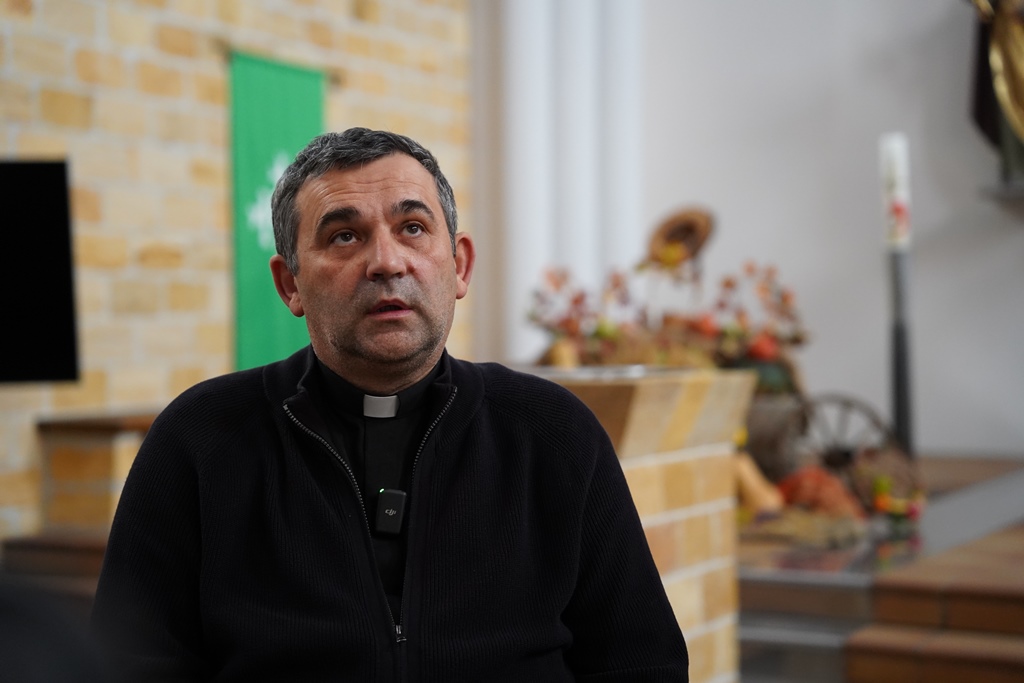
Pastor Oleksandr Gross. PHOTO: Intent/Author Natalia Dovbysh
How much strength does it take to keep a community together when many members have left or are mobilized?
Well, how can you weigh it, how much strength is needed? I don't have days off, I don't have vacations, although this year I managed to have a little vacation. It's, as they say, 24-7, that is, we don't hide, we hear all the appeals that come to us and try to be useful in all the many projects. I am not a pastor of one community, but responsible for four communities. I don't even live in Odesa, I live in Petrodolynske - there is a main community with a lot of projects, with refugees, with different activities.
What are the most noticeable changes you see in your community during the war: spiritual, social, human?
It seems to me that we have become closer to each other. At first, those who stayed, and then those who joined the community of a new quality , so to speak. There is a desire to help each other, to support each other, to go through difficulties together. I mean, we still feel that we are like a family. We are not big churches, all our communities are small, and so they are like families in fact. People often say that they feel like a family. And the church for them is a home where they can always come.
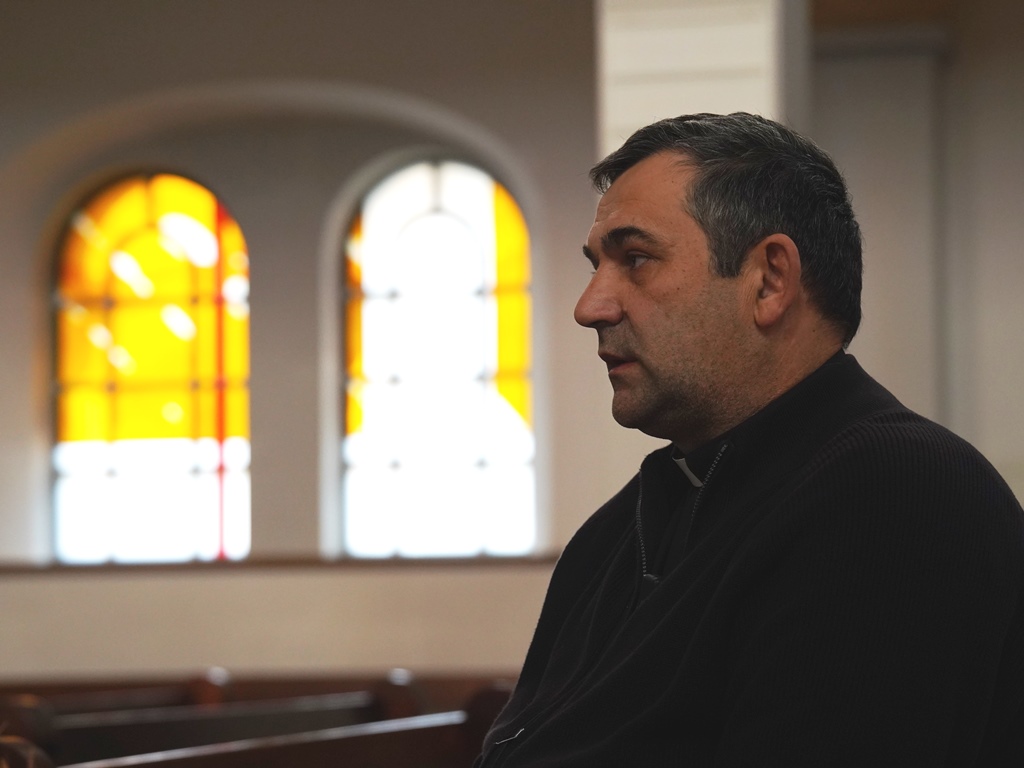
PHOTO: Intent/Author Natalia Dovbysh
What is the place of St. Paul's Church in Odesa for Lutherans today?
In fact, there are not many Lutherans in Odesa. There is another small community here, another church, but not of our Union. I must say that this community has decreased several times since the beginning of this great war, but today it is a little bigger than it was before the war. That is, people are joining, coming. We organize a lot of different cultural events, including for people to enjoy music. For example, we are currently organizing afestival dedicated to Phil Richter , the organist of our church, who was killed in the 1930s. We are trying to create a space of love and support for people. We have just finished a small fair. Again, the fair is not something profitable for us, because the income and profits that come from it are not always large. They go 100% to help hospitals, i.e. the Armed Forces, wounded soldiers: we buy medicines and so on. That is, we are focused not only on making the community grow, but rather on helping the society by engaging as many people as we can. This way, people also feel needed and important. They invest all their efforts to make this place an oasis of love for everyone, and to emanate such light from this place, again, for the people around them. The light of God's love.
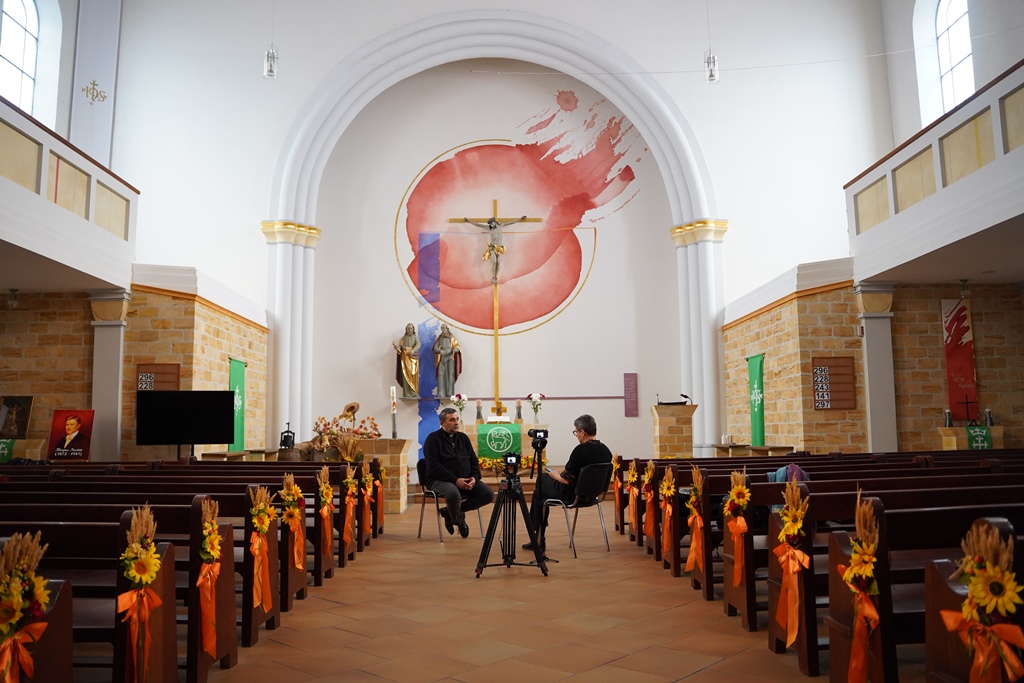
PHOTO: Intent/Author Natalia Dovbysh
Please remind us how the church was used during the Soviet period. I know that there was a fire in the 70s. Is there any reason to assume that it was arson?
Basically, the church was closed in 1932 or 1933. All our churches in Ukraine were closed then. It was still the Soviet Union, of course. Then the pastor was shot... The organist was the last to be shot. The church was closed... It was open a little bit when the Romanian occupation was here...
But for whom was it open?
This is a very interesting point. In 1988, along with perestroika, there was an opportunity to revive the church. People began to gather, even though the building was in a terrible state at the time. As you know, the state first used the old building that was here as a gymnasium. Then it was decided to restore and open the organ hall. There are rumors that it was allegedly an arson attack, because somehow it is very symbolic: On May 9. And there is a suspicion, of course, that it was done in order to somehow hide the stolen goods, so to speak. We do not know how true this is. And, in principle, it's all in the hands of the Lord: He will deal with it. In the 80s there was an attempt to revive it again. If anyone was here in that building in those years, they saw huge metal structures when they tried to make a church, a roof, by loading the metal structure. And again, there are some stories that these were not entirely honest attempts. And, in the end, nothing was restored. And only when this building was given to us did the process of raising funds and inviting various patrons to rebuild it begin. And it (the church - ed.), of course, does not look the same as the historic church, but, in my opinion, it is more modern and brighter. It is a church where it is pleasant to be and concentrate on the main thing.
With this material, Intent continues a series of video conversations with clergymen from southern Ukraine. The goal of this series is to show as broad and complete a picture of religious life as possible.