Меню
Соціальні мережі
Розділи
Oct. 12, 2025, 11:51 p.m.
"The main association with modern Odesa is wrestling," Artur Dron
This article also available in English206

PHOTO: Intent/Natalia Dovbysh
Modern Odesa is in a constant struggle against Russification and markers of Russian ideology. This is how Artur Dron, a soldier and writer, saw the city, who came to the presentation of his first prose book. We talked about his childhood, the decision to mobilize, current challenges for society, and Odesa. Watch the full version and read the short version on Intent.
Watch the full video on Intent's YouTube channel
We began to study certain childhood experiences and why we are reacting to the war in the way we are now. That is, we usually find familiar scenarios of how we grew up. You were born at the turn of the new century in the Ivano-Frankivsk region. Tell us about your childhood in the Ivano-Frankivsk region, what was it like for you?
This is the Rogotyn district of Ivano-Frankivsk region. Rogotyn district is a district that borders on Lviv region. I think it can be called a kind of familiar, classic, Galician, Western Ukrainian, rural childhood. Surrounded by a lot of traditions, with a great influence of the church. It leaves the biggest imprint on the very first years. I had a childhood surrounded by many other people, children. I'm the only child in my family, but my mother comes from a large family - she has eight brothers and sisters. That's why I have a lot of cousins. I always joke that there are probably too many of them. So yes, even though I am alone in my family, I have always grown up surrounded by others, in communication, in visiting each other. In Galicia, during the holidays, we all visit each other. And this is a constant growth with someone, watching someone else being born and growing up as well. It's a constant movement.
And here is an element of such home schooling. Perhaps some books that your mother read to you, or what you were advised to read as a child. What kind of literature was there?
At such an early age, it was some familiar children's books. I think that my favorite book was some story about a raccoon - Bo the raccoon, something like that. I still have it somewhere at home. At that age, when I was already interested in reading myself, somewhere between the end of the 9th and 10th grade, I read something that is very typical for teenagers. The Witcher series, which was published by theFamily Leisure Club at that time, and King's novels.
I really liked that. I entered literature through that side, through some interesting stories. Something that was, in fact, typically adolescent, youthful.
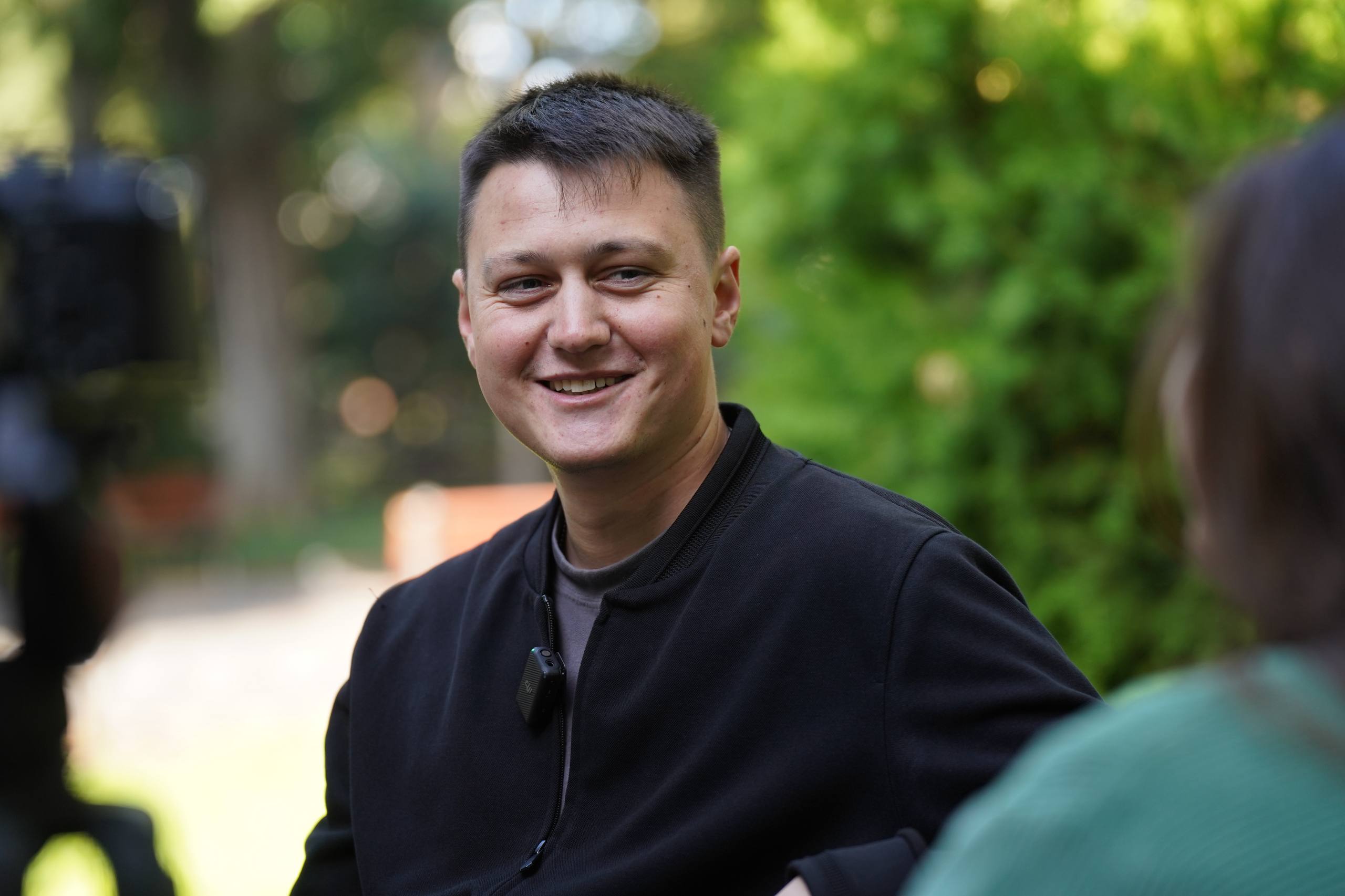
PHOTO: Intent, Natalia Dovbysh
When the full-scale invasion began, and I started talking to people around me, I asked them more about the context of conversations they grew up having with their parents about the same Union. What was it like in your family, in your environment?
Yes, it's obviously not about the division of the country. Where I grew up, I didn't really hear any longing for the Union. What we could hear about this period of Soviet occupation in our childhood, when we didn't understand much ourselves, was not very clear. But from the stories, from the memories of our parents and their parents, we just knew that it was a very poor time. Probably the most important thing that characterized it was poverty, with a small amount of food, with queues, with something so incomprehensible, with something that you don't really want to remember. I have never heard any reverence for it, any romanticizing of it, from any of my relatives or people around me. Now you understand what kind of period it was, so it's strange to hear someone express such piety, but you already understand that he probably grew up in a different context, he had a different family, a different family, and so from childhood they told him about it in this way.
Now, at this age, I understand, but when I first came to Lviv, meeting people from different parts of the country, I heard for the first time that someone had actually heard something good about the Soviet Union, that it was something so good, that there was a sacred "Victory Day" there, and even, of course, ice cream for how many kopecks, it was just memes from the Internet for me. And over time, I really realized that many people grew up with such narratives, many were told about it. Well, we didn't have that. Obviously, I think this is fortunate.
But it's an important historical moment in the context of the Ivano-Frankivsk region that this is being discussed and studied there. In Odesa, you know, there is a whole story about the city's day,
, for example, and those who want to get involved are starting to study history. Why is September 2, in principle, not the Day of the City of Odesa? But this is something that throws all people, whether they want to or not, into the context of history. Perhaps there is some interesting period in the history of Ivano-Frankivsk region that is important for this region, and everyone there knows about it, while we in Odesa may not know about it.
It seems to me that we don't have anything so controversial that it would be a stumbling block. Specifically, my area, I mean, not the whole of Frankivsk region, but Rohatyn region, our main historical marker is that it is the birthplace of Roksolana. Rohatyn is the city from which Nastia Lisovska, who went down in history as Roksolana, the wife of the Turkish sultan, the mother of the next Turkish sultan, came from. I wouldn't say that there is any cult of Roksolana there, but she is a major historical figure. In Rohatyn, there is a big monument to Roksolana in the city center and various tourist and souvenir products like magnets and so on. Obviously, Roksolana is depicted everywhere. That is, the main historical marker of our area is Roksolana. And something that is more massive in terms of more than one figure, for example, a historical period, then the UPA is probably more cultivated here. We still have a lot of this historical memory about the UPA, about the insurgents. For example, in Knyahynychi, a village between Rohatyn and my village, there is a small museum dedicated to Roman Shukhevych, the general commander of the Ukrainian Insurgent Army. For some years he had his own underground headquarters there. I had an assignment from the university to interview someone who had seen the Second World War in their lives.
I talked to my neighbor, Mrs. Marta, who spent those years as a child, maybe 6-7 years old. And she told me how she and her mother once helped Roman Shukhevych's wife, who was being hidden and where he had meetings with her from time to time. It was very important and interesting to learn this from us.
As for the Soviet Union, it was obviously a very harsh, only negative attitude toward the Ukrainian insurgents, toward the Ukrainian insurgent army.
It is very important in our area to keep this memory alive.
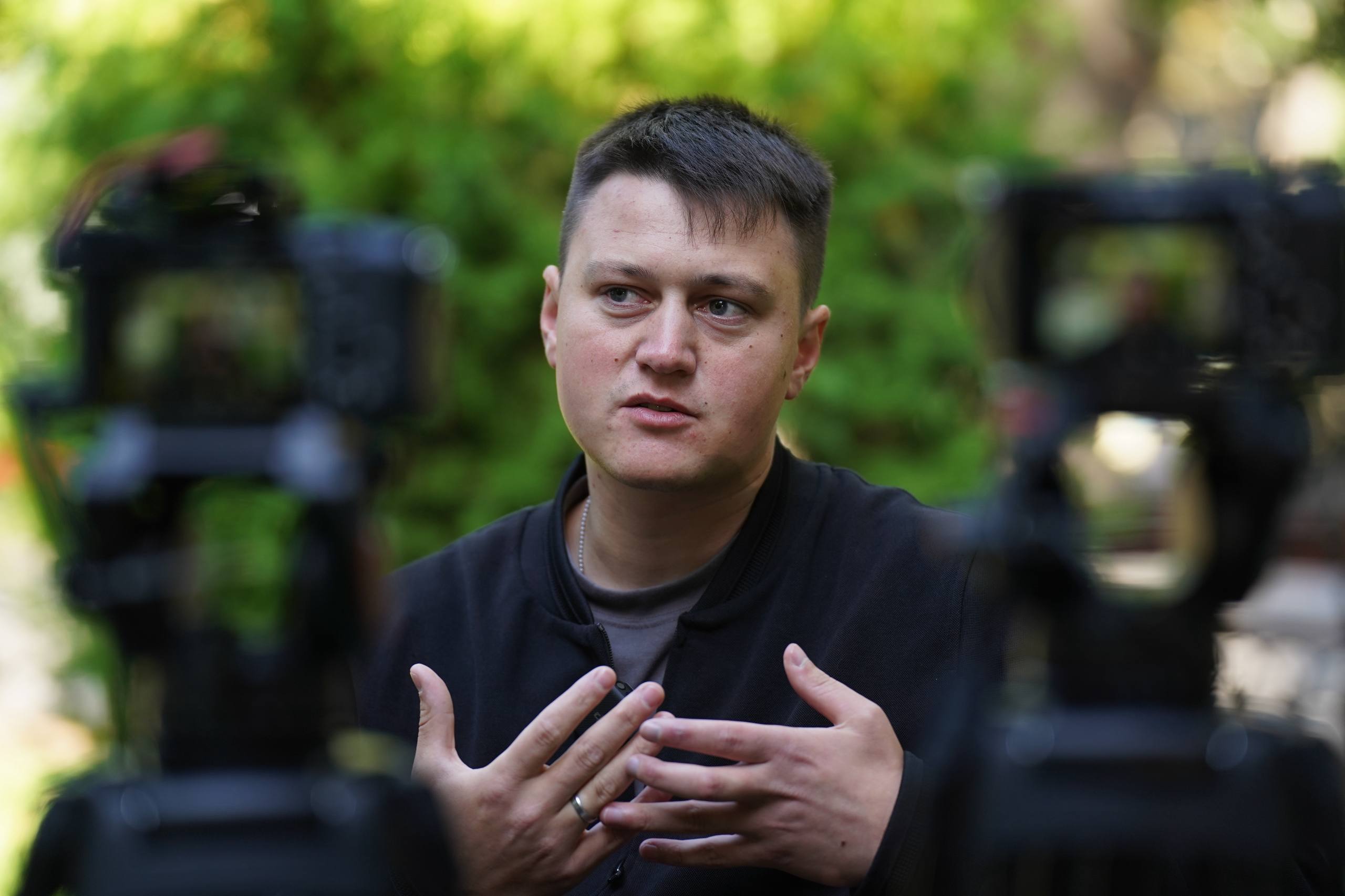
PHOTO: Intent, Natalia Dovbysh
What was your idea of Odesa before you came here, for example, what kind of city was it?
My idea was shaped by this mass culture, which was also very much Russified, and as far as I understand, so was Odesa itself. That is, these are associations like Odesa-mother, the pearl by the sea, some kind of Jewish dialect, some very massive, stereotypical ideas. Now, in the time of full-scale war, with what I know, what I have seen, and after I have already visited, I have an idea of Odesa as a city that is constantly fighting. We are all fighting because there is a war, but it is fighting for its true identity, against this Russification, against stereotypes that are unpleasant for such a conscious part of Odessans.
And this year I read a fantastic book about Odesa. There is a writer named Yuriy Yanovsky, and at school we studied his novel The Horsemen, about the Civil War, about how four sons are fighting on different sides. And it's not that we liked that novel very much, because every other book in the school curriculum at that time was about this national struggle, and we already knew so much about it, and we were already so tired.
It was only now that I got to read The Master of the Ship and the doors opened to me that made me want to go to Odesa. I discovered this kind of spirit... Well, obviously, it's not called Odesa there, but we all understand that this city with a capital letter is the city of Odesa. And it's not about Odesa-mother, actually. It's about a young city with the sea, with waves, with young people, about how these young people fall in love, how they argue with each other, how they make movies, how they dream of conquering the world. Such a young spirit, some kind of freshness, a breeze from that sea. These are much more pleasant associations with the city. Nowadays, when I think or talk about Odesa, I don't remember any such stereotypes from my childhood anymore, but rather think about that "Shipmaster". I also really like these beautiful white big trees that grow everywhere. I asked Hayetskyi in the spring what these trees were, as if the city were dotted with baobabs. It's very beautiful.