Меню
Соціальні мережі
Розділи
Nov. 18, 2025, 8:28 p.m.
"Our Constitution does not work," Odesa pastor Viktor Onufriychuk
This article also available in English34

Pastor Viktor Onufriychuk. PHOTO: Intent / Natalia Dovbysh
How did the Odesa congregation of the Seventh-day Adventist Church turn into a bomb shelter, provide free medical services, and at the same time preserve its principles? Pastor Viktor Onufriychuk talks about the role of the church today, the life of believers in exile, relations with the CCC, and why Adventists choose the path of nonviolence.
Watch the full video on Intent's YouTube channel
What led you personally to the pastoral ministry?
These are my personal experiences with God since childhood. You know, childhood faith is a very strong thing. When my parents brought me up and told me that there was a God, I sincerely believed it. And when it became difficult, when life's problems arose, I turned to God in prayer and saw His help. This cannot be attributed to chance. And this is what actually determined the further path of my life.
Why Seventh-day Adventists?
I was born into an Adventist family. But I always had my own opinion, and many of my positions differed from those of my parents. I cannot say that I was a model child as a child - I had a company, and I did some things that cannot be called good: I smoked, fought, and so on. But my conscience bothered me, I felt an internal conflict. In the eighth grade, I asked myself the question: either to be a Christian or to live like everyone else and not to "play" religion. Then I decided: "No, I will live according to the Bible, according to God's principles."
After that, I started preparing myself for the army. I knew that I would defend the truth. I went to the army as a Christian - I was baptized before the service on purpose to feel like a child of God.
You say that you became a Christian and then joined the army. Did you have any problems because you were baptized?
My friends, guys a few years older than me, who had already served, came home and told me about harassment, about "hazing," about various problems they had because of their faith in the Soviet army. And I understood this. But, as I said, I'm not a softy by nature - I was a physical education major, and if I have an opinion, I have it. I was always ready to defend my beliefs. It was the same in the army.
That's why I was preparing myself mentally before the army. And when I went to serve, of course, there were also different circumstances. Mostly at the level of soldiers. But the higher military leadership treated me very well. I was even surprised, because I was preparing for a bad attitude. But I met some leaders who treated me very sensitively and kindly, just like parents.
The first six months were hard for me, especially at the initial stages of my service. But then I had a very good relationship with my superiors. The unit commander personally shook my hand - he didn't shake anyone else's, but he did shake mine. I was considered one of the best soldiers in the regiment, and during my two years of service, I never had a single comment.
What trials or difficulties did you face on your pastoral journey? And how did you cope with them?
There were times when I came somewhere to organize a program in the city. And I felt that people were putting up obstacles under various pretexts to prevent me from doing so. Because we live in a state where if you are not Orthodox, you are "something incomprehensible." This was the case.
And although everyone is equal under the Constitution and has the same rights, in real life this did not always work. I encountered this very often. Now I don't, not anymore, I haven't had such problems lately.
Of course, I prayed to God, and so did the church. I understood the situation, so I took it calmly. I know what kind of world we live in.
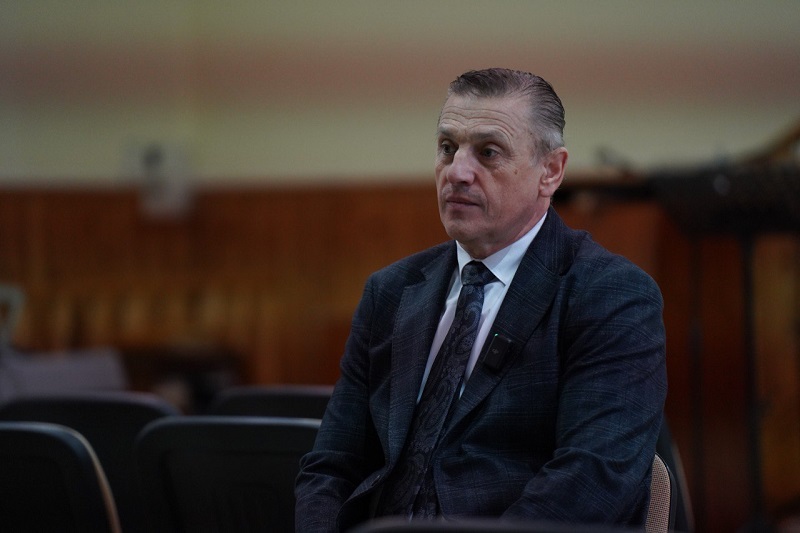
Pastor Viktor Onufriychuk. PHOTO: Intent / Natalia Dovbysh
Do you have a similar attitude towards other churches?
No, we do not call anyone sectarian. You know, the word "sectarian" now has a very negative connotation. But if you open dictionaries, you will see that this word has a neutral meaning and does not mean anything bad in itself. A "sect" is a smaller group of people who have separated from a larger one. And it doesn't necessarily mean religion. A factory can split into two parts, and the smaller part will also formally be a "sect."
But over time, in the historical process, the word has acquired a negative connotation. And it so happens that sometimes it is beneficial for someone to humiliate a branch of Christianity, and then they label it: "Oh, sectarians."
I would also like to note that the first Christians in the first century AD were also called sectarians. Because they left Judaism and separated from it, they were called the "Jewish sect."
What should be the role of the church in modern society, especially now, in difficult times?
The role of the church - today, yesterday, and always - should be active. The church is the agency of the Lord God on earth, which should serve people and society.
How do you feel about the topic of reconciliation between people of different faiths or denominations? Is there a way to unity through common moral principles?
Despite the fact that we may have different views - religious, political - this, if we are reasonable people, should not push us away from each other. Everyone has the right to freedom of choice. But we have to respect a person's choice if they are committed to good, if they want to do something for society. So what if they have a different view - it shouldn't be a problem.
What are the most important challenges facing the Adventist community in Odesa today?
I see a problem related to the fact that we are at war, and this greatly affects people, their psychological health. Post-traumatic stress disorder is a reality. And we need to be ready to communicate with such people, build relationships, help them find their place in society, and interact. This is one of the challenges to which we must respond and be prepared.
How many parishioners did you have before the war and how many now?
Before the war, our third Odesa community had 186 church members. Now there are 100 left. 86 people left.
Do you keep in touch with them?
Of course we do. We have created groups on Viber and Telegram. We communicate, share news, help each other and pray for each other.
Do people want to come back?
Some people are ready to return and say they will. But some people are not. They learned the language there, found work, adapted. And, of course, they will not return.
Did they find their church?
Yes, they did. We take this very seriously. Our church members are not just 'parishioners', we are one big family. So when a person moves to another city or country, the first thing they do is look for a church and let us know about them, give us their address. Our church secretary contacts the secretary of that congregation, and an official transfer of membership takes place. Only when a person is accepted there do we remove him or her from the lists of our community.
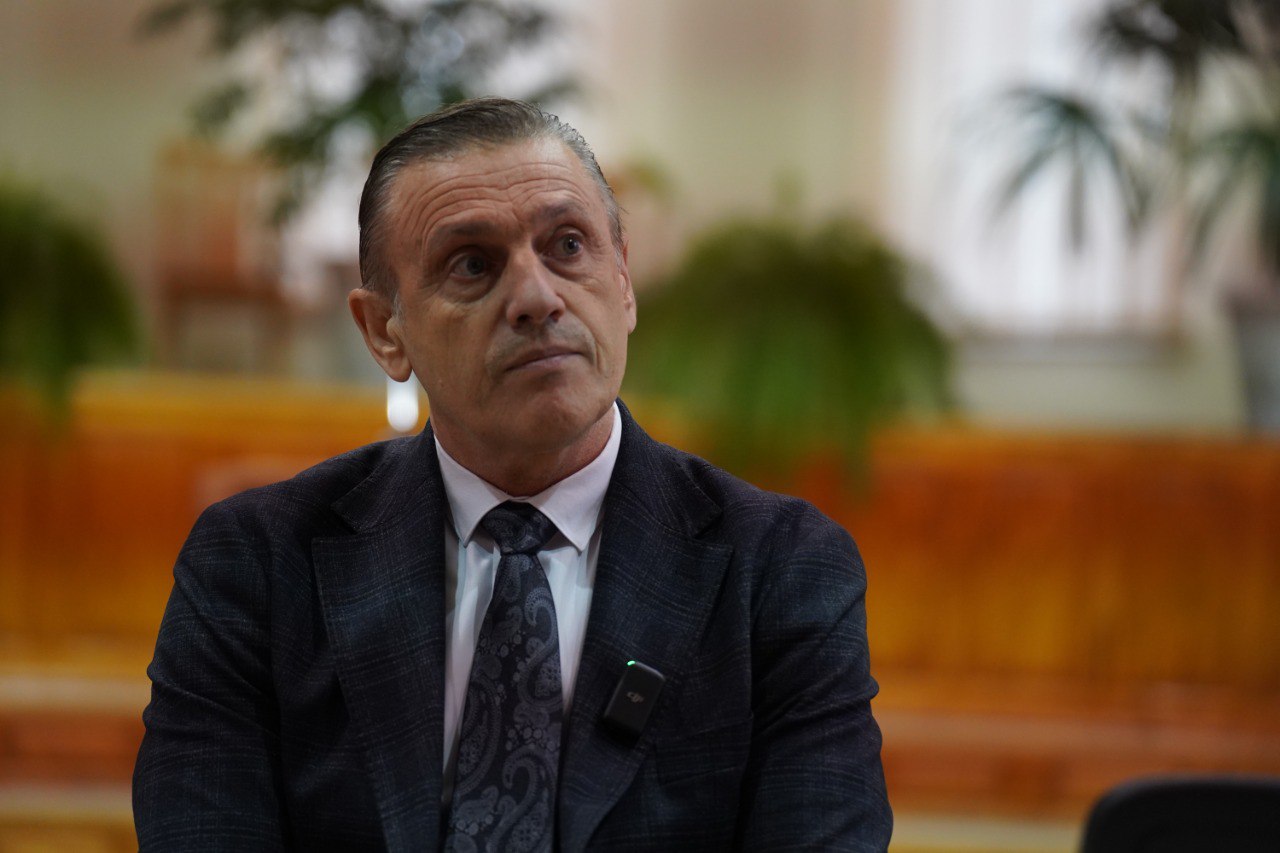
PHOTO: Natalia Dovbysh, Intent
How does the church support people who are going through a crisis of faith or personal difficulties?
The church visits such a person at home, calls, talks, prays with them, holds conversations - we do everything possible to support them and not leave them alone.
Do you have any ministry programs for young people and families with children in your community?
Yes, we have programs for youth, families, and children. This year we held family meetings once a quarter. And it is important that these were programs not only for members of our community. We opened them for IDPs and everyone else.
How did your community come up with the idea of combining spiritual service with physical health care? I saw that you have doctor's consultations, massage, and cosmetic services. Tell us about them.
We understand, like everyone else, that health is not only a physical condition, but a combination of physical, psychological and spiritual well-being. And that all these areas are interconnected. That is why our global Adventist Church attaches great importance to a healthy lifestyle.
The world church has about 700 hospitals. The University of California Medical Center performs heart transplants for infants, and once performed an operation to separate Siamese twins. In Ukraine, we also have our medical center in Kyiv.
We also have special large medical buses equipped with everything we need. They travel around Ukraine, and one of them came to us, to the Third Odesa Community. There is an ultrasound machine, a cardiogram can be done, and various specialists are available. We also invited hairdressers, cosmetologists, and psychologists. People came and received services, and we try to do this regularly.
Our community also has its own medical office, which operates on a regular basis. We have massage therapists, a therapist of the highest category who provides free consultations and can make a cardiogram - we have a cardiograph. You can also come for a massage or to see a beautician. From time to time, we make announcements and invite people, regardless of whether they are members of our church.
Which service is in the greatest demand?
The most popular service is massage. Most people have been through it.
Moreover, I periodically contact the head of the city's social protection department. She gives me information about the IDPs, because we are primarily concerned about them. We understand that it is difficult for them: a new city, new conditions, they are less protected. That is why we give priority to this category of people - we invite them to see a doctor, to have a massage, to see a beautician, to attend family programs.
What is the attitude of the Seventh-day Adventist Church to war? What biblical principles define its position?
The sixth commandment of God's law reads: "You shall not kill." People interpret it differently, but we take it literally. Our church is a peaceful organization, and we consistently advocate non-violence. We do not take up arms and do not participate in military operations.
Yes, individual members of the church can make their own decisions - it is a matter of their conscience. But the official position of the worldwide Seventh-day Adventist Church remains unchanged: we are a church that does not fight.
How do you reconcile this with the CCC? How does each church member personally defend their beliefs?
It is very difficult. Our believers are treated the same as everyone else. We see phenomena in the country that can be called shameful: busification, pressure, and human rights violations. Although we have a Constitution, in particular Article 35, frankly speaking, it does not work.
But believers can look for work in the rear units. After all, there are units where you do not need to take up arms.
Yes, there are various opportunities for those who are not ready to take up arms. And among our believers there are also people who serve at the front, but without weapons. Some work in the kitchen, others as nurses. There are cases when members of our church with medical education voluntarily went to the front line because they realized that their vocation is to treat, support, and save. We have such examples.
How did your activities change during the war?
In 2022, as soon as the war started, the first thing we did was to equip our house of worship as a shelter. Both our church members and volunteers worked here every day. We brought in several cars of sand, bought bags and reinforced the windows, both inside and out. Part of our church is located underground, so it was both relevant and possible.
People came to us from Bucha, Kharkiv, Kherson and other regions. They stayed here overnight and sometimes longer. I personally drove people to the border with Moldova-those who were going further. We had a canteen here: our sisters received people, cooked food, made beds. People could rest, eat and continue their journey.
We also have a church humanitarian organization, ADRA (Adventist Relief and Development Agency). This is a global organization that responds to natural disasters, wars, crises and provides assistance with food, medicine and other necessities. Since the beginning of the war, we have received large batches of aid from ADRA. We distributed 255 tons of food packages to people - two trucks visited us every month. Our volunteers worked from morning to evening. Separately, we distributed baby sets - about 13,600.
We also distributed free bread. ADRA allocated money, we took several minibuses, brought bread and distributed it to people. There were huge lines. From April to October 22, we distributed 1.5 million loaves of bread. This was the active phase of the aid.
Now we are focusing more on vulnerable people, primarily IDPs. We have a medical office, programs for families, and counseling on various life issues. There is even an opportunity to get legal assistance - we have not yet advertised it widely, but we have specialists and we help whenever possible.
There is an opinion that Protestant countries are more prosperous than Orthodox ones. Do you agree with this?
Yes, most countries with Protestant roots are indeed wealthier. This is due to the fact that at the beginning of their formation they were based on Christian principles, in particular: "Whatever you do, do it for God". And this had a great impact on their development.
But if we look at Europe today, we must say that many Protestant countries are gradually secularizing, moving away from biblical values. There are things there that I don't even want to talk about. However, in the early stages, it was the Protestant understanding of the Bible, the attitude to work and responsibility that became the foundation of their growth.
They perceived work as a call from God. They worked diligently, honestly, with a sense of mission, and this undoubtedly contributed to the fact that these countries became rich and developed.
With this material, Intent continues a series of video conversations with clergymen from southern Ukraine. The goal of this series is to show as broad and complete a picture of religious life as possible.