Меню
Соціальні мережі
Розділи
Feb. 18, 2026, 6:48 p.m.
World War Zero
This article also available in English16

PHOTO: P.F. Collier & Son
The Russo-Japanese War of 1905 is sometimes called "World War Zero" because the seemingly regional conflict actually affected the interests of many countries and had a significant impact on the geopolitics of the first half of the twentieth century. Two ambitious empires decided to find out which of them would become the hegemon in the Far East. To achieve this goal, tens of thousands of soldiers died in fierce battles on both sides, the external debt of both countries was significantly increased, and popular uprisings resulted in both countries. Let's try to find out how the conflict developed and whether the participants were satisfied with its outcome.
Russian-Japanese relations before the outbreak of war
For a long time, Japan remained a country that was isolated from the world. Because of this, it managed to preserve its unique culture, but it lagged far behind European countries in political and economic terms. Russia first tried to establish trade relations with Japan in the late eighteenth century, but the latter ignored Russian initiatives then and later. Russia has always been a country that has tried to expand in different directions. It continued to do so in the nineteenth century. The Crimean War put an end to Russia's expansion in Europe, which led it to look toward Asia. As a result of its conquests in Central Asia, Russia reached the borders of Afghanistan and Persia at the end of the century, where Britain's interests began. So Russia looked more closely to the east, where interesting prospects seemed to be opening up. New opportunities for expansion were primarily associated with the decline of China since the mid-nineteenth century, which Russia and Western European countries immediately began to take advantage of. Russia did not forget about Japan either: in 1855, the first Russian-Japanese treaty was signed. In the following decades, the two countries agreed that Sakhalin would become Russian and the Kuril Islands would become Japanese. Overall, positive relations were established between the countries. In 1891, the future Russian Emperor Nicholas II even visited Japan, where he was assassinated.
The year 1868 was a turning point in Japan's history, when the transition from the samurai feudal system to imperial rule with a number of progressive reforms was introduced. Japan learned quickly, absorbing technologies and ideas from the most powerful countries in the world. As it grew its muscles, the country also began to look toward China and the Korea it controlled. In 1894-95, the Japanese-Chinese War took place, in which the island nation celebrated victory. According to the peace treaty, Japan, in particular, received Taiwan and the Liaodong Peninsula. China also recognized Korea's independence, which opened up prospects for Japan. Russia, Germany, and France were concerned about Japanese expansion in China, where they had their own interests, so they forced Japan to give up the Liaodong Peninsula. For Japan, the peninsula on the continent could have become a springboard for further offensive in Asia. Russia, on the other hand, had its own views of Port Arthur, which did not freeze in winter and was of strategic importance. A few years later, China even leased the port to Russia for 25 years. This infuriated the Japanese, because it turned out that Russia had actually taken away what Japan had won in the war. International troops entered the country to help China overcome the Boxer Rebellion. Russia took advantage of this opportunity to occupy Manchuria. In fact, Russian troops were supposed to leave China soon, but they never did. Russia also agreed to cut down forests on the border with Korea. Recognizing Russia's intentions, Japan proposed a redistribution of spheres of influence: Korea to the Japanese, Manchuria to the Russians. However, Russia repeatedly ignored Japan's proposals. It should be understood that at that time, European and U.S. states considered Asian countries to be inferior, and they had to talk to them accordingly.

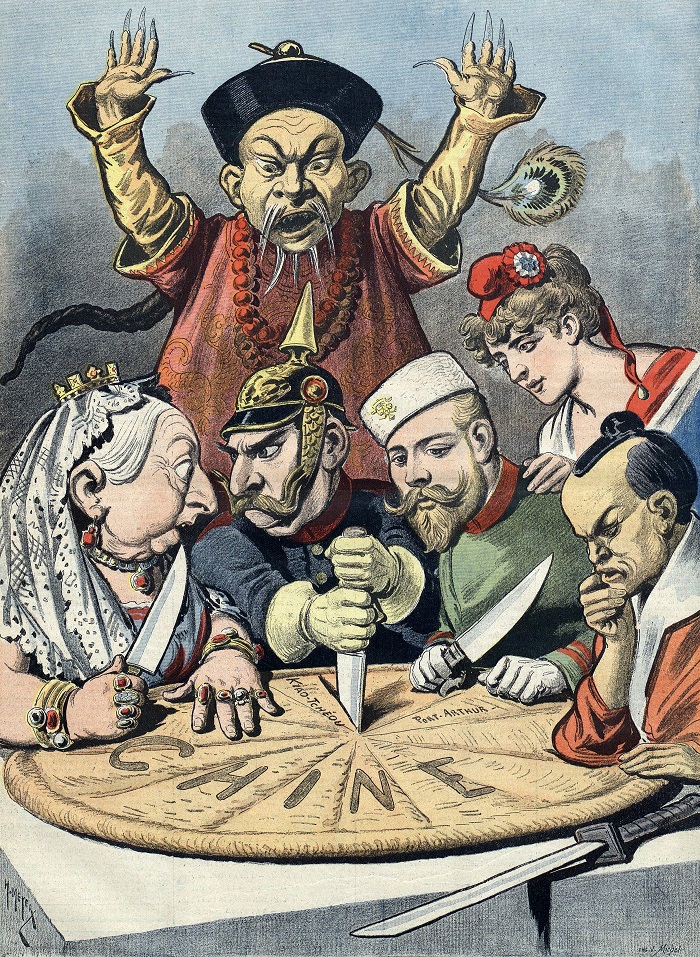
French caricature from the 1890s. IMAGE: Wikipedia
Japan began to prepare for war. The country had a strong army, hardened in the war with China. In addition, the Japanese enjoyed the active support of Britain, which feared the expansion of Russia's influence. In particular, a renewed Japanese navy was being built at British shipyards, and Japanese officers were trained in Britain. In 1902, the two powers signed a rather delicate agreement. In it, the participants pledged to enter the war only if one of the signatories was attacked by two or more states. The agreement tied the hands of France, which had an alliance with Russia.
Did Russia want a war? There was a group of officials around Nicholas II who believed that a war could be useful. In particular, Russian Interior Minister Vyacheslav Pleve allegedly said: "To keep the revolution alive, we need a small victorious war." At the same time, Russia was not going to prepare for a war with "inferior" Japan.
The outbreak of war and events around Port Arthur
Seeing Russia's ignoring of its proposals, Japan decided to go to war. Obviously, Russia had much greater capabilities. In particular, Japan was able to gather up to 270,000 soldiers against Russia, while Russia had a regular army of 1.2 million troops. Russia's problem was the remoteness of events from the center of the empire. Thus, there were only up to 110 thousand troops in the Far East. The Japanese plan was to launch a blitzkrieg on land and sea.
The war began when Japanese destroyers launched a torpedo attack against Russian ships at the Port Arthur harbor. The attack severely damaged two of Russia's best battleships and an armored cruiser. On the same day, a Japanese squadron of 14 ships approached the Korean port of Chemulpo to ensure the landing of troops. In the port were the Russian armored cruiser Varyag and the gunboat Korets. Having no chance, they nevertheless came out to fight, after which they were destroyed by the crews.
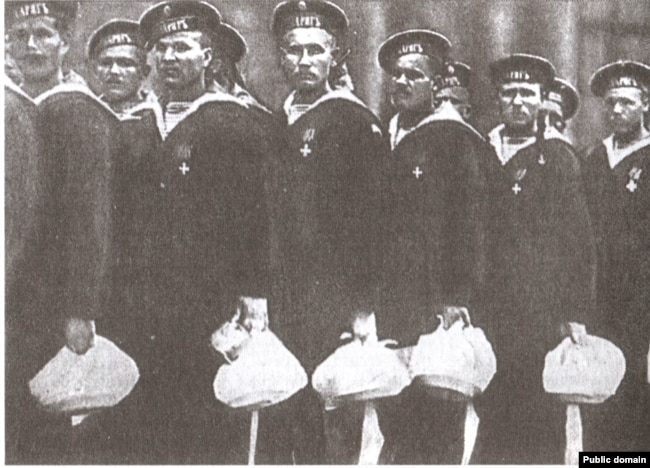
The remains of the crew of the Varyag cruiser. PHOTO: Radio Liberty
The Japanese continued to act in two directions. The First Japanese Army marched through neutral Korea and reached the border with China. In the other direction, the Japanese tried to capture Port Arthur. In order to gradually move to a siege, it was necessary to neutralize the First Pacific Squadron, which was located in Port Arthur. The Japanese made several attempts to sink old ships at the entrance to the harbor to cut off the squadron, but they all failed. Meanwhile, the second Japanese army began landing on the Liaodong Peninsula, about 100 kilometers from Port Arthur. The First Pacific Squadron could have greatly interfered with the Japanese, but its commander, Admiral Wilhelm Witgeft, was afraid to leave the harbor. The situation might have changed when Vice Admiral Stepan Makarov was appointed commander of the Pacific Fleet. Arriving in Port Arthur in early March 1904, he immediately intensified his work and went to sea himself at the head of the squadron. However, at the end of the month, the battleship Petropavlovsk hit mines and exploded. Among the 600 dead were Stepan Makarov and the artist Vasyl Vereshchahin.
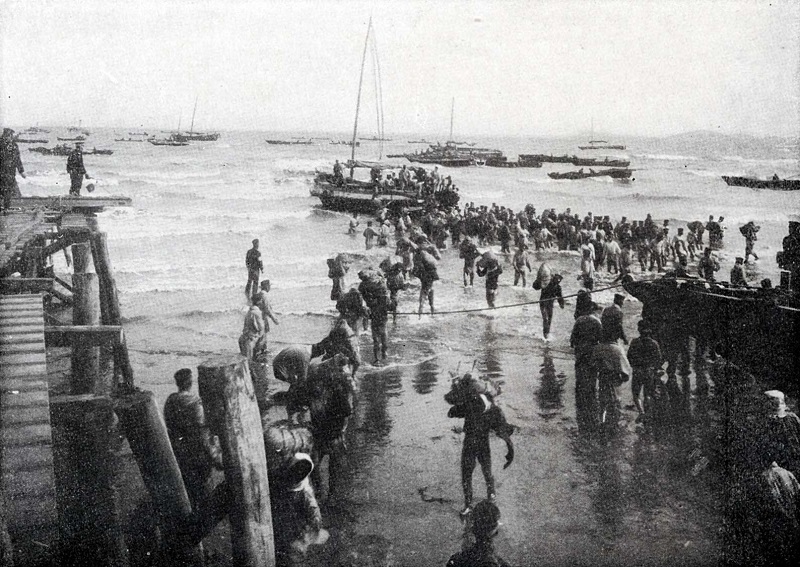
The landing of the Japanese army on the Liaodong Peninsula. PHOTO: Wikipedia
After capturing the port of Dalnyi, the Second Japanese Army turned north toward Manchuria. The siege of Port Arthur was to be carried out by the Third Japanese Army under General Maresuke Nogi. The siege began in July and lasted five months. Shortly after the start of the siege, Admiral Witgeft received an order to break through to Vladivostok, as otherwise the squadron would have been destroyed in the port by Japanese artillery. At the end of July, the First Pacific Squadron met with the Japanese Combined Fleet, led by Admiral Heihachiro Togo. The scales tipped in favor of the Japanese when they began firing on the flagship Cesarevich. First, Witgeft was killed, then the ship's commander, who led the squadron, was seriously wounded. The Russian ships lost their formation. The battle stopped due to darkness. A significant number of Russian ships returned to Port Arthur, some escaped to neutral ports. Although not a single ship was destroyed during the battle, the first squadron effectively ceased to exist as a combat unit.
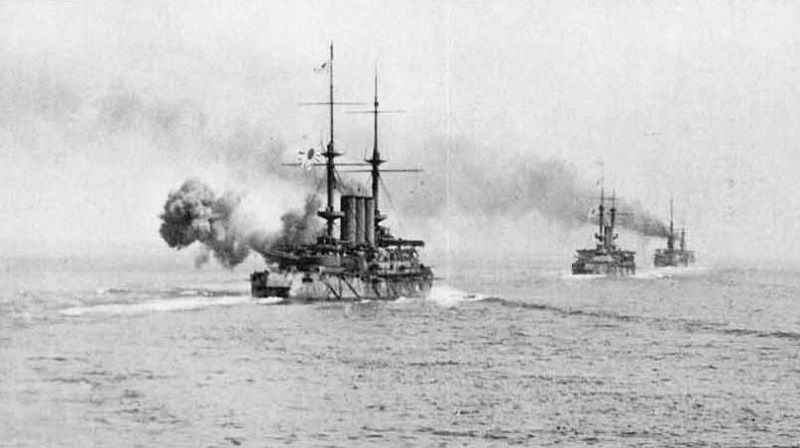
The battle between Russian and Japanese ships. PHOTO: Wikipedia
The defense of Port Arthur is considered one of the most heroic episodes of the war. During the storming of the fortress, 15-16 thousand Japanese were killed and 44-45 thousand were wounded. After the siege ended, the Third Japanese Army was able to join the war in Manchuria. There are radically opposing opinions among historians as to whether Port Arthur could have defended itself further. One way or another, Lieutenant General Anatoly Stessel, who signed the surrender of the fortress, was supposed to be sentenced to death after the war, but the emperor commuted it to imprisonment.
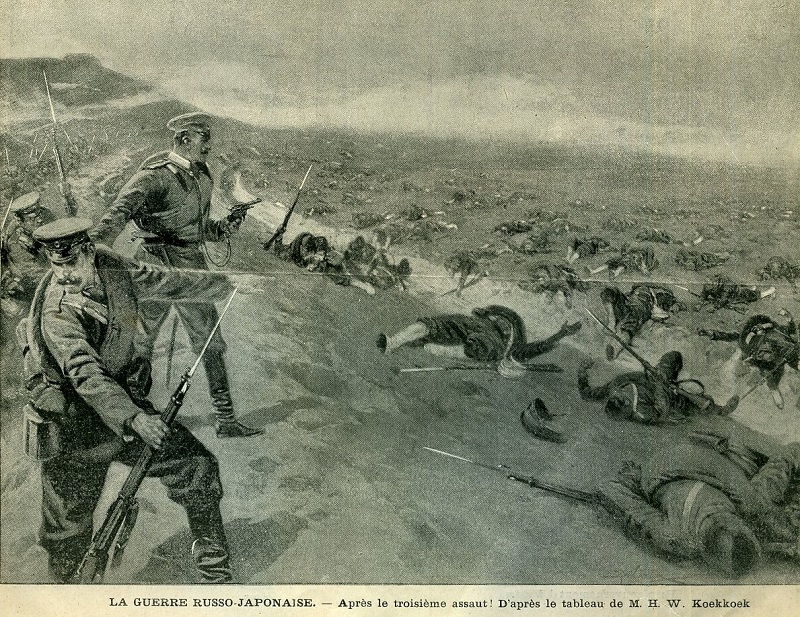 Bodies of killed Japanese after another assault on Port Arthur. PHOTO: Wikipedia
General Nogi's fate was tragic. Considering himself guilty of the deaths of a large number of soldiers, he asked the emperor for permission to commit suicide, but was refused. Nevertheless, the general and his wife committed suicide after the emperor's death.
The war in Manchuria
General Alexei Kuropatkin was appointed commander of the Manchu Army. As the general wrote in his memoirs, he planned to constantly retreat along the Trans-Siberian Railway, waiting for reinforcements. It should be noted that during the war the railroad was indeed a constant source of reinforcements from western Russia. Another thing is that the capacity of the railroad was limited, so reinforcements arrived slowly. On the other hand, the Japanese potential was extremely limited. They needed a decisive victory.
Of great importance was the Battle of Liaoyang, where approximately equal forces of Russians and Japanese met. The latter attacked in all areas of the front, but the defenders held the line. Fearing an outflanking from the left flank, General Kuropatkin ordered a retreat to the second line of defense. The Japanese again went on the offensive along the entire front, while the Russians tried to meet them with short counterattacks, in which they spent almost all their reserves and most of their ammunition. Once again, fearing a left turn, Kuropatkin ordered a retreat to the third line of defense. The Japanese went on the offensive for the third time, but the fate of the battle was unclear. Fearing a Russian counterattack, the Japanese wanted to retreat, but they were again outpaced by an order to retreat from Kuropatkin.
A month later, at the request of the emperor, the Russian army launched an offensive on the Shahe River. As a result of heavy fighting, neither side was able to gain the upper hand, but the Russians lost twice as many soldiers. However, the Russians continued to receive reinforcements.
The Battle of Mukden
The year 1905 in the Russian Empire began with Bloody Sunday, a peaceful demonstration that was shot at with firearms by tsarist troops. The tragedy became the impetus for the First Russian Revolution, which significantly affected Russia's capabilities in the foreign arena. The initial emotional upsurge of citizens against the external aggressor traditionally gave way to fatigue from the war, especially since there were no victories at the front. At the same time, mostly reservists were sent to the front, as regular troops were needed inside the country to suppress the revolution. External loans were needed to continue the war, but lenders were in no hurry to invest in a "dubious project." Japan had long been fighting a war with British money, and its foreign debt was growing at an alarming rate. The Japanese made contact with Finnish and Polish revolutionaries, hoping to undermine Russian forces from within and influence the outcome of the war.
It was under these conditions that the largest battle of the entire war and the largest battle in history at that time took place in February 1905, which lasted three weeks. At Mukden, the Russian army had approximately 350,000 troops compared to 300,000 for the Japanese. Despite the numerical superiority of the Russians, the Japanese once again attacked along the entire front. Eventually, Russian troops began to retreat. While the first Manchurian Army retreated in an organized manner, the other two were threatened with encirclement. The Russian army lost 90,000 killed, wounded, and captured; the Japanese lost 75,000. Despite another defeat, the Russian army was not completely defeated again. After Mukden, almost nothing happened in the Manchurian theater of operations, as both sides were exhausted.
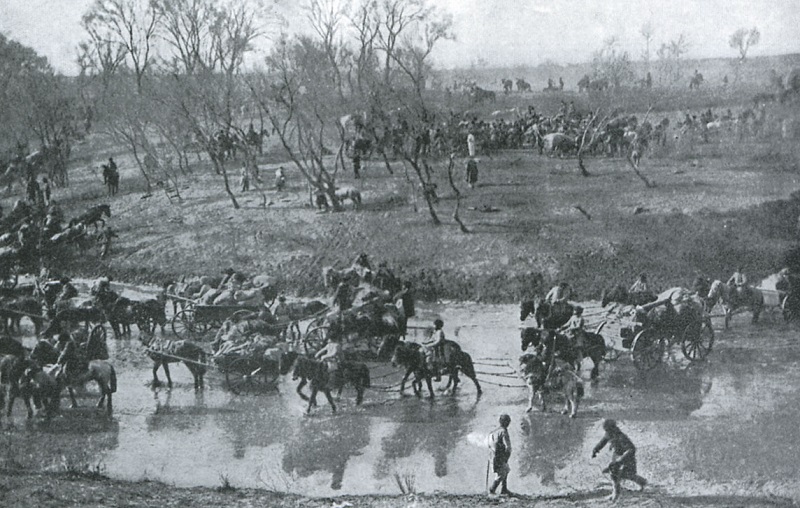 The retreat of Russian troops. PHOTO: P.F. Collier & Son
The Tsushima tragedy
After Mukden, the Japanese military appealed to Tokyo to begin peace negotiations. The Japanese leadership, in turn, appealed to U.S. President Theodore Roosevelt, who was ready to actively promote peace. Nicholas II's mother , Maria Feodorovna, asked French diplomats to influence her son. However, the emperor himself believed that all setbacks could be overcome by a great naval victory.
In early October 1904, the Second Pacific Squadron, led by Admiral Zinoviy Rozhestvensky, left the Baltic. The purpose of the voyage was to reunite with the First Pacific Squadron near Port Arthur and then inflict defeat on the Japanese fleet. To do this, the squadron had to sail around the world. However, the problems were just beginning. The squadron consisted of both new Borodino battleships and outdated ships, which made it impossible to move efficiently. The large ships of the squadron could not pass through the Suez Canal, so they had to go around Africa. At the same time, the European colonial empires, which remained neutral in the war, imposed restrictions on the squadron's ability to enter ports and replenish supplies along the entire route. Because of this, the squadron was forced to carry huge reserves of coal. At the end of the year, the participants of the crossing learned about the surrender of Port Arthur and the destruction of the First Pacific Squadron. The Third Pacific Squadron, consisting of outdated ships, was sent to catch up with Rozhestvensky. Rozhestvensky was to wait for help near Indochina and then sail together to Vladivostok. The consequence of the crossing was the fatigue of the crews and the wear and tear of the ships.
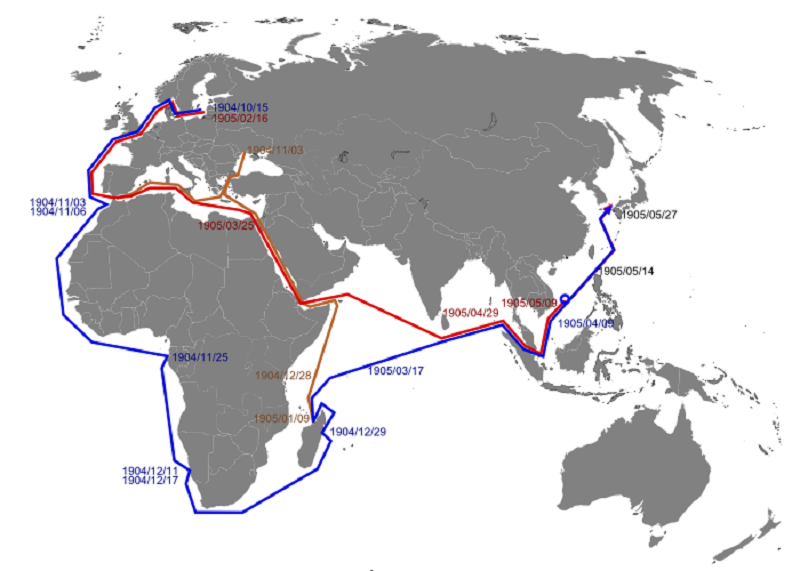
The route of the Second Pacific Squadron. MAP OF THE ROUTE: Wikipedia
Rozhestvensky had two options for reaching Vladivostok: either a shortcut through the Tsushima Strait or a long way around Japan. Rozhestvensky was in no hurry, but he chose the shortcut, where the Japanese fleet was waiting for him. The Japanese came to the battle in perfect condition. The Russian ships were worn out by the passage and loaded with coal. The different speeds of the ships further slowed down the Russian squadron. Flotillas of that time stood in a keelboat column, that is, in one line, during the battle. During the Battle of Tsushima, it became immediately clear that the Japanese column had a significant speed advantage. The Japanese moved perpendicular to the movement of the Russian column and began firing at the ships that were first in the column. In fact, it was a massacre. The next morning, the four surviving battleships tried to resist Admiral Togo's Japanese squadron, but later surrendered. In total, 21 of the 38 Russian warships were destroyed and 6 were captured. The Russian Pacific Fleet ceased to exist.
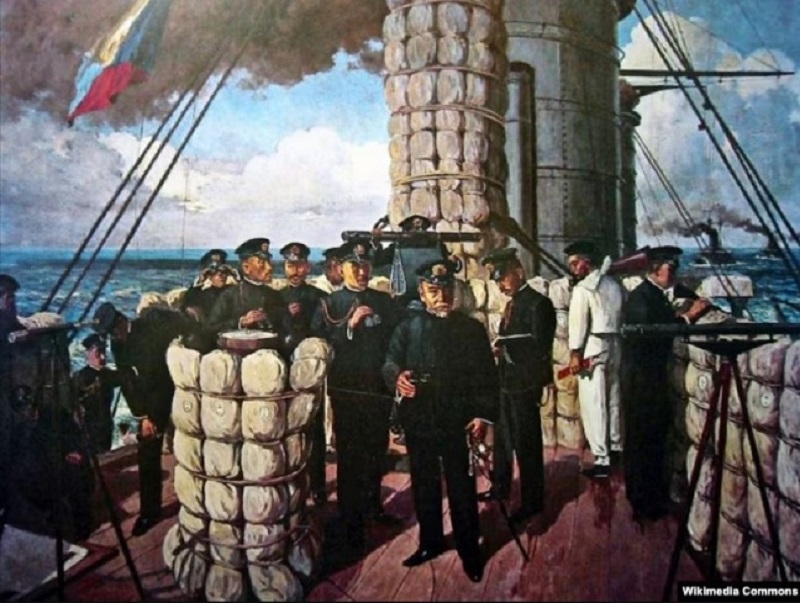 Admiral Heihachiro Togo. IMAGE: Wikipedia/Shotaro Tojo
Among the important events of the end of the war was the Japanese seizure of Sakhalin without any difficulty. Now it was possible to proceed to the conclusion of a peace agreement.
The Portsmouth Peace Treaty
The peace conference was held in the United States under the mediation of President Theodore Roosevelt. Before the war and during its development, the United States had been leaning toward Japan because Russia was too aggressive in its ambitions in the Far East. In addition, Roosevelt personally disliked Nicholas II, whom he considered an arrogant incompetent. However, Japan's total victory in the war could have led to a significant imbalance in the Far East. Therefore, the United States made efforts to ensure that the treaty equalized the results of the war. And they succeeded to such an extent that the peace treaty is considered Russia's only victory during the war. According to the treaty, Russia recognized Korea as a sphere of Japanese influence, transferred lease rights to Port Arthur and the Far East to Japan, and gave the Japanese southern Sakhalin.
 The Portsmouth Conference. PHOTO: P.F. Collier & Son
The war was a great burden for Japanese citizens, and many men died. Therefore, the Japanese were convinced that Russia should pay a contribution. They also believed that the territorial gains should be greater. Because of this, there were quite serious riots in Tokyo.
Conclusions.
There are several reasons why the Russian Empire lost the Russo-Japanese War. First, it was the arrogance and self-confidence typical of most empires. Russia realized that war was coming, but made no effort to prepare. Not least, it was arrogance toward Asian nations that played a role. Such arrogance is familiar to Ukrainians: one modern empire believed that it could defeat a neighboring country in three days. Second, the remoteness of the theater of operations from the center of the Russian Empire played an important role. An eight-month round-the-world voyage of Russian squadrons to die in a foreign land in the first battle looks absolutely ridiculous. Under other circumstances, Russia's significant numerical superiority would have had a significant impact on the course of events. The third reason should be sought in the slave mentality that a rigid authoritarian government creates. Such a system elevates the obedient and ignores the intelligent and proactive. In almost every major battle, Russian commanders either tried to retreat or followed a pattern.
It is no coincidence that the Russo-Japanese War is called "World War Zero" because it had a significant impact on the countries of the world. For the Russian Empire, the war was an impetus for revolution. It seemed that this fire had been extinguished, but in reality it was still smoldering. And a decade later, the next war became a catalyst for new revolutions that finished off the empire. Communism, which was born in its wreckage, influenced the world until almost the end of the twentieth century. Through a crushing victory , Japan proved that it was worthy of joining the club of world hegemons. Perhaps the rapid transition from the dark Middle Ages to the heights of world politics was dizzying and gave a sense of national election. These ideas pulled Japan irresistibly toward World War II and its collapse in 1945. It is believed that the Portsmouth Peace Treaty severely damaged the previously friendly relations between the United States and Japan. These tensions were biding their time before Pearl Harbor happened. For Asian countries, which were mostly under colonial yoke, Japan's victory was an example that an Asian country could defeat European empires. This example is known to have inspired Mahatma Gandhi and Jawaharlal Nehru. On the other hand, for Korea and China, the rise of Japan was a real curse. Korea was swallowed up in five years, and China had to suffer from its neighborhood for another 40 years.