Меню
Соціальні мережі
Розділи
Jan. 15, 2026, 7:23 p.m.
Saratoga: 7 interesting facts about the city
This article also available in English25

IMAGES: Intent
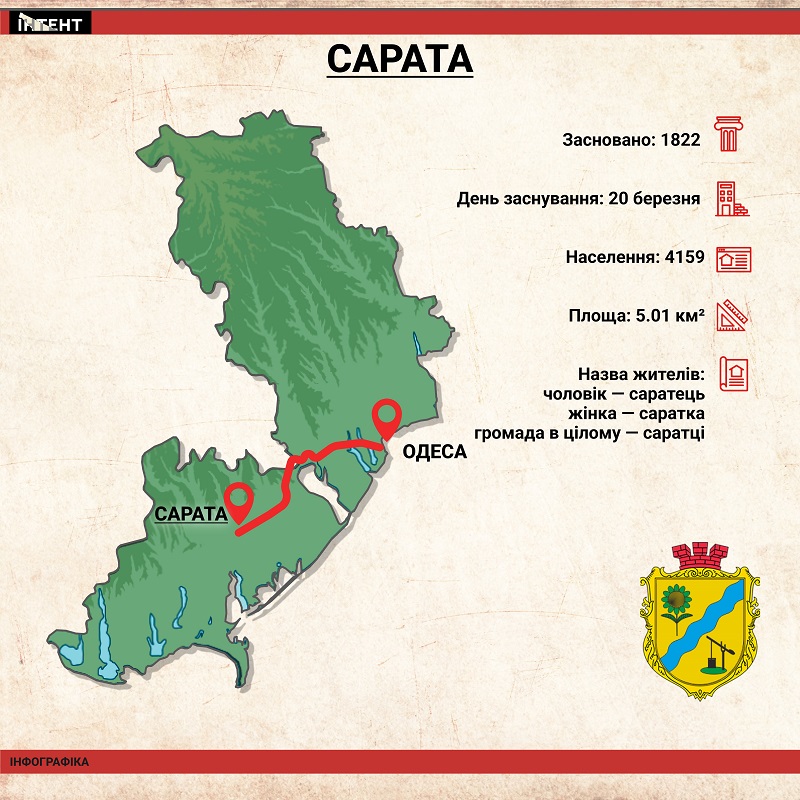
Sarata is a village in Bilhorod-Dnistrovskyi district of Odesa region. It is the former administrative center of the Sarata district, now the Sarata settlement community. It is located on the bank of the Sarata River, which flows into Moldova and Ukraine, within the Bilhorod-Dnistrovskyi district of Odesa region. It flows into the Sasyk estuary lake. The distance from Sarata to Odesa is 137 km and is reached by the M15 highway. The nearest railway station is Sarata. The distance by rail to Odesa is 146 km.
The intent continues to tell stories about the cities of Odesa region. After Bilhorod-Dnistrovskyi, Reni, Podilsk, Izmail, Vilkovo, Bolhrad, and Tatarbunary, we will tell you about another settlement in the south of Odesa Oblast - Sarata.
IMAGES: Intent
A colony of Christian communism
Sarata emerged after the conclusion of the peace between Russia and Turkey in 1812, as a result of which Bujak, along with all of Bessarabia, was ceded to Russia. In an effort to develop the sparsely populated lands as quickly as possible, the tsarist government encouraged the resettlement of people from Central Europe.
During the Russo-Turkish War of 1806-1812, Russian troops captured Bessarabia. Chisinau became the seat of the Russian Tsar, Alexander I. The nomadic tribes of the Budzhak Tatars were driven out of southern Bessarabia, and the region remained sparsely populated and largely unused. In 1813, it was decided to invite colonists from abroad to colonize the annexed lands. On November 29, 1813, Tsar Alexander I issued a Manifesto, according to which German colonists were granted land ownership, interest-free loans, tax exemption for 10 years, exemption from military service, self-government, and religious freedom.
According to Natalia Kondratenko, Doctor of Philology, Professor of the Department of Applied Linguistics at the I. I. Mechnikov Odesa National University, the promises of self-government for German settlers did not materialize: they were placed under special management and care of the Committee of Colonists of Southern Russia (formerly the office of guardianship for foreign settlers in the Novorossiysk Governorate). The headquarters was initially located in Chisinau, and from 1833 onward - in Odesa.
Despite unfulfilled promises, the Manifesto played its role. German colonists began to appear in Bujak.
Sarata was founded in 1822 by pastor Ignaz Lindl. On March 10, 1822, he left for his new place of residence, Sarata. His congregation followed him. A letter from one of the colonists (dated May 27, 1822), published by G. Dalton, revealed that on April 1, 50 carts of immigrants arrived in Sarata.
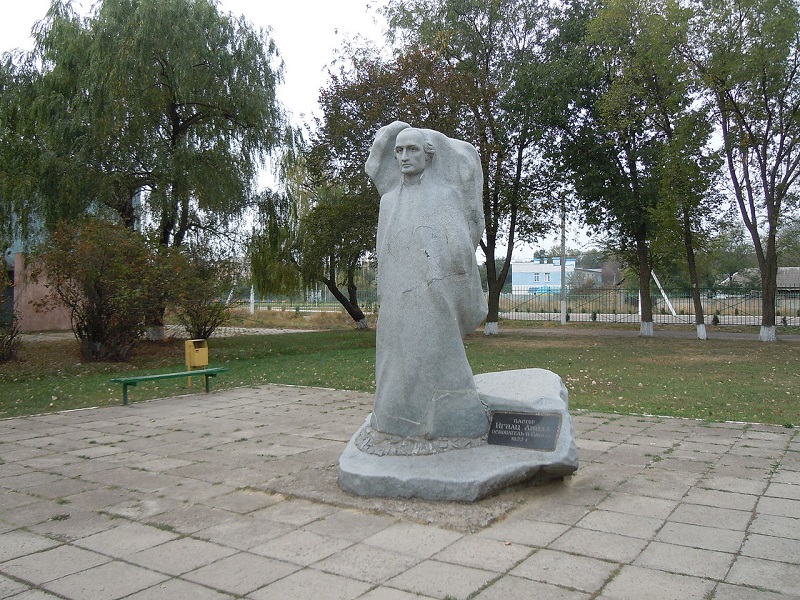
Monument to the founder of Saratoga, Ignaz Lindl. PHOTO: Wikipedia
By the end of 1822, 40 more Catholic families from Bavaria and the same number of Lutherans from Württemberg had moved to Saratoga. According to the Czarist Manifesto, each family received 60 acres of land from the Czarist government. In addition, the colonists were given 2,000 rubles per family for the construction of houses and outbuildings, and the purchase of livestock and supplies.
According to Jung-Stilling's mystical ideas, this territory was considered a "sacred" place of the second coming of Christ, so the future Sarata seemed to the German colonists an ideal place to create a brotherhood of equal people, followers of the First Apostolic Church. The colony was organized according to the apostolic commands. All property was common, and the principles of Christian communism prevailed. The colonists lived in a limited world, where the teachings of I. Lindl, the church, school, and community were the centers of spiritual and social life. The Pietists sought to isolate themselves from the rest of the "sinful outside world," to close themselves off in their community. The inhabitants of the colony did not allow outsiders into their midst, but were happy to hire runaway peasants as hired hands in their households. The colonists' prosperity grew rapidly.
"...The uniqueness of Sarata also lies in the people and the purpose for which it was founded. Its founders are the outstanding representatives of the late Reformation, Ignaz Lindl and Christian Werner. Their goal was to build a unique Christian community based on the principle of the first Christian communities. This project is known in world literature as the "Apostolic Project of the Christian Community of Ignaz Lindl." And this project was realized in only one place on Earth - in the Sarata colony of the Kherson province, Akkerman district, in the early 20s of the 19th century.
Thanks to the energy and determination of I. Lindl, favorable conditions of settlement, the capital of K. Werner, and the diligence of the inhabitants, Sarata managed to gain such a pace of development that by the 1930s it became a major agricultural, industrial, spiritual, cultural, educational, and medical center of Bessarabia," notes researcher Petro Uzunov.
In 1823, the first school was built in Sarata with 68 students. In 1840, a church of Evangelical Christians with 515 seats was built. It was the only church in Bessarabia to have an organ. In 1844, the first pedagogical school in Bessarabia was built at the expense of the colonist K. F. Werner. It trained teachers for rural parochial schools in the German colonies, as well as clerks and surveyors. Over time, a Jewish elementary school was opened in Sarata, and in 1912 a Russian parochial school was opened.
By the beginning of the twentieth century Sarata had acquired the features of a town and became the volost center of the Akerman district of the Bessarabian province. The population grew significantly. If in 1856 there were 943 inhabitants, in 1890 there were 2500 people. In 1874, a steam mill was built. In 1886, a mechanical plant was put into operation, employing 140 workers. There was also a cast iron foundry and paint shops in the town.
For many years, the city also developed as an important trade center and had a strategic position on a major transportation route. During historical events such as the First World War and the Russian Civil War and World War II, Saratoga was also subject to destruction and reconstruction.
Predecessors of the Germans in Sarata: from Trypillians to Budzhak Tatars
People have lived on the territory where the village is now located since ancient times.
On the outskirts of Sarata, archaeologists have discovered burials and settlements of the Trypillian culture of the Copper and Bronze Ages (III - II millennia BC), two settlements of the first centuries AD with a mixed population, which included Slavs of the Cherniakhiv culture (II - VI centuries AD).
Also found: a Bronze Age settlement south of the village and the railroad, north of the ravine on the right bank of the Sarata River, 100 by 100 meters in area. Late Bronze Age settlement Sarata I, 4-5 kilometers north of the village on a promontory on the left bank of the Sarata River, 300 by 100 meters. Settlement of the first centuries AD Sarata II to the north of the settlement, one kilometer on the left gentle bank of the Sarata River.
Also near the present-day Sarata there is the first kurgan burial ground to the north of the village, 2-4 kilometers away. It consists of two groups: one has nine mounds, the other ten, one of which has been excavated and revealed a Late Trypillian burial. Seven mounds were excavated to the north of the village, and 30 burials were discovered, including one of the Usatov type, two of the Pit Culture, two of the Multicolored Pottery Culture, 14 of the Bronze Age, two of the Early Iron Age, and six of medieval nomads. The second mound cemetery is located 2-3 kilometers southwest of the village in the watershed of the Sarata and Kogylnyk rivers, consisting of five mounds running north-south. The third mound cemetery is located 3 to 4 kilometers east of the village on the plateau of the left bank of the Sarata River, consisting of five mounds.
Researchers also note that Sarata itself was founded on the site of the former Tatar settlement of Gura-Kuruder. Also, according to some reports, in 1814, the settlement of Hryhoropil was founded in the area that was later renamed Sarata.
The village's namesake in western Ukraine
The village of Sarata in the Odesa region has a namesake: the picturesque village of Sarata is one of the most remote and inaccessible villages in Ukraine, the most remote village in Bukovyna. It impresses with its natural beauty. Here, the name Sarata has Romanian roots and means "salty". This name of the western village is not accidental: there are two mineral water springs above the Slatina village, from which salt has been extracted since ancient times. The water here is of a unique composition: bromine-chloride-sodium-calcium type, mineralized, healing.
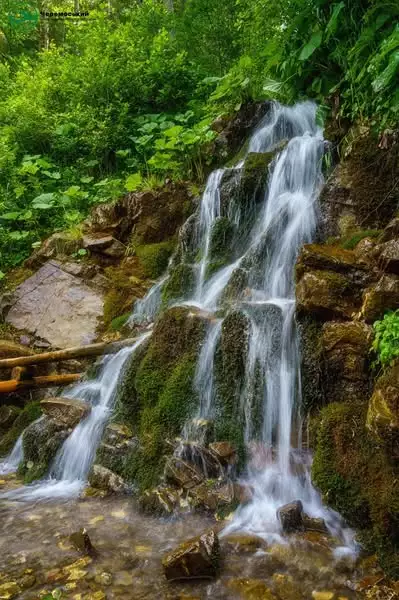
A waterfall near the Bukovyna village of Sarata. PHOTO: A young Bukovynian
Natural treasures of western Sarata:
- The Chornyi Dil landscape reserve of national importance is located along the road from the village center to the village of Perkalaba.
- Karst and speleological reserve "Molochno-Bratskyi Karst Massif" - the deepest vertical karst cave in Chernivtsi region (37 m) is located here.
- The White Stream Complex Natural Monument is a unique limestone deposit and a center of rare flora listed in the Red Book.
- Sarata also has a picturesque Cortuzian waterfall, known locally as Sikalo. It is located near the village of Slatina. The water here is surprisingly tasty and healing.
Twice occupied by Romania
In January 1918, Romanian troops began the occupation of Bessarabia. The 22-year occupation left its mark on the life of the region. The so-called"Romanization" began. Historians note that schools taught children of all nationalities only in Romanian.
Historians also note that during this period the Romanian government protected the interests of the German colonists. In return for the assistance provided to Romania, General Manenzen of the Kaiser's troops received a guarantee that the German colonists would retain all their privileges.
After the agrarian reforms of 1918-1924, the German colonists retained the lands they had owned before 1918. As a result, 16 kulak farms had 50-100 hectares of land, 10 had 40-50 hectares, 21 had 30-40 hectares, 58 had 20-30 hectares, and 112 had 10-20 hectares, while 98 had 3-10 hectares of land. The colonists widely used hired labor on their farms.
Industrial enterprises were also mostly owned by descendants of German colonists. In 1928, Sarat operated the Schneib foundry, the mechanical workshops of Layer, the brick factory and oil mills of Oswild and Würch, the cloth factory and 3 mills of Eckert, Hansen, and Wagner, the tannery and bank of Halperin and Lublinsky. The Germans also owned grocery stores, etc.
According to Soviet researchers, during the period of fascization of Romania and Bessarabia, which began with the rise to power of Hitler and Antonescu, Sarata became a kind of center for fascists in southern Bessarabia. Their meetings first took place in the house of a local wealthy man, Winkler, and in 1939 a club was built for them. There was a district organization of the National Socialist Party, whose center was located in Tarutyno. It was actively supported by the pro-fascist government of Romania. Fascists from neighboring German colonies often came here.
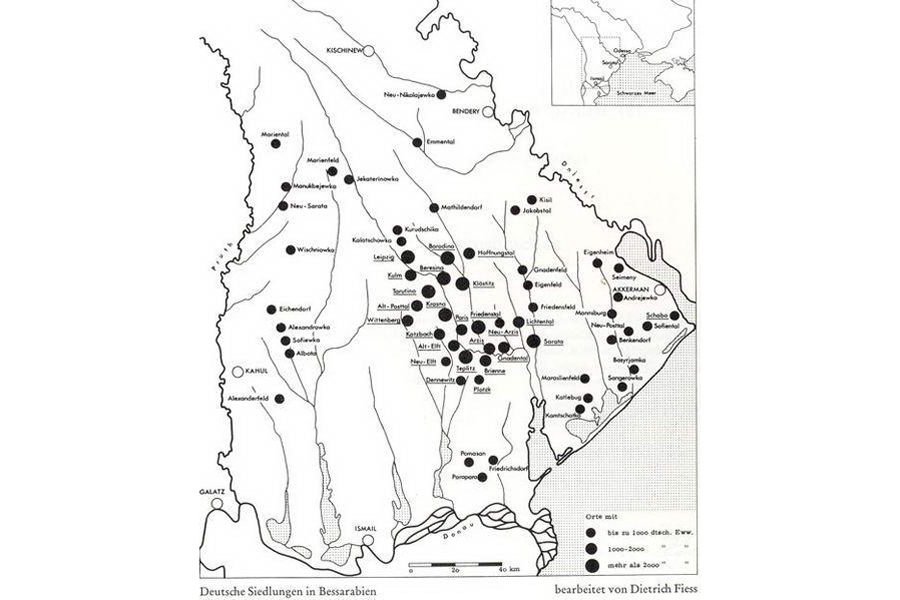
Where ethnic Germans lived in Bessarabia. PHOTO: Frumushika Nova
On June 28, 1940, Bessarabia was annexed to Ukraine as part of the USSR under the Molotov-Ribbentrop Pact, and Soviet rule was established in Saratia. After this annexation of Bessarabia, almost the entire German population of Saratia was forcibly relocated to Germany.
"There was practically no time to gather. On Sunday, September 22, 1940, the last mourning service for the immigrants was held in the church. All the residents of Sarata gathered in the hall as one. All the aisles, stairs, and steps of the church were filled with parishioners. People were crying. The farewell service was conducted by Pastor Gotthold Winger. His sermon that day was interrupted several times because the pastor could not continue because of the excitement. For the last time, the choir sang under the arches of the church, the hall was filled with the tearing and sad voice of the organ, and the bells rang out for the last time on the tower. People came out of the church and stood on the steps for a long time without wearing hats," Petro Uzunov, a researcher of the village's history, wrote in his book "The Temple in the Steppe."
Socialist transformations began, as a result of which Sarata became the district center of the Izmail region of the Ukrainian SSR. Land and property were nationalized. As the colonists moved to Germany, many peasants from the western regions of Ukraine moved to Sarata. They were united into the Red October collective farm. The artel received assistance from the state: 45 horses, 90 heads of cattle, 280 sheep, 26 pigs, 500 poultry, seeds of cereals, grasses, sunflowers, potatoes, etc. In 1940, a secondary school was opened, cultural and educational institutions, a club, and a district library were organized. The district hospital started working.
With the help of the MTS organized in Sarat, the first sowing campaign of 1941 was successfully conducted.
But on July 22, 1941, German-Romanian troops occupied Sarata. The period of Romanian occupation began again.
During the Romanian occupation (1941-1944), Sarata, like the rest of Southern Bessarabia, was ruled by the regime of Ion Antonescu.
At the time, Sarata was part of the governorate of Bessarabia, which Romania considered its inalienable territory (unlike neighboring Transnistria, which had the status of a controlled zone).
By the beginning of the Romanian occupation in 1941, most of the local Germans (about 1600 people) had already left for the Third Reich during the mass repatriation in the fall of 1940. For the remaining local population (mostly Ukrainians, Bulgarians, and Moldovans), the occupation regime established a rigid system of taxes and duties. The administration actively implemented the policy of Romanization. The Romanian authorities pursued a harsh policy toward the Jewish population of Bessarabia. Jews from the surrounding areas were gathered in transit camps and ghettos for further deportation to Transnistria.
During the occupation, there was an underground movement in the region; residents tried to avoid mobilization into the Romanian army, which led to repression and arrests by the Sigurantsi (Romanian secret police).
The occupation of Sarata ended on August 23, 1944, during the Jassy-Chisinau Offensive, when Soviet troops regained control of the region.
The Werner School
One of the brightest pages of Sarata's history is the Werner School, which brought the village fame far beyond Bessarabia. It trained teachers for schools in the German colonies, as well as clerks, surveyors, and architects.
In 1823, the first school was built in Sarata, and 20 years later, colonist H.F. Werner built the first pedagogical school in Bessarabia at his own expense. It trained teachers for rural parochial schools in the German colonies, as well as clerks and surveyors.
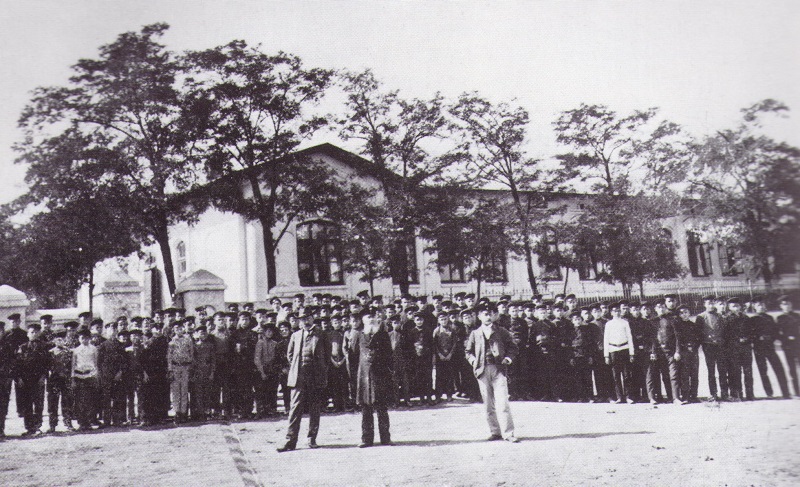
Students of Werner's school. Photo: Facebook / Zlahoda Sarata
Christian Friedrich Werner arrived in Sarata in 1823 at the age of 63 and died just a few months later, leaving the community a capital of 25,000 rubles in silver for charitable and educational purposes.
The school founded with these funds was the first German-language teacher's seminary (Lehrerbildungsanstalt) in the Russian Empire and the only such institution in Bessarabia. Initially, it trained orphaned boys to become teachers, clerks, and surveyors for the German colonies, but in 1866 the school received the status of a Central School. It was the intellectual center of the Bessarabian Germans, graduating about 20 qualified teachers annually.
It should be noted that from 1869 to 1873 , Alexander Teodorov-Balan, a prominent Bulgarian scholar and future first rector of Sofia University, studied here.
Werner's funds were used to build not only a school in Sarat, but also a church (consecrated in 1843), which served the residents for exactly 100 years until the deportation of the Germans in 1940. It was the first religious building in Bessarabia to have an organ.
History of the Saratov church
Built more than 180 years ago, the church in Saratia has survived more than one change of political system. And it has heard not only prayers. In Soviet times, according to Petro Uzunov, the church was a cinema, a House of Culture, and even a disco...
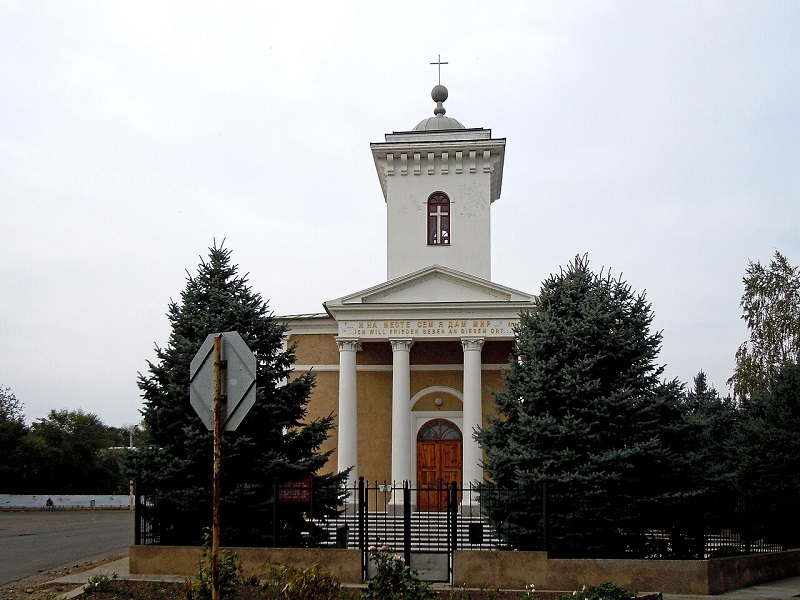
PHOTO: Wikipedia
The church as a branch of the cinema network (August 1940 - June 1941; August 1944 - 1948)
The first stay of the Soviet government in Saratov in 1940-41 resulted in the transfer of the majestic building of the Saratov Kirkha to the ownership of the regional cinematography department for the purpose of using it as a cinema.
In the winter of 1940, a plywood movie booth was hastily erected on the eastern side of the church, where the famous organ used to stand. The opposite wall of the church, the former Lutheran altar, was covered with several sheets that served as a screen.
Kirkha, a Romanian Orthodox church (1942 - early 1944)
Romanian troops entered Sarata in late July 1941. Information about the fate of the church in the first months of the war is contradictory: according to one version, Soviet prisoners of war were temporarily held in the church building, according to another, the church building was turned into a warehouse. Later, by 1942, when the Romanian contingent in Sarat grew to two thousand people, there was a need to meet the religious needs of Romanian soldiers, who were predominantly Orthodox in their religion. Services were held in the church, prayers were said, ministers performed sacred rites, people performed church rites and treated the church with respect. And all this was happening in wartime.
Kirkha - a district club (1944-1950)
Available information and eyewitness accounts indicate that at the time of the Red Army's entry into Saratia in August 1944, the church building retained its original appearance and could well have been used as a cultural institution. The church again became a district club and a district cinema. As a matter of urgency, the church lost its bell tower topped with a cross. The famous inscription from the book of Haggai also disappeared from the building's pediment: "And in this place I will give peace." The architectural masterpiece ceased to stand out against the background of other buildings in Saratoga and turned into a nondescript, gray slate-covered building. The only distinctive element was the four columns at the entrance, which also miraculously survived.
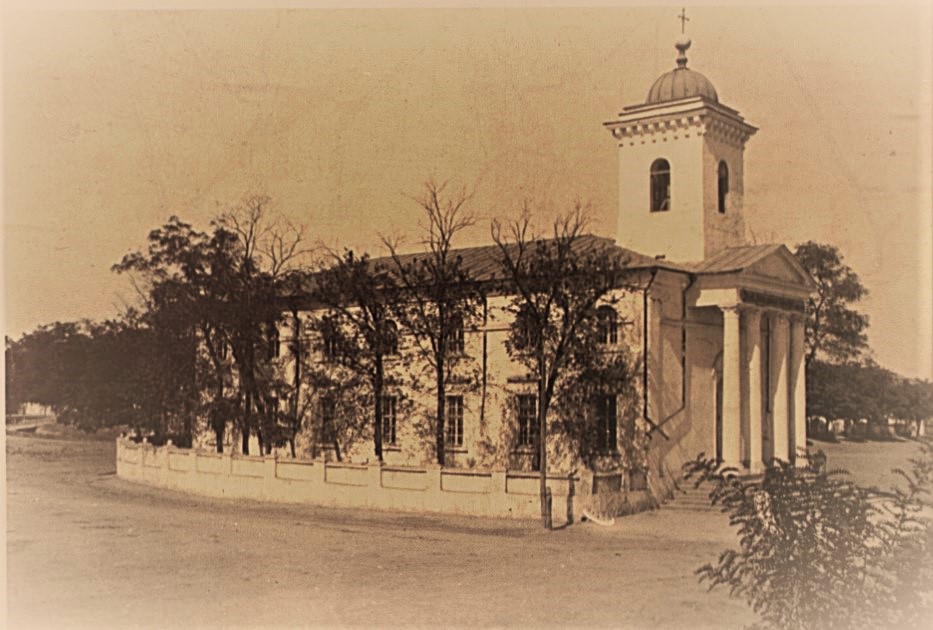
PHOTO: Facebook / Zlagoda Sarata
Kirkha - Garrison Officers' House (1950-1988)
The postwar history of the Sarata Kirk building is directly related to the use of Sarata as an important military strategic facility in Soviet times. According to the researcher of the history of the village, former military officer V. Klynovskyi, Sarata became a "popular" place of deployment of numerous military units and subdivisions due to "convenient transport location, the presence of a railway station, and, most importantly, due to the availability of a large number of vacant housing units left by Saratov Germans as a result of resettlement in 1940."
Of course, a large number of military officers needed a building that could serve as a kind of cultural and ideological center for the army. The church building was the only object that could fulfill this function. The church hall became a venue for numerous cultural events. For each holiday, a cultural and entertainment program was prepared by the military and civilians. On weekend evenings, movie screenings were held and attended by young people from all over Saratoga and the district. In addition, the Officers' House hosted amateur art groups and sports sections.
During the entire period of the Officers' House's existence, no major repairs were made to the church building. Small cosmetic repairs (whitewashing, painting) did not contribute to the preservation of the unique building.
Kirk - the village and district house of culture (1989-1994)
In the late 80s and early 90s, during the period of Ukraine's independence, the number of the Saratsk military garrison was drastically reduced for obvious reasons. Military units were either disbanded or relocated. The building of the church, which served as the Officers' House, was empty, but not for long. The fact is that in January 1984, Sarata lost a building that served as a cinema and a cultural center to a fire. At first, it housed the village house of culture, and a little later the district one. The methodological office of the district house of culture worked in the utility room, and the costume room and gym were located in the neighboring rooms. The church hall itself hosted traditional events related to holidays and New Year's celebrations. At that time, discos were especially popular among young people. On Saturday nights, the church hall would shake from the roar of music, deafening from powerful speakers, blinded by bright spotlights, and suffocated by cigarette smoke. In one corner of the hall there was a kiosk, or more simply, a stall where you could buy alcohol. Although it was forbidden to smoke and drink alcohol in the hall, the resourceful youth of Saratov managed to circumvent these prohibitions. After the discos, beer bottles and cigarette butts were lying around the church building.
Restoration of the church
On September 20, 1994, a meeting of the Saratov Village Council was held, at which the deputies unanimously supported the decision to transfer the church to the church community.
All the restoration work in the Saratov church, from the design stage to the grand opening, took only 7 months. On September 30 of the following year, the restored church was opened. Many people still consider such a short time to rebuild a miracle.
Sarata residents are very fond of their church, so the village, in addition to the Foundation Day, also has its own church holiday (the Day of the Foundation of the Church) on October 14.
A native of Sarata lost his freedom because of a caricature of Khrushchev
The steppes of Budzhak have brought up many brave people. Among them was Pavlo Ivanovych Otchenashenko (1941-2022), an artist born in Sarata, a political prisoner, and a fighter for Ukrainian freedom.
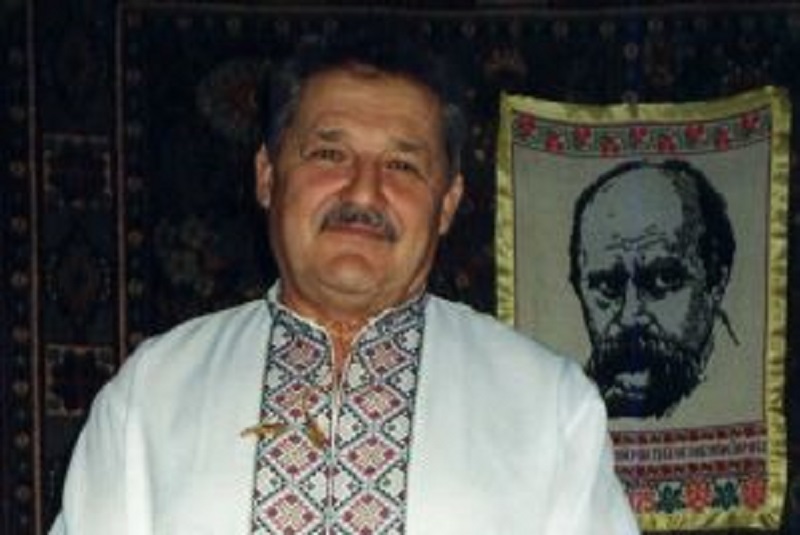
Pavlo Otchenashenko. PHOTO: UINP - Odesa
In 1963, during the Thaw, Pavlo Otchenashenko created a caricature of Nikita Khrushchev as a symbolic protest against the senselessness of the Soviet system. At that time, the country lived in an atmosphere of total control, and even an ordinary drawing could become a "high treason." When the KGB got hold of the cartoon, a real hunt began. Otchenashenko was arrested in September 1963. The artist was accused of "anti-Soviet agitation and propaganda" and sentenced to two years in camps in Mordovia. There he became a political prisoner alongside Ukrainian dissidents who were already forming the spiritual backbone of the Resistance Movement.
Pavlo himself later recalled how he learned to be a Ukrainian even in the camp: there he began to speak Ukrainian, became acquainted with the poetry of Stus and Malaniuk, and listened to stories of repressed priests and scholars.
After his release, the authorities did not allow him to return to Odesa, so he settled in Bilhorod-Dnistrovskyi, where he worked, engaged in social activities, and became one of the organizers of the Society of Repressed and Rehabilitated. In the 1990s, he joined the People's Movement of Ukraine, opposed Soviet symbols, and was among those who removed red flags in his city.








