17 August 2026, 18:41
Andriy Krasnozhon: "Catherine II was not the founder of Odesa and did not consider herself to be one"
Ця стаття також доступна українською
Andriy Krasnozhon, Ph.D. in History and archaeologist, shares details of the excavations on Primorsky Boulevard in Odesa, presents evidence of the Ottoman origin of the discovered tower, and reveals how the ancient port of Istrian and the fortress of Khadzhibey coexisted at the same location. The scholar explains the connection between the Genoese Genestra, the Lithuanian Kochubiev, and the Turkish Hadzhibey, definitively debunking the myth that Catherine II “founded the city from scratch.” He demonstrates how the city—a transportation hub—has always been connected to the Ukrainian Right Bank and can function fully only as part of Ukraine.
I’ll start, perhaps, with a bit of a lighthearted provocation, but still: could you try to explain in a minute to someone who knows nothing about archaeology exactly what you found this summer?
We found traces of human activity from various eras in the form of architectural remains, ranging from the time of the ancient Greeks to the most recent layers associated with the development of Primorsky Boulevard during the time of Count Langeron and Prince Vorontsov. And between these two chronological markers, there are also the remains of Ottoman-era fortifications, the Khadzhibey Castle, as well as cultural layers from the medieval period of the Italian trading post of Genestra.
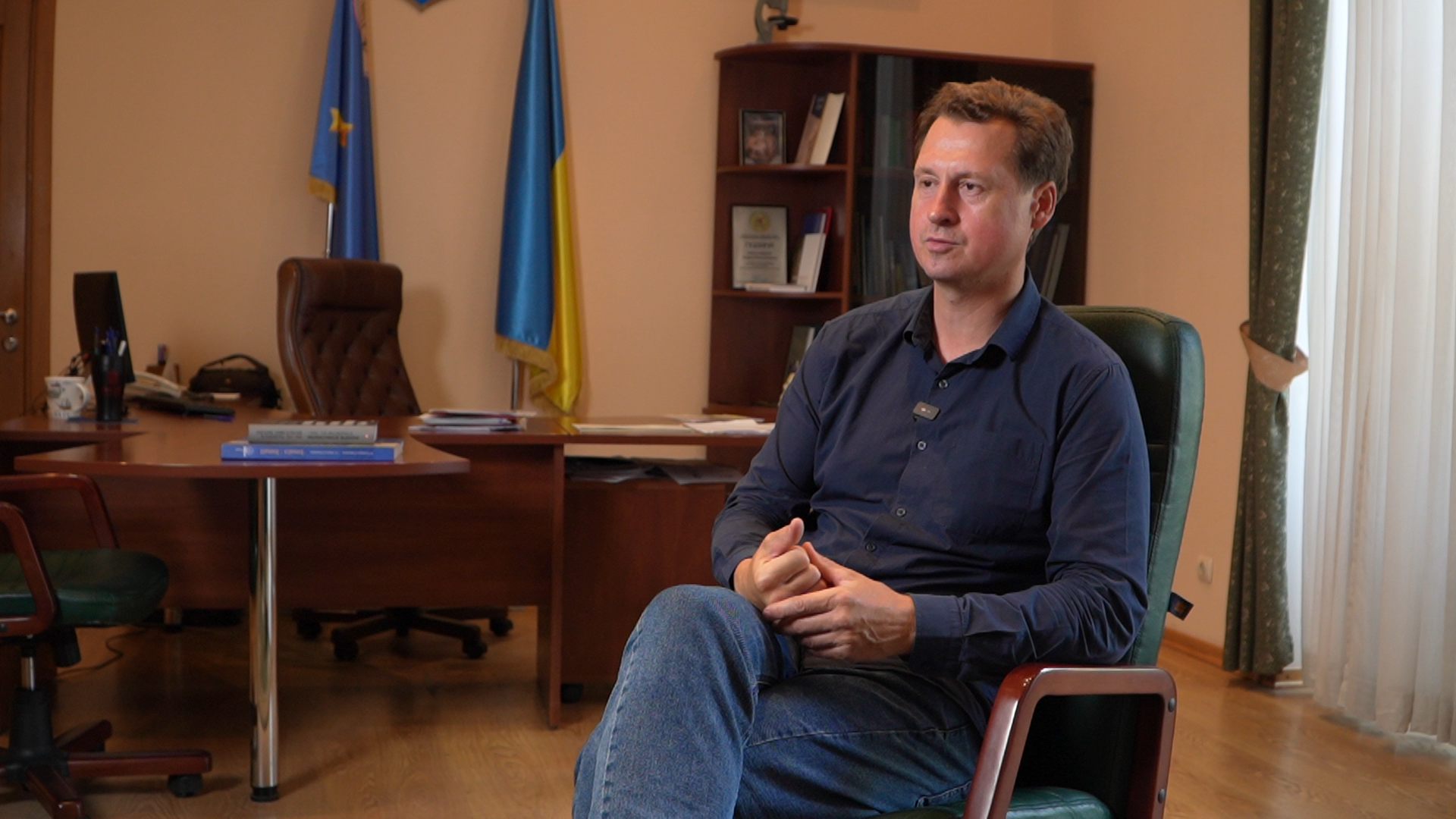
SCREENSHOT: Intent’s YouTube channel
You constantly say that the main discovery is not the structure itself, but its archaeological context. Why might this be even more important for science?
Any discovery is, first and foremost, a body of scientific evidence. It’s not just some find in and of itself. You have to prove to the scientific community that your discovery is well-founded. That’s exactly why it’s so important not just to find an artifact or a structure, but to find it correctly, document it, and understand its entire stratigraphic context.
Stratigraphy is the science of the layering of strata; it is fundamental to archaeology. And these layers are linked to the economic activities of ancient people. For example, you uncover a layer of dressed stone that was used to build a specific structure. In that same layer, you find a coin, a jug, or even a fragment of something. And in this way, through stratigraphy, you date the structure you’ve found. It could be a stone structure, a utility pit, or anything else.
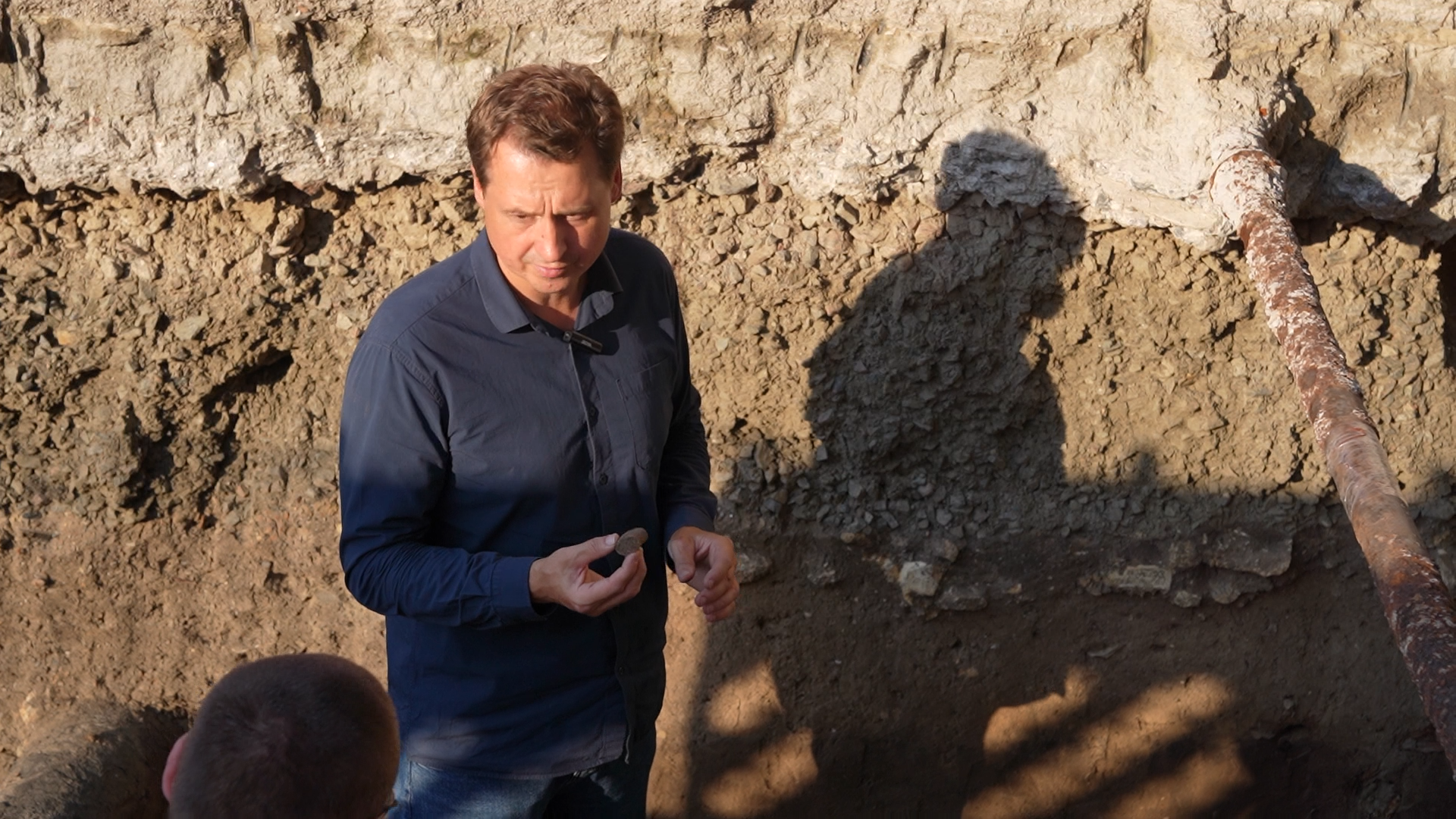
SCREENSHOT: Intent’s YouTube channel
It is precisely in this context that it is important that we discovered the entire complex over the course of years of research in the semicircular area of Primorsky Boulevard, where all of our other finds have already been located. If we had found the tower of the Khadzhibey Castle in the first season instead of the fourth, I wouldn’t rule out the possibility that we might not have understood what we were dealing with. At first, it was just a small section of a wall. And we might have misinterpreted it if we hadn’t excavated toward the flower bed to trace its continuation. But we already knew the context. That’s what stratigraphy and a proper understanding of context mean.
How do we even know that this structure dates specifically to the Ottoman period? What evidence is most compelling here, aside from stratigraphy?
There are two sets of information on this matter. The first is the structural features of the substructure, which we interpret as the tower’s foundation. The second is the collection of finds associated with this substructure.
Ideally, there would be some kind of commemorative plaque inscribed with the words: “I, Sultan So-and-so, built this fortress.” In Bendery, for example, there is such a plaque from Sultan Suleiman dating to 1538. In our case, there is no such direct indication. But we are certain that, at the very least, this castle was used by the Turks in the 16th century. This is not a Russian or Soviet structure, nor is it the foundation of a 19th-century entertainment pavilion. It is an Ottoman fortification. Military artifacts should be found there. We have a pile of flints from 18th-century flintlock muskets. In September 1789, the castle was stormed by the troops of Joseph de Ribas, and these flints were lost during reloading and combat. We have decorative elements from grenadier-style sabers and flattened lead bullets that struck the stonework. In other words, this was an Ottoman-era fortification that was stormed.
In September 1789, the assault took place, and just two weeks later, the castle was rendered inoperable by the detonation of two mines. Afterward, it was systematically dismantled for building materials. When Franz de Volan began building barracks and an earthen fort here, the first thing they did was dismantle what remained of the Turkish structures. There are documents in which General Kakhovsky writes in a report to St. Petersburg that there would be enough stone from the Khadzhibey ruins for the first buildings.
Where did Khadzhibey get the stones to build the castle? When we examined the first course of the tower’s wall, we noticed an important detail. A medieval-style mortar was used there, to which bones and charcoal were added to help it set.
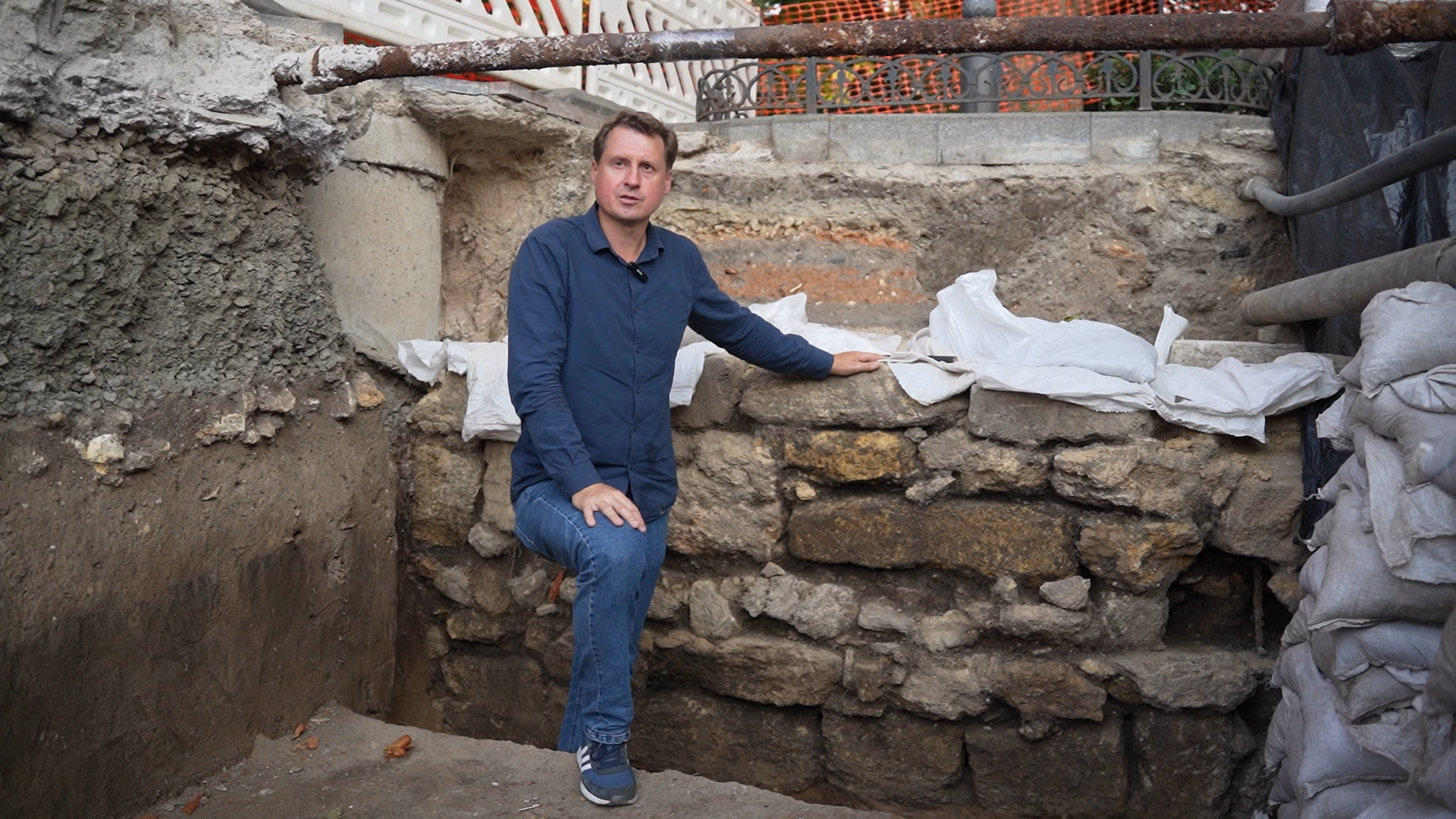
SCREENSHOT: Intent’s YouTube channel
The stones themselves, both in the foundation and higher up, are of very high quality, uniform in type, and beautifully hewn. Where did they come from? On Primorsky Boulevard, from the 5th to the 3rd centuries BCE, there was an ancient Greek settlement called Istrian Harbor. The ancient Greeks did not know how to make mortar, but they left behind substantial stone structures. When the Turks built the castle in the 16th century or earlier, they simply dismantled the ancient city and pried out these stones, using them in the castle’s foundation.
Then another upheaval took place: the stones from the Ottoman castle were used for Russian barracks, and when the barracks were dismantled in 1818 to make way for the construction of Primorsky Boulevard, they were used for the foundations of the first buildings in the new Odesa.
No archaeological finds have been discovered that would indicate people lived here in the 15th century. But for now, we are primarily investigating the fortress. Perhaps it had already been abandoned by that time, while the population continued to live nearby—for example, in a village?
The fact is this: from an archaeological standpoint, we do not yet have any archaeological evidence confirming the presence of a population here in the 15th century. If you’re asking whether there is a continuity between, so to speak, the 700-year-old Genestra and modern-day Odesa, I want to say that “continuity” is a very misguided way to frame the question. There is continuity even from the ancient Greeks.
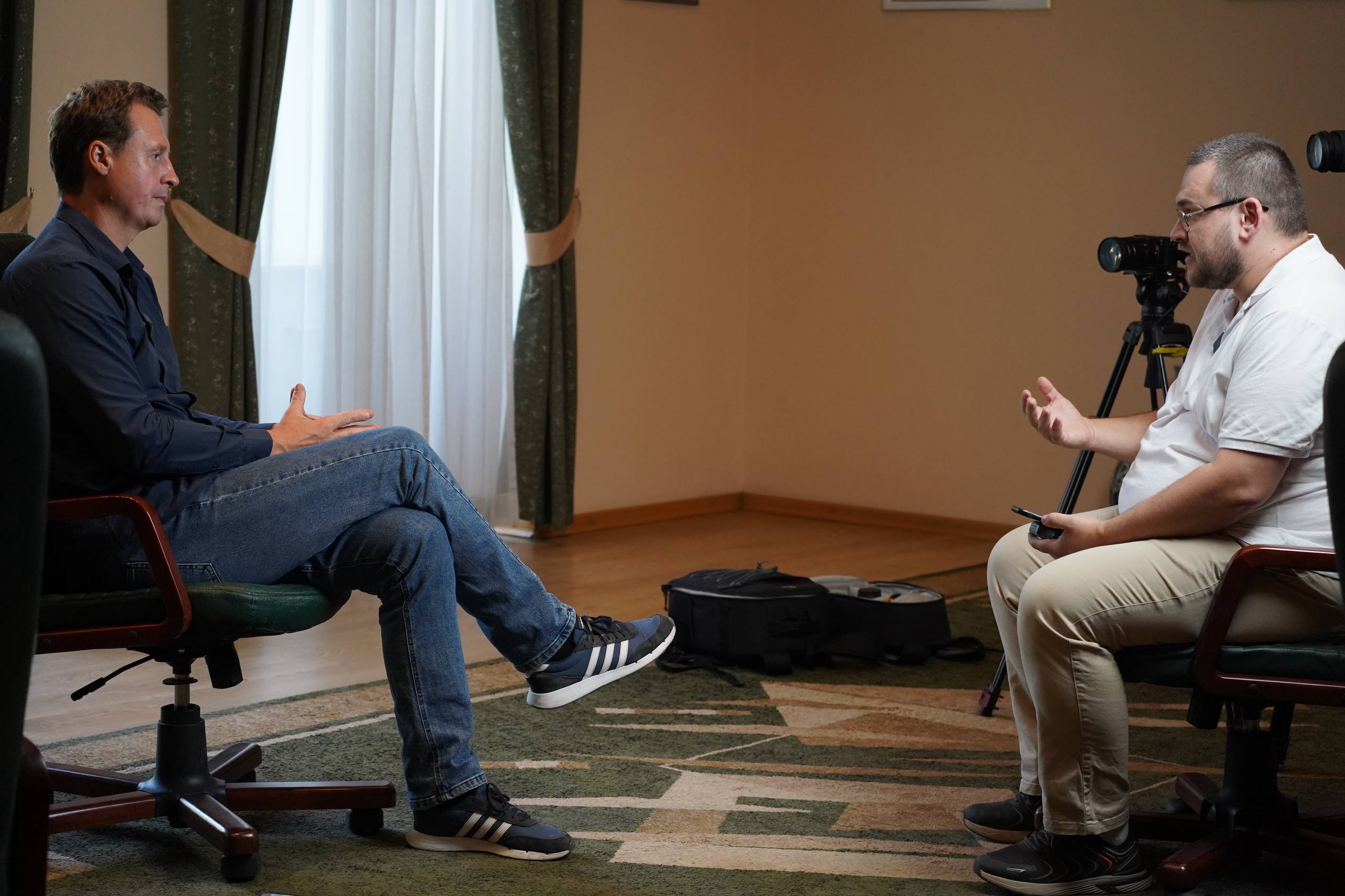
Intent Editor Valery Bolgan asks Andriy Krasnozhon a question. PHOTO: Natalia Dovbysh
Let’s start with the fact that Catherine II herself was not the founder of Odesa and did not consider herself to be one. During its first year of existence, the city had a Turkish name. Catherine simply captured the Ottoman city of Hadzhibey and turned it into the Russian city of Hadzhibey. That’s all. She allocated funds for the construction of the port. Incidentally, Odessa was considered the least “Russian” city in the Russian Empire.
In terms of infrastructure and urban culture—not as a settlement, but as a city in its own right—this cultural phenomenon was first introduced here by the ancient Greeks 2,600 years ago at the site of the Vorontsov Palace. And since then, this urban culture has continued uninterrupted here.
Odessa is a replica of the ancient Greek port of Istrian, the medieval Genestra, the Lithuanian port of Kochubiyiv, the Ottoman Hadjibey, and—pardon the expression—the Russian Odessa. Because there’s no escaping this reality. All of this reflects the same logic of the steppe’s connection to its grain and the sea’s ability to transport that grain to the Mediterranean, where it was sold and brought profit to the owners of this commodity.
It depended on the technological progress of the era whether it was a large port, as in the days of Catherine II or Comrade Brezhnev, or whether it was cramped and small, as in the days of Vladislav Varnenchik, for example. Or it was more or less significant from the Italians’ perspective; they referred to it as a “factoria.” That is, it was simply a direct indication that there was a small port here. It all depended on what resources were invested in this particular area during a given period. And the logic behind its operation has remained unchanged for the past 2,500 years.
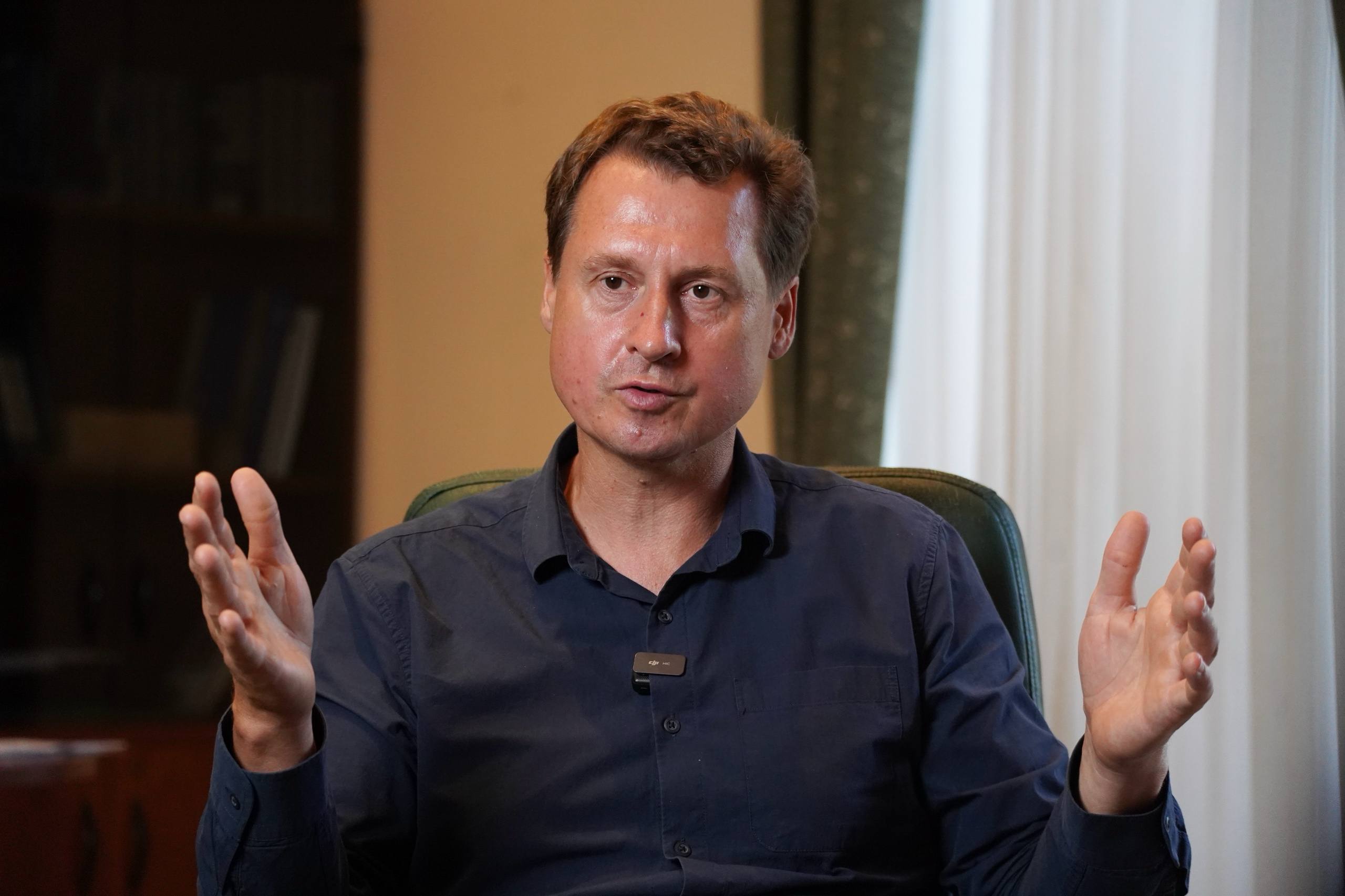
PHOTO: Natalia Dovbysh
For some reason, people have stubbornly latched onto this idea of a founding date: is Odesa 200 or 600 years old? I wouldn’t base anything on dates at all, because tomorrow archaeologists will discover... They’ve already found Genestra, which means it’s been 700 years. There’s no need to date anything at all or celebrate it with such fanfare. It’s an inferiority complex. Have you noticed that the smaller a settlement is, the older its history seems to be?
I’d look at Odessa through Fernand Braudel’s framework—not as a specific point, but within a broader context. The author uses the term “eternal Mediterranean.” It exists within its own unified, logical context, rooted in geography. All of history is shaped by geography. It’s exactly the same here. We still have the same black soil today that existed in the steppes of Ukraine during the times of the Scythians and the ancient Greeks. And the history of the northwestern Black Sea region, from the Danube to the Southern Bug, is the history of Ukraine’s sole supply of resources from the Eastern Mediterranean. It’s just that 2,000 years ago, for example, its center was in Olbia, whereas today it’s in Odesa. 500 years ago, it was in Akkerman, and in the 16th century—in Izmail. And now, for example, these are provincial towns that cannot compare to the great city of Odesa.
So what am I getting at? This is a single region with a single history that has been engaged in the same activity since time immemorial. And thus we have the eternal Black Sea region, rather than the history of any specific city, town, or the like. It’s all unified within a single context. You just need to zoom out a little, and this entire area—the northwestern Black Sea region—becomes a single microzone. It has been continuously inhabited by us, passed down from generation to generation.
Watch the full version of the interview on the Intent YouTube channel
Here’s another example, specifically about the Mediterranean: Barcelona has virtually no connection to Hamilcar Barca other than its name, and you won’t find any Punic architecture in the city today.
The name Odessa didn’t come about by chance. It emerged precisely in the context of a reference to the ancient heritage of the Mediterranean and the Black Sea regions. So, in the 18th century, they set out to drive the Turks out of the territories of the Greek colonies. Odessa is associated with Homer’s *Odyssey*—the traveler was just like that. It’s a name of the ancient type, revived in modern times.
Odessa, unlike the Port of Istria, sounds cool. I think that’s more or less how people reasoned back then during the construction of the port and the first buildings along what is now Primorsky Boulevard. In other words, in the Russian mindset of that time, they weren’t engaged in founding any new cities—at least not in Odessa. According to their philosophy at the time, they were simply reviving the ancient Greek colony of Odess, which had fallen into disrepair.
The gradual infrastructure development of Odesa, in which the Russian Empire invested, gave rise to a vast number of economic infrastructure projects throughout the Podillia region all the way to Western Ukraine.
And we can see this in one of the 2021 excavations on Primorsky Boulevard. Back when there was no boulevard yet, but there were the moats of an ancient, unfinished fortress from 1765–66, they were simply filled in with city trash. We excavated three and a half meters of these municipal landfills from the Richelieu era. There was just about everything there! All the ceramics were of Podillia origin, from the Radziwill and Chartoryisky manufactories. The entire range of fine and everyday ceramics—which had to be replenished daily for a large city because they break easily—was supplied by Polish-Lithuanian manufactories.
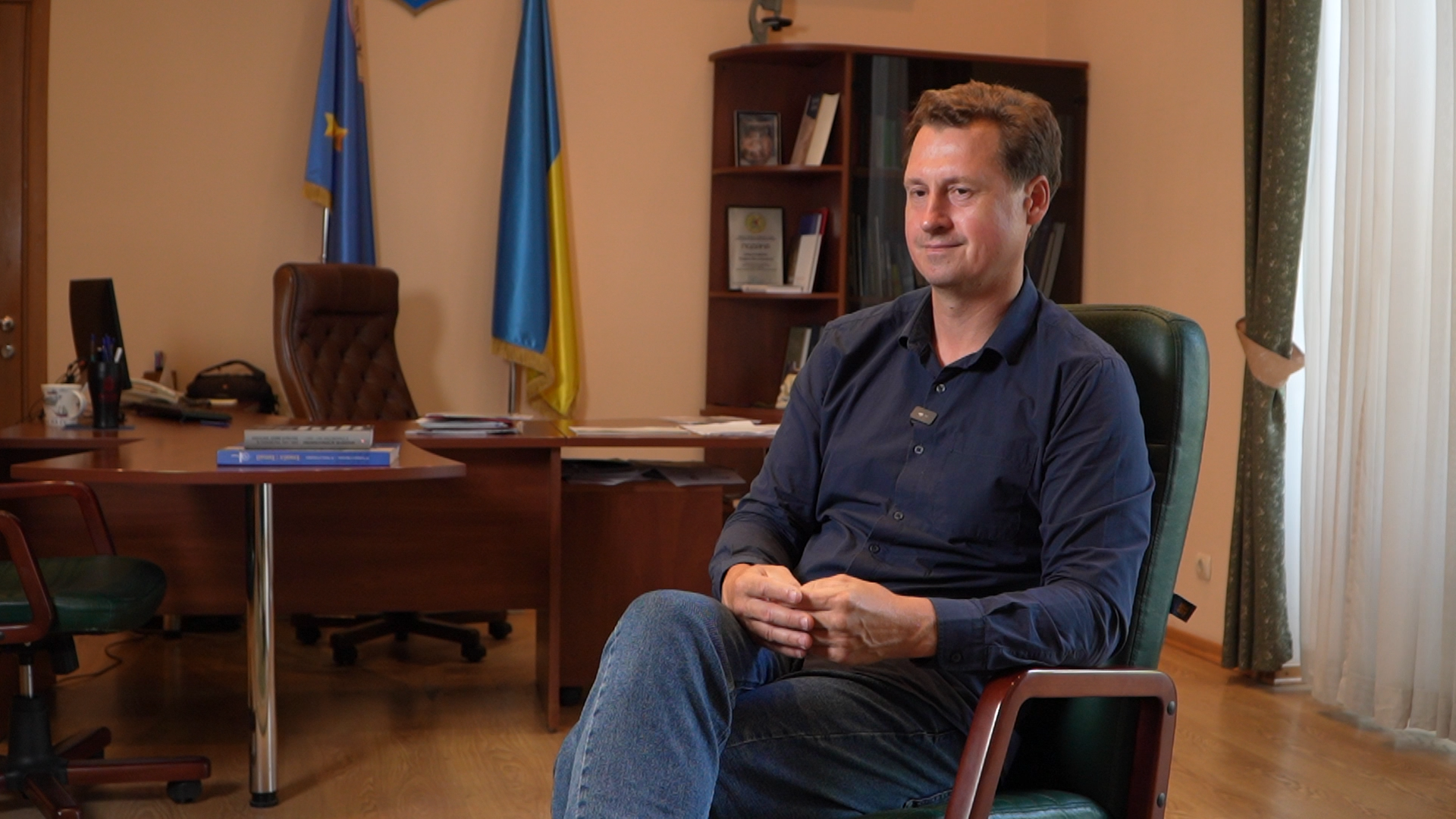
SCREENSHOT: Intenta’s YouTube channel
In other words, for the first time in history, the sea was linked not only to the steppe but also to the “golden belt” of the Polish Crown—the network of manors that had formed in the 17th century. All that grain and the entire economy of all those towns began to function solely to supply the great metropolis.
Consequently, as a major transportation hub in the early 19th century, Odessa began placing orders for luxury goods. After all, it was necessary to somehow satisfy the tastes of the aristocrats who had settled here, as well as the merchants who were rapidly rising through trade—primarily in grain from Podolia.
This entire process only really took off once the Ukrainian Black Sea region and the Right Bank were economically united. And they exported Ukrainian grain not through Polish manors, cities, and the like, but through Odesa—a coastal city that, for the first time in history, was finally functioning properly. This is what Polish leaders tried to do, but they simply failed—as Długosz wrote: “We ship Podillia’s grain through the Black Sea port of Kochubiyiv.”
Everyone keeps saying, “Odessa is a Russian city” or “Odessa is a Ukrainian city.” But Odessa is a thoroughly Ukrainian city—not because of its language or its population, but because of its economy. Odessa’s very existence is possible only within the context of Ukraine, both geographically and politically. In the sense that it supports Ukraine’s economy: give us grain, and we’ll ship it onward and trade it. And any attempt to cut it off or isolate it will result in it becoming a dead-end border zone.