Меню
Соціальні мережі
Розділи
July 15, 2024, 11:26 p.m.
War for guano: when resources don't smell
This article also available in English10647

The battle of Tarapak. Image: Wikipedia
Resources are one of the most popular reasons for starting a war between countries. Silver, gold, spices, gas, oil - the list is endless. Probably, the War for Guano will be one of the most exotic on this list. Let's try to find out how Bolivia, Peru, and Chile approached this war and whether guano was the only thing that became a bone of contention.
South American countries after independence
Causes of tension between neighbors
Countries of South America after independence
The Napoleonic Wars and France's conquest of Spain led to a decline in the latter's authority in the American colonies. Gradually, they all began to declare independence. Interestingly, the former allies in the common struggle for freedom quickly moved to clarify their relations. In particular, when the creation of the Peruvian-Bolivian Confederation was proclaimed in 1836, Chile declared war on the newly created state, and Argentina followed suit. In 1841, the president of Peru tried to annex Bolivia. In general, the first decades of Bolivia and Peru's existence were characterized by instability. In addition to fighting with each other, there were constant uprisings and coups within the countries.
After the liberation of the colonies from Spain, a number of resources were discovered on the west coast of South America. In particular, in the 1830s, the silver rush began in Chile. Also, the dry climate of the western coast of South America led to the formation of significant deposits of nitrate and guano, the excrement of seabirds and bats. Both resources were excellent fertilizers. In addition, nitrate could be the basis for the manufacture of explosives. So the region around the world's driest desert, the Atacama Desert, where Peru, Bolivia, and Chile were located, attracted the attention of the world. Western capital began to flow into the region. In the mid-1860s, Spain tried to return to South America by seizing the Chincha Islands, rich in guano deposits. However, the Spanish attempts were in vain. Peru and Chile, later joined by Bolivia and Ecuador, rebuffed the aggressor decisively. Joint exploitation of nitrate and guano deposits, as well as metal exports, seemed to create a good basis for peaceful coexistence.
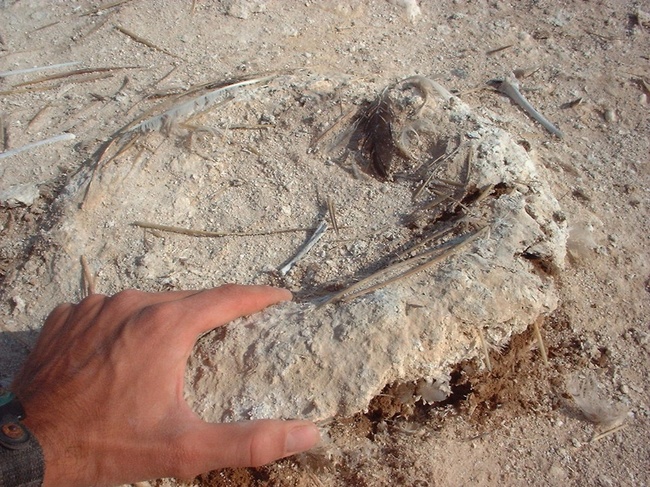
A bird's nest made of guano. Photo: Wikipedia
Causes of tension between neighbors
In the 1870s, the world experienced an economic crisis. As a result, metal exports from South America decreased significantly. Moreover, in 1873, the United States passed the Coinage Act, which transitioned the country from bimetallism to the gold standard. That is, if earlier money could be exchanged in American banks for both gold and silver, from now on, gold remained the basis of the US monetary system. The adoption of the act led to a drop in silver prices, which hit Chilean exports in the first place. Peru's big problem was that prices for guano, which was the basis of the country's exports, began to fall globally. Guano deposits on the Peruvian Chincha Islands and other territories began to decline rapidly. Bolivia in the 70s of the nineteenth century was an economically weak country. Antofagasta, a province on the Pacific coast separated from the rest of Bolivia by the Atacama Desert, could have become the basis for the country's economic prosperity. Antofagasta had huge deposits of both guano and saltpeter. However, the territory of Antofagasta was ruled by an Anglo-Chilean company that agreed to exploit the province's resources on extremely favorable terms. It should be added that Chile, Peru, and Bolivia had significant international debts and were on the verge of default.

The Atacama Desert. Photo: Photo.
Relations between Bolivia and Chile were complicated by a border dispute. In 1866, the countries signed a treaty establishing the border between the two countries along the 24th parallel. The mineral-rich zone between the 23rd and 25th parallels was also declared a territory of joint tax collection. However, it is well known from history that such agreements on the joint use of territories gradually lead to general discontent.
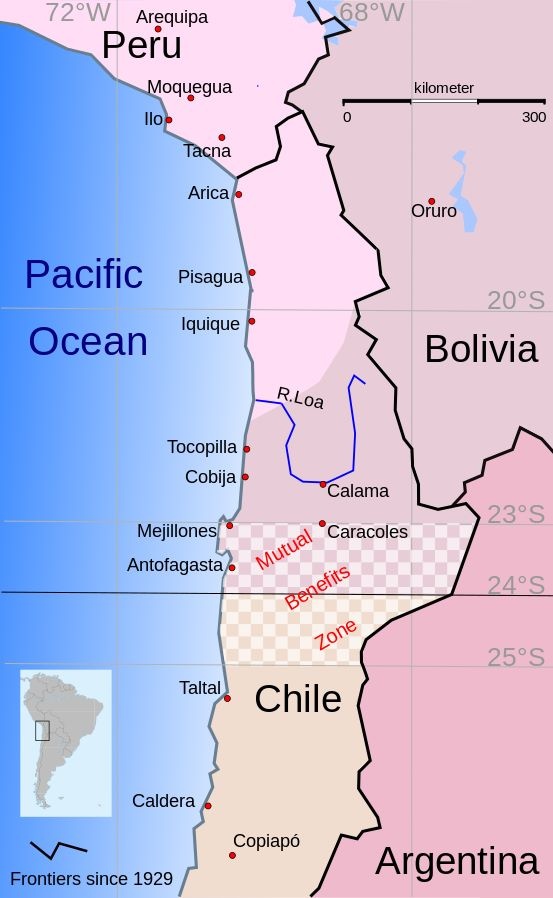
The division of the disputed territory under the 1866 treaty. Map: Wikipedia
In 1873, Peru and Bolivia signed a secret alliance against Chile. The alliance was offered to Argentina, which had territorial disputes with Chile. The Argentines repeatedly expressed a desire to join the treaty, but feared that Chile might have a symmetrical secret treaty with Brazil.
In 1874, Chile and Bolivia revised the 1866 treaty. Under the new act, Bolivia received the exclusive right to collect taxes between the 23rd and 24th parallels. As compensation, Bolivia undertook not to raise taxes for Chilean public and private enterprises in the region for 25 years.
In the mid-1870s, Peru, worried about falling guano exports, made efforts to create a regional monopoly on the production and export of saltpeter. First, Peru nationalized its domestic production of nitrate. However, this was not enough, as Bolivia and Chile were nearby. Chile's deposits of nitrate were insignificant, but the country, together with the United Kingdom, was engaged in development on Bolivian territory. Peru was able to reach an agreement with Bolivia on the exploitation of nitrate deposits on its territory, but Chile and the United Kingdom were unwilling to give up their business in Antofagasta. The Peruvian government began pushing Bolivia to violate the treaty it had signed with Chile in 1874.
It was Peruvian economic ambitions that can be considered the direct cause of the War of Guano. However, it seems that the Chilean leadership also harbored aggressive plans to seize coastal territories of economic and strategic importance.
War was to be
In February 1878, Bolivia decreed that a Chilean-British company in the territory of Antofagasta had to pay an additional tax. Since the company, supported by the Chilean government, refused to pay the tax, Bolivia confiscated its property early the following year. In response, Chile sent a warship to seize the port of Antofagasta. In March, Bolivia declared war on Chile. A month later, Peru joined the war, following a secret treaty.
The Chilean army began to move deeper into Bolivia, but it was difficult to do so in the Atacama Desert without established communications. In fact, this meant that for a successful advance on land, Chile needed to win the war at sea. The war at sea was fought between Chile and Peru, as Bolivia did not have its own navy. The Chilean navy tried to blockade Peruvian ports, and the Peruvians responded by attacking Chilean ships without support. The battle of Cape Angamos, in which five Chilean ships surrounded two Peruvian ships, became decisive for the war at sea. The corvette Union managed to escape, and the monitor Uascar was captured by the Chileans. Chile now had stable communications and was able to quickly deploy troops to Bolivia and Peru.
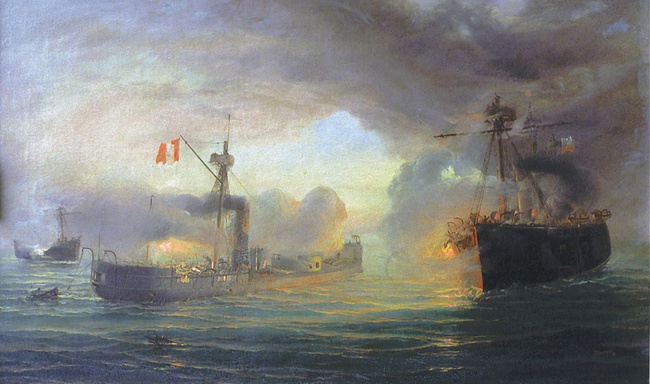
The Battle of Cape Angamos. Image: Image.
On the ground, the Peruvian-Bolivian forces were supposed to have an advantage in personnel. However, Chilean officers had a better military education, Chilean soldiers had combat experience in overcoming Mapuche uprisings, and the technical equipment and organization in the army were at a much higher level than that of the allies. Some battles were fought with varying success, but Chile's strategic advantage was obvious.
Chilean troops landed on the territory of Peru near Pisagua and managed to gain a foothold on the coast. Despite a heavy defeat near the city of Tarapaca, the Chileans continued to advance.
One of the most important battles took place near Tacna, where the allied forces were defeated. Soon, the Chileans approached the key port of Peru, Arica. After heavy artillery preparation from the sea and land, the Chileans stormed the city, shooting some of the prisoners. The President of Peru announced full mobilization, but the army was already demoralized. Negotiations were held with the mediation of the United States in the fall of 1880, but the parties failed to reach an agreement. In January 1881, the Chileans approached the Peruvian capital of Lima and took it in fierce fighting. The war did not end there, as the Peruvians fought guerrilla battles for another 2.5 years. However, there was no unity among the rebel leaders.
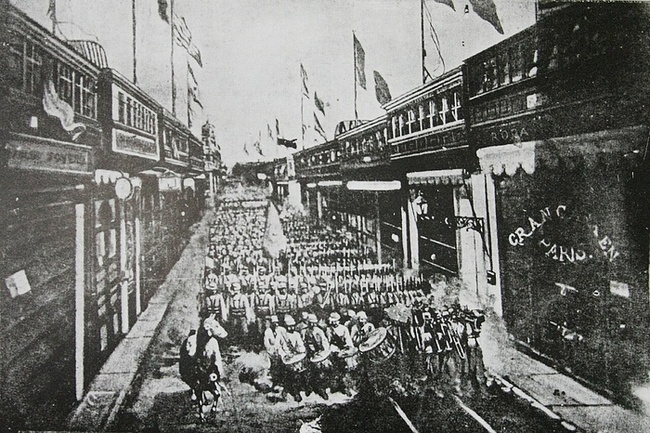
A parade of Chilean troops in Lima. Photo: drukarnia.com.ua
Consequences of the war
In the fall of 1883, a peace agreement was signed between Chile and Peru. According to the agreement, Chile kept the captured province of Tarapaca, for which it had to pay compensation to Peru. The provinces of Tacna and Arica remained under Chilean control for 10 years, after which a plebiscite was to be held in them. After 10 years, the countries failed to agree on a plebiscite. With the mediation of the United States, a new treaty was signed in 1929, according to which Peru received Tacna and Arica remained in Chile.
The armistice between Bolivia and Chile was signed in the spring of 1884. According to the agreement, Chile received the province of Antofagasta, for which it paid Bolivia a compensation of 300 thousand pounds. The Atacama Desert was also transferred to Chile.
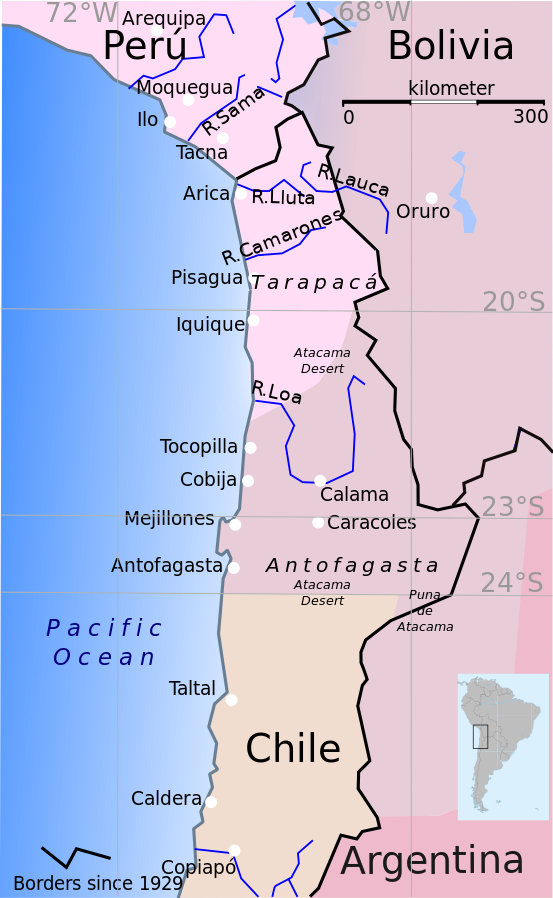
Changes in the map of South America after the War of the Guano. Map: Wikipedia
As a result of the war, Chile became a regional leader in western South America. The country's geopolitical and economic achievements were simply impressive. First, Chile captured important ports. Secondly, the country took control of all key deposits of nitrate and guano that belonged to Peru and Bolivia. Thirdly, powerful copper deposits were later discovered in the Atacama Desert, which was taken from Bolivia. Fourth, as a result of the loss of Antofagasta, Bolivia was left landlocked. However, Chile has partially met this challenge by building a railroad connecting the Bolivian capital with the port of Arica. Chile also guarantees freedom of transit for Bolivian goods through its territory. However, the loss of access to the sea is still an extremely painful issue for Bolivians. In 2010, Peru gave Bolivia a small coastal area in the province of Ilo to build a port. However, Bolivia is still in no hurry to implement the project due to the need for significant investment. Bolivia even appealed to the International Court of Justice to return the territory seized by Chile, but received a negative decision.
Interestingly, Bolivia has a navy based on lakes and rivers. The navy flag has a lone star symbolizing the lost province of Antofagasta. The national suffering of the Bolivians is the subject of jokes from neighboring Chile. Chileans invite Bolivians to lie on their beaches and swim in the Pacific Ocean.
Conclusions.
The War of Guano is just one of the names of the international conflict that took place in South America in the last quarter of the nineteenth century. This is further evidence that a complex conflict should not be reduced to just one cause. Of course, saltpeter and guano played an important role in this conflict. However, it is worth emphasizing other causes as well.
Undoubtedly, the global economic crisis was the impetus for the conflict. As the welfare of the population steadily deteriorated, the authorities had to make difficult decisions. At the same time, they were unprepared to make effective decisions. Peru, Bolivia, and Chile were typical resource-based countries and developed on the back of global demand for guano and saltpeter. When the problems began, the public debt began to grow. The last resort for solving internal problems is always war.
Another important reason for the war was the struggle for hegemony in western South America between Peru, Bolivia, Chile, and Argentina. Each of the countries claimed regional leadership and nervously reacted to the attempts of others to play ahead. This led to the formation of alliances that later led to hostilities.
The War of the Guano was another example of how border disputes can turn into conflicts. International agreements on borders should be as clear and unambiguous as possible. Any variants of territorial co-ownership are possible only as an interim solution that requires further negotiation. It should be emphasized that Argentina could have joined the conflict due to border disputes with Chile.
Some sources claim that the war was caused by Chile's desire to seize nitrate deposits. Such categorical statements at least require some clarification. For example, Chile was the first to start hostilities by seizing the port of Antofagasta. And even the fact that Chile willingly joined the conflict suggests that it had certain plans. However, we should not forget that the conflict was started by Bolivia, which grossly violated an international treaty, and Peru was the instigator. We can once again conclude that it is extremely easy to start an international conflict if both sides want to.
Obviously, Peru and Bolivia underestimated Chile, which had a smaller armed force. What is the secret of Chile's victory? In a more professional attitude to the organization of military affairs. Not preparing for war and even reducing the number of regular army in recent decades, Chile provided a system of training officers and weapons with the latest models of the same caliber. The latter greatly facilitated logistics during hostilities.