Меню
Соціальні мережі
Розділи
Sept. 7, 2025, 1:58 p.m.
"Europe will be ours": presentation of Oksana Zabuzhko's book
This article also available in English413

Photo: Intent/Natalia Dovbysh
The presentation of Oksana Zabuzhko 's new book, Our Europe, took place on August 29 at the V. Vasylko Odesa Academic Ukrainian Music and Drama Theater. According to the author, this book is about Europe, which protects those whose culture it knows. And at the same time, it is about Ukraine, which is capable of becoming the center of a new civilizational route.
Oksana Zabuzhko is a writer, author of more than thirty books of various genres (poetry, prose, non-fiction, cultural studies). She holds a PhD in philosophy, is a researcher at the H.S. Skovoroda Institute of Philosophy of the National Academy of Sciences of Ukraine, and is an honorary doctor of the Ivan Franko National University of Lviv. Zabuzhko's books have been translated into 25 languages and have received numerous national and international awards.
Watch the full video on Intent's YouTube channel
About the Odesa beginning of the book "Our Europe"
I haven't been to Odesa - I'm afraid to say it - for seven years, and it's indecent. Not since 2018, when I wrote here at the Odesa Literary Festival. While preparing for this meeting, I somehow realized that I was the one who opened that festival in Odesa. I gave the inaugural speech.
I wouldn't have remembered my text about Odesa if it weren't for this invitation and this visit. I just picked it up, found it, opened it, read it, and realized that this text was missing, really missing in this book. That perhaps this book, this very "Our Europe" that we are going to talk about in more detail here today, is a collection of texts written during the Great War, that is, from the spring of 1922. But it began somewhere, as if from a certain embryo, perhaps from the very inaugural speech with which I greeted the international literary festival in Odesa.
About the Odesa Literary Festival
Every year, by the way, I am regularly invited to participate in the Odesa Literary Festival, either to Bucharest, Sofia, or somewhere else. That is, they move it every year to some Central European country, where it is safe, where they say it is close to Odesa, with at least one border, because from their point of view, it seems that I shouldn't come back here: how could I? When I explain that, excuse me, war is war, but it is a war waged by a large, developed European country, they do not deny life in the rear. Undoubtedly, the war has its manifestations in everyday life, and no war is like another, but cultural life in the rear, like any other life in the rear, does not stop; on the contrary, it intensifies.
I really dream of a literary festival in Odesa, because yes, Odesa needs it, and Odesa needs it-an international literary festival of this very Baltic-Black Sea belt, if you will. I want a festival of the two seas, of the literatures of the two seas in Odesa.
And let's consider this meeting to be the beginning of Odesa residents' work on this festival, because it must go on, must take place in parallel with the political formation of this Baltic-Black Sea belt. And politically it is being formed now.
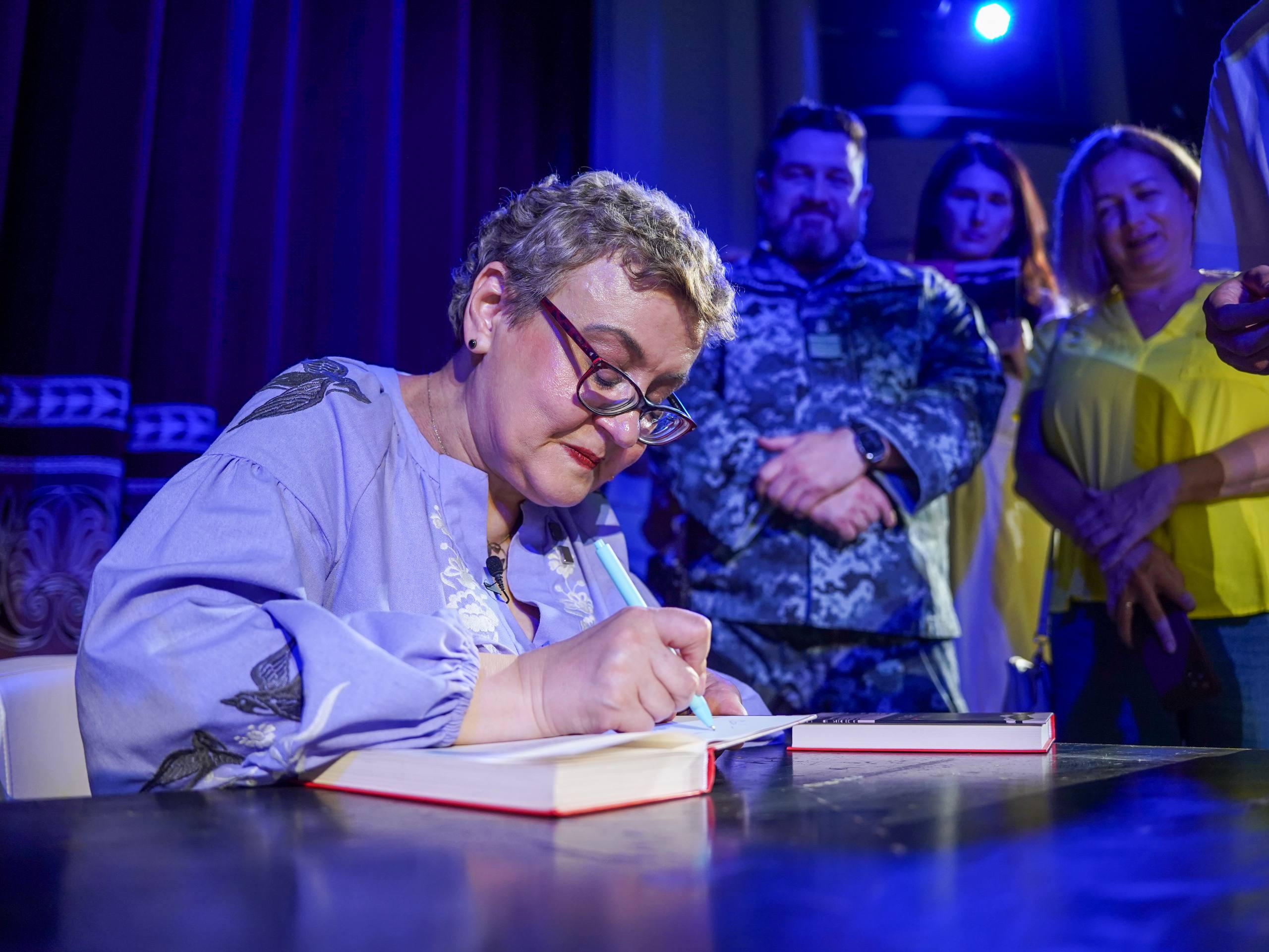
PHOTO: Intent, Natalia Dovbysh
About Mazepa and the Intermarium Doctrine
I remember from the year fourteen: the annexation of Crimea, and the first country to react to the annexation of Crimea absolutely adequately, that is, to jump, so to speak, to the forefront of world politics, stamping its feet and shouting that this is unacceptable, that this is a violation of international law and that the UN Security Council should be convened, and so on, was a small, neutral Sweden. It would seem that he is a Hecuba, what does he care about Hecuba? Why Sweden? And this moment of switching on - you can call it historical intuitions, you can call it some kind of mechanisms that turn on and start working. It's just that writers are, you know, the history dogs who feel it first, you know, by smell, when Mazepa's Europe suddenly turns on.
Suddenly it turns out that these long-forgotten allies of ours are the project that Ivan Mazepa offered to Europe in the early eighteenth century as a belt of European security. He had this line, as he called it, from Riga to Bakhchisarai. He proposed a union of states, a union of equals, on the basis of equal partnership. This is an incredibly important moment for today. Why? Well, look: Putin, Trump, Xi - these are people who play according to scenarios: there are great powers that dictate their will, that divide the world and dictate their will to kids. These three cannibals are sitting in Yalta, and they have already divided Europe among themselves, figured out what goes where. And now Trump comes along and says that he and his friend Vladimir will come to an agreement, and you are some kids here and you have this, no maps, you know. And it was very beautiful-that was the moment when I applauded our president for the first time: "I am not playing cards". And this answer, "I am not playing cards," is wonderful, it fits perfectly with this very Mazepa project, where he insisted that even Little Kurland, you know, or Great Ukraine, or Great Poland, should be on an equal footing. So the idea of this interstate union, which is essentially a geopolitical Black Sea Doctrine or Intermarium Doctrine. Listen, your fellow countryman, Yuriy Lypa from Odesa, wrote The Destiny of Ukraine, a work that is still underestimated in Ukraine, but which is nevertheless fundamental to this very Black Sea Doctrine. Some of it is outdated, but, in principle, as an idea and as a concept, he is undoubtedly a very interesting author, and it is time to revise and shake it all up. To be more precise, if so many intelligent people only in the twentieth century talked about this very Baltic-Black Sea belt as a security belt of the new Europe against the East, then there is certainly something in this idea, and now we can see what it is, and now we can see how this very European view of the East and this vertical is being formed as something that protects Europe.
My point is that we will be the kshatriyas of Europe, the defenders of Europe, the military defenders of Europe, the military power of Europe, because we already are. But if we don't want our children to be destined for the fate of European mercenaries, the fate of European Landsknechts, then we must now dig ourselves up with all four paws to establish ourselves as a cultural nation.
And so, while politicians are concluding, shaping, quarreling, formatting, discussing, trolling each other, and so on-in short, while the voice of Ukraine as the main guarantor of European security is being formed in international diplomatic negotiations and beyond, work on the international festival of the Two Seas in Odesa.
About the authors you should read
The fact that we knew Russian literature, Russian culture at the expense of our own and at the expense of our neighbors on the western side, neighbors in the region, and neighbors in future interstate unions that are useful to us is, of course, a problem. It is very bad that we still know all the third- or fourth-ranked Russian writers, but we do not even know the leading Hungarian, Romanian, and even Polish writers-well, Polish writers, maybe. But it was only after I published Our Europe that readers began to approach me and say, "Here you have written a foreword to Czesław Milosz's book, and this is a really fresh Polish edition, and it is such a proud project-you know, the Poles were reissuing Czesław Milosz, their main classic of the twentieth century, a Nobel Prize winner, a great poet, and the author of several truly outstanding intellectual bestsellers that should be in the library of every educated European. So they were reissuing his book Family Europe, which was published in Ukrainian about 20 years ago, and they commissioned me to write a foreword to Milosz. Which, of course, is very cool. After all, they have their own Nobel laureate, Olga Tokarchuk, and when they commission a foreword to Czesław Milosz not from their own Nobel laureate but from a neighboring Ukrainian woman who is known in Poland, who is thus chosen as a participant in a dialogue, a parity participant in a dialogue with Milosz-this is beautiful, of course, it is a pride, it is recognition not only for Oksana Zabuzhko but for all Ukrainian literature. But in this preface, I managed to say a few important things about war in general, about the war in Ukraine today, about the difference between Milosz's war, Poland in the Second World War, and today's Ukraine in the Third World War. I also threw in a few other ideas that I think are important and interesting for discussion. And Ukrainians who have read it now come up to me and say: do you know that Milosz is not in our libraries? There is nothing. There is a preface by Zabuzhko to Milosz. It's beautiful, yes, cool, but there is no Milosz! And Milosz was not read in our libraries!
And yet we live without such authors-without authors like Milosz, without authors like Kundera, without authors with whom I am in dialogue, for whom I have written forewords commissioned by Western publications, or whom I mention for one reason or another as my interlocutors, and so on.
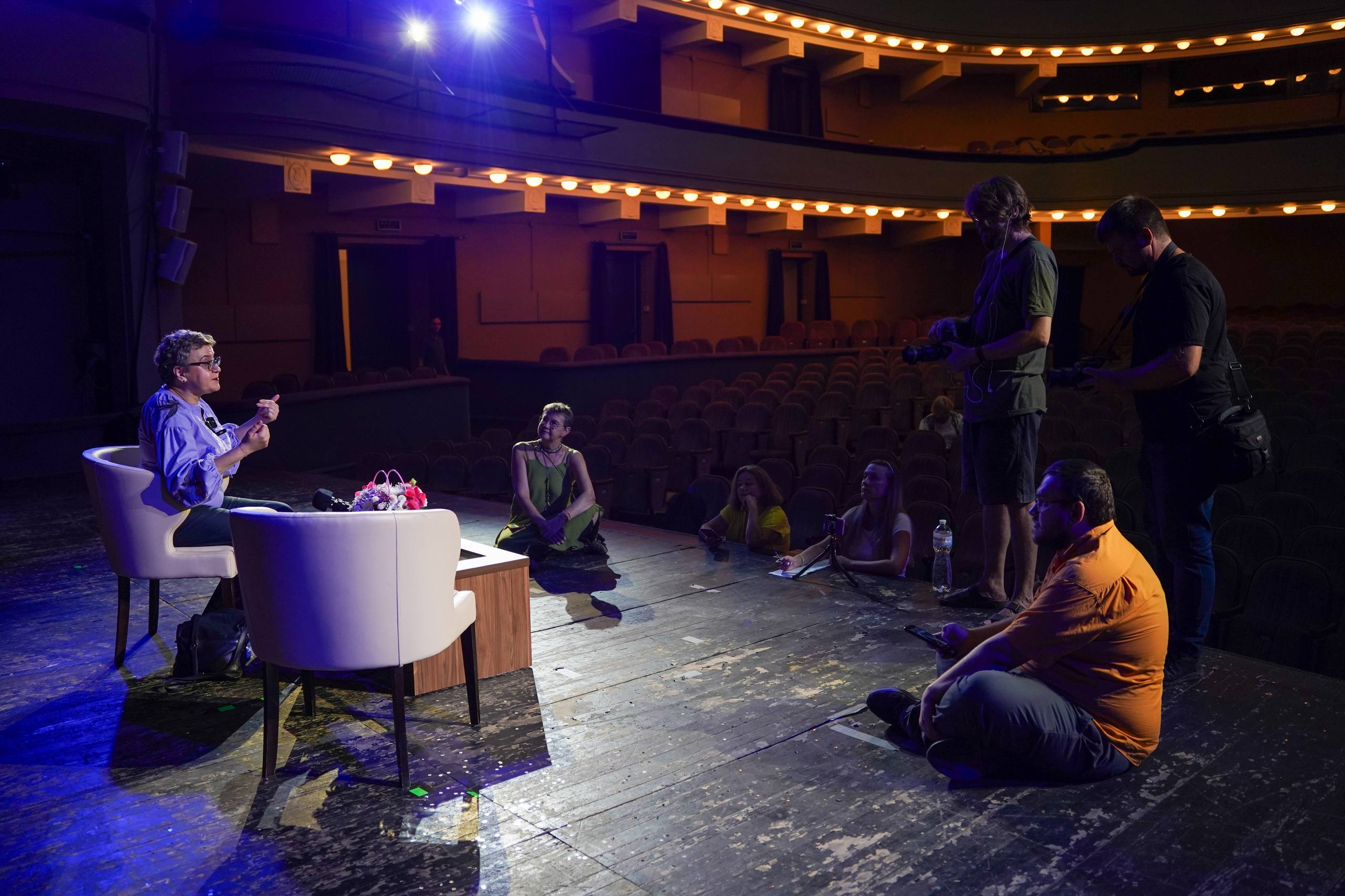
PHOTO: Intent, Natalia Dovbysh
On Western stereotypes about Ukrainians
Our educated refugees were a shock to Europe. The shock for Europe was the face of middle-class Ukraine, which arrived in their cars, often of a good brand. The problem is the war stereotypes of Europeans who associate war with the third world, poverty, misery, disasters, something that can never happen to me. It can't happen to me, I can't be attacked. There's a whole culture of complacency behind this, and we've stirred up this culture of complacency because people have come who are just like them, who are the same color as them, and we'll take that into account, who are the same background, who are the same education, who are the same clothes, who are the same training, who are the same as us. No, it can't be. Does this mean that this can happen to me? No. I will convince myself at all costs that it won't.
There is such a model of reaction, of course. And there is another, the discovery that it turns out that this Ukraine, which we still thought of as poverty, migrant workers, a third world country, and we were told that it was the poorest country in Europe, so terrible, so corrupt, so terrible, and if we have never been there, we imagine it as some kind of European Zimbabwe, and here we have, excuse me, golden rains of Russian money that are sown all the time.
You meet with journalists, and you answer their questions about your country, among other things. And the questions I was asked there were that you have such a poor, corrupt country, and Ukrainian women are the main prostitutes in Europe. Stop, stop, stop, stop. They are not the number one prostitutes in Europe. How? No, they are not. Romanian women, yes, fact-checking. I mean, I had to do a fact-check.
And a boy... well... a boy... a young journalist, let's say, a young German journalist, whose glasses literally fall off his nose when he hears this, he says: "They tell us that they are Ukrainians. That is, someone says - who? The owner of the newspaper. The owner of the newspaper is told by his Russian colleagues. This is called information warfare. When you are surrounded by this very wave and cloud, you know?
This image that was being created, which, excuse me, was being nodded to in unison, pardon the unparliamentary expression, by a whole army of, excuse me, Ukrainian media figures, speakers, intellectuals, journalists, agreeing: "Yes, sir, yes, we are so poor, we are so corrupt, we are so miserable, we are so unhappy..." And then, bam: the twenty-second year, you know, and here it is-the real Ukraine, and of course, it was a shock for the Europeans.
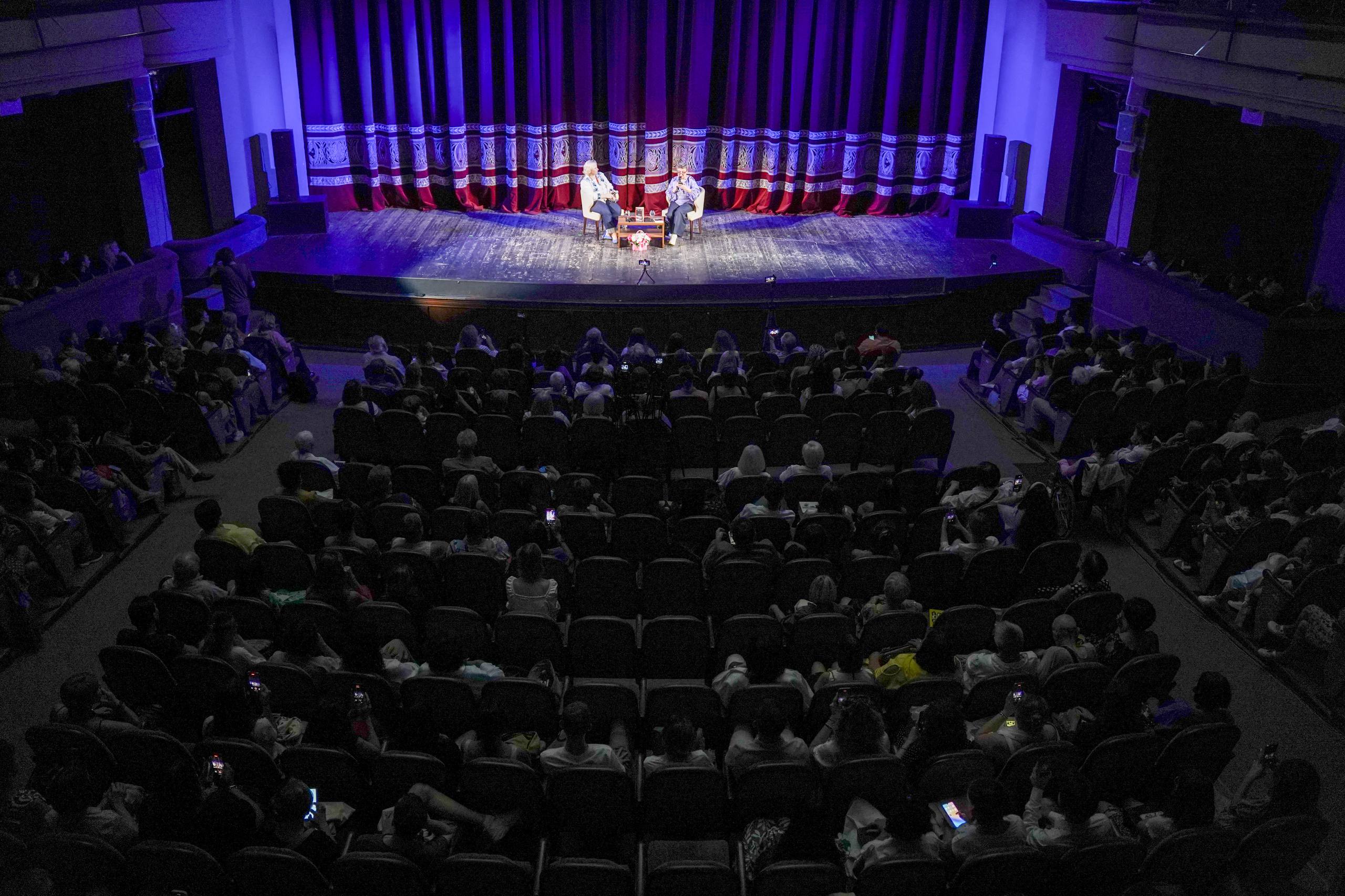
PHOTO: Intent, Natalia Dovbysh
Authors writing about today's war
What I can recommend is that it is being prepared now, I know for sure that it has even been translated into Ukrainian. But don't scold me, it's not Ukrainian literature, it was written by an American soldier, a girl who was in Iraq and Afghanistan and who came to Ukraine as a military photographer back in 1919, one of her colleagues called her and invited her, and she got stuck here, and she met February 24. It's called "Snapshots from Home" - Ed. I don't know what the Ukrainian translation is. And it's called JT Blatty. Jen T. Blatty is her name. The postcards, the album, something like that-I don't know what the title is. But just keep an eye out for this Jen Blatty, don't miss this book, or rather, this book. This is the best nonfiction about our war that I've read, in my opinion. Because she looks at it through a slightly different lens. She compares it all the time, she has flashbacks all the time. She compares her war experience - Iraqi, Afghan... It's a special genre in general - I would also mentally file this movie Cuba and Alaska - when the voices of women warriors appear. When Athena spoke, so to speak. And it's interesting that the American warrior also spoke up only when she got to the Ukrainian war. The Ukrainian war gave her a voice.
The last question to Cassandra
- Is Europe ours? Is it ours or not?
- It is.
Віктор Турецький