29 August 2026, 19:09
Odessa Residents’ Money Ends Up in a Private Company’s Pockets: How GERTS Found Its Way Into Utility Bills
Ця стаття також доступна українською

COLLAGE: Intent
Every resident of Odesa who pays utility bills knows that often the money doesn’t go directly to the service providers but through a private company called “HERTS,” which charges a commission for this—and a hefty one at that. For example, when paying over 700 hryvnias for water and electricity, “HERTS” takes an additional 20. The higher the payment amount, the larger the private company’s commission.
Intent decided to investigate how “HERTS” effectively became the main collector of utility payments in Odesa, as well as who owns the company.
An Unspoken Monopoly
“HERTS” has been operating in the information technology market since 2000. The company provides information and computing services, develops and maintains software systems for banks and financial institutions, as well as for utility providers and other service providers, regardless of their ownership structure. This is how “HERTS” describes itself on its official website. And in practice, it is primarily through this company that Odessa residents pay for utilities in their homes.
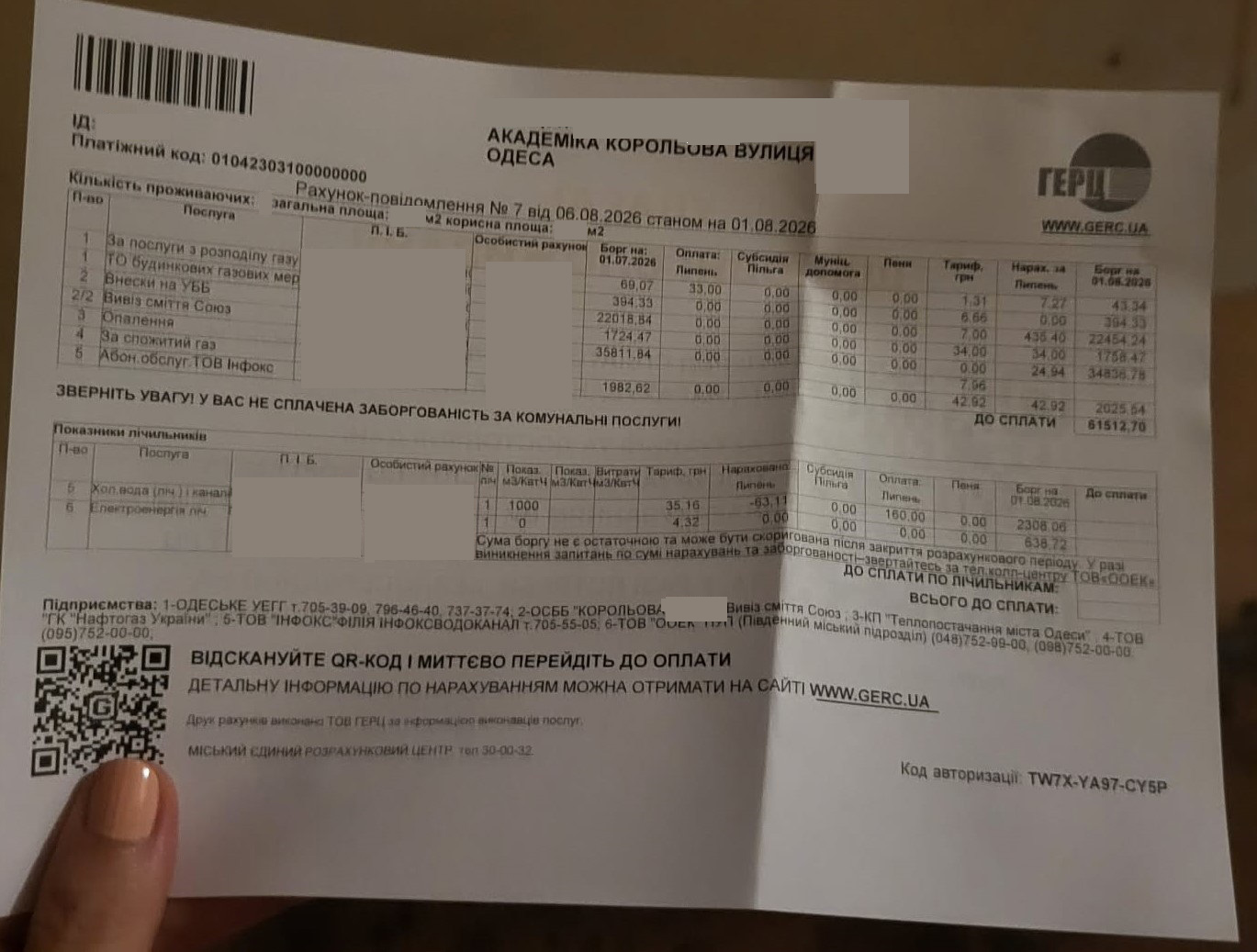
The bills that Odessa residents receive from “HERTS”
Even if a city resident wants to bypass “HERTS” and pay for utility services through another payment system, they won’t be able to—the system redirects them to the company’s website anyway.
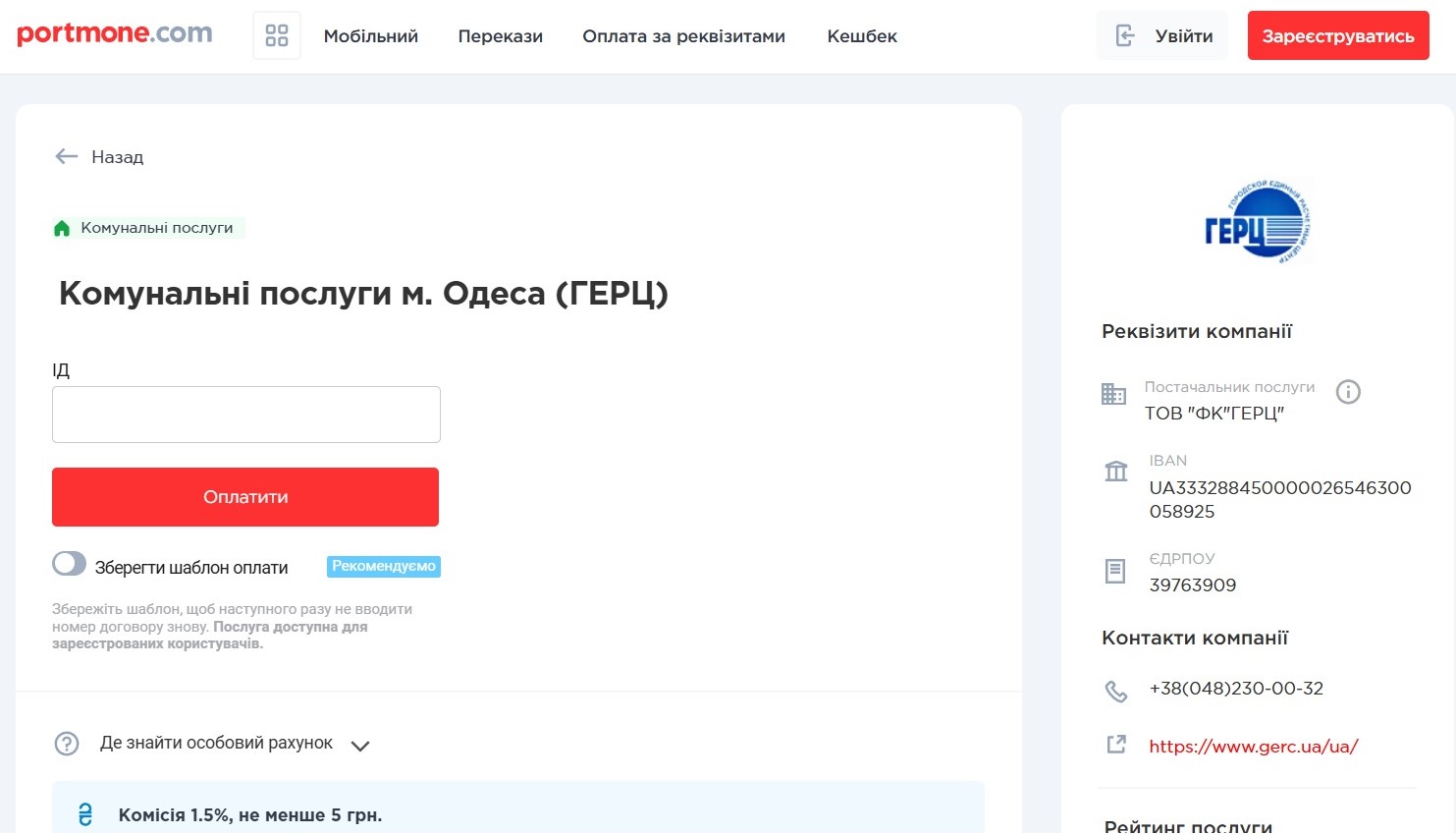
A request to pay for utility services in Odesa via the “Portmone” payment system redirects to “HERTS”
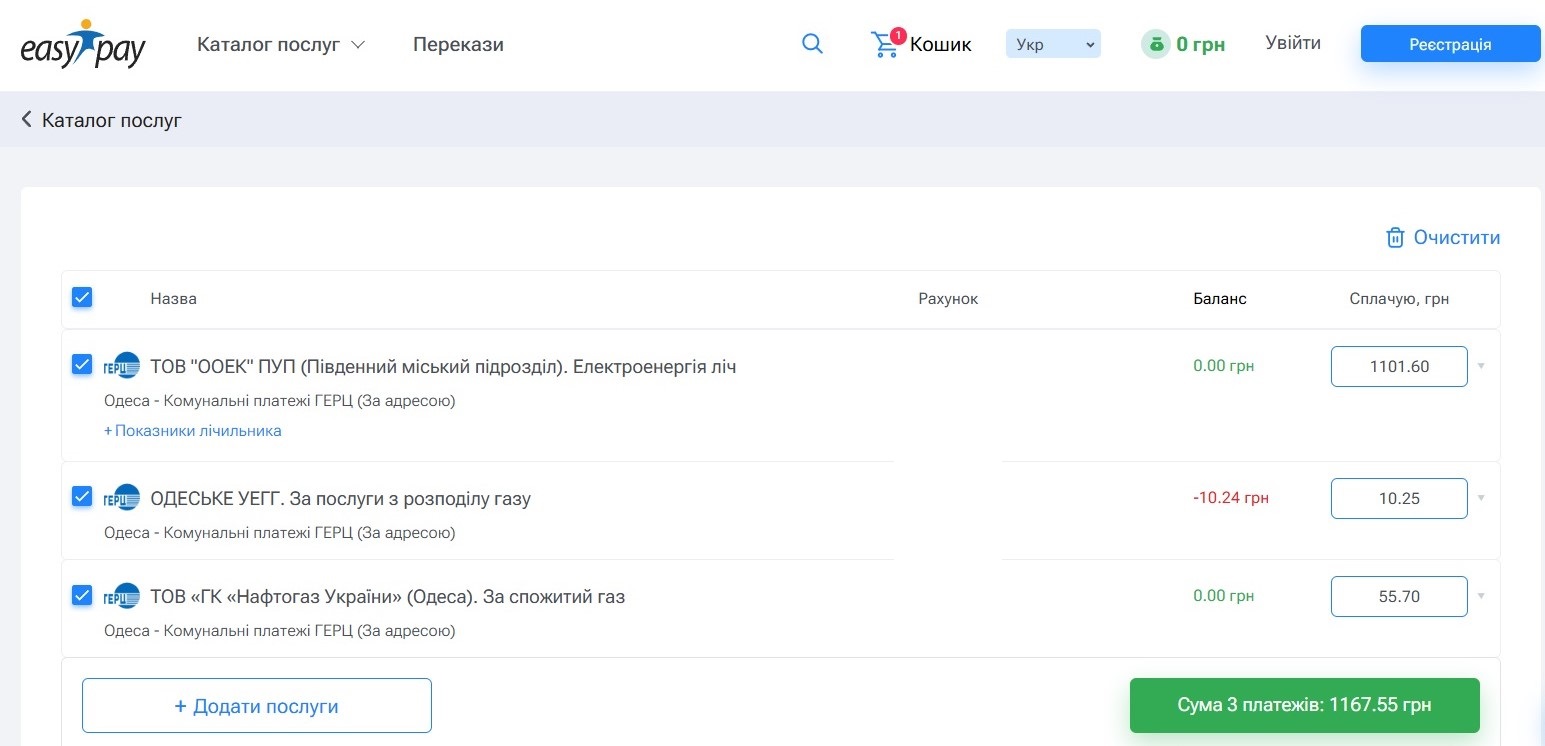
A request to pay for utilities in Odesa via the “easy pay” payment system also redirects to “HERTS”
Of course, “GERTS” does not collect utility payments for free—the company charges a commission of 2% per payment, with a minimum of 10 UAH. And it is the utility customers themselves who pay this fee.
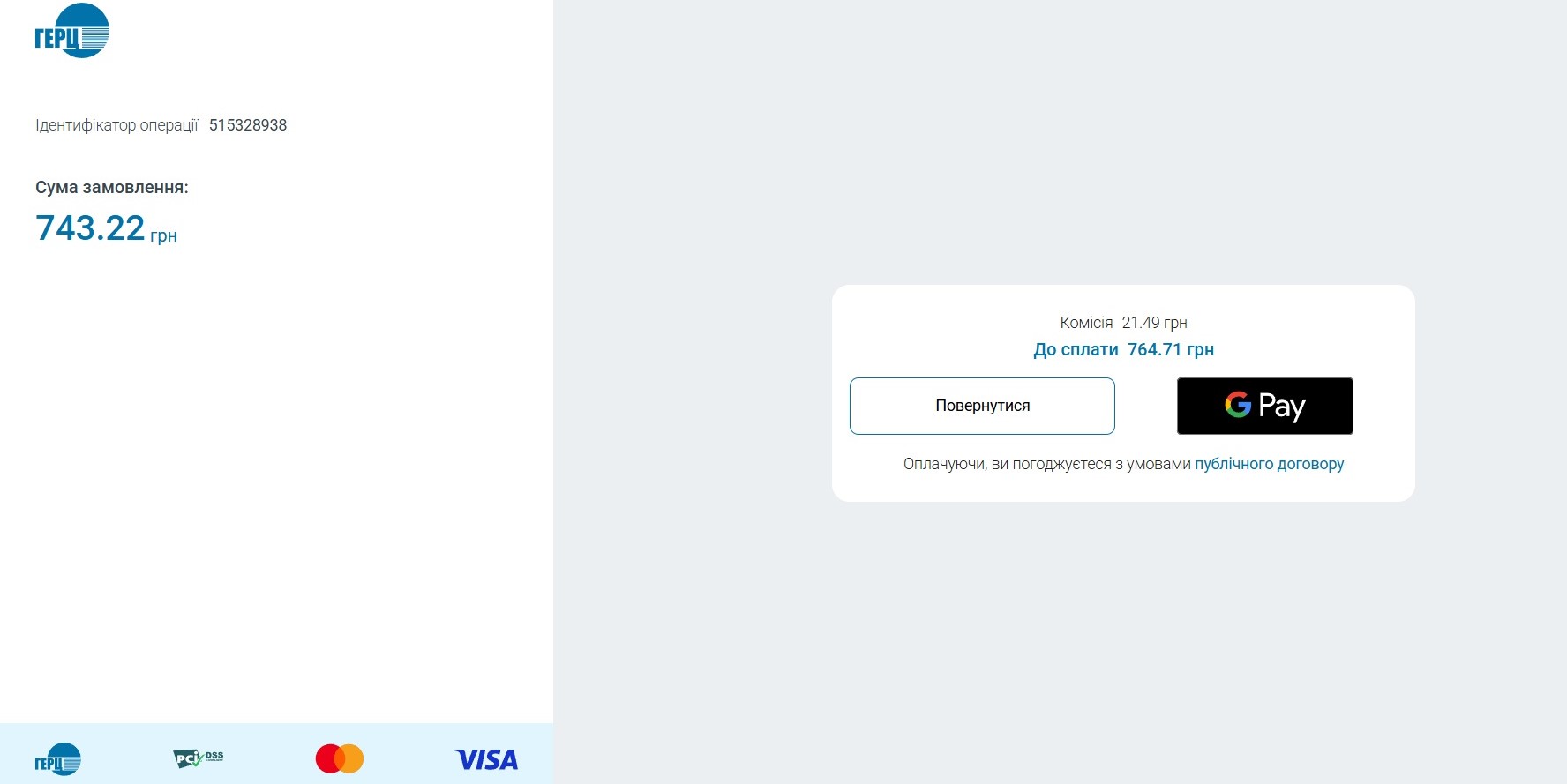
Paying for utility services in Odesa through “HERTS”
Interestingly, the same situation has arisen not only in Odesa—"HERTS" also collects utility payments in Kyiv. The company’s website lists all the organizations it partners with in Odesa and the capital. Among them are management companies and housing and utility service (HUS) enterprises in these two cities, “Kyivteploenergo,” “Kyivvodokanal,” “Odesagaz,” and others. GERTS also processes payments for daycare centers in Kyiv and Odesa, traffic fines, court fees, taxes, and more.
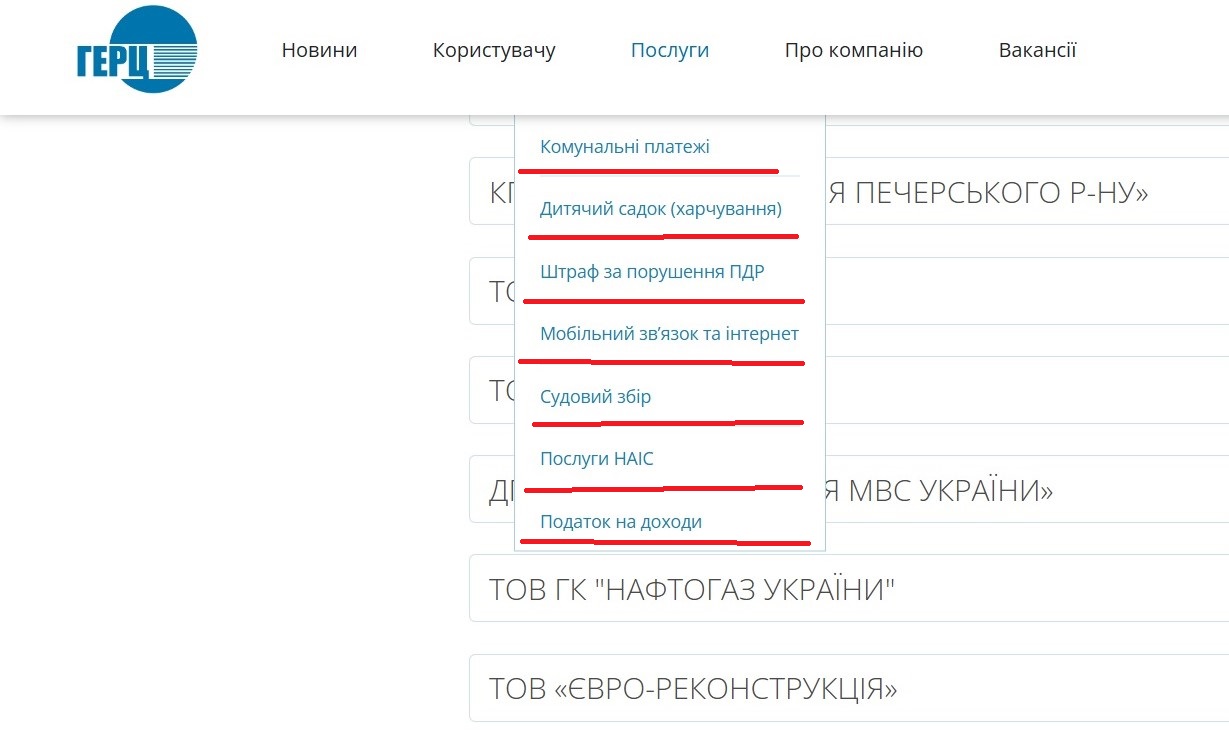
Screenshot from the "HERTS" website
In addition, payments for services provided at Odesa’s Administrative Service Centers (ASCs)—such as replacing a foreign passport—are processed through “HERTS.” For each such service, “HERTS” charges a fee of 33 UAH.
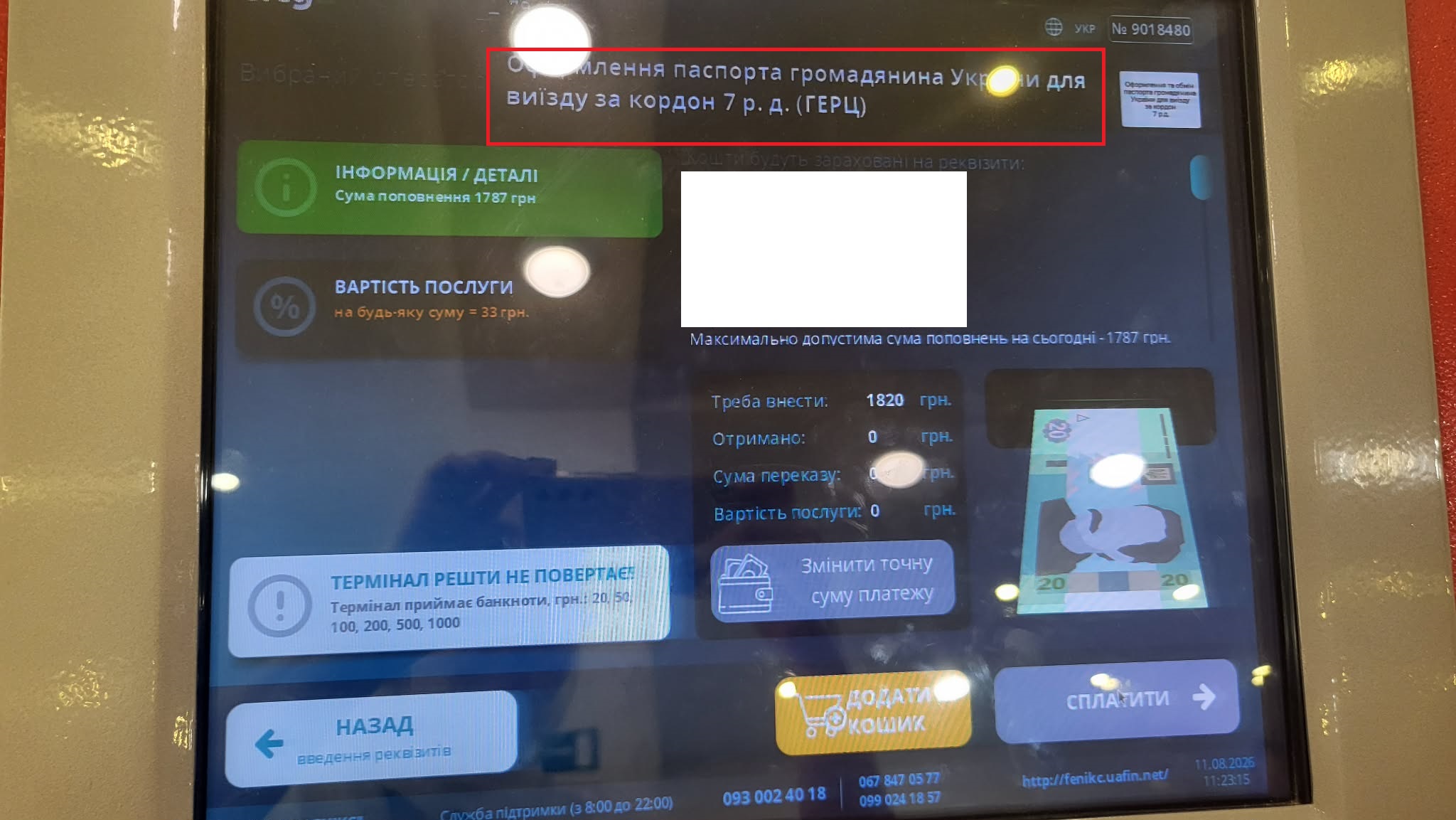
Applying for a foreign passport at the Administrative Service Center on Korolyova Street. They suggest paying through “HERTS”
Of course, since this involves payment for services, the company collects not only money from residents of Odesa and Kyiv but also their personal data—bank card number, full name, residential or registered address, email address, and phone number.
However, the Odesa City Council denies that “GERTS” holds a monopoly. They say the company is not the sole provider of financial services.
“GERTS Payment Center LLC has existing contractual relationships with utility providers in the city of Odesa. Other banks that are licensed by the payment services regulator—the National Bank of Ukraine—also have contracts with utility companies. Thus, consumers are guaranteed the right to choose, at their discretion, the most convenient channel for paying for services—banks or ‘HERTS’, ” city hall responded to Intenta’s inquiry.
However, the response overlooked the fact that “GERTS” has exclusive access to data on Odessa residents’ utility bills, since the company sends paper bills to residents. No bank sends such bills to residents.
And when asked whether there had been any competitive bidding process in which “HERTS” was selected as the city’s utility bill collector, the Odesa City Council stated that “the provisions of the Law of Ukraine ‘On Public Procurement’ did not apply to this type of financial service at the time the agreement was signed.” In other words, it appears that the city council did not hold any tender and selected the company “HERTS” at its own discretion. How did this happen?
The system was never transferred to Odesa
This story began 17 years ago—under the leadership of then-Mayor Eduard Gurvitz. On April 23, 2009, he issued an order to create a working group to develop a municipal information, billing, and payment system. Among the members of this group, in addition to city council members, heads of municipal enterprises, and various municipal agencies, was the CEO of “HERTS” LLC. At that time, Vitaliy Stepanov held this position. It appears that it was at that very moment that city officials decided that “HERTS” would be the company responsible for developing the payment system for Odesa.
A few months later, Gurvits issued another directive—to create a commission to oversee the transfer of the software for the Unified Automated System for Calculating Utility Payments (ESAN) from “HERTS” LLC to the balance sheet of the municipal enterprise “Informresurs.” In other words, as of November 2009, the private company had apparently already developed a utility payment calculation system for Odesa and was ready to transfer it to the city.
In 2010, Odessa city council members approved the transfer of the “ESAN” system—which at that time belonged to “HERTS” LLC—to municipal ownership. Even the copyright agreement for the transfer of exclusive property rights to the software in question between the private company and the city, represented by the head of the municipal property department — who at the time was Eduard Smolyar— was agreed upon and signed on August 5, 2010. Prior to that—in February 2010—the Odessa City Council had already drawn up the transfer and acceptance act. But then something went wrong.
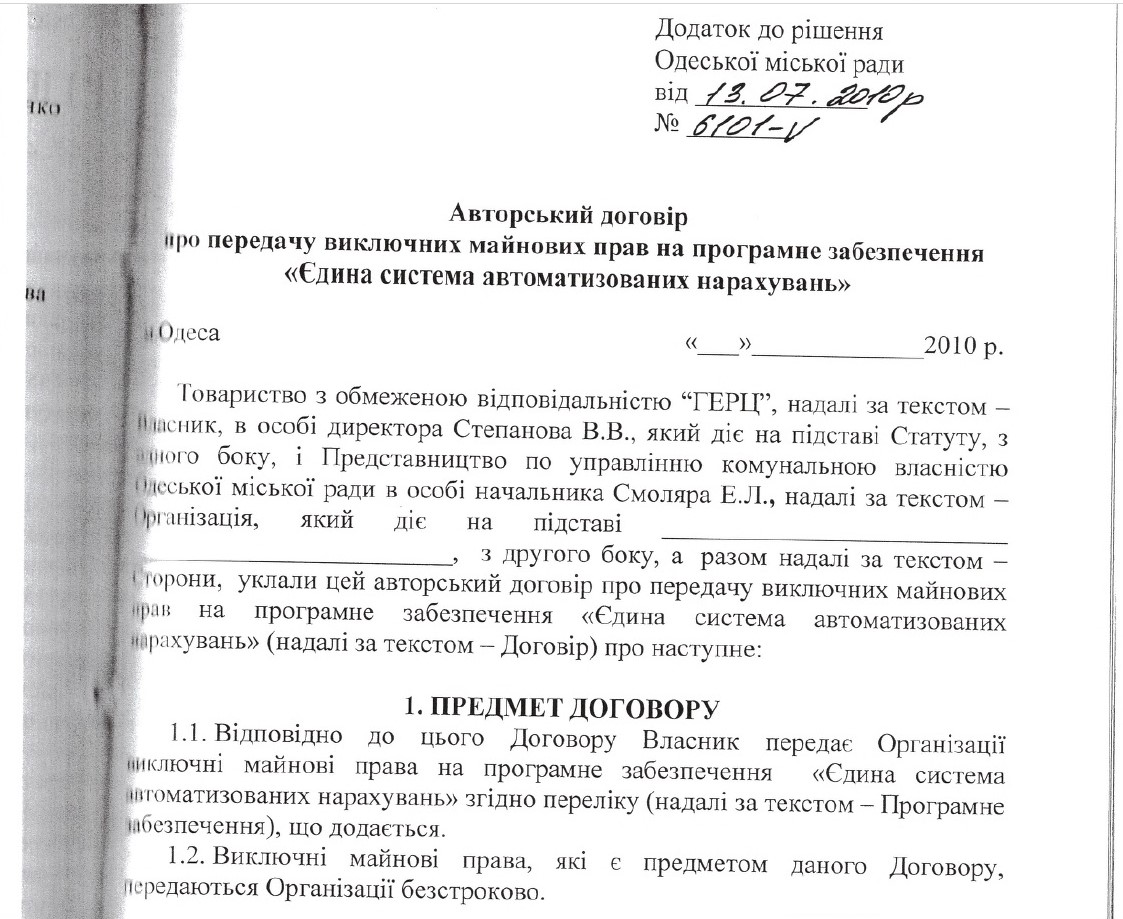
The approved agreement between GERTS LLC and the Odesa City Council
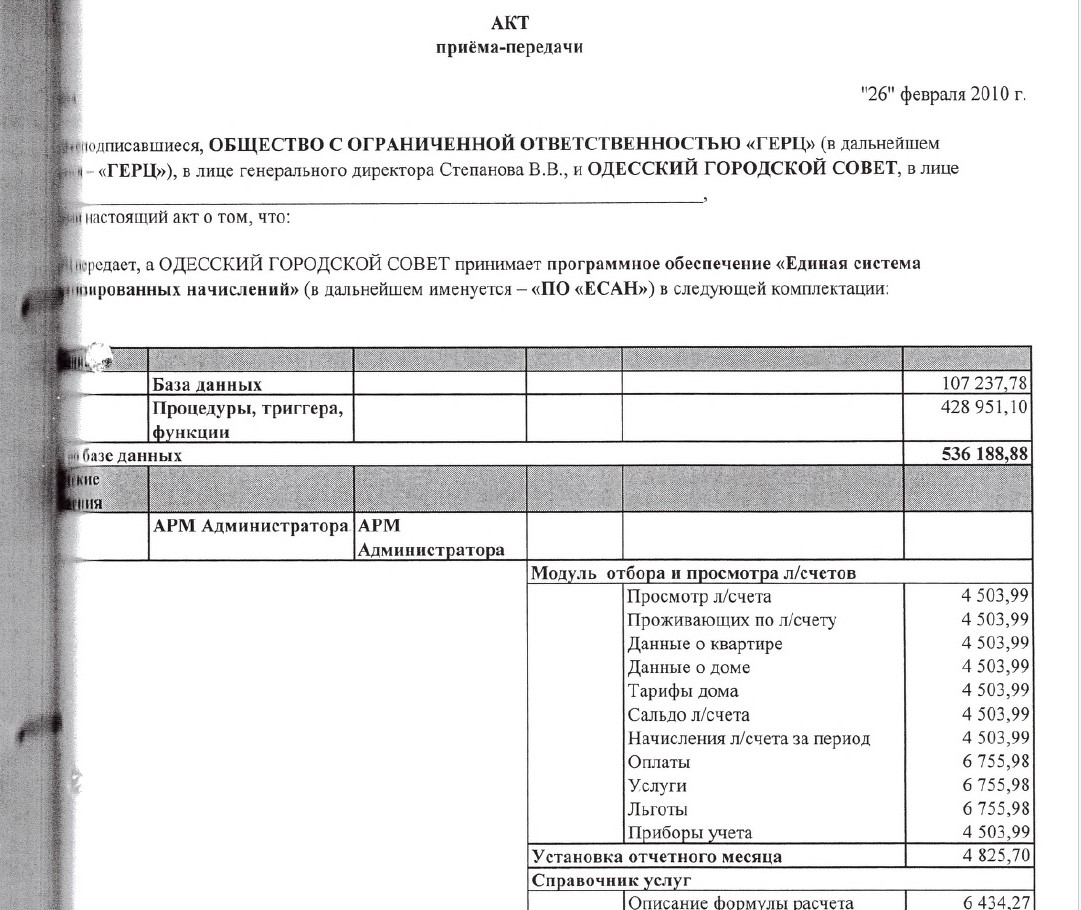
Software Acceptance and Transfer Act
As reported to an Intenta journalist by the city’s Department of Municipal Property, the “ESAN” software, developed by GERTS LLC, was never actually transferred to the “Informresurs” Municipal Enterprise:
“The municipal enterprise ‘Informresurs’ used the aforementioned software for the purpose of testing and debugging it. As of today, the municipal enterprise ‘Informresurs’ is in the process of liquidation in accordance with the decision of the Odesa City Council dated December 21, 2012,” the department noted.
A likely reason why the software was never transferred to the city could be that "GERTS" LLC registered the software as its own intellectual property, and according to the Cabinet of Ministers’ resolution “On State Registration of Copyright and Agreements Concerning the Author’s Rights to a Work,” reissuance of the copyright registration certificate was not provided for.
It is noteworthy that the “HERTS” website features a copy of the copyright registration certificate for the computer program “Unified System of Automated Calculations.” According to this certificate, the economic rights to ESAN belong to “HERTS” LLC. This certificate dates back to 2008.
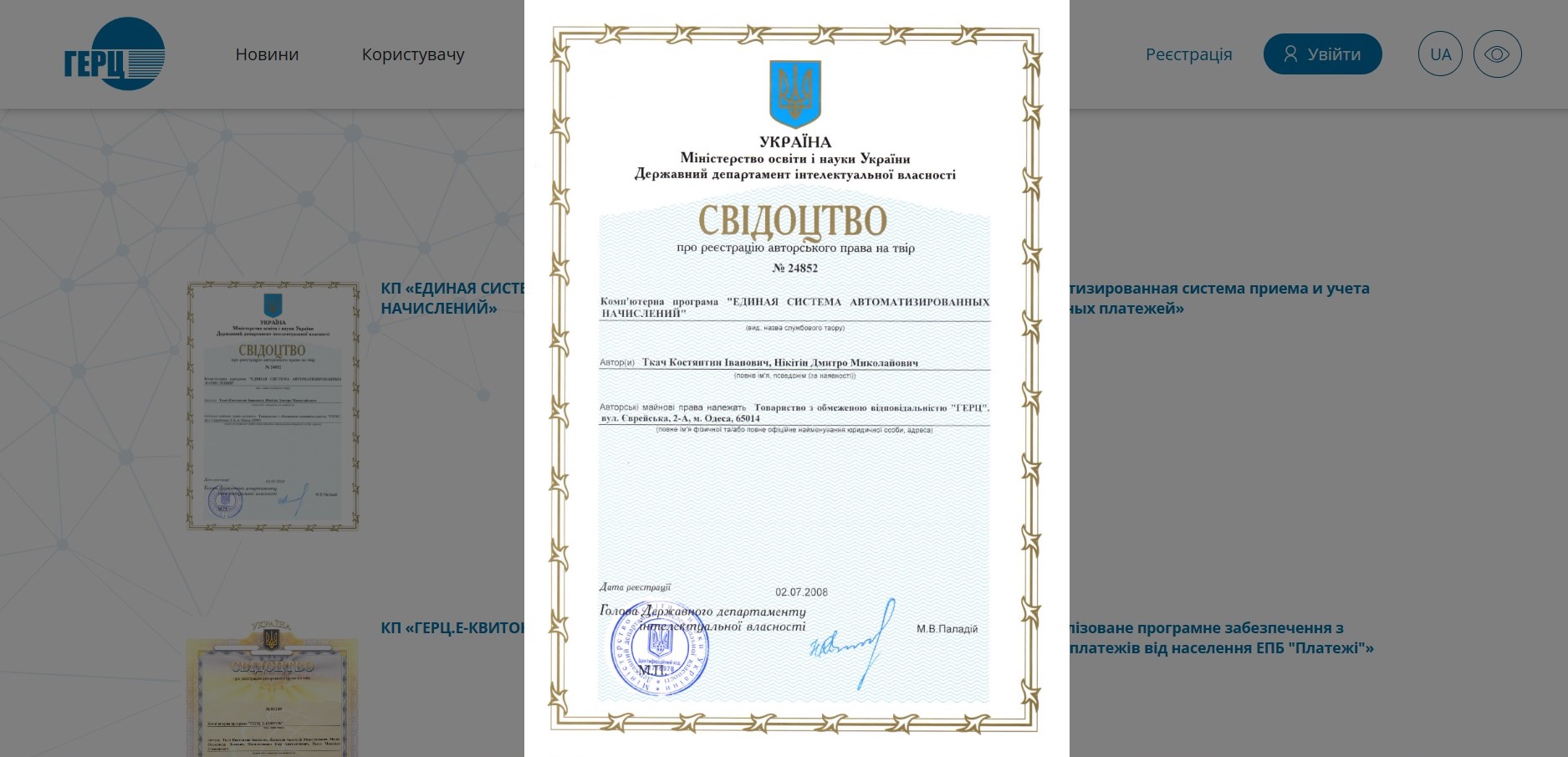
It appears that “HERTS” LLC undertook to develop software for Odesa while already owning this software. Or did it develop a new version in 2010 but keep that one for itself as well? And, most importantly, why was a private company allowed to actively implement this software in Odesa, effectively turning “HERTS” LLC into a monopoly?
A Million for Development
It is worth noting that the services provided by “HERTS” LLC to develop a payment system for Odesa were not free. According to the Odesa City Council, the cost of the “ESAN” software as of 2010 amounted to over one million hryvnias. Or, at the exchange rate at the time, approximately 135,000 U.S. dollars. The city was supposed to pay this amount to the private company using funds from Odesa taxpayers.
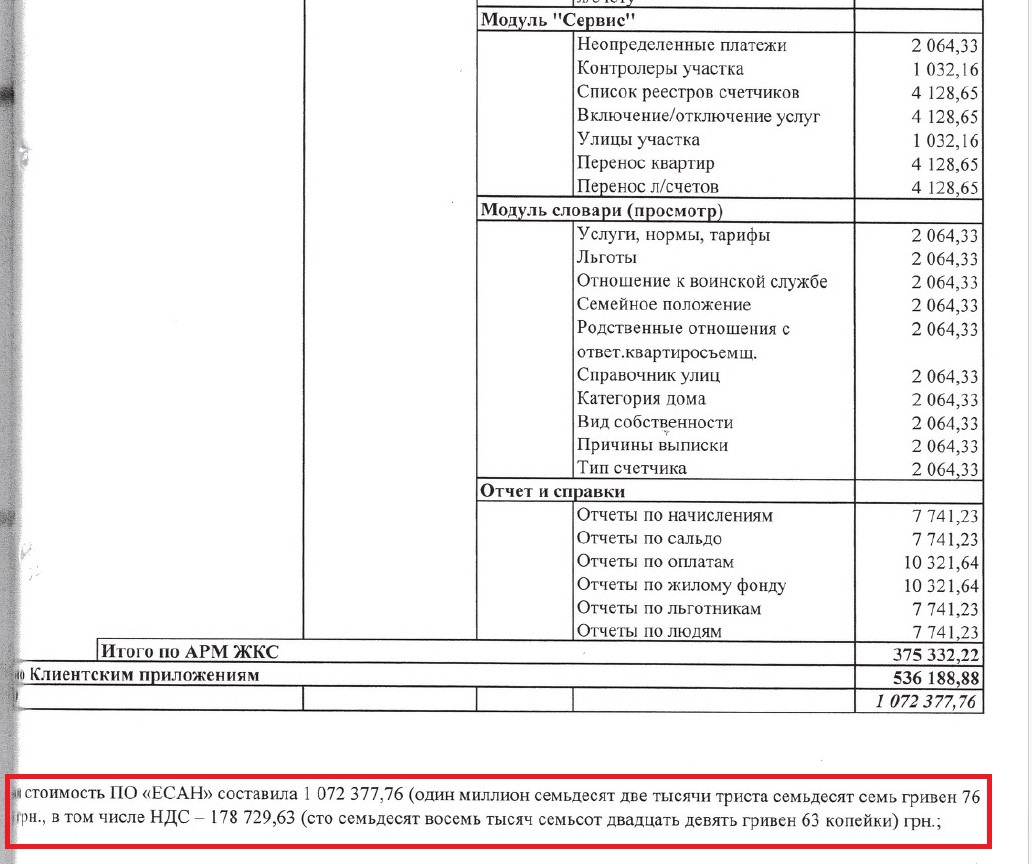
However, in the end, “HERTS” LLC was not paid under this agreement. At least, the Odesa Department of Municipal Property stated that “the department has no information regarding payments made to ‘HERTS’ LLC.” Furthermore, the Main Directorate of the State Treasury Service in the Odesa region reported that no payments were made under the specified acceptance and transfer act. At the same time, the acceptance and transfer act with the indicated amount was signed.
According to attorney Vita Musatenko, this case raises more questions than it answers, since “HERTS” LLC has been collecting data on city residents for years, and the private company is integrated into payment systems—though it remains unclear on what legal basis.
“How is the system even being used in the city when it seems no one has been paying for it? Perhaps there is some kind of agreement, since ‘HERTS’ has been collecting utility payments in Odesa for nearly 20 years. It turns out that a private company is amassing a huge amount of information about Ukrainian citizens, yet they have no alternative,” notes Musatenko, emphasizing that this situation should be investigated by both law enforcement agencies and the Antimonopoly Committee.
So who controls “HERTS”?
Influential Connections
“HERTS” LLC was registered back in 1999 in Odesa at 2a Yevreyskaya Street. Currently, the company’s founders are listed as the “Investment Asset” investment fund and a number of individuals. Among them are Hennadiy Besedovskyi, Vitaliy Kozubskyi, Olena Pysana, Hanna Sushkina, and Denys Tkach. The latter is the son of Odesa businessman Kostyantyn Tkach. And it is he who owns the “Investment Asset” fund .
Since 2017, the company has been actively securing government contracts—as of now, “HERTS” LLC has signed contracts totaling over 660 million UAH. The Odessa-based firm receives the most government contracts in Kyiv and the Kyiv region.
In 2009, the company “HERTS-Ukraine” was registered in Odesa. Currently, “HERTS” is listed among the founders of this company. And in 2015, “HERTS” LLC founded the company “HERTS Payment Center,” which is owned by Kostyantyn Tkach.
“GERTS Payment Center” LLC also receives government contracts—as of now, it has signed contracts worth more than 600 million hryvnias. And it seems that business is going well for both companies. At the very least, both LLCs regularly pay hundreds, if not millions, of hryvnias in taxes alone. According to data from the Odesa City Department of Finance, “HERTS” LLC paid over 500,000 UAH in taxes to the municipal budget last year, while “HERTS Payment Center” LLC paid over 2.4 million UAH.
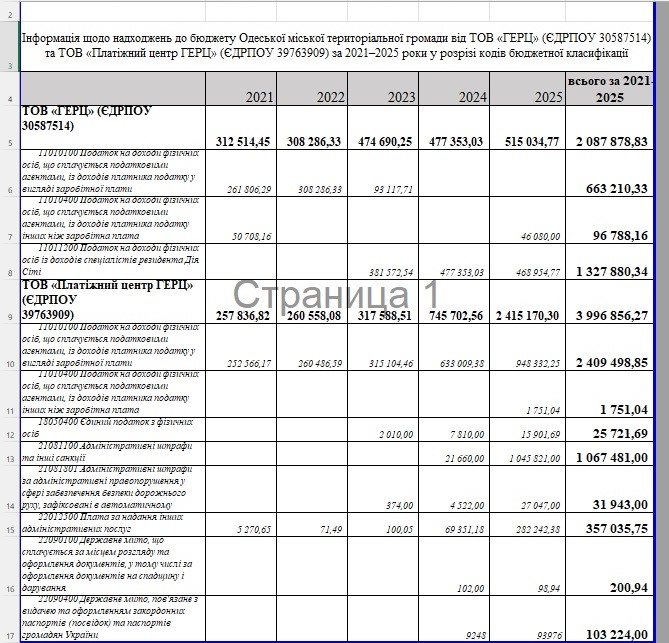
From the department’s response
In addition to the “HERTS” empire,Kostyantyn Tkach is also involved in construction. In particular, among his completed projects is the “Marinist” residential complex,located on Mayachny Lane on the site of the former “Yakir” sanatorium. And this businessman’s success may be linked to his influential connections.

Konstantin Tkach. PHOTO: “Urban Space”
Currently, Konstantin Tkach is one of the owners of the company “Trans Ocean Tour.” This company—though with different owners at the time—was among the founders of the now-defunct “Sotscom Bank,” which ceased operations in 2011. One of the bank’s founders was the influential Odessa businessman Volodymyr Galanternyk. The media referred to him as the “shadow ruler of Odessa” and a friend of the city’s former mayor, Hennadiy Trukhanov. However, Galanternyk has been wanted since 2021. The National Anti-Corruption Bureau believes he may have been involved in organizing a criminal group in Odesa, which caused the community to suffer losses of nearly 700 million hryvnias.
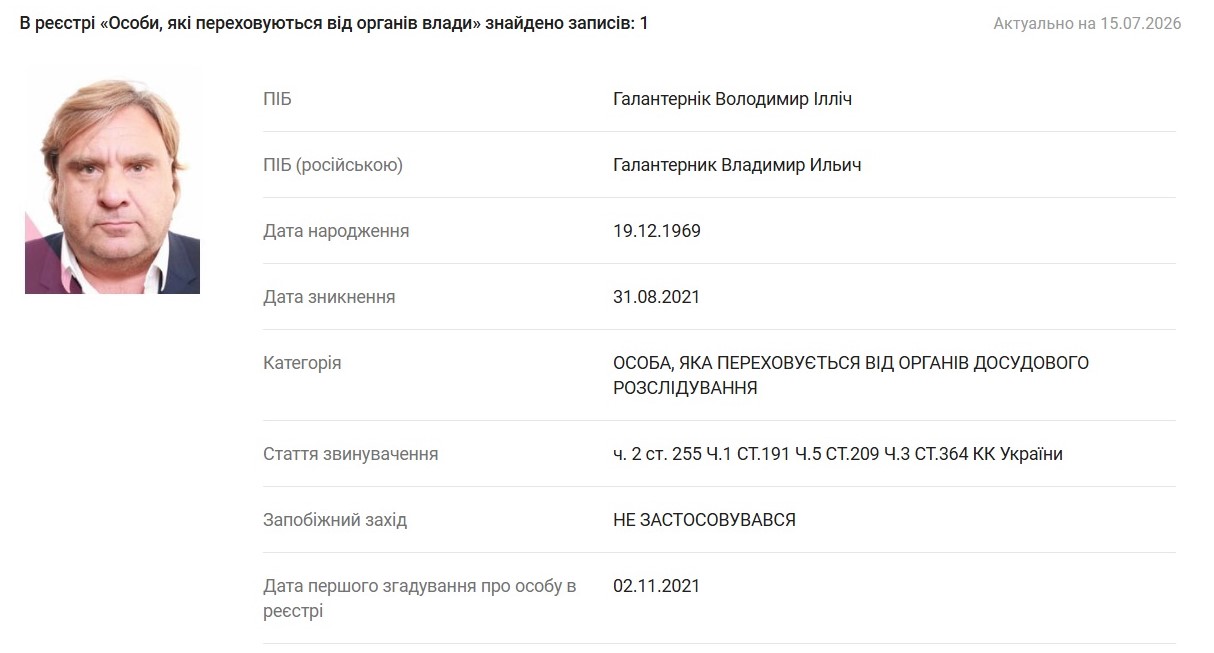
It is noteworthy that Tkach was also implicated in a high-profile corruption investigation—albeit as a witness.

Screenshot from YouControl
The case involves the purchase of a land plot for 146 million hryvnias from the state budget to expand the “Zakhidne” city cemetery, even though the land’s actual value was 16 million. This investigation is one of the episodes in the case involving the aforementioned businessman Galanternik.
Ambitious Plans
Moreover, simply collecting utility fees from “HERTS” owners apparently wasn’t enough. In 2017, a company affiliated with “HERTS” also planned to introduce an electronic ticketing system for the city’s public transportation, profiting from it. The authorities at the time actively supported this. It appears that a scheme similar to the one involving the “ESAN” software was in the works.
In October 2017, Odesa city council members voted to approve the terms of a tender to select an investor for the implementation of an automated fare collection system in the city’s public passenger transportation system—the so-called e-ticket.
At the time, journalists from “Public Investigation” analyzed the approved terms of the tender and determined that they were tailored to a specific company and contained discriminatory requirements. Despite this, the competition in Odesa took place, and, as expected, only one company participated— Odesa City Card LLC , which at the time had been founded by two companies: “HERTS” and “Telekart.” Eventually, the matter reached the Antimonopoly Committee, which acknowledged that the terms of the tender had been tailored for a specific company. In addition, according to “Odesa Life,” the project was not approved by the European Bank for Reconstruction and Development, which had issued a loan to the municipal enterprise “Odesmiskelektrotrans.” As a result, an electronic ticketing system has still not been implemented in Odesa.
At the same time, the GERTS website states that in 2018, the company registered the copyright for the computer program “GERTS. E-Ticket" and, in 2017, for the “Odessa Public Transportation Fare Collection System (SOPOTO).” Therefore, it cannot be ruled out that if “HERTS” electronic tickets are introduced in Odesa, residents will be forced to pay Tkach’s company for their rides—just as is currently the case with the “ESAN” payment system.
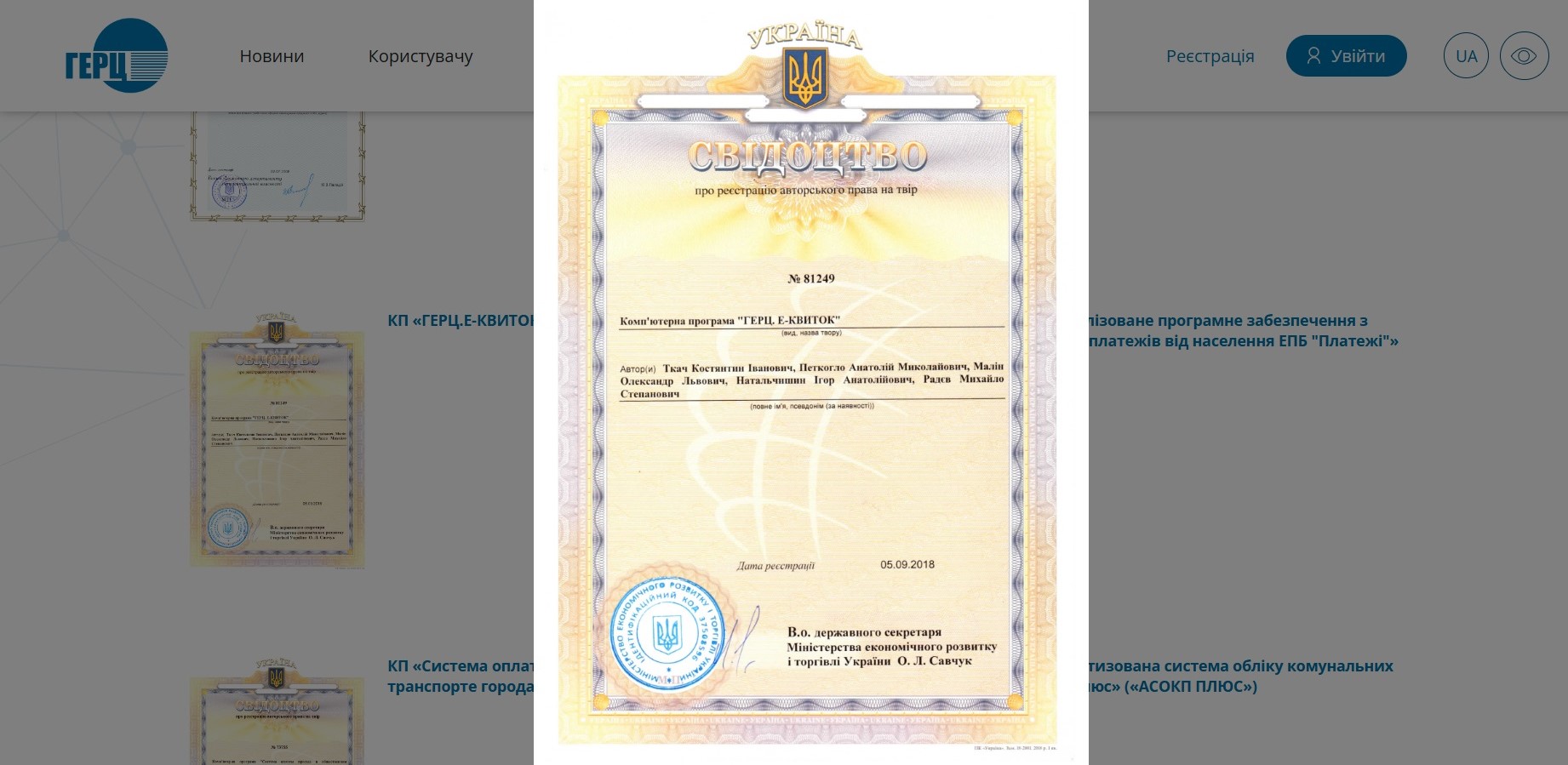
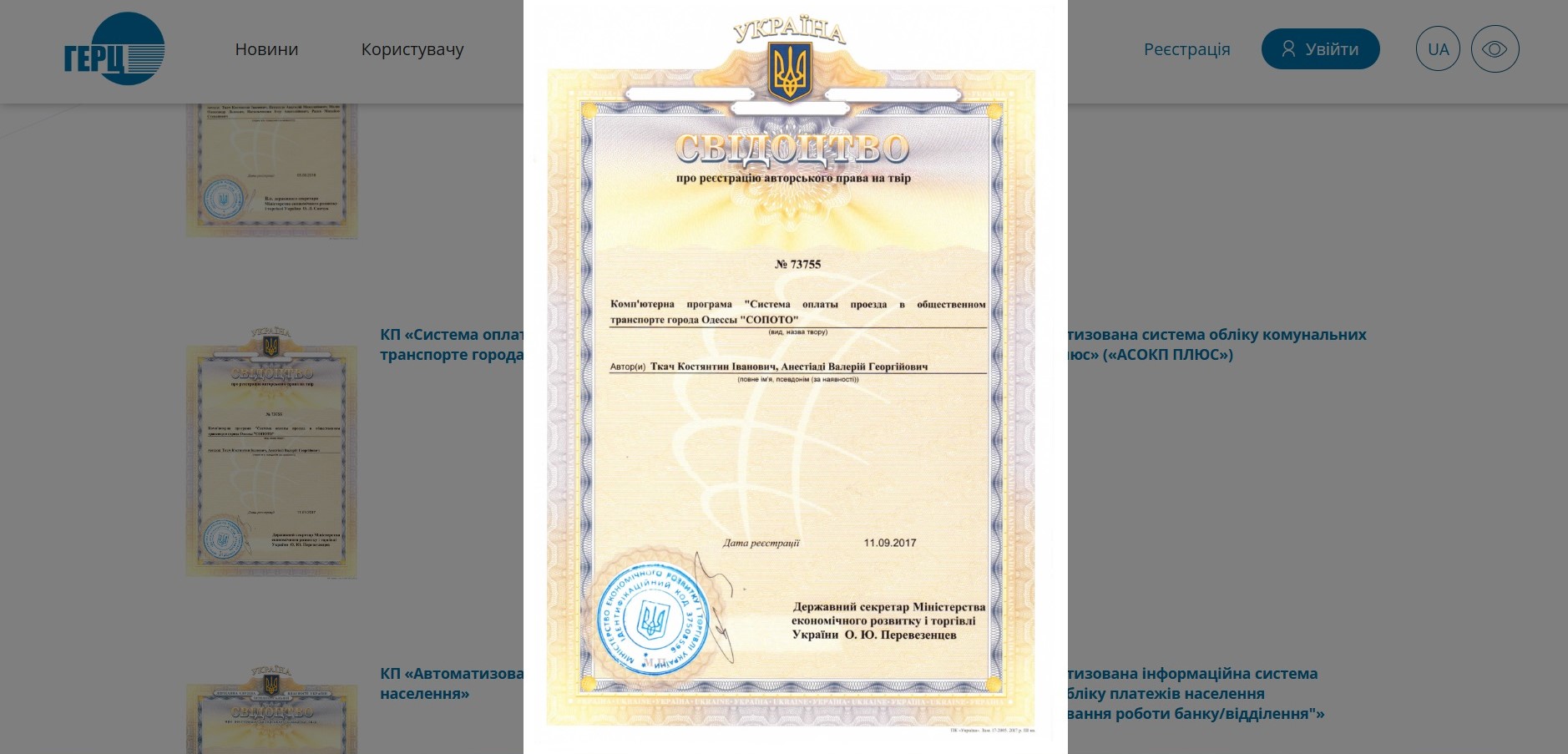
“Intent” reached out to “HERTS” to ask how it came to be that the company undertook to develop software for the city to collect utility payments, even though it had already developed similar software. It also asked whether there are plans to develop and implement an electronic ticket system for Odessa’s public transportation users. However, as of the publication of this article, the company had not provided any comments.
Thus, for many years, Odessa has been using a program for collecting utility payments that belongs not to the city but to third-party companies that are effectively making money out of thin air. It is unclear when the city will abandon this artificial monopoly.
Produced with the support of the “Stronger Together: Media and Democracy” program, implemented by the World Association of News Publishers (WAN-IFRA) in partnership with the Association of Independent Regional Publishers of Ukraine (ANRVU) and the Norwegian Media Business Association (MBL), with support from Norway. The authors’ views do not necessarily reflect the official position of the program’s partners.
Олена Чернишова