Меню
Соціальні мережі
Розділи
March 31, 2026, 6:57 p.m.
Cogeneration: a big failure of the Odesa authorities
This article also available in English4

COLLAGE: Intent.
The winter season of 2022/23 was a difficult one for Odesa, as the city was without electricity for most of the winter months due to regular Russian shelling of its energy infrastructure. In addition, after the shelling, water and heating were often cut off.
It was after that difficult winter of full-scale war that donors, at the initiative of UNDP, provided Odesa with the necessary number of cogeneration units to maintain critical infrastructure - water and heat - even in blackout conditions. As of November 2025, Odesa had received 13 cogeneration units, but the local authorities were able to install only one of them. Thus, the city spent the winter of 2025/26 in extremely difficult conditions again.
Intent investigated why this happened .
There is no plan "B"
Yevhenia Henova, an Odesa resident and Intent editor, lives in a Soviet nine-story apartment building in the Peresypskyi district. There are hundreds of such houses in Odesa. The heating is centralized. It is supplied, in particular, by the Severnaya-2 boiler house:
"A huge advantage of my apartment is that it's a one-room apartment. This small space allows us to stay warm when there is no heat."
According to Yevheniia, in 2022, she, like other Odesa residents, faced mostly electricity shortages. In the 2025/2026 heating season, this was compounded by interruptions in water and heat supply:
"We have a big chat room that residents of the neighborhood are subscribed to. We joke with each other when the radiators are cold: Hey, the Chinese wall is the house in front of the boiler room - is there smoke coming out? Often there is no smoke."
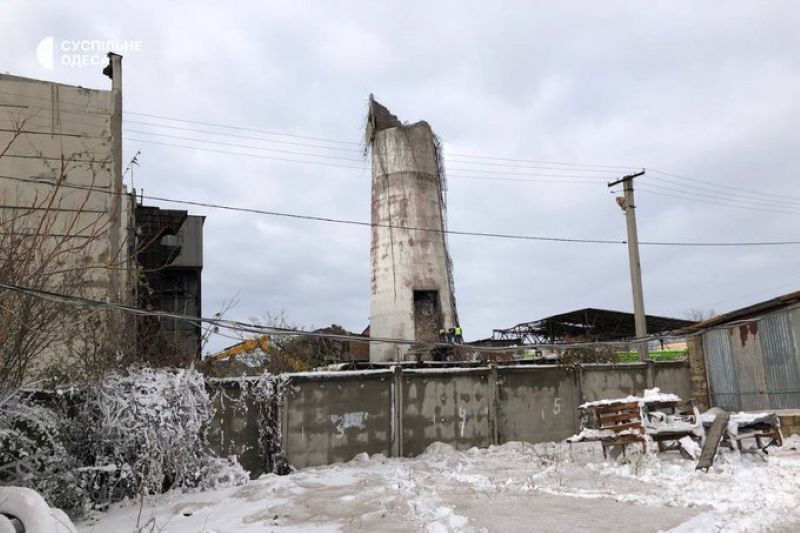
The Severna-2 boiler house. In 2023, a 100-meter pipe fell there due to bad weather. PHOTO: Suspilne.Odesa
In December 2025, Russian missiles and shaheeds hit several substations, leaving residents of the Peresypskyi district without electricity for more than 5 days. And for almost as long, there was no heating in the houses:
"Of course, we realized that our boiler house had no alternative, no backup power. There is no contingency plan B. It was scary. Fortunately, it was not very cold outside at the time. In the apartment without heating, the temperature was 15-16 degrees. These are not very comfortable conditions."
Yevheniia notes that her neighbors with larger apartments had even lower temperatures. In addition, dampness immediately appeared. Although it is dangerous, people turned on gas burners to raise the temperature in their apartments a little. Those who did not have gas in their apartments did not have this option.
In January 2026, the situation repeated itself - not only electricity, but also water and heating disappeared as a result of Russian shelling. At that time, the temperature outside was below zero. According to Yevheniia, there was no heating for more than a day:
"This is being discussed on social media. This creates additional tension. It caused local road closures."
On the night of February 12, 2026, Odesa came under attack again. The energy infrastructure was heavily damaged. Simultaneously with the power outage, hundreds of thousands of the city's subscribers were left without water and 200 houses without heating. For almost a day. Local water problems could not be fixed for several more days. And after the night shelling on February 16, the Kyiv district was affected. Thousands of subscribers were left without electricity, heating and water for several days in the cold.
Sweet promises
After the difficult winter period in 2022-2023, Western partners promised to help with critical infrastructure, such as heat and water supply, in the coming years. Thus, on November 6, 2024, it became known that the first gas-piston cogeneration unit was transferred to Odesa under the UNDP program. The initiative was launched thanks to the support of the governments of Norway, Sweden and Japan. The city received the expensive equipment free of charge.
"The peculiarity of our city is the lack of its own generation inside, which led to long blackouts, when the city was left without electricity for several days. That is why the equipment provided is extremely important - it is the first step in the implementation of the project to create distributed generation in the city to provide residents with reliable access to heat, light and water," said Hanna Pozdnyakova, then Deputy Mayor of Odesa.

Transfer of cogeneration units to Odesa. PHOTO: Odesa City Council
Together with three other units that were already on their way to the city, Odesa's generating capacity was to be increased by 13.2 megawatts. This would have provided at least 450,000 Odesa residents with reliable access to critical services. This would cover approximately 45% of the city's energy needs in water supply, heating and sewage, excluding water intake. But these are only theoretical calculations. The reality turned out to be quite different.
In April 2025, the Odesa City Hall reported that the city had received 11 gas-piston cogeneration units from international partners, 4 of which were powerful and 7 less powerful, for neighborhood boiler houses. At that time, the first 3.3 MW unit was supposedly already in operation. It cost the city more than UAH 43 million and additional payment for related work. As for the others, the city authorities assured us that they were installing 5 more units. The works are large-scale and expensive. They include laying cable lines, building foundations, and connecting to external gas and electricity networks.
In total, the city expected 16 gas-piston cogeneration units with a total capacity of 31.8 MW from the partners. This is estimated to be enough to supply electricity to all critical infrastructure in the city. The former mayor of Odesa, Gennadiy Trukhanov, emphasized that the city should manage to install and connect the maximum number of units by the new heating season of 2025/26, ensuring their connection not only to boiler houses but also to other critical infrastructure facilities.
But by the heating season, the Odesa city authorities managed to install only one unit. And Trukhanov himself and Pozdnyakova, who had long headed the Odesa City Heat Supply (OCHS ) utility and was in charge of installing cogeneration units as deputy mayor, were left without managerial positions before the start of the heating season. Gennadiy Trukhanov was also deprived of his Ukrainian citizenship because he had Russian citizenship.
On paper and in reality
In November 2025, when the heating season had already begun, the Department of Municipal Economy reported: "The TMC received 13 cogeneration units with a total capacity of 21,243 MW from international partners. But only one of them has been installed with a capacity of 3.3 MW. All the others are still not connected.
The current situation with the cogeneration units in the city is not known for certain, as the Odesa City Heat Supply Utility did not respond to our repeated request. However, judging by the prolonged heat outages in the city after the loss of electricity due to shelling, all the equipment we received has not been launched yet.
It is also unknown whether Odesa's water supply system, which is operated by Infoksvodokanal, a private company associated with former Yanukovych presidential environmental minister Mykola Zlochevsky, has backup power. The company refused to answer, claiming that this information is classified. However, the prolonged water outage after the shelling of the energy infrastructure suggests a lack of backup power at the company's facilities.
At the session of the Odesa City Council on February 25, 2026, Leonid Grebenyuk, Director of the Department of Municipal Economy, actually admitted that the city is going through the 2025/26 heating season with only one cogeneration unit:
"One (cogeneration unit - ed.) has been operating since the last heating season. Today, there are cogeneration units that we received from the fund that are not working, but the installation and commissioning process is underway. We expect them to be operational in the 2026/27 heating season."
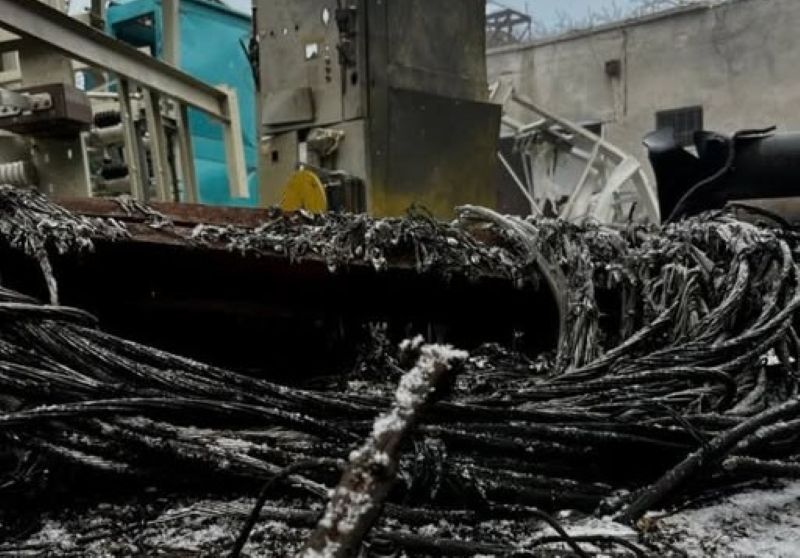
Destruction of a power facility in Odesa on February 3, 2026. PHOTO: DTEK Odesa Power Grids
Energy expert Vadym Glamazdin told Intent that the UNDP project was intended to help power critical infrastructure - boiler houses, treatment plants, and water and wastewater pumps - even in a blackout situation:
"If this project had been implemented in the city, residents would have been able to receive certain services even in the face of a critical electricity situation. Unfortunately, the project has not been completed yet."
Glamazdin emphasizes that the transfer of equipment is only part of the project. To implement it, it is necessary to invest a lot of money in the installation of this equipment. This should be provided by the city budget:
"Equipment is at best half the cost, or even 30%. The rest is work: design, construction, installation, etc., and obtaining licenses. In addition, it should be understood that the transferred equipment is not intended to provide electricity to the homes of Odesa residents. The installation of one cogeneration unit takes about 3-4 months."
The expert explains that the city does not have its own generation, although there is a thermal power plant in Odesa, but it is not currently working to supply electricity. The station is now owned by the state-owned Naftogaz of Ukraine and needs a large-scale modernization. Regarding the possibility of providing the city with the necessary amount of electricity from its own sources, Glamazdin notes that technically it is almost impossible. However, the city needs its own generation:
"Odesa is a complex region. Not only in terms of electricity, although there is a dead-end part of the high-voltage networks, only three substations, which are regularly under Russian attack. At the same time, Odesa has a fairly large consumption volume. In addition, the city is a dead-end region in terms of gas supply. Therefore, there may not be enough gas to launch gas generation to power the entire city. We need to reconstruct the gas network. There is also the question of how to distribute the electricity generated, because the condition of the distribution networks is also unsatisfactory."
But all these problems need to be addressed. According to the expert, to ensure its own generation, Odesa needs to modernize and actually build a new CHP plant, additionally purchase and, most importantly, install cogeneration equipment where possible. But all these projects require huge costs. They also take time to implement. We are talking about millions of dollars and years to supply equipment and carry out work.
It is not known how much electricity the city needs to cover all its needs - DTEK Odesa Electric Networks, the company that runs the electricity distribution system in the region, refused to even answer questions about the light needs before the full-scale invasion. They claim that this is information with restricted access.
What about the money
As of the beginning of February 2026, the Prozorro e-procurement system contains 79 contracts that were uploaded by the Odesa City Heat Supply Utility related to the installation of cogeneration units transferred by international partners at the city's boiler houses. Not all of them were successful, and some of them were small amounts for preparatory services and works or the purchase of construction materials for the equipment. In total, during this time, KP "TMO" concluded agreements related to the installation of cogeneration units for a total amount of more than UAH 105 million.
The first agreement related to the installation of cogeneration units in Odesa is dated February 26, 2025. The first unit was handed over in early November 2024. Obviously, the then Odesa city authorities knew about its transfer in advance, but for some reason did not prepare for a quick launch. At the same time, Prozorro does not have a single contract for the purchase of cogeneration units for the city to provide Odesa residents with an additional source of electricity.
For example, in the capital, which also suffers from enemy shelling of the energy sector and experienced a difficult winter period without heating due to the destruction of energy facilities, back in 2024, 9 cogeneration units were purchased for UAH 1.1 billion, as reported by the Nashi Hroshi publication . Kharkiv, which lives under regular Russian shelling and, like Odesa, has received a number of cogeneration units from international donors, additionally purchases power generation equipment from the city budget. In particular, in the summer of 2025, the Kharkiv Metro signed an agreement to purchase five cogeneration units worth more than UAH 260 million. This is not the only such agreement in Kharkiv.
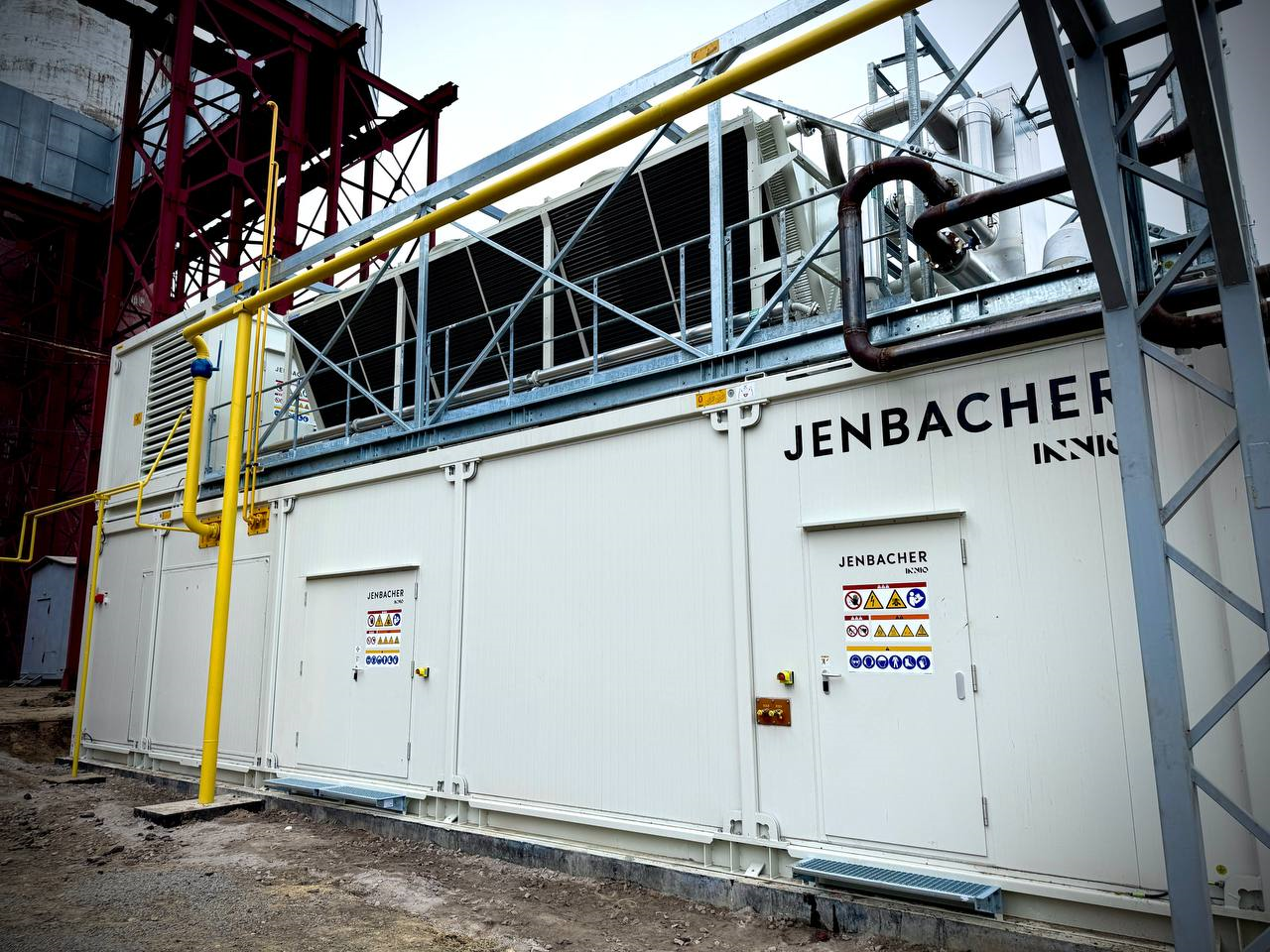
A cogeneration unit. PHOTO: Odesa City Council
According to Yevhen Magliovany, an expert at the Dixi Group think tank, a number of Ukrainian cities have been actively installing cogeneration equipment since the beginning of the full-scale invasion, and some even before. According to the expert, in these cities, specialists are connecting cogeneration units into a local network, which makes electricity supply decentralized and more sustainable:
"Container-type cogeneration units need to be connected to gas, electricity must be connected, and the foundation poured. This can be done quite quickly - in 2-3 months," Maglevanyi said in a comment to Intent.
But in Odesa, this has not been done in a year and a half, with the available equipment.
We were also interested in the question of who is installing the equipment in Odesa, or rather, who should be installing it, according to the procurement. We found out that in July 2025, TMO entered into an agreement to install the only plant operating in the city without an open tender. The cost of the work amounted to UAH 43.8 million. The contract was awarded to Pivdenenergomontazh.
According to Magliovany, this is the market price for the installation of a 3.3 MW cogeneration unit:
"Installation of one kilowatt is about $300-400. I proceed from this calculation. The larger the capacity of the plant, the cheaper it is."
Pivdenenergomontazh was registered in 2017 in Odesa. Pivdenenergomontazh LLC often receives budget contracts. The total amount of signed contracts since 2016 is almost 170 million budget hryvnias, including a significant share from KP TMI. The company is owned by three people: Andrii Onyshchenko from Zaporizhzhia, Andrii Shcherbin from Odesa, and Mykola Zabrotskyi. The latter used to be the director of the now-defunct collective enterprise Elektropivdenzakhidmontazh-11. This company also received budget contracts. Zabrotskyi's wife Yulia worked as a department head at Ukrenergo until 2020.
The installed cogeneration unit is maintained by Kyiv-based KTS Engineering. Without holding an open tender, TMO signed a contract with this company for UAH 5.2 million. The contract is valid until the end of May 2026. In February of this year, the company signed another agreement for UAH 4 million for maintenance and repair of the cogeneration unit until the end of the year. KTS Engineering LLC receives budget contracts almost all over Ukraine, having signed agreements totaling almost UAH 475 million since 2016.
In September 2025, KP "TMO" signed a contract for the construction of distributed generation based on gas-piston cogeneration units at another boiler house in the city. The cost of the works is UAH 7.3 million. The company did not hold an open tender. The works are to be completed only at the end of 2026. The contract was awarded to Odesa-based KB Teploenergo.
This company was registered in 1999. The company is currently owned by Valentyna Ishchenko, a resident of Odesa. The lion's share of KB Teploenergo 's contracts is with TMO, and since 2016 the company has received contracts from budget customers totaling more than UAH 90 million.
Criminal cases
At the same time, KB Teploenergo, like the aforementioned Pivdenenergomontazh LLC, is involved in criminal proceedings regarding the possible embezzlement of budget funds when performing work commissioned by the municipal enterprise Odesa City Heat Supply.
The investigation believes that officials of the municipal enterprise, acting in prior conspiracy with business entities, abusing their official position, misappropriated budget funds by entering false information about the scope of work performed under martial law into the acts of construction works. As a reminder, Pivdenenergomontazh installed a cogeneration unit in Odesa for tens of millions of hryvnias at the request of the utility company.
In particular, one of the court rulings, dated the end of 2025, refers to the director of Pivdenenergomontazh LLC, who, according to the documents, is Andriy Onyshchenko. According to the ruling, he "held meetings with officials of the budget managers of the Odesa City Council in the office on the second floor of the ARK SPA PALACE entertainment and recreation complex at 1a Genoese Street."
At these meetings, according to the investigation, he discussed the mechanisms of misappropriation of budget funds and transferred part of the already misappropriated funds. In addition, the company's director held meetings with officials at the Vinobroteria restaurant to discuss the terms of capital works and the amount of kickbacks. The investigation was launched in the fall of 2024.
The Vinobroteria restaurant has been involved in criminal proceedings related to the former city authorities before. As reported by Intent, several generators donated to the city by donors for free were found in this restaurant, whose owner at the time was Olga Grytsenko. The media called her the "girlfriend" of the then mayor of Odesa, Gennadiy Trukhanov.
Also, one generator from the humanitarian aid shipment was found at the residence of Vitaliy Tsurenko, deputy director of the Odesa Department of Municipal Economy, at the ex-mayor's place of residence and at the CARat car wash. Law enforcement officers seized 15 generators, while another 29 were stored at the Odesa Electrical Maintenance and Installation Enterprise and were not used.

ARK SPA PALACE. PHOTO: Agoda
The ARK SPA PALACE is no less interesting . Once upon a time, this spa center was legally owned by the Odesa-based Ark Spa LLC, which is now reorganized. Since 2012, the company's director has been Kateryna Trukhanov, the daughter of the former mayor of Odesa. Later, the center, according to documents published on the official website, was operated by the SKVO company, which has already ceased its activities. It was also once run by Kateryna Trukhanova together with the former mayor's business partner Andriy Ivancho, according to the Slidstvo-info publication . Now the ARK SPA PALACE center is operated by Arkspa LLC. This company was registered in 2021. Its owner was a certain Zakhar Petrovytskyi. He is currently one of the defendants in the case of misappropriation of community property worth more than UAH 11 million. The investigation calls Oleksandr Matveev, a deputy of the Odesa City Council from Trukhanov's party "Trust the Deeds," the organizer of the real estate misappropriation scheme. He is on the wanted list, and Petrovitskaya is in the dock.
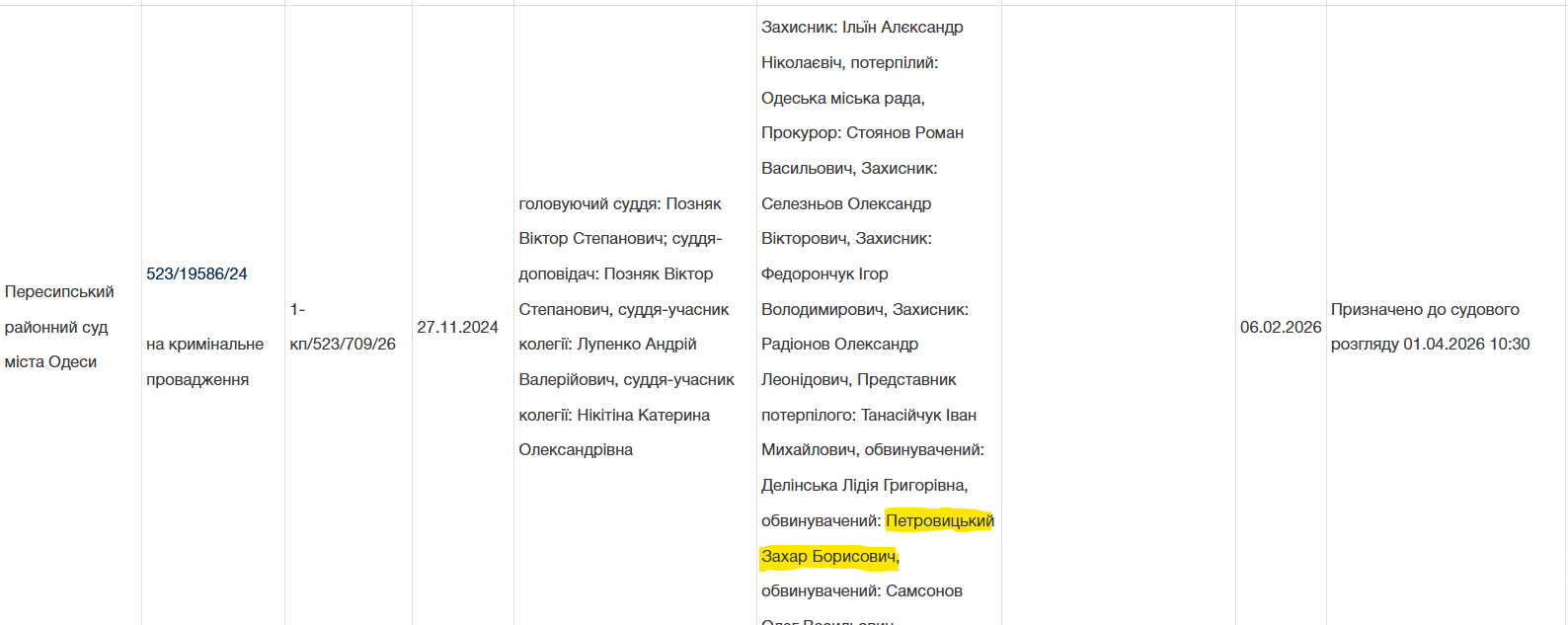
Screenshot of the judiciary's website
If what is stated in the law enforcement investigation is confirmed, this would explain the slow and outright failure to install the cogeneration units transferred to the city. Perhaps the former city authorities simply could not divide the funds for a long time. But for Odesa residents, this resulted in a difficult winter period not only with long power outages, but also without heating and water. Even in the cold.

The project was supported by the program "Stronger Together: Media and Democracy" program implemented by the World Association of News Publishers (WAN-IFRA) in partnership with the Association of Independent Regional Publishers of Ukraine (AIRPU) and the Norwegian Media Business Association (MBL) with support from Norway. The views of the authors do not necessarily reflect the official position of the program partners.
Олена Чернишова