Меню
Соціальні мережі
Розділи
July 8, 2025, 12:59 p.m.
Managed affairs in the Kakhovka occupation administration: traitors are suspected
This article also available in English108

Photo: Depositphoto
The so-called "manager of affairs" of the Kakhovka occupation administration has been served a notice of suspicion.
This was reported by the Kherson Regional Prosecutor's Office.
According to the investigation, the suspect voluntarily agreed to cooperate with the enemy during the temporary occupation of Kakhovka. Starting in June 2022, he participated in the creation of illegal local governments, coordinated the activities of representatives of the so-called "territorial departments," and helped organize information and propaganda activities in favor of the aggressor state. He also fostered sentiments among the local population aimed at discrediting the state authorities of Ukraine.
In addition, the defendant collected and prepared assets of Ukrainian legal entities for transfer to the occupation administration. On behalf of the so-called "head of the Kakhovka Military-Civilian Administration", he conducted an inventory of property belonging to Ukrainian enterprises.
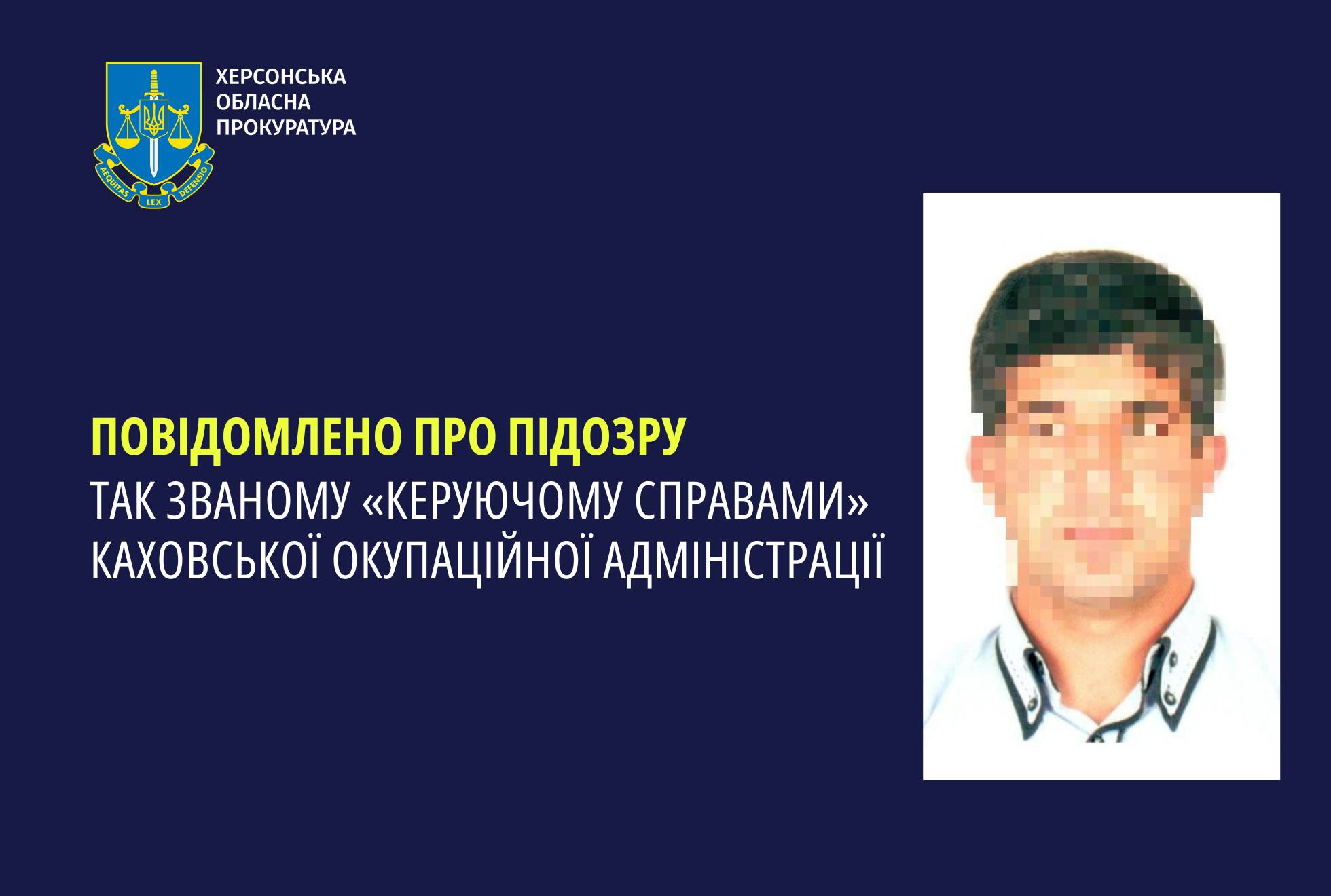
Photo: Kherson Prosecutor's Office
In the Kherson region, more than 1,500 cases of torture of civilians during the occupation have been confirmed, including about 50 murders as a result of torture. Law enforcement officers have already served notices of suspicion to more than a hundred people involved in these crimes, including Russian military, FSB officers, and collaborators.
Also in Crimea, a man was exposed who, through the organizations he created, was preparing teenagers for service in the Russian army. His actions were classified as a violation of the laws and customs of war, for which he faces up to 12 years in prison.
As of April 2025, there were 260 cadet classes on the peninsula, 63 more than in 2024. In addition, there are 16 Cossack classes, and a total of more than 6,200 children are undergoing military training in schools.
In Simferopol, schoolchildren are also involved in weaving camouflage nets for the Russian military. Children are forced to participate in the collection of humanitarian aid and the production of food for the Russian army.