Меню
Соціальні мережі
Розділи
Oct. 16, 2025, 3:51 p.m.
Crimean builders work in three shifts to urgently build a hospital
This article also available in English232

Semashko Medical Center, illustrative. PHOTO: CRIMEA.SOS
Agents of the ATES movement reported a sharp acceleration in the construction of a naval hospital in occupied Sevastopol. This decision indicates a critical situation with the occupiers' medical infrastructure, which is overloaded due to enormous losses at the front.
The ATESH movement wrote about this on Telegram.
According to the agents, the facility, which began construction in October 2022 and was planned to be completed only at the end of 2026, is now being completed as soon as possible. Construction work is being carried out in three shifts to provide places for the wounded Russian military as soon as possible.
The reason for this rush was the large-scale losses of the occupation forces in the Kherson and Zaporizhzhia directions. The flow of wounded is so great that the existing medical facilities in Crimea can no longer cope with the load.
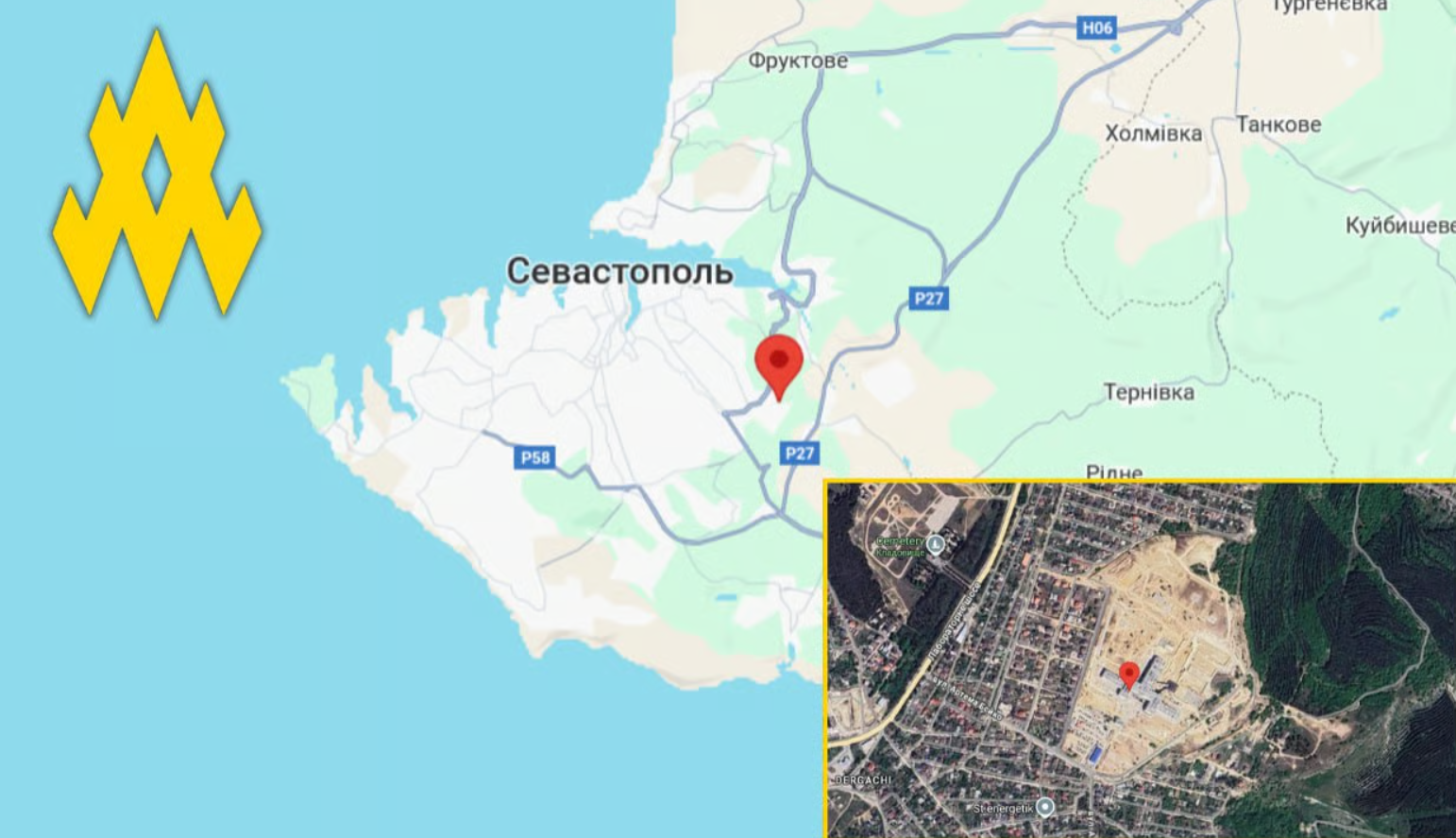
SCREENSHOT: ATESH
That's why the construction of the new hospital has been switched to round-the-clock operation. At the same time, sources note that due to the rush, technological standards are being grossly violated: materials are being wasted and safety rules are being neglected, which has already led to frequent accidents.
"ATES warns that the facility already has serious structural distortions and foundation problems that could make the building unsafe and unsuitable for use.
Earlier it became known that in the Kherson sector, the command of the Russian occupation forces resorted to methods of financial blackmail and control to prevent mass desertion among the personnel.
In particular, ATESH was told about a case when a company commander forcibly collected bank cards from all his subordinates to completely deprive them of the opportunity to use their own funds. Such actions are related to the desire to prevent escapes just before the soldiers were sent to the Donetsk region.
At the same time, the company commander categorically forbade his subordinates to talk about it, threatening to "zero out" those who reported the incident. The cards were promised to be returned only after the redeployment was completed. The Atesh movement said that such actions by the command demonstrate that the Russian authorities "see their military as expendable" and use illegal methods to keep personnel at the front.








