Меню
Соціальні мережі
Розділи
July 17, 2025, 5:58 p.m.
About loyalty, home and life under occupation - an interview with Oleh Baturin, a journalist from Kherson region
This article also available in English161
"I don't want Russians to influence my decision to anchor here," says Oleh Baturyn, a journalist from Kakhovka.
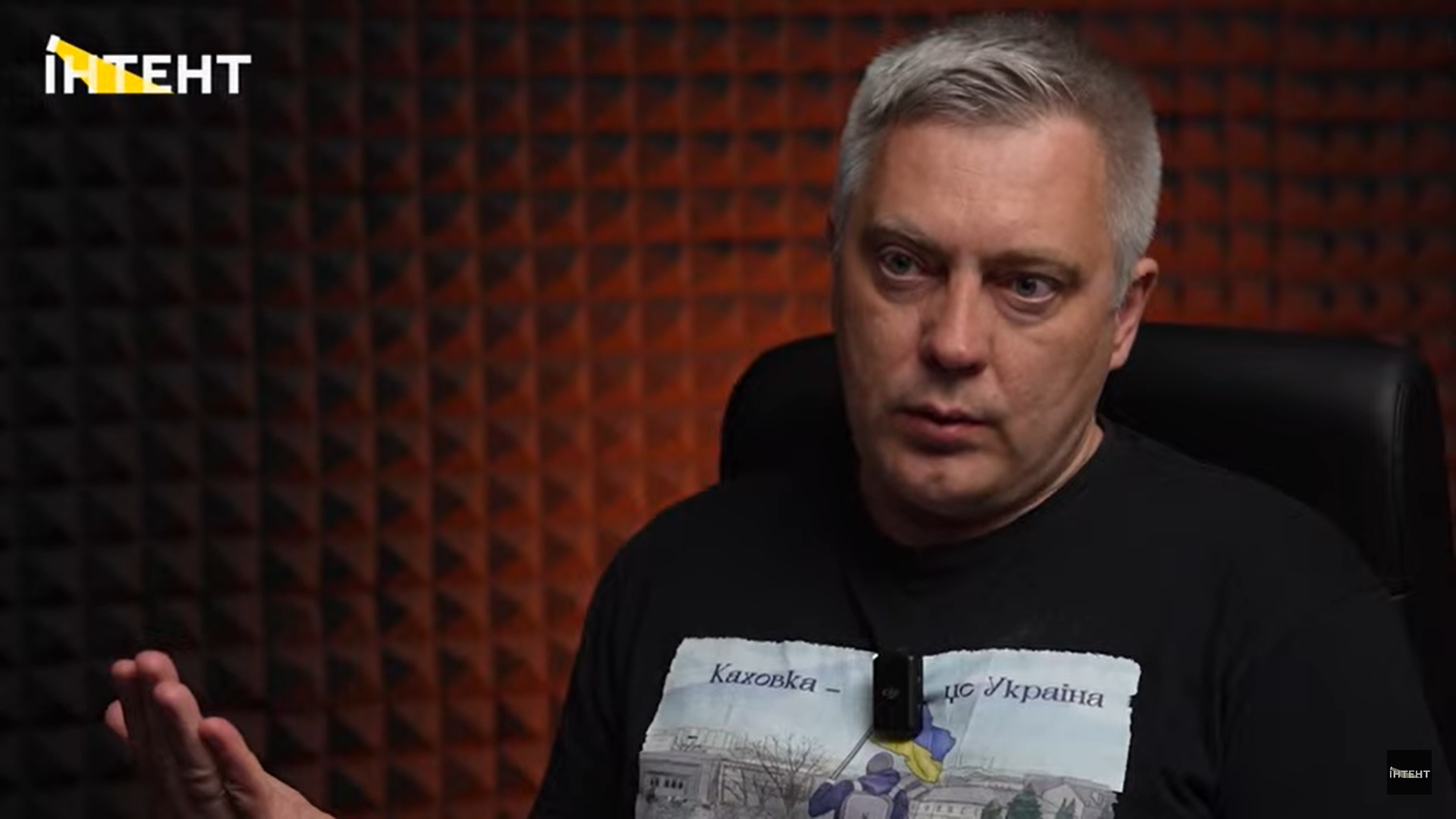
Together with him, Intent discussed life in the frontline and occupied territory of Kherson region, detention by Russians and war crimes.
Oleg Baturin is a Ukrainian journalist. Since the beginning of the Russian invasion in 2022, he has been actively covering the occupation of Kherson region, and later was captured by the Russian occupiers, where he stayed from March 12 to 20. Head of the Eurospace NGO, which specializes in investigative journalism about life in the occupied territories and corruption in the regions. He is a holder of the Order of Merit III class (2022).
Watch the interview about loyalty, home, Kherson region, collaborationism and life under occupation on Intent.
Earlier, in an interview with Intent, Serhiy Hutsaliuk, head of the Southern Interregional Department of the Ukrainian Institute of National Memory, historian, activist and serviceman, expressed the opinion that the composition of the Odesa City Council and its head would change after the war, and the city would finally be cleared of pro-Russian myths.
He also noted that throughout the city's history as part of independent Ukraine, local politicians have been actively promoting the idea that Odesa is not a part of Ukraine, but an integral part of Russian history. He also recalled how he met the declaration of Ukraine's independence and how the Odesa City Council was stormed and how the city's political elites changed.
As for the monuments to Russian writers, Serhiy Hutsaliuk believes that these monuments are a marker of the fact that the entire multiculturalism of Odesa was defined through the prism of Russian culture. Now, during the war, the city, according to the historian, is independently cleansing itself of the imperial past, and with the end of the war, there will be no more people in the city council who support Russian narratives.








