14 September 2026, 22:30
When Repairing a Home Coffee Maker Is No Longer the Best OptionAdvertisement
Ця стаття також доступна українською

Long-term use of kitchen coffee equipment inevitably leads to gradual wear and tear of its internal components, which negatively affects the quality of extraction and thermal stability. Users often try to compensate for the deterioration in the drink’s flavor by changing the recipe or the type of beans. When restocking through the ROOV online coffee and tea store, coffee connoisseurs expect a rich aroma, but the machine’s worn-out hydraulic system is simply unable to maintain the necessary pressure and water temperature. In such situations, owners face a choice: send the machine to a service center yet again, or consider whether it makes sense to replace the equipment.
Key Signs of Severe Wear and Tear in a Home Coffee Maker
Timely diagnosis helps you understand when routine maintenance turns into a never-ending process of fixing minor defects. Deterioration in the machine’s technical condition manifests as systematic malfunctions during daily use.
Among the most pronounced symptoms of the machine reaching the end of its service life are the following:
- A systematic drop in pump pressure, resulting in a watery brew lacking crema.
- Unstable operation of the thermoblock, resulting in water that is either too hot or too cold.
- The appearance of unusual noises, such as a metallic grinding sound or a loud humming from the built-in coffee grinder.
- Constant water leakage under the housing due to loss of elasticity in the O-rings and wear on the hydraulic distributor.
- Regular malfunctions in the electronic control board, resulting in random resets of settings.
Cost-Effectiveness of Service: A Comparative Analysis of Repair vs. Replacement
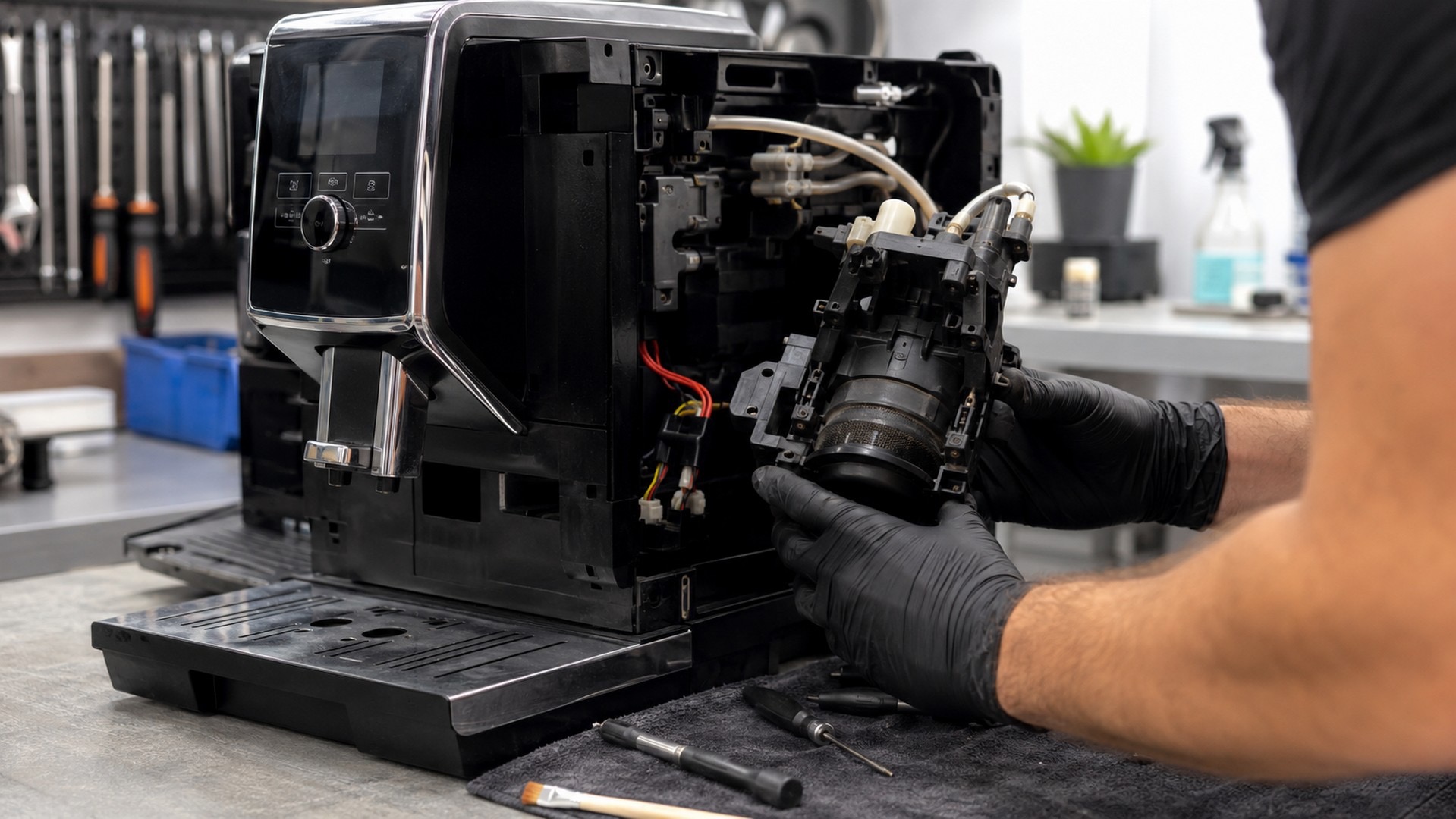
The main argument in favor of another repair is the desire to save money by avoiding the purchase of a new machine. However, in practice, the total cost of several consecutive visits to a technician often exceeds the cost of a refurbished, higher-end machine.
|
Comparison Criteria |
Ongoing repairs to an old coffee machine |
Purchasing a New Machine |
|
Predictability of costs |
High risk of recurring breakdowns |
Fixed price and warranty coverage |
|
Condition of the hydraulic system |
Presence of scale and worn pipes |
Fully cleaned or new lines |
|
Coffee extraction quality |
Deviations from the norm due to component wear |
Stable extraction and rich flavor |
|
Remaining service life |
Critically low service life of all units |
Full service life of all components |
If repairs require replacing several expensive units at once, continuing to invest in outdated equipment becomes impractical. In this case, a sensible solution is a used, serviced automatic coffee machine that has undergone a complete technical inspection, descaling, and replacement of worn seals at a specialized workshop—you can learn more by visiting https://roov.com.ua/avtomatychna-kavomashyna-bv/. This allows you to get a reliable machine with metal burrs at the price of a basic new coffee maker.
FAQ: Answers to Common Questions
When is the cost of repairing a coffee machine considered uneconomical?
Repair is considered economically unfeasible if the cost estimate for the repairs exceeds 40% of the cost of a comparable, fully functional machine, or if breakdowns occur more frequently than once every three months.
Why doesn’t replacing a single part guarantee the long-term operation of an old coffee machine?
All components of a coffee machine wear out at the same rate. Replacing a single part increases the load on adjacent older parts, triggering a chain reaction of failures in the hydraulic or electrical systems.
How does wear and tear on a coffee machine affect the taste of the beverage?
Scale buildup in the boiler disrupts the temperature control, and worn-out burrs produce an uneven grind with coffee dust. This leads to premature under-extraction or bitterness.
What should you look for when choosing used coffee equipment?
You should verify that comprehensive maintenance has been performed: descaling, oil removal, replacement of seals, the presence of a warranty, and a verified dose counter.