27 November 2026, 16:06
Two antique tombstones were discovered in Kherson
Ця стаття також доступна українською

The base of a 19th-century tombstone. PHOTO: Oleksiy Patalah
At the Old City Cemetery in Kherson, local historian Oleksiy Patalah discovered the base of a tombstone dating from the 1830s–1840s and a marble tombstone that had been “reworked” in the 1960s. A fragment of the original epitaph has been partially preserved on the latter.
Local historian Oleksiy Patalakhreported this on social media.
The preserved fragment of the epitaph retains the beginning and end of the ancient inscription: “Here lie the remains” and “Peace to your remains.” The researcher noted that hard marks are visible at the ends of the words.
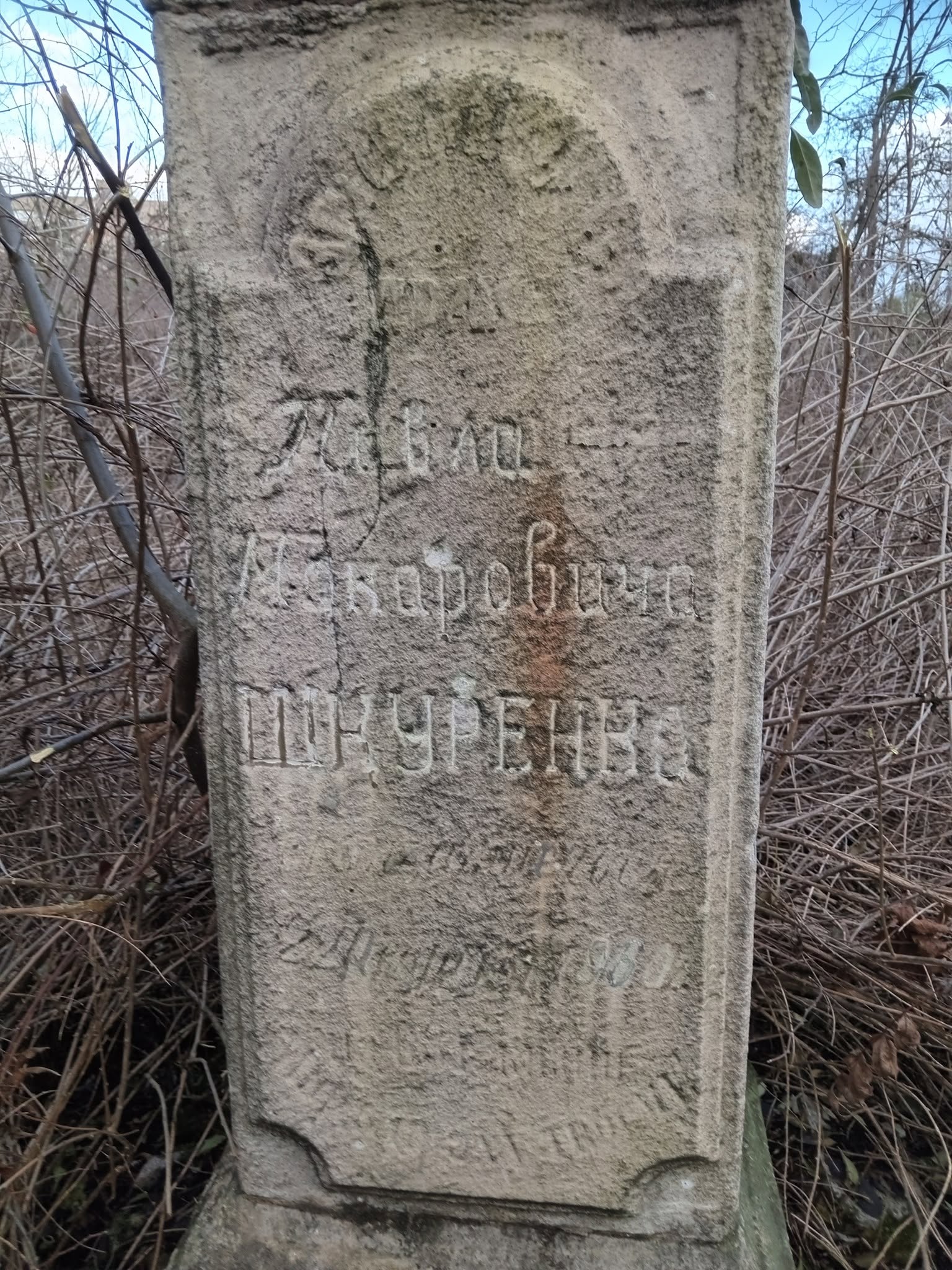
Marble tombstone. PHOTO: Oleksiy Patalah
Oleksiy Patalah told Intent that during the Soviet era, it became “fashionable” to steal monuments from the graves of wealthy individuals, sell them, and subsequently “reuse” them for new burials. This trend became particularly widespread after World War II.
Read also:Historians have restored an antique cross over a children’s grave in Kherson
The researcher explained that originally, such a marble tombstone could have belonged to any of the affluent residents of 19th-century Kherson—nobles, officers, officials, merchants, clergy, or wealthy townspeople. The local historian noted that during the Soviet era, crosses were systematically removed from gravestones.
The Old City Cemetery in Kherson (also known as the Memorial Cemetery) is the city’s oldest cemetery, established in the 1780s on what was then the outskirts of the city, near the roads to Beryslav and Mykolaiv. The historic All Saints Church still stands here. Among those buried here are the first builders of Kherson, Cossacks, military personnel, scholars, and the renowned British philanthropist John Howard, who died here in 1790. During the Soviet era, part of the cemetery was destroyed during the city’s expansion. Today, this cemetery is protected as a historical monument.