24 October 2026, 15:59
The "Black Sea Steppe" festival, celebrating the cultural mosaic of the South, took place in Odesa
Ця стаття також доступна українською

"Black Sea Steppe" Festival. PHOTO: Intent
On October 24, Odessa hosted the "Black Sea Steppe" festival, which brought together ethnic communities, artists, and civic organizations to promote cultural exchange and dialogue.
The event took place at the Bristol Hotel on Italiiska Street. A photojournalist from Intenta attended the festival.
The program featured performances by folk ensembles, presentations on the cultures of national communities and local groups, and workshops on traditional crafts. There was also a fair and forum for civic initiatives, interactive performances, and a lecture series featuring experts, researchers, and civic activists.
The musical program is set to conclude with a performance by Ukrainian folk musician Kozak Siromakha.
The goal of the event is to create an open space for cultural exchange, community-building, and civic dialogue. The festival aims to contribute to the preservation of Ukrainian cultural heritage, the promotion of traditions, and the strengthening of social cohesion.
Postcards, Motanki, and Kherson Herbs
Staff members of the Kherson Regional Local History Museum presented their exhibition at the festival.
According to Oleksandr, a senior research associate at the museum, they brought postcards they had produced themselves and a “meadow” of Kherson herbs. The herbs were collected by museum staff on the streets of Kherson.
One of the postcards is dedicated to the second anniversary of Kherson’s liberation. It depicts resistance rallies and flooding. This year, the museum prepared a new postcard titled “Tree of Life”—made from fragments of painted shells.
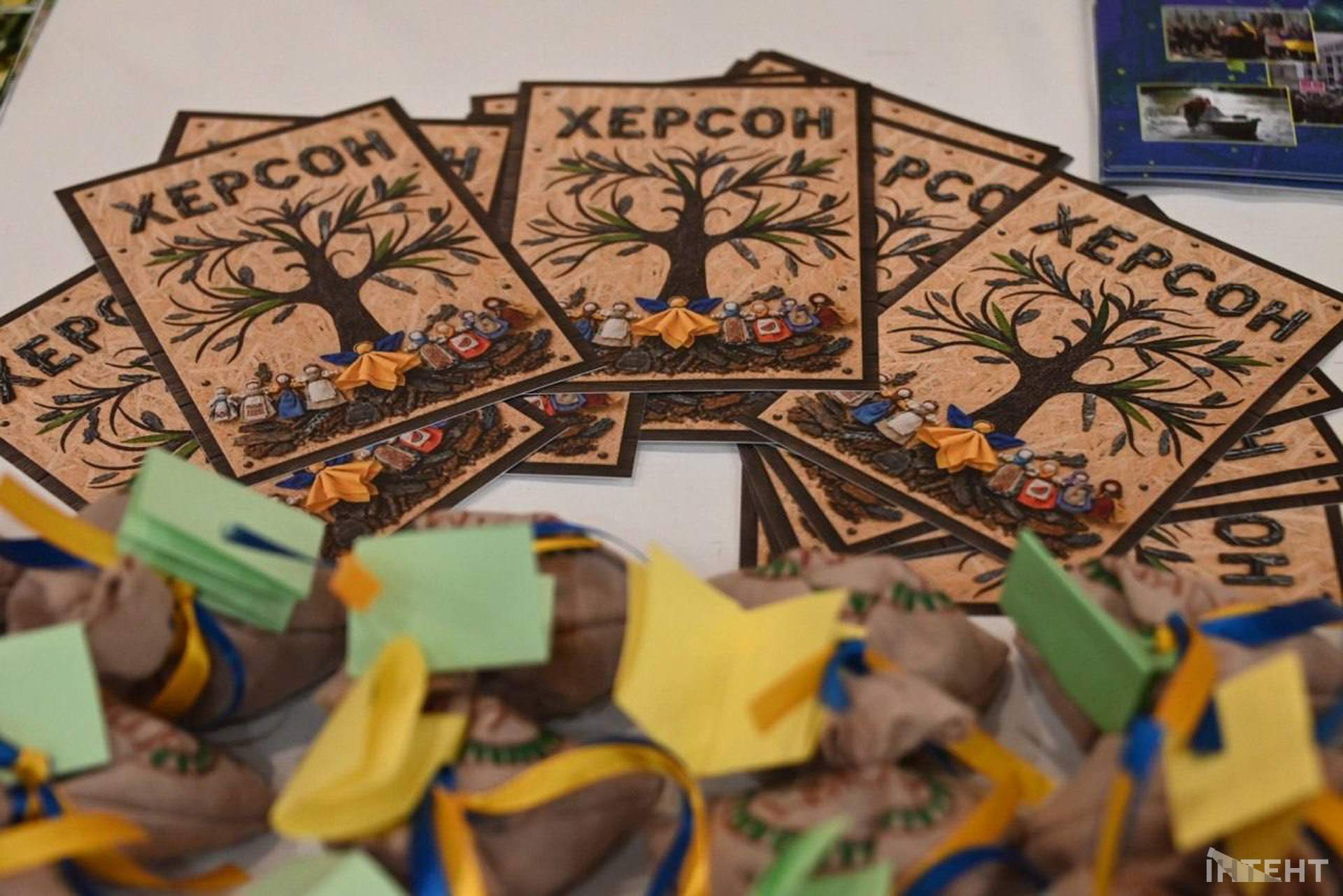
The exhibition also featured motanka dolls. Among them is a guardian angel, which is made during workshops.
Another doll is a “herbal motanka,” with a collection of herbs gathered at its base. You can smell them. According to a museum staff member, some of the herbs can be brewed into tea.
Life in Kherson Today
Natalia Shushlyannikova —a volunteer, poet, and philosopher from Kherson—was also at the festival. She came to talk about what life is like in the city today, how it is being shelled and destroyed.
“I want to say that we still love, dream, and hope for the best,” she said.
She works in Kherson and coordinates the “Kherson” support center. According to her, the initiative began during the occupation among colleagues who had previously taught at Kherson University and the Lyceum. After de-occupation, the center expanded with the help of the Ukrainian Educational Platform and the Association of the Ukrainian Peacekeeping School.
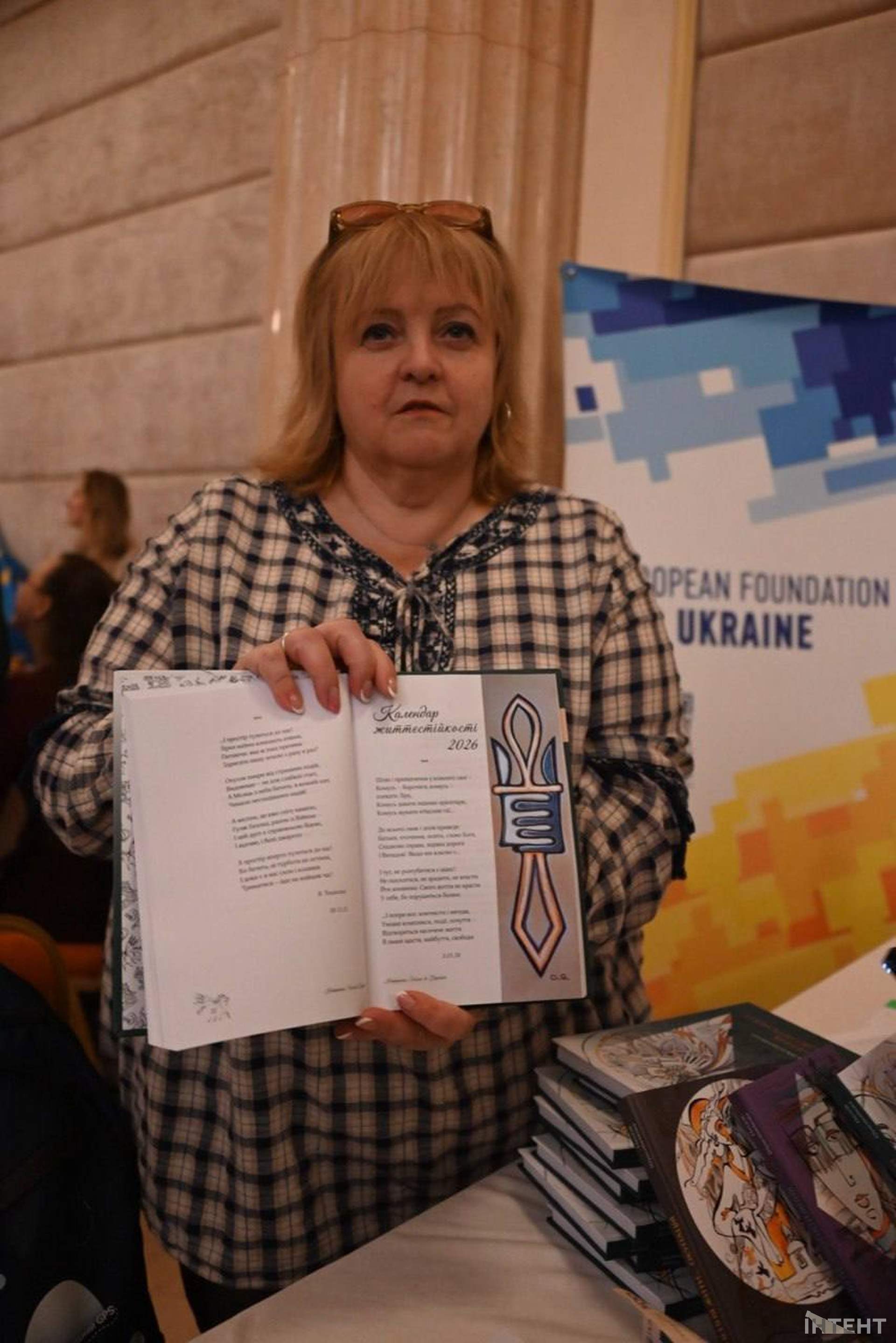
As the poet explained, they run many programs and projects in Kherson that help people become more resilient.
During the war, Shushlyannikova published four books. These include a trilogy—*Inspiration: To Live*, *Inspiration: To Be*, and *Inspiration: The Path to Victory*—as well as *War Diaries*.
According to her, there are no copies of “War Diaries” left because her house was partially destroyed. The book is a daily account of life under occupation, featuring poems and messages of support from others. At the festival, she introduced visitors to the poetry and books in the “Inspiration” series.