Меню
Соціальні мережі
Розділи
Feb. 1, 2026, 9:54 p.m.
Signs of mechanical problems in the timing belt Реклама
This article also available in English8

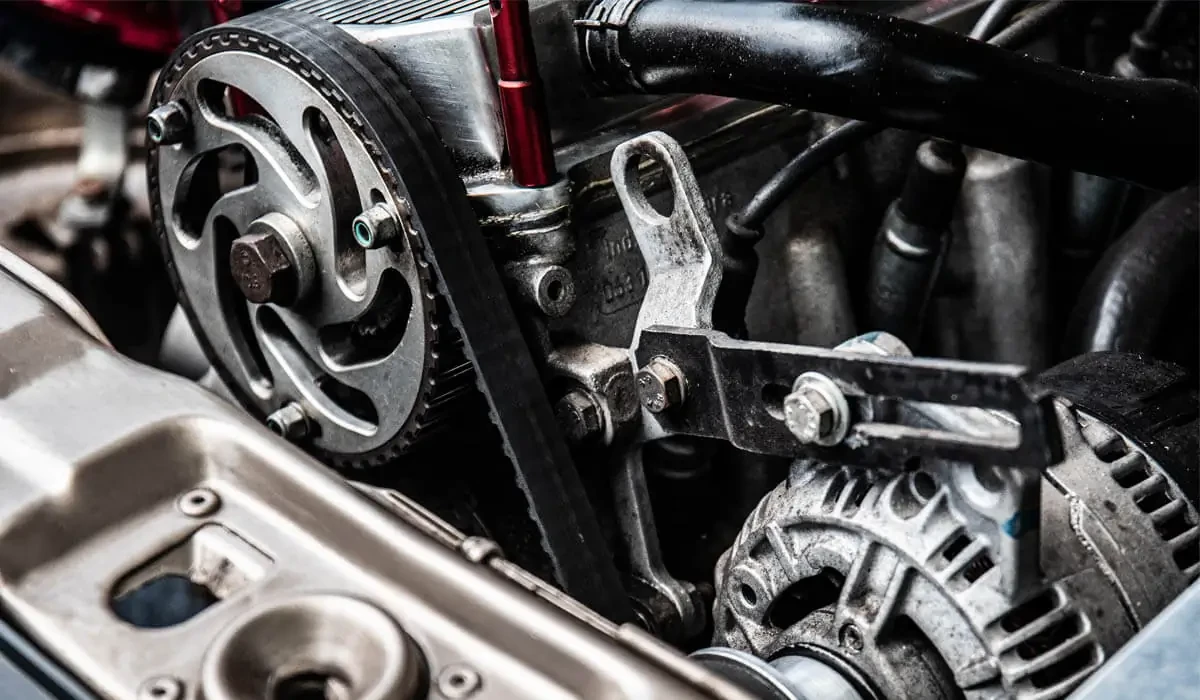
The attachment drive transmits torque from the crankshaft to the alternator, power steering pump, air conditioning compressor, and water pump. The system consists of a poly-V-belt, tensioner, bypass rollers, and pulleys on each unit. Mechanical malfunctions in this area lead to disruption of the operation of all auxiliary systems of the vehicle.
In addition to the drive of the attachments, the timing belt, which synchronizes the operation of the valves with the position of the pistons, is critical for the engine. Timely diagnosis of both systems prevents serious damage to the power unit. The recommended interval for checking the condition of the drivetrain is 20000-30000 km or once a year.
Characteristic sound and visual signs of malfunctions
Mechanical defects in the drive are manifested by specific symptoms. Whistling when starting a cold engine indicates that the belt is slipping due to insufficient tension or wear on the working surface. A metallic grinding sound indicates that the bearings of the tensioner or idler roller are worn.
A visual inspection can reveal the following problems
- cracks and delamination on the belt surface after 60,000 to 80,000 kilometers;
- uneven wear of the grooves with a depth deviation of more than 0.5 mm;
- Skewed pulleys with a deviation from the plane of more than 0.3 degrees;
- oil stains on the belt due to leaking seals;
- Roller backlash when pressing more than 1-2 mm.
Regular inspections every 15,000 kilometers help to identify problems at an early stage.
Malfunction of attachments
Unstable operation of the generator due to belt slippage is manifested by the battery indicator flashing on the dashboard and a decrease in the onboard voltage below 13.5 V. The power steering pump, with insufficient torque transmission, creates increased resistance when turning the steering wheel, especially at low engine speeds. Under similar conditions, the air conditioner compressor does not reach the operating pressure of 12-15 bar, which reduces the efficiency of interior cooling.
The water pump does not provide sufficient antifreeze circulation when the belt slips, causing localized overheating of the cylinder head. Diagnostics of the operation of mounted units should be carried out comprehensively, checking the parameters of each unit separately.
Consequences and risks of further operation
Ignoring mechanical problems of the drive creates a chain reaction of faults. Belt slippage increases the temperature load on the crankshaft pulley and can cause deformation. Worn roller bearings jam the drive when they break, leading to belt breakage. A sudden stop of the generator discharges the battery in 30-40 minutes of engine operation. Failure of the water pump causes critical overheating of the engine with a coolant temperature of more than 120°C. The cost of complex repairs after an emergency drive failure exceeds the cost of scheduled component replacement by 3-5 times. Purchasing high-quality spare parts from trusted manufacturers guarantees reliable operation of the system throughout the entire scheduled service life.