29 October 2026, 23:09
Selecting Perforated and Expanded Metal Sheets for Flooring and FencingAdvertisement
Ця стаття також доступна українською

In industrial settings, it is important to combine the strength of metal structures with the ability to drain water and allow air to pass through. For such applications, perforated steel sheet (PVL) is used—a steel sheet with through-holes formed by cutting and stretching the metal. It is used in construction, manufacturing, and the outfitting of technical areas. However, the product’s application depends on its dimensions, thickness, and load conditions.
Where Perforated Steel Sheets Are Used and What Their Advantages Are
For staircases and service corridors, it is important to have a surface that does not accumulate as much water and small debris as a solid deck. The open cells facilitate cleaning, and the textured surface can improve traction. However, anti-slip properties must be evaluated with operating conditions in mind.
If the facility requires perforated and expanded metal, it can also be considered for equipment enclosures, ventilation screens, and protective partitions. The mesh structure allows light and air to pass through, but the cell size must be selected according to safety requirements regarding the minimum distance from moving mechanisms.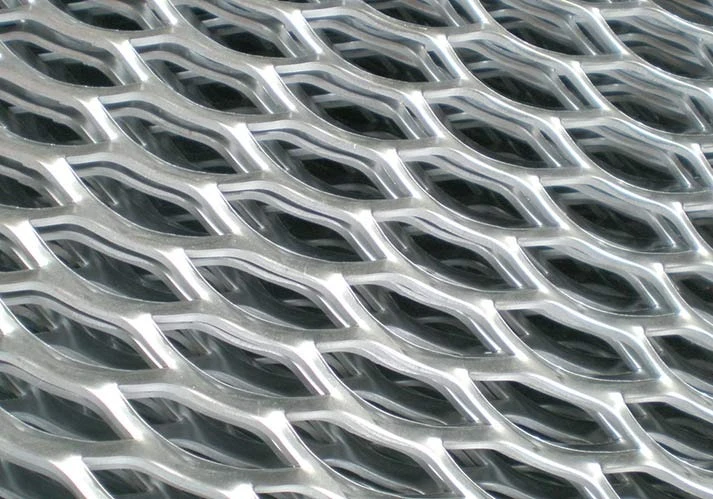
What characteristics influence the choice of sheet
It is not enough for the buyer to know only the sheet’s external dimensions. For flooring, the load-bearing capacity must be verified with regard to the supports, and for fencing, the rigidity and size of the openings are critical. The specification should include:
- the sheet size—to minimize the number of joints and scraps;
- cell parameters—in accordance with ventilation, visibility, and safety requirements;
- the thickness of the base metal—taking into account design loads;
- steel grade and coating—depending on the operating environment.
The Vartis catalog lists perforated metal panels with sheet sizes of 1000 × 2500 and 1000 × 2100 mm. The availability of a specific model must be confirmed prior to purchase: identical dimensions do not necessarily mean identical cell characteristics.
How to Prepare Lightweight Steel Panels for Installation
The mounting method determines how stable the structure will be. Particular attention must be paid to areas subject to pedestrian traffic, where errors in the supports or fastenings create a risk of deflection.
- Check the distance between supports and the allowable load specified in the design.
- Coordinate the cutting layout, taking into account the direction of the cells and the location of the joints.
- Ensure that sharp edges are smoothed and that the steel is protected against corrosion.
The installation diagram should not be replaced with general recommendations: fastener specifications depend on the substrate and the intended use of the decking. After installation, verify that the fasteners are secure and that there are no hazardous protrusions.
What to Consider When Ordering Galvanized Steel Mesh
It is convenient for businesses to send the supplier a drawing or a bill of materials specifying the number of panels. For a small fence or a private property, it is sufficient to specify the dimensions, the desired type of coating, and the delivery address. You can check with Vartis regarding the availability of galvanized steel mesh, custom cutting, pickup, or delivery.
When comparing offers, consider not only the price per sheet or metric ton, but also material waste after cutting and delivery costs. This makes it easier to place an order that matches the drawings and doesn’t require unnecessary on-site rework.