01 November 2026, 17:32
Reliable Pool Plumbing: Why PVC Pipes Are the Only Right ChoiceAdvertisement
Ця стаття також доступна українською

Building your own pool is a major investment, and the quality of the hidden plumbing plays a crucial role. Using standard plastic or metal plumbing pipes for the equipment’s piping system inevitably leads to leaks, corrosion, and costly dismantling of the entire recreational area. That is why the global standard in this industry is specialized PVC pipe, capable of withstanding high pressure and contact with corrosive chemicals for decades without fail. You can find a complete range of certified pipes and fittings for creating a reliable system of any complexity at the link at a specialty store.
Why has polyvinyl chloride replaced other materials?
When it comes to water circulation in a tank, engineering requirements are extremely stringent. Modern PVC water pipes have unique performance characteristics that make them the only viable solution:
- Absolute chemical resistance: The material does not react at all with shock chlorine, pH regulators, algaecides, or even sea salt.
- Perfectly smooth inner surface: Limescale does not accumulate on the walls, and bacteria do not multiply. Additionally, the absence of roughness reduces hydraulic resistance, making the pump’s operation easier.
- Monolithic joints: Reliable PVC pipes are not connected using threads or a hot soldering iron. They are installed using the cold-welding method with a high-performance adhesive. The adhesive dissolves the top layer of the polymer, causing the parts to fuse at the molecular level into a single, ultra-strong joint.
Rigid and Flexible Pipes: What to Use and Where
A professional pool water supply system is typically designed using two types of PVC materials that complement each other perfectly during installation:
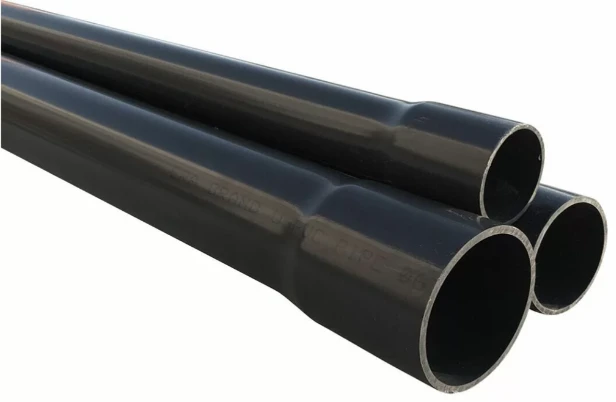
- Rigid pipe. Used in the equipment room to connect the filtration unit, heat pumps, and dosing stations, as well as for laying long, straight lines in trenches. It reliably retains its shape and easily withstands the maximum pressure from the equipment (PN6 and PN10 classes).
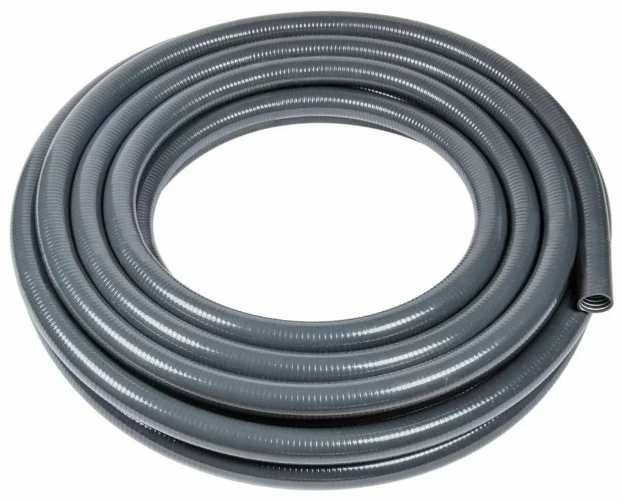
- Flexible pipe (flex). This is a thick-walled, reinforced hose most often used to route piping directly around the tank itself underground. Its flexibility allows it to smoothly follow corners without the need for extra fittings (which reduce pressure) and also effectively compensates for potential seasonal shifts or soil settlement.
A product range that meets any engineering need
Our catalog features a comprehensive selection of components from trusted global manufacturers, such as ERA, Lareter, Praher, Aquaviva, Fitt, and other industry leaders. We offer solutions for both compact private pools and large-scale commercial facilities:
- Wide range of sizes: Products are available in diameters ranging from 20 mm (ideal for the precise connection of automatic chemical dosing stations) to massive 160 mm and larger. For classic home pools, the “gold standard”—50 mm and 63 mm—is most commonly used.
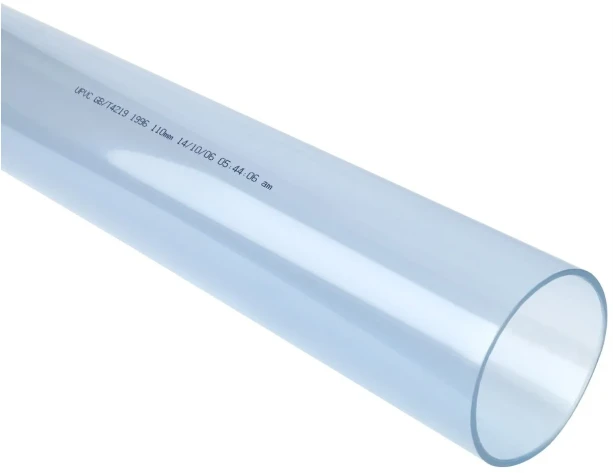
- Transparent pipes: A special line for areas where constant visual monitoring is required. They are installed on drain lines leading to the sewer (to clearly see when the water becomes clean after filter backwashing), as well as at chemical injection points to monitor the flow of chemicals.
- All necessary fittings: Elbows, tees, valves, couplings, and check valves that fit together perfectly, allowing you to assemble a system of any complexity.
Cutting corners on underground and utility systems is the biggest mistake when designing a recreational area. By choosing high-quality European PVC and following proper bonding techniques, you’ll get a 100% leak-proof system that will last over 50 years without a single drop of leakage.