Меню
Соціальні мережі
Розділи
Jan. 8, 2026, 8:36 p.m.
How to start a car in cold weather: effective ways Реклама
This article also available in English18

Reasons that can lead to problems with starting the engine in winter and effective solutions to start the car in the cold.
What should I do if my car won't start in the cold?
Winter sub-zero temperatures are often a serious test for vehicles. It doesn't matter if you rented a car in Odesa or if it's your own car - in both cases, a situation may arise when the engine refuses to start in the cold.
This not only delays your trip, but also causes stress. That's why it's important to understand why the problem occurs, how to safely troubleshoot it, and how to start the car in the cold. This article will help you understand the common causes and give practical advice for drivers.
Why won't the car start in the cold?
Frost affects all car systems. The oil thickens, the battery loses power, and the fuel evaporates worse. Let's take a closer look at these reasons.
The battery is discharged or weak
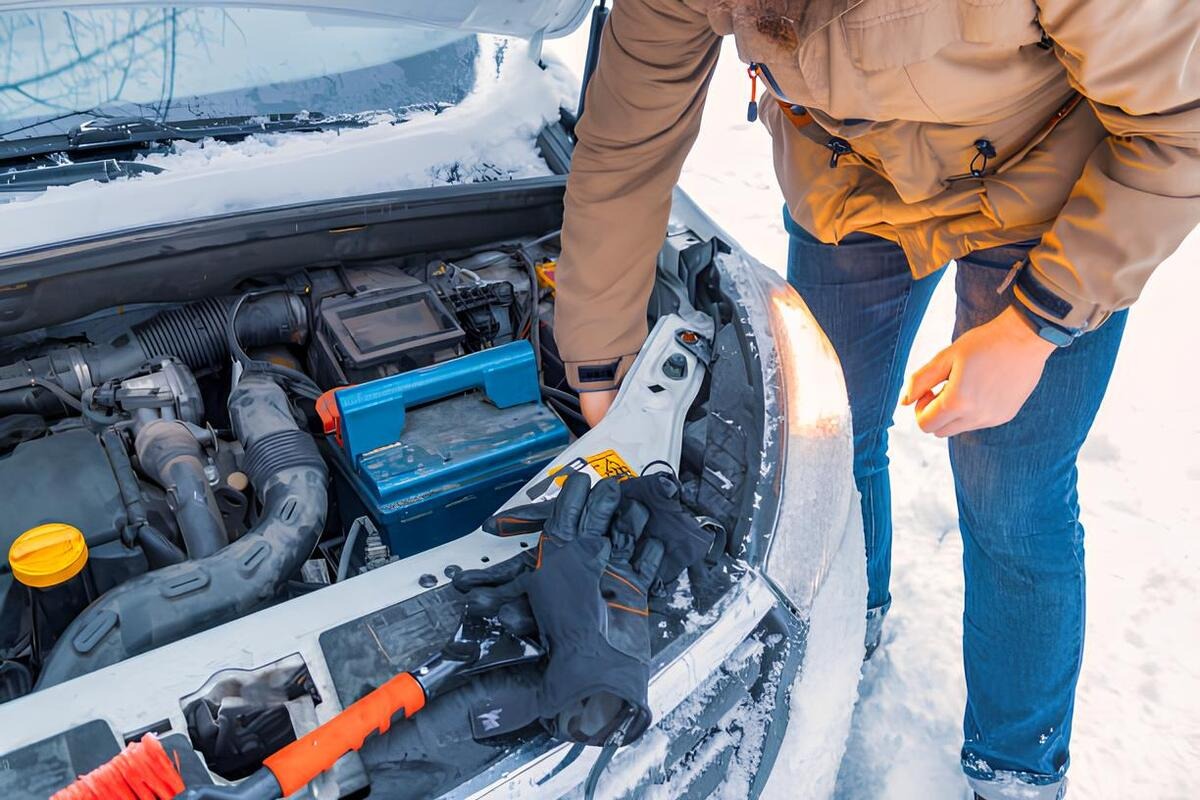
The most common cause of cold start failure is the battery. At sub-zero temperatures, its capacity drops by 30-50%, and the starter requires more power due to the thick oil. As a result, the battery simply does not deliver the required current. Check the condition of the terminals and the charge - this is the first thing to do.
Problems with spark plugs
Spark plugs can also be the reason why the car won't start in the cold. If they are covered with soot or fail, they cannot provide a strong spark in cold weather. Carbon deposits usually form due to short trips or poor quality fuel, which leads to ignition skips.
Problems with the fuel system
It can be difficult to start a car in cold weather because of possible condensation in the fuel filter or fuel lines (in gasoline cars). In diesel cars, paraffins in the fuel crystallize at low temperatures, clogging the filter. If the fuel is summer rather than winter, the problem is almost guaranteed.
Malfunctions of the ignition system
If your car won't start in the cold, you should check the high-voltage wires, coil, and ignition module. They are sometimes damaged by moisture and temperature changes. Cracks in the insulation or oxidation of the contacts disrupt sparking, and the engine does not start.
Other possible causes
If all the factors listed above are ruled out, but the car still won't start in cold weather, then look for other possible problems. Thick oil makes it difficult to turn the crankshaft, the starter is slow or blinks. There may also be problems with the immobilizer, sensors, or mechanical malfunctions. Sometimes the cause is a clogged air filter or low antifreeze level.
How to start a car in the cold?
When a vehicle won't start, there are several safe ways to try.
Using a cigarette lighter from other cars
The easiest way to start a car in the cold is to use a cigarette lighter. Connect the wires correctly: first, the positive of the donor to the positive of your battery, then the negative of the donor to the mass of your car. Run the donor for 5-10 minutes, then try to start your car. After starting, let the engine run to recharge the battery.
Using a starting booster
If you want to start the car in the cold in a modern and safe way, then try a portable jump starter. It is compact, does not require a second vehicle, and quickly delivers the required current. Follow the polarity instructions.
Charging the battery
Remove the battery and charge it with a stationary charger. A full charge will restore the capacity and help prevent the problem from recurring.
Is it possible to start the car with a crank and what are the consequences?
For cars with a manual transmission, it is possible to start the car with a push button. Shift into 2nd or 3rd gear, squeeze the clutch, accelerate the car, and let go abruptly. But this is an emergency method. Risks: damage to the clutch, catalytic converter, timing belt, or gearbox synchronizers. This method is strictly prohibited for cars with an automatic transmission or a variator, as it can damage the transmission.
What must not be done?
Do not crank the starter for more than 10-15 seconds without pausing. This overheats it and drains the battery faster. Avoid filling the engine with ether or gasoline - there is a risk of fire. Do not use hot water on a frozen battery or wires. The case may crack. Do not ignore the problem: if the car does not start, it is better to run a diagnosis than to try again.
How to avoid problems with starting a car in winter?
The best advice is prevention. Park your car in a warm garage if possible. Use winter oil with low viscosity. Regularly check the condition of the battery and change the spark plugs. Fill in high-quality winter fuel and add diesel antiglaze. Before frost, have the ignition system and fuel line diagnosed. Insulate the engine with a car blanket or heater.