24 August 2026, 22:45
How to Choose a Hydraulic Pump: Key Specifications and Common MistakesAdvertisement
Ця стаття також доступна українською

How to Choose a Hydraulic Pump
A hydraulic pump generates a flow of working fluid and transfers energy to the system’s actuators. The speed of the hydraulic cylinders and motors, pressure stability, and the equipment’s service life all depend on the correct selection of the pump. Therefore, relying solely on price, power, or external similarity to a previous model is risky: mismatched parameters can lead to overheating, insufficient performance, or premature wear of components.
Before ordering a hydraulic pump, it is important to gather data on the system and its operating conditions. You will need not only the markings from the old unit but also the operating pressure, required flow rate, drive speed, fluid type, mounting method, and load characteristics. If the pump is being selected for a new installation, the parameters are determined based on calculations for the entire hydraulic system, not just a single component.
What Hydraulic Pump Characteristics Should Be Considered
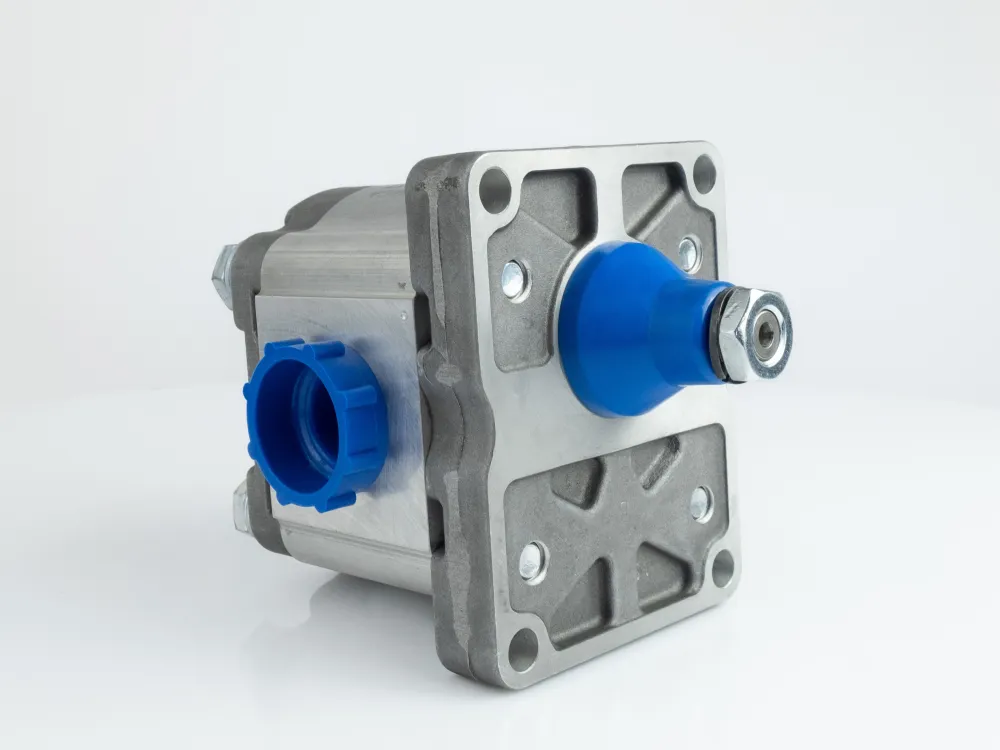
First, you need to determine the type of pump. Gear pumps feature a simple design, compact dimensions, and perform well in many mobile and industrial hydraulic systems. Axial piston pumps are chosen for higher pressures, demanding operating conditions, and systems where flow control is critical. Radial-piston solutions are used where very high pressure, precision, and stable operation under heavy loads are required. The design type should match the application, not just the available budget.
The key parameters to consider when selecting a pump are:
- operating and maximum pressure with a technically justified margin;
- operating volume, which determines the amount of fluid delivered per revolution;
- the flow rate required for the specified speed of the actuators;
- the permissible rotational speed and direction of the drive shaft;
- flange type, shaft shape and size, thread, and port locations;
- compatibility with the working fluid, its temperature, and viscosity.
A pressure margin is necessary, but the “the more powerful, the better” approach does not work. An excessively high-capacity pump can increase flow rate, heat generation, and the load on valves, piping, and seals. At the same time, a unit that constantly operates at the limits of its capacity will wear out faster. It is important to evaluate not only the rated operating conditions but also peak loads, cycle duration, and start-up frequency.
Mechanical compatibility requires special attention. An identical displacement does not necessarily mean that a new model will be a direct replacement for an old one. Differences in the flange, shaft mounting, direction of rotation, or port threads may make installation impossible. Incorrect direction of rotation is particularly dangerous: the pump will not deliver the required flow, and its internal components may be damaged.
Operating conditions also influence the selection. For equipment operating outdoors, the temperature range and the stability of the fluid’s properties are important. In dusty environments, filtration quality is particularly important, and during prolonged operation, heat dissipation is crucial. Even a properly selected pump will wear out quickly due to contaminated oil, cavitation, or errors in the suction line.
Why Professional Selection Is More Important Than Searching for a Substitute
The most common mistake is to look for a replacement based solely on a photo or a few numbers from the label. The full model name often specifies the displacement, shaft design, flange, direction of rotation, and port configuration. Therefore, before purchasing, it’s helpful to have a photo of the nameplate, the technical specifications, the wiring diagram, and a brief description of the equipment’s operation. If the pump has failed, it’s important to determine the cause of the malfunction: simply replacing a part won’t resolve system contamination, excessive pressure, or an oil-related issue.
This is where the difference between a standard product sale and engineering support becomes apparent. The HYDRO-GID team selects components based on pressure, connection standards, operating mode, and expected service life, and also supplies parts for the construction and modernization of hydraulic systems. If necessary, our specialists perform installation, commissioning, diagnostics, maintenance, and repair of hydraulic equipment. This approach helps evaluate not just a single pump, but its performance within the system as a whole.
Therefore, choosing the right hydraulic pump does not start with the brand or price, but with a precise understanding of the task at hand. When technical specifications, installation design, and operating conditions are properly aligned, the system operates more reliably, and costs associated with repairs and downtime become more predictable.