02 October 2026, 17:02
Fire Alarms for Offices and Warehouses: Addressable or Threshold-BasedAdvertisement
Ця стаття також доступна українською

A fire in an office or warehouse rarely starts with an open flame. Smoke appears first, and it is during these initial minutes that the system must sound an alarm and indicate where the problem is located. The speed of the staff’s response and the extent of the damage depend on how accurately the system does this. There are two main types of fire alarm systems: threshold and addressable. They differ in how they work, as well as in installation and maintenance costs, so it’s worth comparing them before purchasing the equipment.
Threshold vs. Addressable Fire Alarm Systems: Key Differences
A threshold (non-addressable) system is based on loops. Several detectors are connected to a single cable, and when an alarm is triggered, the control panel displays only the loop number—that is, the zone or general direction. The exact location must be identified manually. However, this type of fire alarm system is easier to install and more affordable.
An addressable fire alarmsystem works differently: each detector has its own address. The control panel immediately indicates the exact room where the detector was triggered and also detects malfunctions and contamination in individual devices.
|
Parameter |
Threshold |
Addressable |
|
Accuracy of location detection |
zone or loop |
specific sensor |
|
Equipment cost |
lower |
higher |
|
Fault monitoring |
General |
per device |
|
Ideal location |
Small rooms |
large areas |
How to Choose the Right Alarm System for an Office and Warehouse
For an office, the area, layout, and installation budget are important factors. If there are several offices on a single floor, a threshold system is usually sufficient, since the detection zone can be easily checked in a minute. In an open-plan or multi-story office, an addressable system significantly reduces the time needed to locate the source of the alarm.
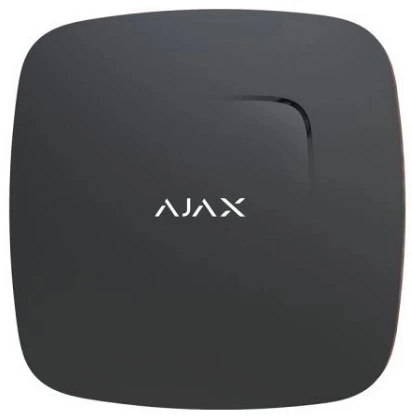
A warehouse poses different risks. Large areas, high ceilings, shelving, and flammable materials such as cardboard or plastic require rapid fire localization. In this case, an addressable system is almost always more cost-effective: it is more accurate, and unnecessary responses to false alarms occur less frequently.
What does a modern fire alarm system include?
A modern fire alarm system consists of several key elements:
- a control panel that processes signals and manages the system;
- smoke detectors for office spaces and warehouses with dry materials;
- heat detectors for areas where dust or steam may be present;
- visual and audible alarms for evacuating people.
The system can be integrated with security alarms, video surveillance, ventilation, and access control. For example, during a fire, fans automatically shut off, and electric locks on emergency exits are unlocked.
Bezpeka-SHOP offers devices, detectors, and alarms for both types of systems, as well as cables and power supplies for installation.
What should you consider?
For a small office with a simple layout, a threshold system is often sufficient, while for a warehouse or large space, it’s better to choose an addressable system. Assess the size of the premises and the risks involved; you can find compatible equipment in the Bezpeka-SHOP catalog.