13 October 2026, 16:49
Animal rights activists have criticized the decision to allow hunting in the Odesa region
Ця стаття також доступна українською

Photo: Ivan Rusev/Facebook
In the Odesa region, hunting has been approved in seven districts, prompting outrage from animal rights activists and environmentalists: they question the data on predators and warn of the dangers of gunfire during wartime.
As Intent previously reported, a joint order authorizing hunting for the 2026–2027 season was issued by the Odesa Regional State Administration and the “Odesa” Operational-Tactical Group.
Officials explain the decision by citing an increase in the number of wild predators and the threat they pose to people and farms.
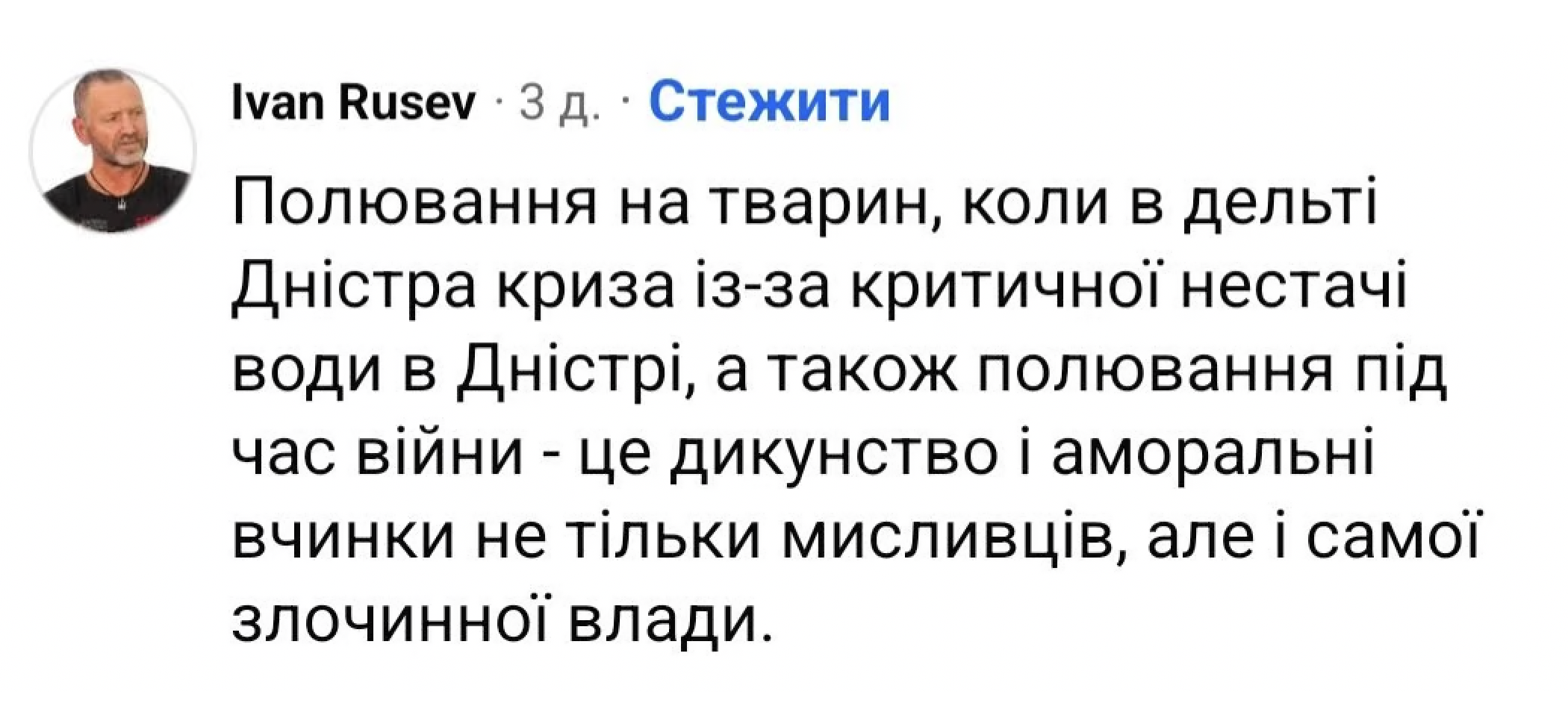
Environmentalist Ivan Rusev criticized the decision. He emphasized not only the war but also the dire ecological situation in the Dniester Delta, where there is a critical water shortage.
“Hunting animals while the Dniester Delta is in crisis due to a critical water shortage in the Dniester, as well as hunting during wartime, is barbaricand immoral behavior not only on the part of hunters but also on the part of the criminal authorities themselves,” Rusev wrote.
Volunteer Yana Titarenko accused regional authorities of indifference toward animals that are already suffering because of the war. She also questioned the accuracy of data regarding an increase in the number of predators.
In her opinion, those wishing to hunt should first be screened for their fitness for military service.
“Based on fake reports about population numbers, are you granting permission to kill animals that are already suffering because of the war? Have you thought about the people? How does the population perceive the sound of gunfire right now?” reads Titarenko’s post.
Animal rights activist Anzhelika Karapetyan also joined in the criticism. In her statement, she posed several questions to the head of the Regional State Administration.
Mr. Oleg Kipper, why do you justify the opening of the hunting season by citing the need to regulate predator populations and protect the public? Have you taken into account the repeated incidents of people—including children—being killed or injured during hunting in the Odesa region? Who will be responsible for the safety of residents in the event of another tragedy?” Karapetyan asked.
She also asked what connection regulating predator populations has to bird hunting, and where the scientific justification, research results, population surveys, and conclusions from independent experts are.
According to Karapetyan, it seems that the reported increase in the predator population was used merely as a pretext to satisfy hunters’ desires.