25 September 2026, 23:21
A Stress-Free Trip: How to Transport Your Cat by CarAdvertisement
Ця стаття також доступна українською

A car ride can be a real adventure for a cat—especially if it’s used to moving only between the couch, the kitchen, and its favorite windowsill. Unfamiliar sounds, movement, smells, and a change of scenery can scare even the calmest purring cat. That’s why it’s important to plan ahead—not only for the route but also for a comfortable place for the trip. The safest option isa cat carrier chosen based on your cat’s size, personality, and needs.
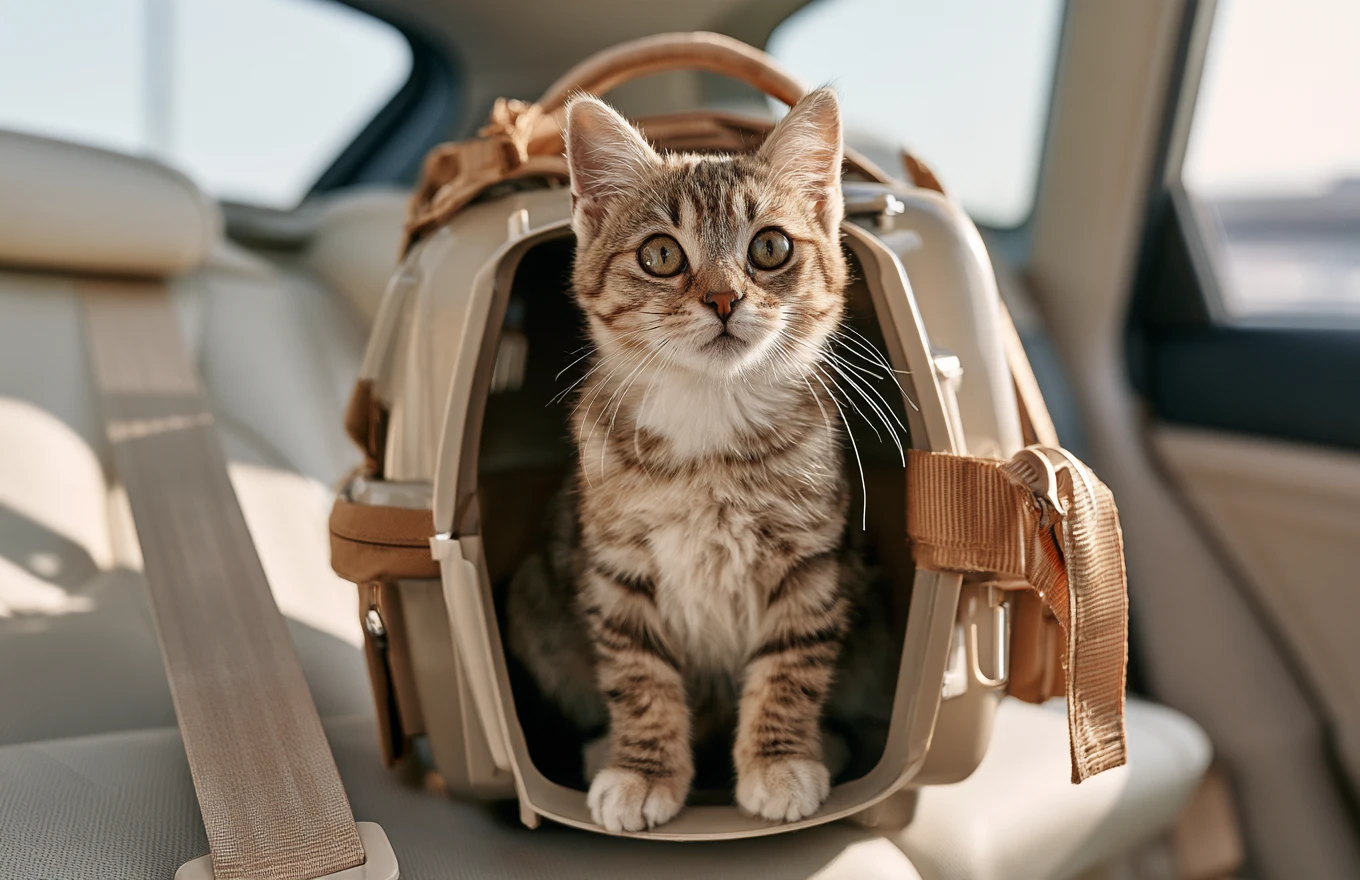
A plastic carrier is a versatile option
A hard-sided plastic carrier works well for most pets. It retains its shape, protects your cat from accidental bumps, and is easy to clean if a minor mishap occurs along the way.
This type of carrier is a good choice for calm, average-sized cats that are regularly taken to the vet, to the cottage, or on trips. Models with large ventilation holes and doors that lock securely are especially convenient.
For a large cat, it’s important not to simply buy the largest carrier. There should be enough space inside for the cat to turn around, sit, and lie down, but a carrier that’s too spacious isn’t necessary either: it makes it harder for the cat to maintain its balance while in motion.
Fabric carriers—for calm cats
Soft carriers are lighter than plastic carriers and are often more comfortable for the owner. They can be folded for storage, and some models have extra pockets for documents, treats, or other small items.
A fabric cat carrier is a good choice for a small, calm cat that doesn’t try to escape. When choosing one, pay attention to the sturdiness of the frame, the quality of the zippers, the ventilation windows, and the material of the bottom.
For an active kitty who starts scratching or chewing on everything around them in stressful situations, a soft carrier might not be the best solution.
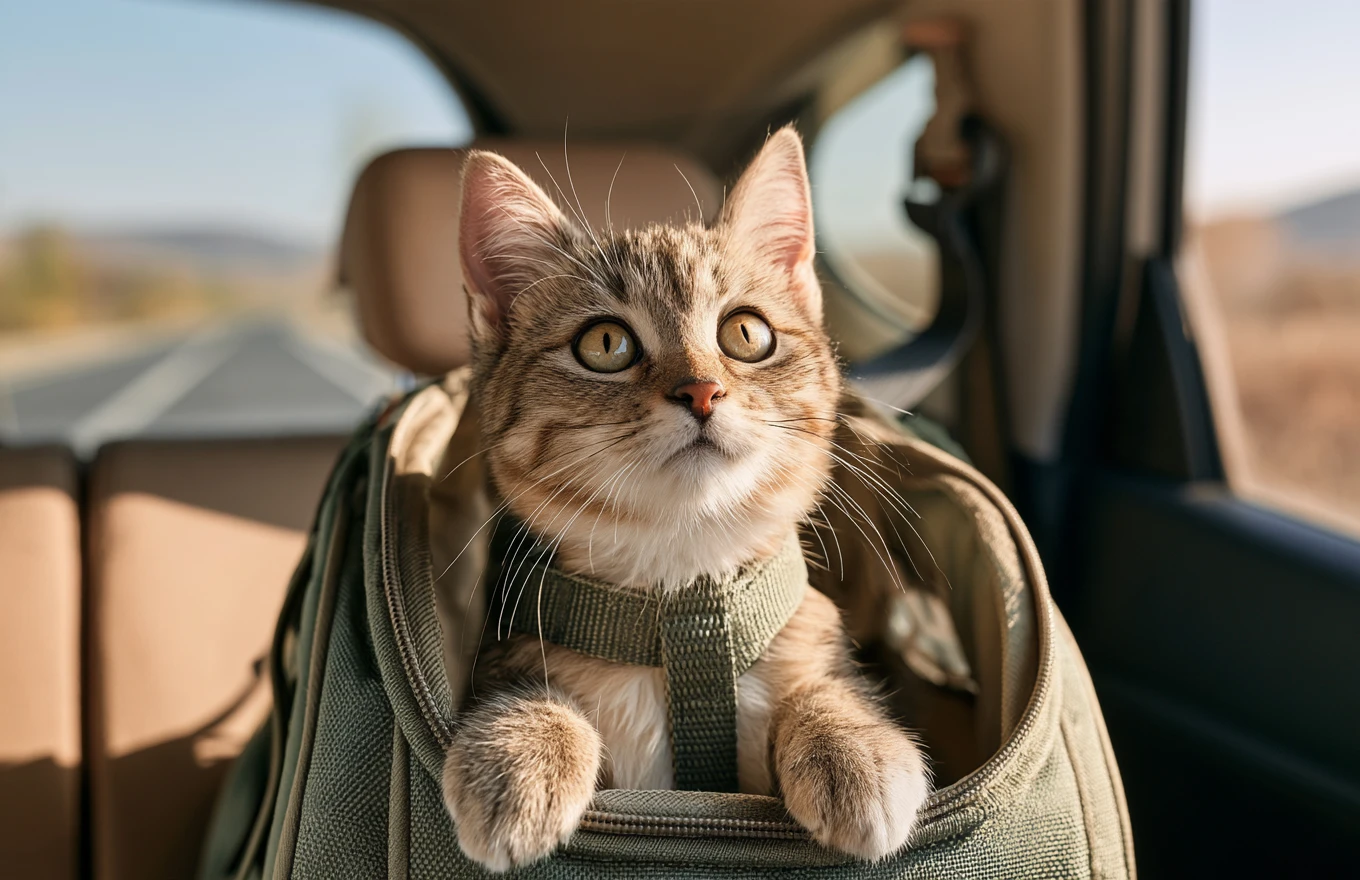
Backpack—When Mobility Matters
Carrying backpacks are convenient if you still need to walk after a car ride. They free up your hands and distribute the weight more evenly.
This option is suitable for a small cat that feels comfortable in a confined space. It’s important that the back of the backpack is sufficiently rigid and that it provides adequate ventilation. Don’t focus solely on an unusual design: your cat’s comfort is much more important.
A carrier for an anxious or restless cat
If your cat gets very nervous during trips, it’s best to choose the most stable design with secure fasteners. Models from which a cat can easily escape through flimsy doors or zippers are not recommended for such cats.
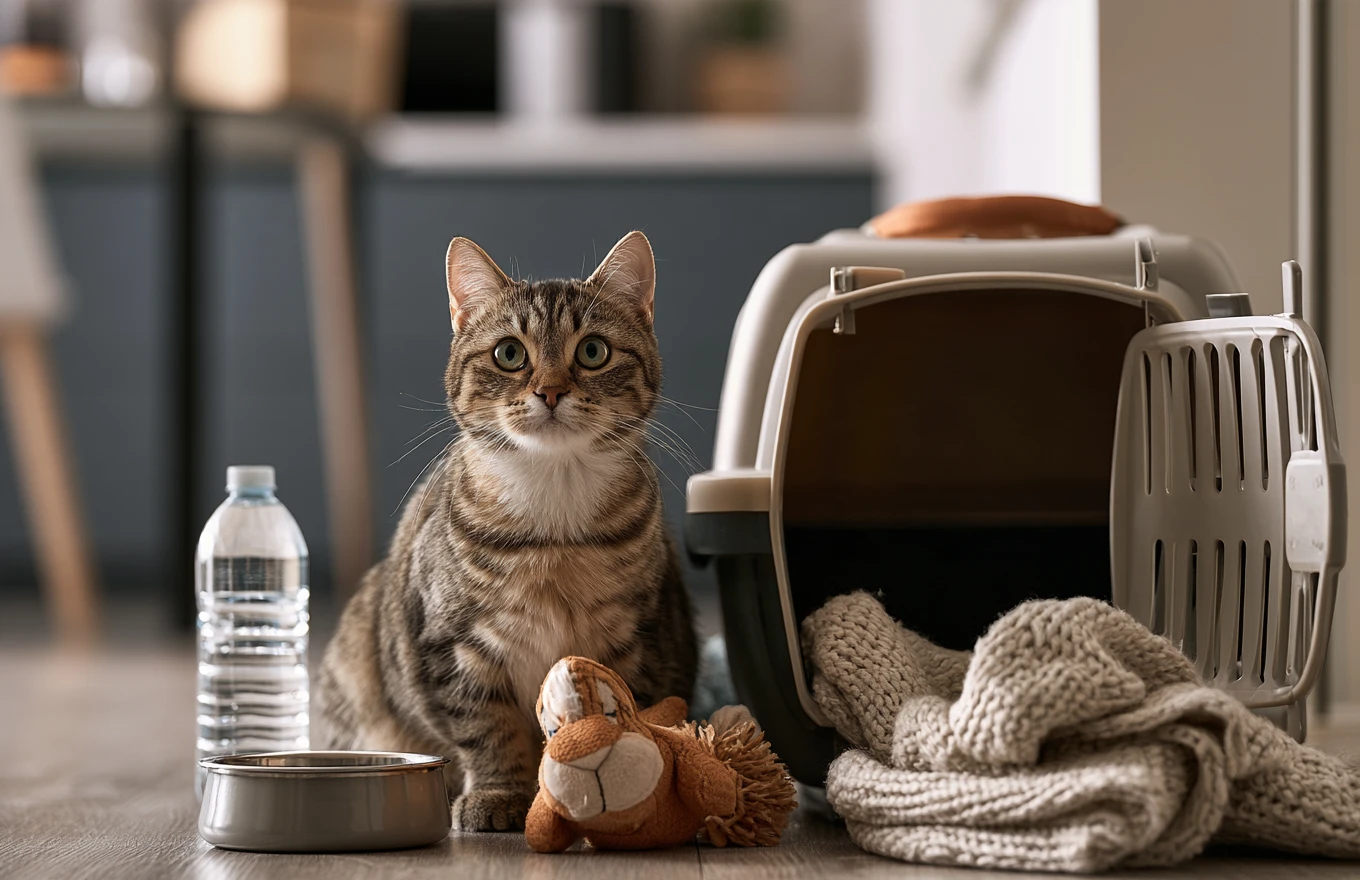
You can place a familiar blanket or a small bed that smells like home inside. Before a long trip, it’s helpful to leave the carrier open at home a few times so your cat can go inside on its own and get used to it.
What should you consider before the trip?
Regardless of the type of carrier, it’s a good idea to check a few things before heading out:
- the reliability of the locks and fasteners;
- adequate ventilation;
- whether the size fits your cat;
- the presence of a soft, non-slip lining;
- the ability to quickly get the cat out if necessary;
- stable placement of the carrier in the car.
While driving, do not let your cat roam freely in the car or sit on your lap. Even a calm cat can be startled by a sudden noise or sudden braking. A properly chosen carrier will help make the trip more predictable, safer, and more comfortable—for both the cat and its owner.