26 April 2026, 18:03
A modular town for IDPs is being built in Mykolaiv region
Ця стаття також доступна українською

Photo: Pervomaisk City Council
A project to create housing for internally displaced people is underway in Pervomaisk, Mykolaiv region.
According to the Pervomaisk City Council, a modular town is being set up in the Fregat neighborhood to provide temporary accommodation for people who have lost their homes due to the war.
The project is being implemented with the support of the Danish foundation GAUFonden in cooperation with the Kingdom of Denmark and with the assistance of Mykolaiv Regional State Administration.
The modular houses have a compact but functional layout. They are equipped with a kitchen area, a bathroom, heating, electricity and drainage systems, which allows for comfortable living conditions.
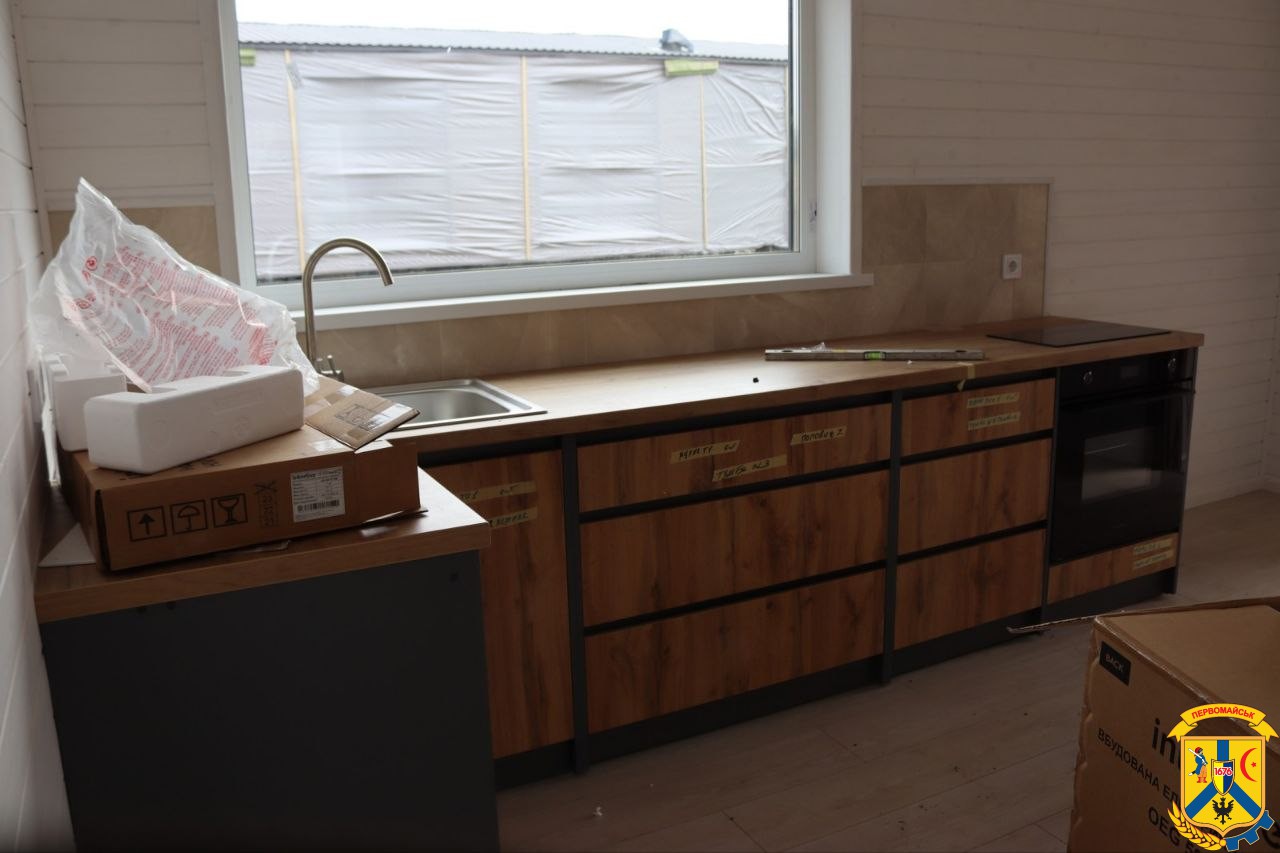 Photo: Pervomaisk City Council
Currently, active work is underway at the construction site: the territory is being prepared, the first modules are being installed and utility networks are being connected. The project is being implemented in stages, taking into account the complex arrangement of the space.
The project also includes landscaping, organization of access roads and creation of a safe environment for future residents.
As a reminder, the executive committee of the Pervomaisk City Council discussed a draft detailed plan for the territory on Korabelna Street. They planned to install 50 modular houses for internally displaced persons there.
Construction of a modular town for internally displaced healthcare workers has begun in the village of Kostiantynivka in the Pivdenoukrayinska community in Mykolaiv region. It is being built next to an existing modular family medicine outpatient clinic, which will allow doctors to live close to their work.
Earlier, a modular town for internally displaced persons for more than 350 people was set up in the Chornobaiv community. It is intended to accommodate internally displaced persons, including people who lost their homes due to Russia, large families, families with children, people with disabilities, combatants, elderly residents of the region, families of fallen veterans and victims of the Chornobyl disaster.