Меню
Соціальні мережі
Розділи
June 21, 2025, 1:15 p.m.
Crimea has been turned into a shadowy Russian hub for exporting stolen Ukrainian grain
This article also available in English457

ILLUSTRATION: Project Expedite Justice
The aggressor country Russia has turned Crimea into a major hub for the export of stolen Ukrainian grain. Through local ports, Russia annually exports millions of tons of products from the occupied territories, legalizing them through fictitious documents, shell companies and a shadow fleet.
This was reported by the online resource Fleet-2017, citing a study by Project Expedite Justice (PEJ).
In the temporarily occupied territories of southern and eastern Ukraine, the large-scale robbery of the agricultural sector has long gone beyond looting. The Russian authorities have built a systematic logistics model - from confiscation of crops to their export under the guise of Russian grain. Crimean ports are at the center of this scheme.
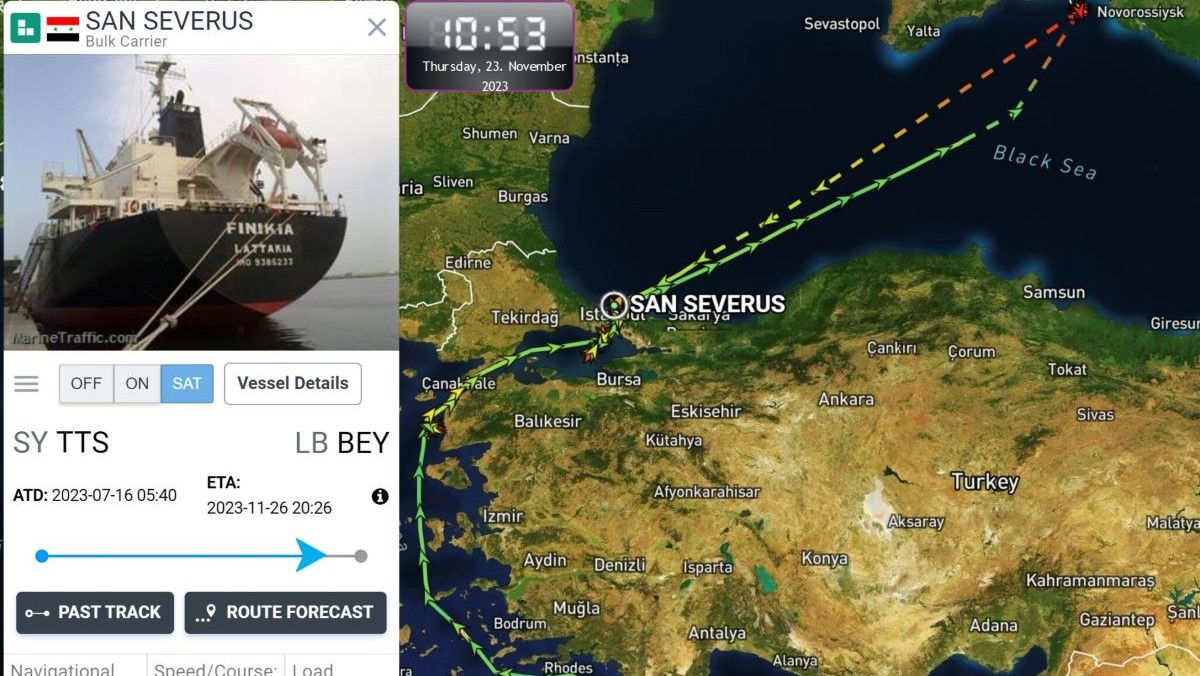
ILLUSTRATION: Project Expedite Justice
According to a study by Project Expedite Justice, more than 2.5 million tons of grain have been exported annually from the temporarily occupied territories through Sevastopol, Kerch, and Feodosia since 2022. The grain is harvested at seized Ukrainian enterprises, transported by road and rail to Crimea, issued with fake documents, and loaded onto ships for export to Syria, Egypt, Libya, Turkey, and Yemen.
To conceal the origin of the products, the invaders use shell companies and fake certificates, and mix the grain with their own. The transportation is carried out by ships from the shadow fleet flying exotic flags, such as Eswatini. Some ships were recorded loading in Mariupol, Berdiansk, and Sevastopol. Some grain is transshipped near the Kerch Strait.
The key export operators are Pallada and Kuban-Forward. In 2023, they exported more than 1.39 million tons of grain, mostly to Syria. Their profits have increased significantly: Kuban-Forward, for example, increased its revenue by 800% to 19 billion rubles. The products often come from captured Ukrainian enterprises, including Kherson Grain Company, Melitopol Cherry, etc.
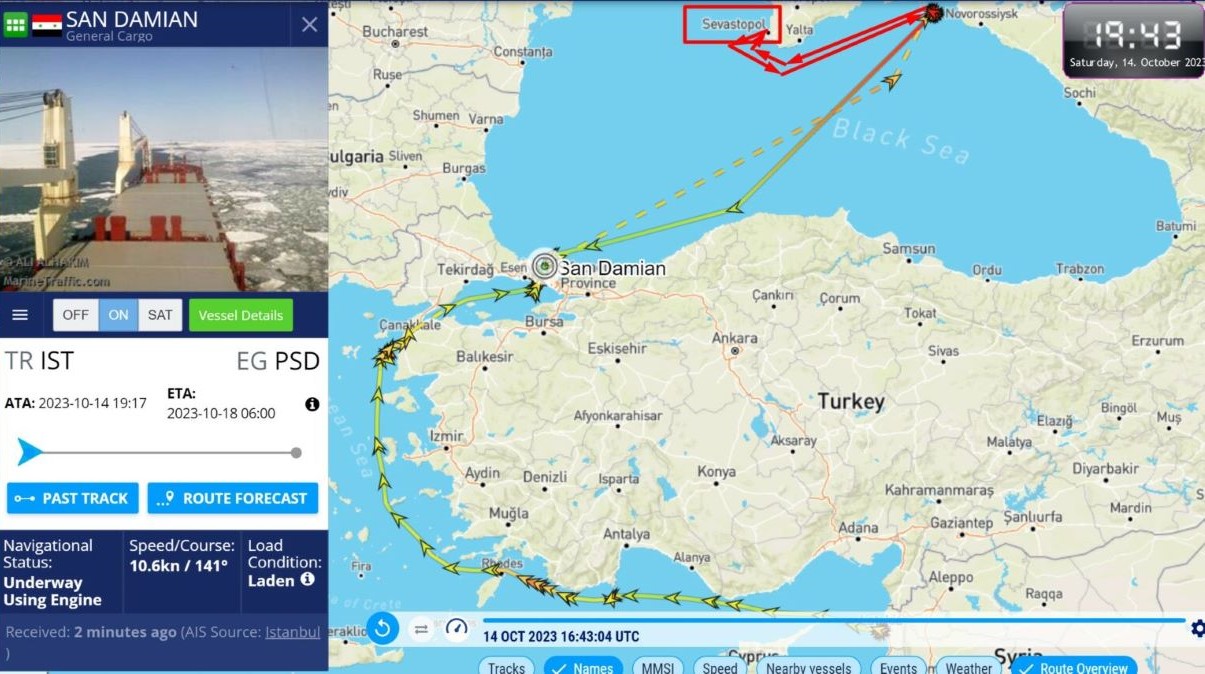
ILLUSTRATION: Project Expedite Justice
Another group, Helios Plus, exports grain, in particular through the Dubai-based company Cereal Crops Trading LLC. Its route - from Kherson, Zaporizhzhia, and Luhansk regions - leads to Crimea and then to the Middle East. The company is linked to Russian officials and operates within export quotas.
The conglomerate Krasnohvardiyskyy Elevator, headed by Mykhailo Hanah, plays an important role. It is integrated into the so-called Crimean Export Council and has partners in the logistics sector, including Agro-Fregat, which provides transportation.
This whole scheme has become a complete business structure with state support: it is supervised by Russian corporations, security forces, and officials. Through Crimea, an ecosystem has been created that allows Ukrainian grain to be exported by changing documents, route, and owner. This not only enriches Russian businessmen, but also finances the war and affects the international food market.
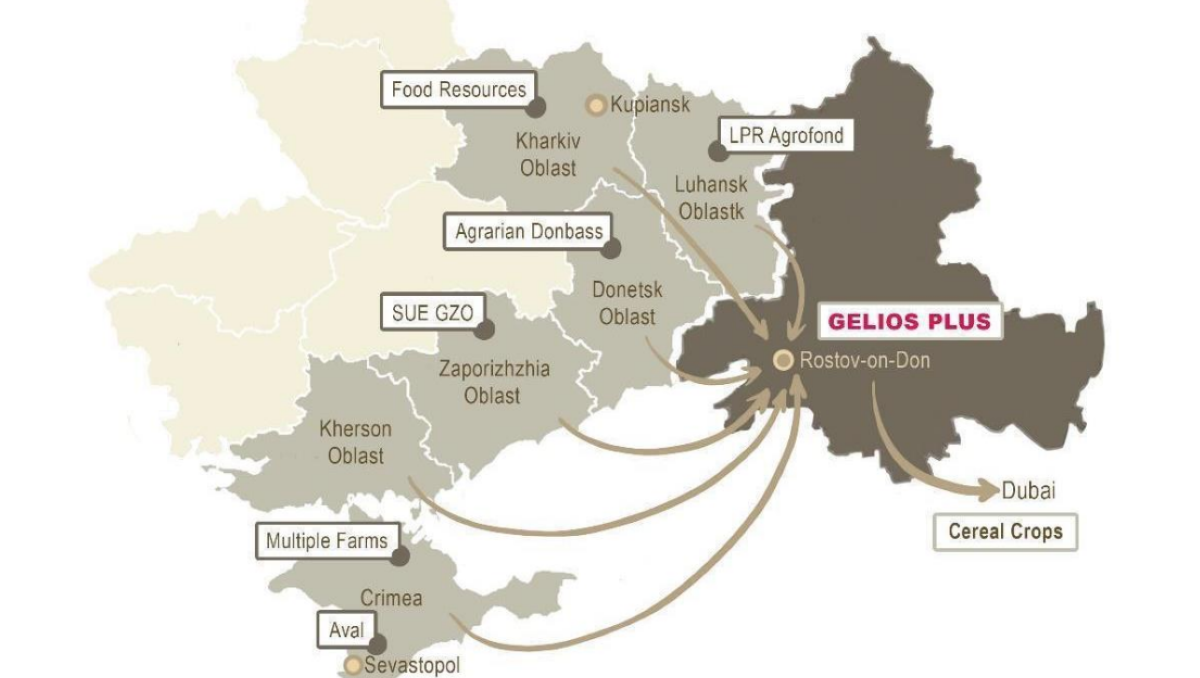
ILLUSTRATION: Project Expedite Justice
Despite the occupiers' statements about favorable conditions for farmers, farmers in the Kherson region are forced to sell their crops for nothing or give away their products for free. Local residents are outraged - the Russians are putting pressure on farmers through threats, blackmail and coercion.