Меню
Соціальні мережі
Розділи
July 25, 2025, 8:45 a.m.
Khadzhybey Castle Found: Archaeologists Put an End to 200-Year Debate on the History of Odesa
This article also available in English652

Photo: Andriy Krasnazhon/Facebook
Archaeologists conducting excavations on Prymorsky Boulevard in the center of Odesa have compared their findings with archival documents and concluded that they have identified the location of the Khadzhibey Castle.
This was announced by the rector of the South Ukrainian National Pedagogical University named after Ushynsky Andriy Krasnozhon.
"Khadjibey Castle has been found. The discussions about its localization, which lasted for almost 200 years, have been put to rest. They were exacerbated by the lack of reliable cartographic data and written sources, as well as traces of this defensive structure, which was blown up by Russian troops shortly after the assault in 1789 and later dismantled for building materials," he said.
So far, the scientists have determined that they have found the front wall of the artillery coastal battery, which was added to the castle from the shore, as well as traces of dismantling curtains. They also recorded the angular intersection of this wall with the side wall that covered the battery from the southeast.
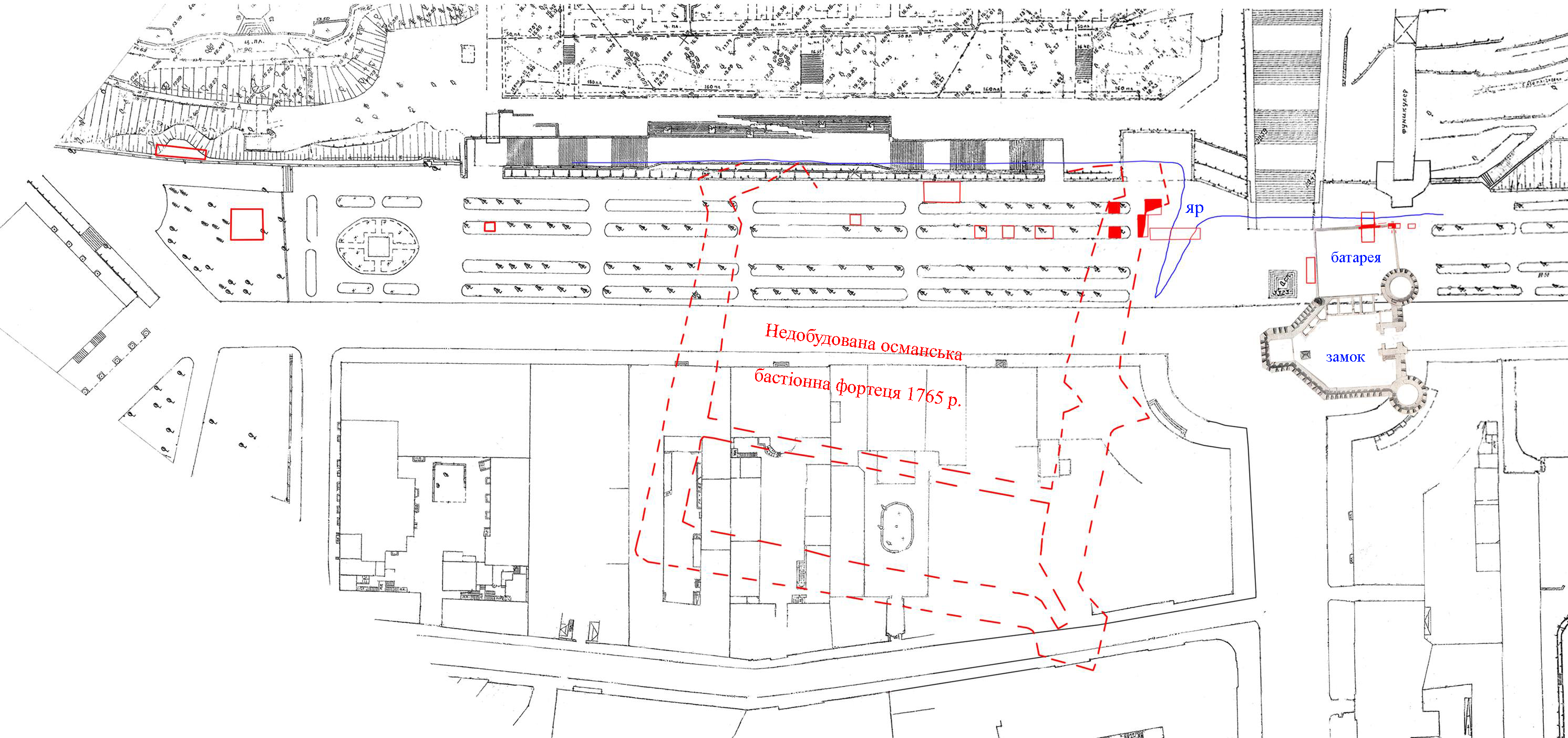
Photo: Andriy Krasnozhen/Facebook
"The building is present on various plans and images of the late eighteenth-century castle. It is distinguished by its unique design features and the specifics of its location near a cliff. The attribution is facilitated by the accompanying finds of ceramics and bronze items of Ottoman origin. The battery was an open area enclosed by a wall up to 1.5 m high and 90 cm thick. It held a low earthen embankment along the front, on which the cannons were placed, directed to the sea," noted Andriy Krasnozhon.
He also noted that traces of wall dismantling and destruction were recorded in all excavations this season. According to the scientist, the corner joint of the masonry of the two walls of the battery, which was dismantled to the foundations, is particularly indicative in this sense.
"The only thing left of the southern, side wall is a foundation trench with the remains of rubble and fragments of Ottoman ceramics. One can only imagine the damage to other parts of the castle, in the area of its capital structures (towers, curtains, internal buildings). The scale of the castle's destruction is evidenced by the findings from the excavation near Duke, where we discovered a pile of stones and blocks removed from the castle walls, including massive Ottoman-type pylon capitals," the rector said.
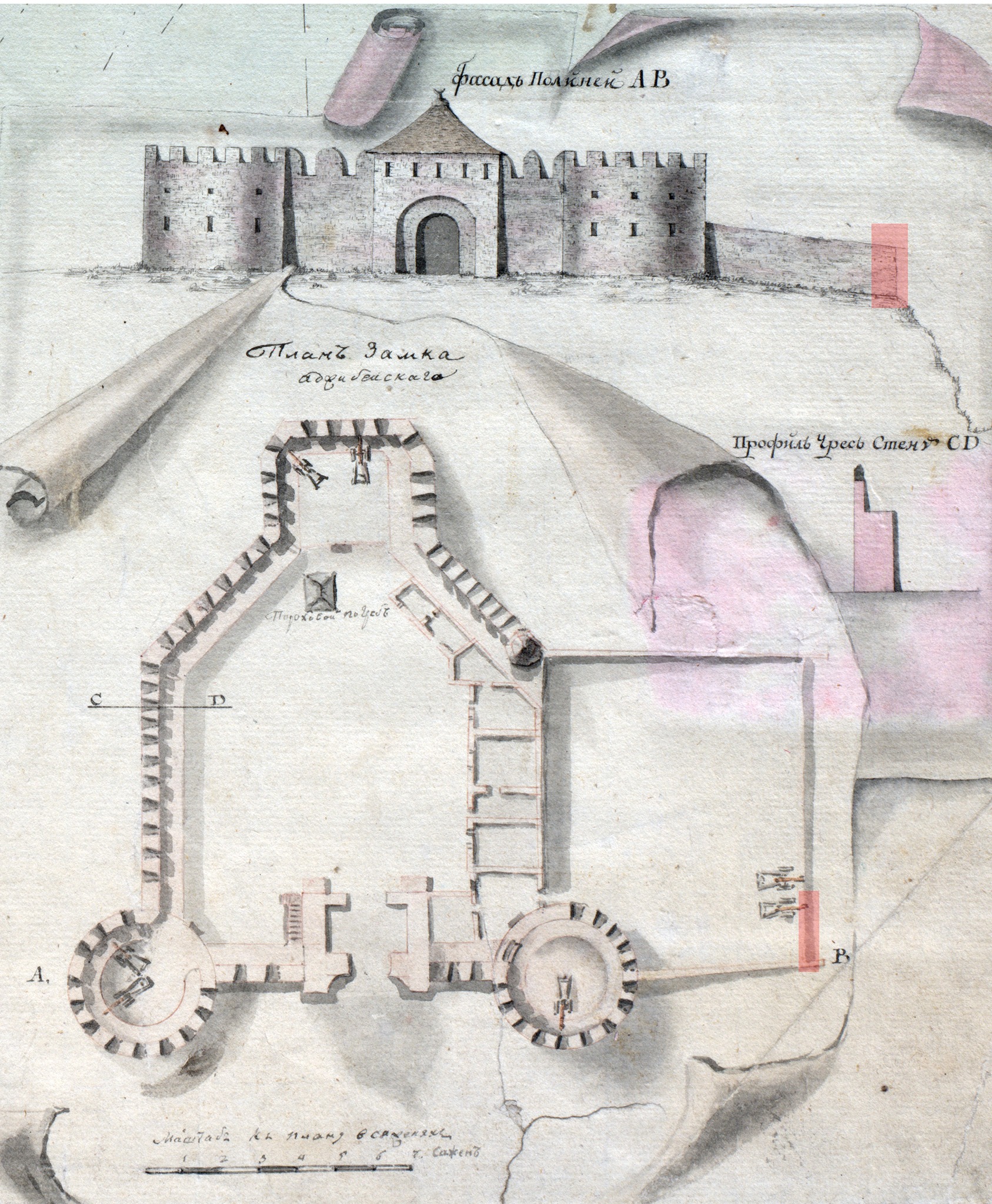
Photo: Andriy Krasnazhon/Facebook
The base of the castle battery wall is embedded in an ancient layer dating back to the fifth century BC. According to Andrii Krasnozhon, this is the first time that it has been possible to trace the cultural layers of the ancient Greek settlement of Istrian Harbor within its northern border. Previously, it was assumed that its boundary lay somewhere in the Duke area. But excavations have shown that it was defined by a small ancient ravine. This natural barrier, according to scientists, also formed protection from the northwestern, frontal side for the Khadzhibey Castle, which led to the choice of its location.
According to Andrii Krasnozhen, this ravine is marked on one of Devolan's plans and on the 1766 map of the City of Hadjibey by the Russian intelligence officer Isleniev. Now historians can accurately pinpoint the Turkish bastion fortress from Islenev's plan, determining its approximate dimensions.









