Меню
Соціальні мережі
Розділи
April 1, 2026, 4:44 p.m.
Between freedom and a golden cage: a performance based on Lina Kostenko's poem took place in Odesa
This article also available in English3

The performance "Snow in Florence". PHOTOS: Intent
In Odesa, a chamber performance of Snow in Florence based on the dramatic poem by Lina Kostenko was held in a cozy space of a bookstore-cafe. The production touched upon the deep themes of artist's freedom, responsibility for talent, and the difficult choice between creativity and compromise.
This was reported by Intent.
The production had a chamber format, which created a special atmosphere of intimacy between the actors and the audience. The number of seats was limited, and the performance lasted an hour and a half without intermission. There were only two actors on stage: Oleksiy Kochetov and Yulia Petrusevičiūtė, who were able to convey the complex inner drama of the characters through minimalist means.
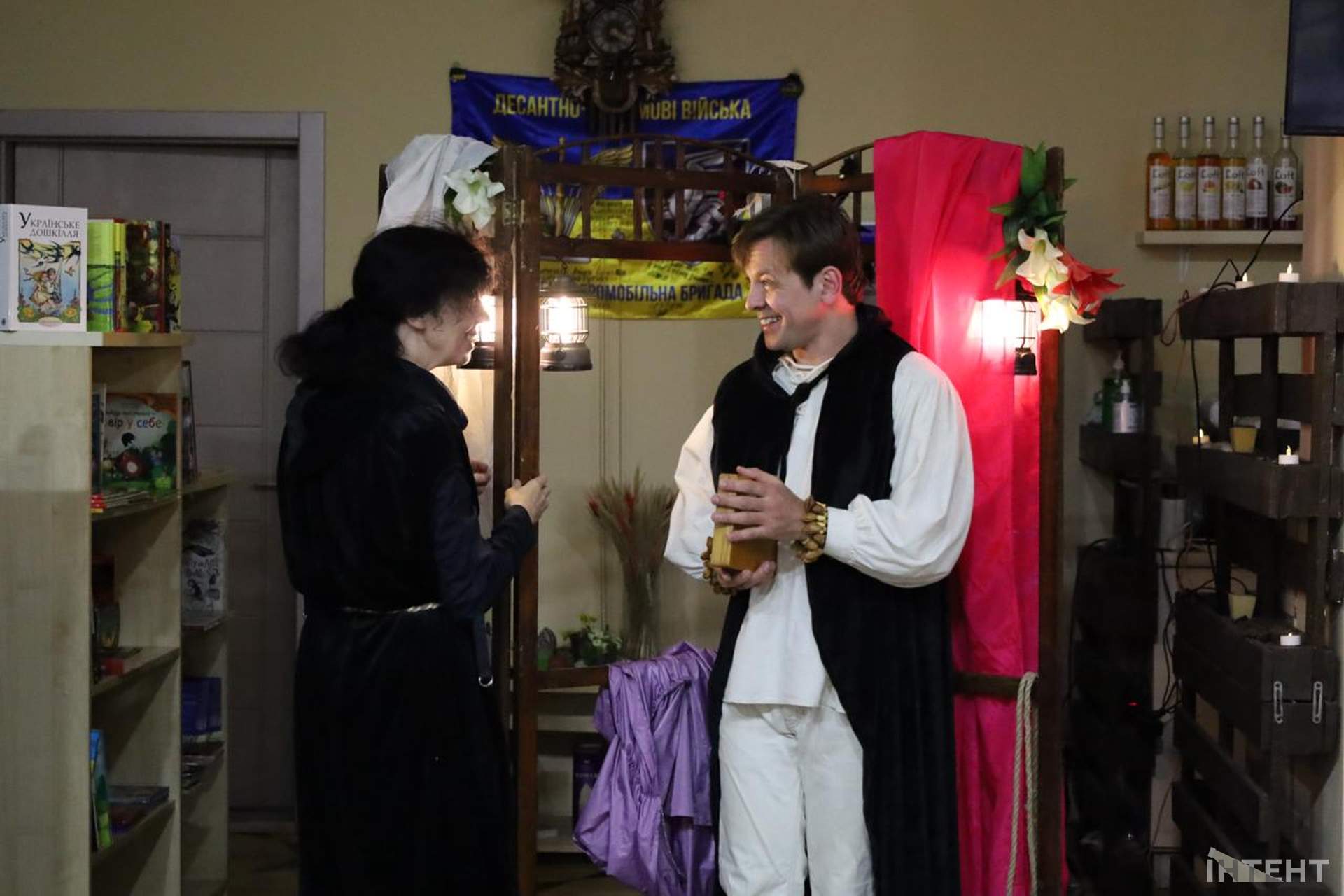 The performance of Snow in Florence. PHOTOS: Intent
The play is based on one of the most profound works of Ukrainian literature of the 20th century. The dramatic poem Snow in Florence, written in the 1980s, raises the eternal questions of an artist's responsibility to his or her own talent, the choice between freedom and material well-being, and the price of compromise with the authorities.
The protagonist of the work is a real historical figure, the Italian Renaissance sculptor Giovann Francesco Rustici, a contemporary and friend of Michelangelo, as well as a student of Leonardo da Vinci. In the story, Rustici spends the last years of his life in a French monastery, in poverty and oblivion. In his memoirs, he returns to his youth in Florence, a time of fame, luxury, and at the same time dependence on influential patrons.
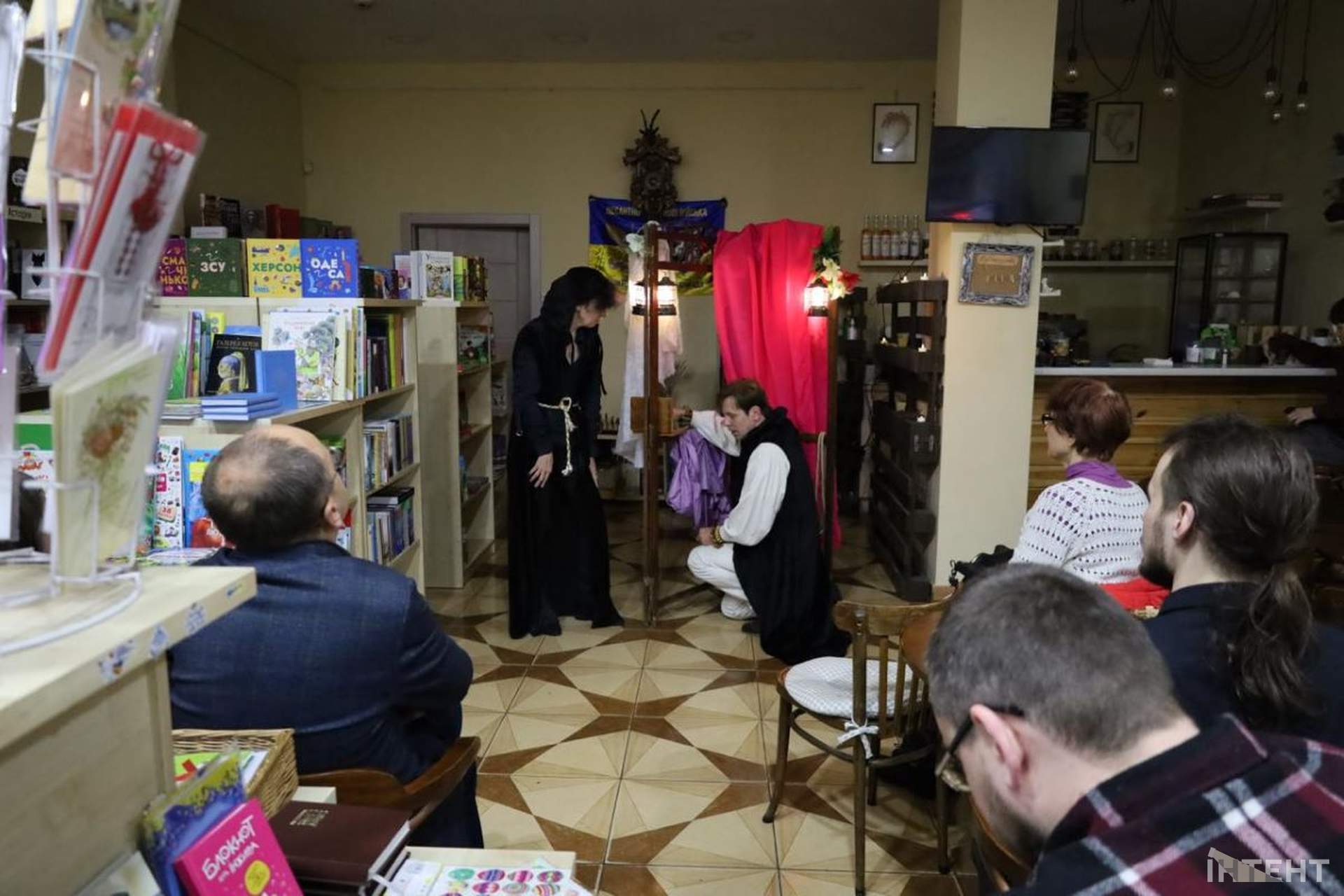 A performance of Snow in Florence. PHOTOS: Intent
The central conflict of the work is the confrontation between true creative freedom and the "golden cage" of comfort and submission. Through the fate of Rustica, Lina Kostenko raises universal questions: whether an artist has the right to sacrifice his or her vocation for the sake of stability and whether true creativity is possible without inner freedom.
A separate symbol in the work is the snow in Florence, a rare natural phenomenon that acquires a deep metaphorical meaning in the poem. It is the personification of purification, belated repentance, or an illusion that quickly disappears.
Despite the fact that the action takes place in Italy and France, the text has a hidden context of the Ukrainian reality of the Soviet period. Through the story of the artist , Kostenko speaks about the fate of a creative person in conditions of unfreedom, when talent is forced to exist under the pressure of the system.
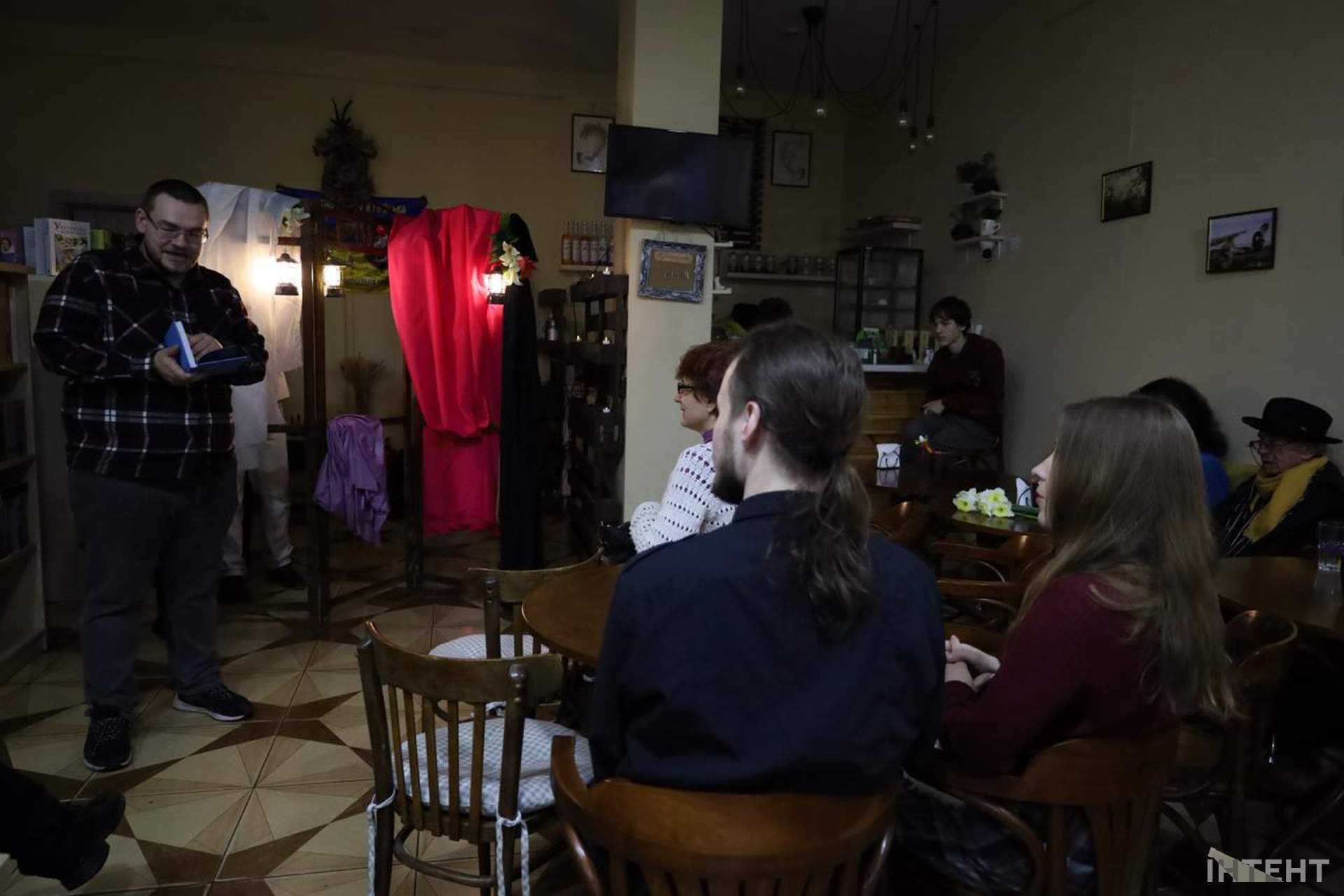 Performance of Snow in Florence. PHOTOS: Intent
The chamber performance in the Odesa art space was another example of how classical texts can sound relevant today. It not only immersed the audience in the atmosphere of the Renaissance, but also encouraged them to think about personal choice, freedom and responsibility, topics that remain important at any time.
Odesa also recently opened the exhibition"Where Does the Current Lead?", a visual and philosophical art project about how the legacy of the past and previously formed social scenarios continue to influence our lives.