06 September 2026, 20:19
Linguist Orisa Demska assessed the chances of Odessa regaining its linguistic multiculturalism
Ця стаття також доступна українською

PHOTO: Intent
At the PORTliterary festival , linguist Orisa Demska called a unified language a key security issue during wartime. The researcher also noted the disappearance of the concept of the “Odesa language” from the city’s streets and shared her thoughts on the future transformation of the Ukrainian linguistic landscape.
As was the case last year, Intent is the festival’s media partner.
Orysia Demska noted that during wartime, warnings about danger must be understandable to everyone. According to her, it is impossible to warn of a threat in thousands of languages. Therefore, there must be a common language.
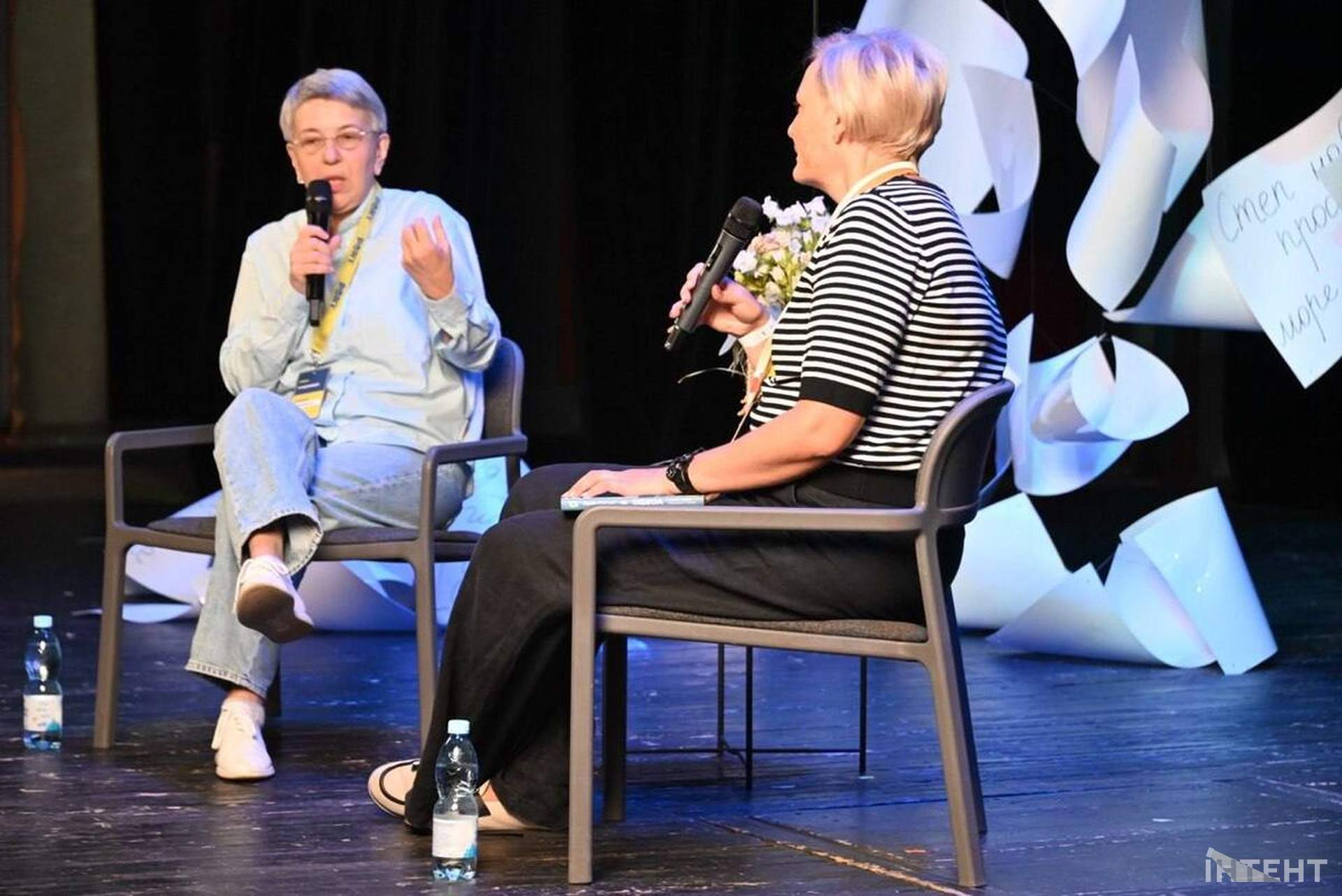
The linguist also noted that during the Soviet era, passive language was predominantly used; now, it is metamodern; and after the war, we may return to Baroque.
The opening of the PORT festival took place at the Odesa Puppet Theater. The event will feature meetings with authors, presentations of new books, and poetry readings. This year’s festival program includes over 40 events and focuses, in particular, on discussions about southern Ukraine, the war, the country’s future, and Ukrainian culture.
Orysia Demska is a Ukrainian linguist, Doctor of Philology, and professor specializing in lexicography, sociolinguistics, and the history of the Ukrainian language. She is the author of numerous scholarly works, monographs, and dictionaries, including studies on linguistic identity and the culture of Odesa. Through her public and scholarly activities, she actively promotes the Ukrainian language as a vital element of national security and state-building.
Earlier, the publishing house “Vikhola” opened pre-orders for Orisa Demska’s new book,*Odesa: A Story Told Through the Steppe and the Sea*.
The author uses the historic café owned by the Greek Simon Asporidi—where townspeople once gathered over a cup of coffee to converse in various languages—as a fictional setting for her narrative. It’s as if the reader were right there among them, hearing the echoes of the manylanguages that shaped the city’s destiny.