Меню
Соціальні мережі
Розділи
Dec. 12, 2025, 10:22 a.m.
Exhibition about Kremlin prisoners opened in Kherson
This article also available in English83

The exhibition in Kherson. PHOTO: miskrada-ks.gov.ua
An exhibition showing the experience of civilian prisoners during the Russian occupation was presented in Kherson. The pictures and stories of the prisoners remind us of the suffering and strength of spirit of Ukrainians.
This was reported by the press service of the Kherson City Council.
An exhibition of drawings "The Art of Captivity. Russian captivity through the eyes of a civilian" is dedicated to the history of the Kremlin's prisoners, the Kherson Nine: Serhiy Ofitserov, Oleh Bohdanov, Serhiy Heidt, Serhiy Kabakov, Yuriy Kaiov, Serhiy Kovalsky, Denys Lyalka, Kostyantyn Reznik, and Yuriy Tavozhnyansky, who were illegally convicted by a Russian court and are still being held captive.
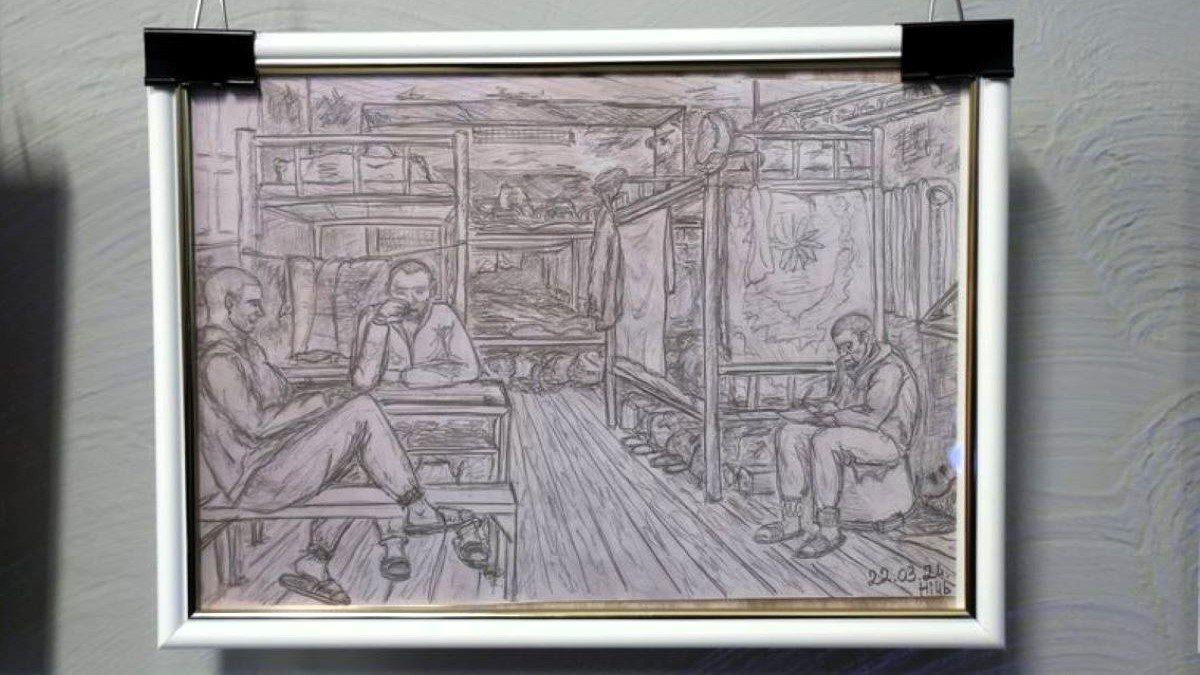 The exhibition in Kherson. PHOTO: miskrada-ks.gov.ua
Among the exhibits are works by Serhiy Ofitserov and Serhiy Kovalsky created during their imprisonment. These drawings are not only art, but also evidence of suffering, strength of spirit and the desire for freedom, each work tells its own unique story that the world should hear.
According to the organizers, the Art of Captivity exhibition has become an important platform for preserving memory, supporting the families of prisoners, and drawing the attention of the international community to the crimes that Russia continues to commit against Ukrainian civilians.
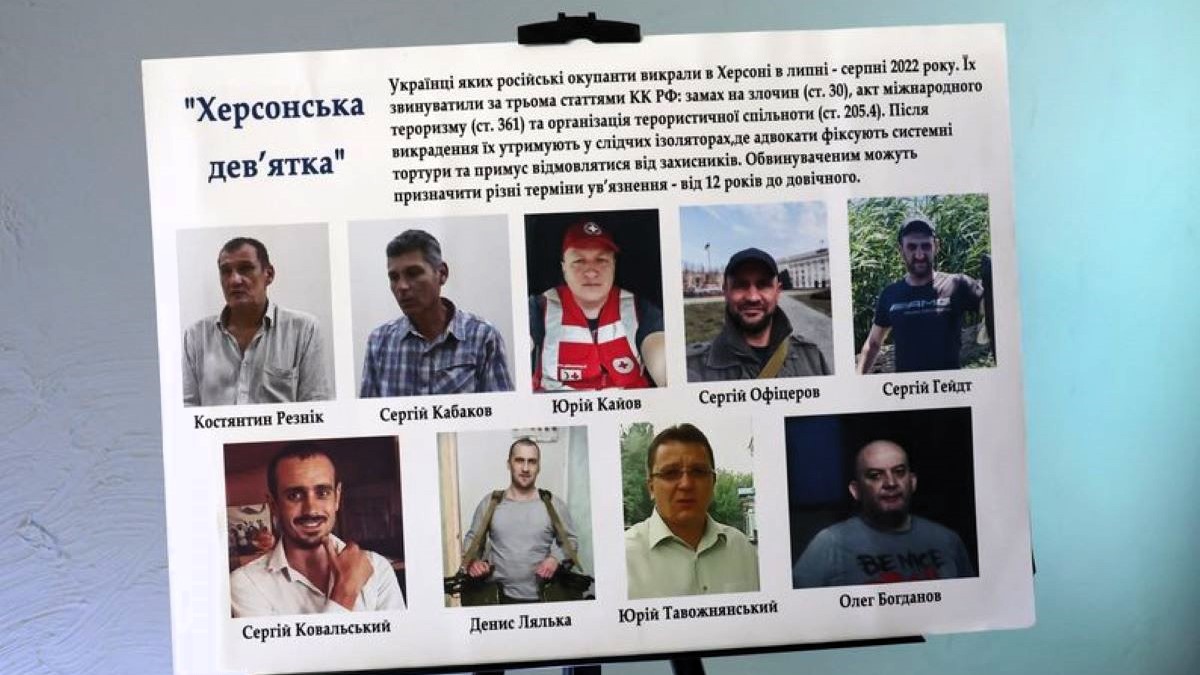 The exhibition in Kherson. PHOTO: miskrada-ks.gov.ua
In October, Oleksiy Sivak from Kherson told how he spent 59 days in basements during the occupation and was brutally tortured for his pro-Ukrainian position. After his release, he and his former cellmates created the organization Alumni, which supports civilian survivors of captivity and torture, provides legal and psychological assistance, and helps to record war crimes.
Oleksiy was held in a basement for 59 days and beaten in front of his wife. He describes brutal physical and psychological torture, including electric shocks, beatings, humiliation and sexualized abuse, and prisoners were often forced to carry out absurd orders or watch others being tortured.