Меню
Соціальні мережі
Розділи
Jan. 14, 2026, 8:27 p.m.
War reformatted the authorities in Odesa and Kherson: how martial law reorganized governance
This article also available in English40

ILLUSTRATION: attestation.in.ua
In Odesa and Kherson, local councils continue to operate without elected mayors due to martial law. The cities are governed by military administrations and acting mayors, which has changed the traditional system of local government.
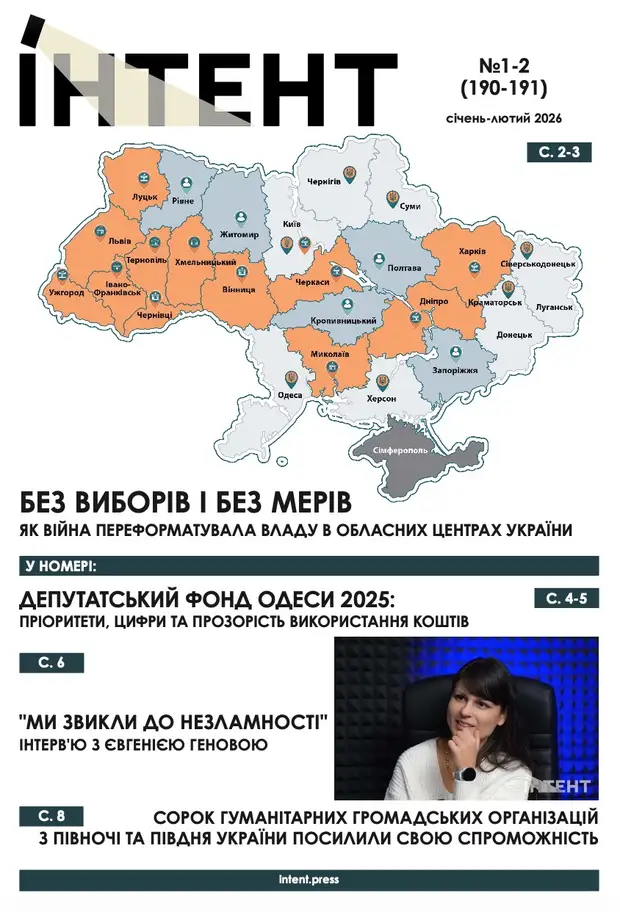
Analysts of the all-Ukrainian campaign"Certification of Local Council Deputies" have recorded that ten regional centers no longer have mayors elected in 2020. The reasons range from voluntary resignation or health problems to court decisions, deprivation of citizenship, or appointment to positions in military administrations. In seven regional centers, city military administrations have been set up to take over city management functions in difficult conditions.
In October 2025, the five-year term of office of local councils and mayors elected in 2020 expired. However, the Verkhovna Rada passed a resolution ensuring the continuity of local government during martial law. This means that the elections are postponed, and the current councils and mayors continue to perform their duties until a new composition is formed at the next local elections.
Odesa: new leadership after the mayor lost his citizenship
Odesa was the last city to set up a city military administration. The reason was the termination of the Ukrainian citizenship of the current mayor , Gennadiy Trukhanov, after a tragedy during the bad weather that claimed lives. The MVA was headed by Serhiy Lysak, the former head of the Dnipropetrovs'k Regional Military Administration. Since October 16, the city council secretary Ihor Koval has been acting mayor. Contrary to expectations, the city's governance is proceeding without any obvious conflicts: the head of the MVA and the acting mayor coordinate their work, and the deputies participate in the preparation of decisions, while maintaining the council's representative function.
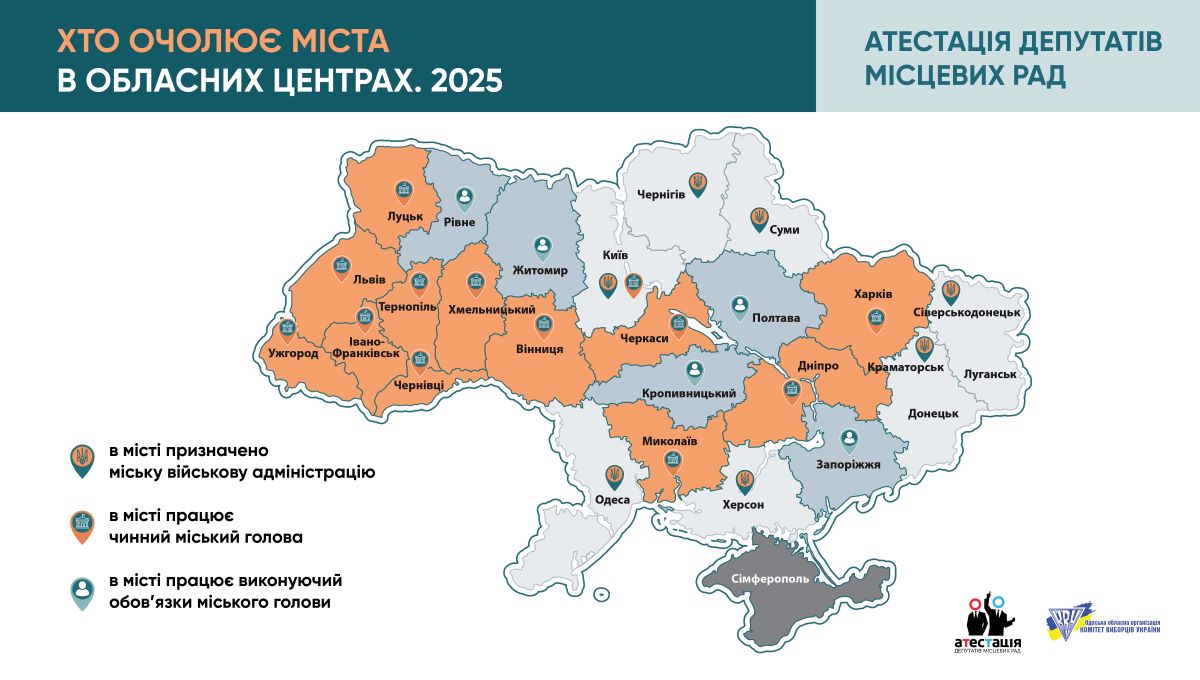 ILLUSTRATION: attestation.in.ua
Kherson: governance under occupation
The situation in Kherson is more complicated. Mayor Ihor Kolikhayev has been in captivity since 2022, the city was occupied, council sessions were not convened, and some deputies were suspected or found guilty of collaboration. On September 19, 2022, the Kherson MVA was established, headed by the Secretary of the City Council, Halyna Luhova. After the liberation of the city, the Verkhovna Rada transferred the powers of the council and mayor to the head of the MVA. Later, the leadership of KhMCA was changed several times due to personnel decisions and the need to ensure stability of management in difficult conditions.
At the same time, in many cities, managerial continuity is maintained due to the long tenure of the current mayors. This allows them to maintain stability and continue to implement city development programs, even in the difficult conditions of martial law.
Transformation of the governance system
The completion of the five-year term of office has shown changes in the management of regional centers. In some cities, the authorities are functioning without an elected mayor or in parallel with the MVA, the role of council secretaries and acting mayors is growing, and the practice of early termination of mayors' powers is spreading. These processes emphasize the need for a clear legal regulation of the functioning of local self-government during martial law.
Last year, experts of the all-Ukrainian campaign"Certification of Local Council Deputies" investigated how the work of permanent deputy commissions resumed, how many decisions are made by deputies, and how interaction between the council and the military administration is being established. The commission on planning, budget and finance was the most active, holding four meetings, while the commission on spatial development and land relations met three times.