Меню
Social networks
Sections
Dec. 24, 2025, 6:49 p.m.
How railroads were built in the imperial Budzhak
Цей матеріал також доступний українською3

The Budzhak railway route in the late nineteenth century: Bessarabia.UA
The issue of railway communication in Budzhak has not lost its relevance since the nineteenth century. A sufficiently powerful port infrastructure is not fully provided by rail transportation. Lack of finance or economic inexpediency of projects often served as an excuse for delaying their implementation. This approach was nothing new - it was based on the practices of imperial-era government officials, who, for reasons described below, also took their time with relevant decisions.
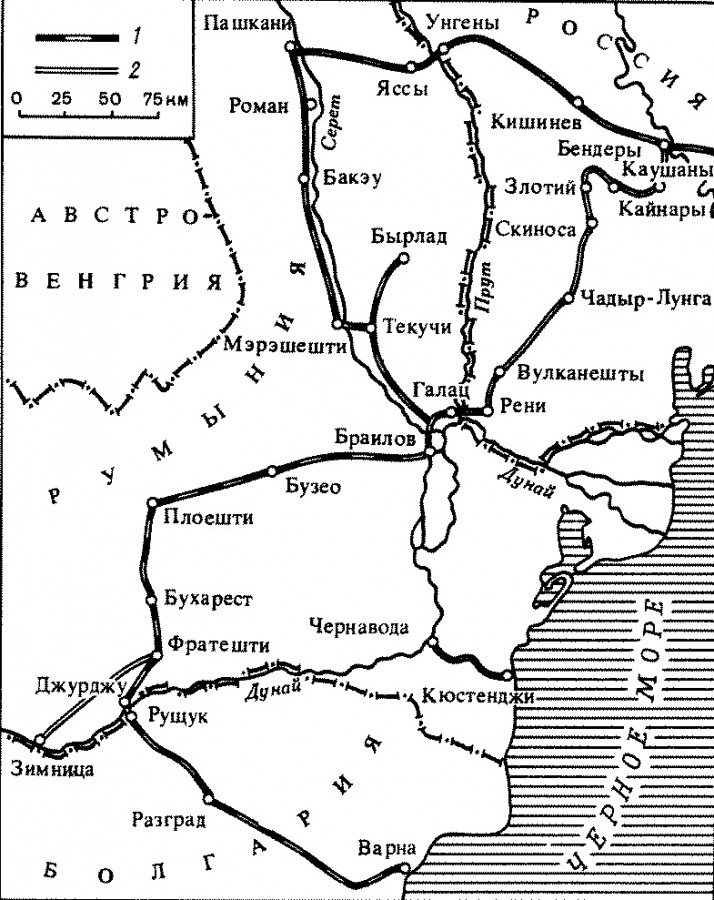
Railroads of the Bessarabian province. IMAGE: My city Chisinau
The process of arranging railroad connections between Budzhak and trade centers, including Odesa, took almost a hundred years. At the beginning of the nineteenth century, the main trade and postal route in the region was the Kamianets-Podilskyi - Chisinau - Bendery route, from where it split into Bendery - Izmail and Bendery - Akkerman - Odesa. In the south of the Bessarabian region, there were other trade routes that passed through Bender, Kaushany, Reni, Gur-Galabini station, Taraclia, and Bolhrad. From there, the road split to Reni or through Tashbunar to Izmail. The connection between Akkerman and Izmail was made by the Akkerman - Kogalnyk - Sarata - Zmiyina station - Kilia - Izmail route. Thus, the roads connected almost all trade and craft centers in the Bessarabian region of that time.
Chumaks were engaged in the transportation of goods along these routes. A Chumak cart carried up to 60 poods of cargo. Thus, 140,000 Chumak carts were needed annually to transport grain from Bessarabia to Odesa, and an additional 6,000 carts were needed to transport salt, wool, wine, and fish. Agricultural imports from Izmail and Reni alone at the same time required about 15 thousand carts, which accounted for more than 10% of all Chumash transportation.
The development of the Chumak trade was hampered by high fees for the use of privately owned roads. Transportation of a quarter of a load from Chisinau to Izmail or from Izmail to Akkerman cost 1-2 rubles in silver. The Chumaks themselves demanded from 18 kopecks in Cahul to 55 kopecks in Izmail for transporting a pud of cargo over a distance of up to 100 versts.
In the post-reform years, the Chumak trades could not compete with river transportation. There was a need to build railroads in southern Bessarabia that would facilitate the export of local food abroad. This thesis was defended by Volodymyr Linovskyi in the Economic Index. Using statistical data from Apollo Skalkowski, he argued that in 1853 Odesa's grain exports required 267.2 thousand chumak carts worth 20 million rubles, "when railroads are built, these 20 million will be used in other economic sectors and will provide jobs for more than 1 million workers."
He also believed that with the increase in expenses (in particular, for grazing and harvesting), the Chumaks were forced to constantly increase transportation fees, which reduced the competitiveness of Ukrainian and Bessarabian wheat in foreign markets: "The only condition that can support the Chumak trade is an increase in freight, but freight is already too expensive... There is a need to build new Chumak routes that would connect Bessarabian and imperial producers and consumers."
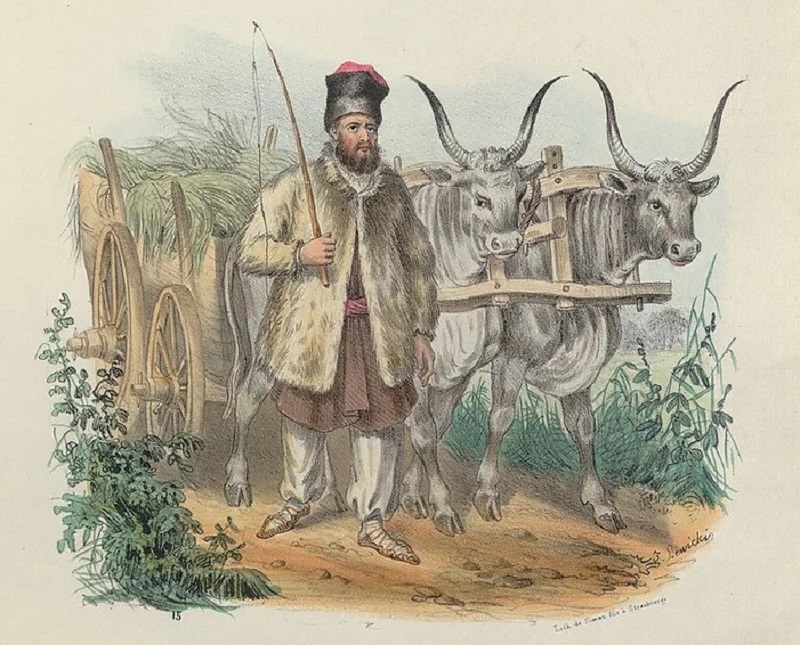
Chumak. IMAGE: Local history
In 1844, Governor-General and Plenipotentiary of Bessarabia Mykhailo Vorontsov proposed a project to build railways from Odesa to Parkan, Olviopol, and Balta: "Take the most decisive measures to prevent significant consequences for our trade from the rivalry of the Danube ports." The governor general was referring to competition with Romanian Galati. Thus, in 1845, State Secretary Ivan Kotlovskyi noted that the extremely long quarantine periods in Odesa led passengers to prefer Galats, through which "one can travel to Russia almost without quarantine," and "foreigners who come to Odesa on a steamer that we maintain together with Galats and who stay there for no more than a week are allowed to return abroad only with a certificate from the local police."
In the mid-nineteenth century, it was believed that the railroad could be a "lifesaver" that would not only preserve Odesa's dominant position in the European bread markets, but also revive trade by overcoming the competition of Austrian trade routes through the Danube and Trieste. "Is it possible to have a large-scale agriculture that successfully works for the market," wrote a Podillia newspaper, "when producers are 60 to 80 miles from the railroad and transportation is only by horse-drawn carriage?
The positions of Pavlo Stojkovych and Apollo Skalkowski, ardent defenders of Odesa's trade interests, were indicative in this regard.
In particular, Skalkowski noted in 1858: "Here (to Odesa) they will bring from Austria what is now traveling by land and the Danube, namely carriages, pianos, furniture, scythes and scissors, and all manufactured goods." Skalkowski also insisted on the construction of the Odesa-Mayaki railroad to ensure navigation on the Dniester. He hoped that with the construction of the latter, the Dniester trade could develop to the point where it would compensate the Russian Empire for the loss of the banks of the Danube, which, according to the Treaty of Paris in 1856, went to the Principality of Moldova and later to Romania. In general, Skalkowski believed that the government should pay special attention to what he considered promising Transnistrian trade points, primarily by establishing rail and steamship connections near the mouth of the Dniester. "Won't they replace the Danube markets we have lost?" he asked. In 1859, he developed a plan to build the Odesa-Bendery railroad, capable of transporting up to 1 million quarters (9.6 million poods) of grain to Odesa.
"We have to say a few words about the importance of the Odesa-Brody railroad," Pavlo Stojkovicz supported Skalkowski in 1859. Its most important significance lies in the opening of a new route for the manufacturing districts of Germany... to sell their products to the East. The inconvenience of sailing on the Danube, which until now, together with Trieste, had served as the main instrument of this trade, will give way to the new connection in terms of ease, proximity, and cheapness..."
In 1863, however, the Russian government decided to begin construction of the Moscow-Sevastopol and Odesa-Kyiv railroads with a branch to the Dniester. Due to the lack of government subsidies, construction of even these railroads did not begin.
Appeals by prominent economists led to the formation of an imperial commission in 1866, headed by Colonel Volodymyr Khrystoforov. Its task was to determine the feasibility of building railroads in southern Bessarabia. Khrystoforov concluded that the construction of railroads "will unite Austria-Hungary with its Danube allies, which means giving Bessarabia to the enemies without a fight... Further construction of railroads in the region will lead to a drop in Odesa's trade turnover, which actually means a decrease in state exports, and hence an inflow of currency necessary for the industrial development of the empire."
According to the official, the construction of railroads in the north of the province would revitalize the economic life of the backward central and northern districts of Bessarabia and would help expand trade ties with Austria-Hungary.
Khrystoforov's views were supported by the Governor-General of Bessarabia and Novorossiysk, Paul Kotzebue. In March 1868, Poltava sheep farmers approached him with a proposal to build railroads in northern Bessarabia. A letter addressed to him stated: "The Australian sheep industry, by the enormity and cheapness of its production, makes it more and more impossible for our wool to compete with it every day. Our situation would be saved by the establishment of a direct railroad connection with Austria and the transit of sheep to France." Therefore, in the 1870s, a number of railways were built in the north of the Bessarabian province: in 1869-1871, the Tiraspol - Rozdilna - Chisinau branch; in 1873-1875, the Chisinau - Ungheni railroad; in 1892-1894, the Slobidka - Novoselytsia railroad, which finally connected Bessarabia with the Austro-Hungarian railways. However, this resulted in the shipment of export goods to the northern customs offices of the province.
In April 1886, the board of the Poltava Sheep Breeders' Association again petitioned the Minister of State Property to begin negotiations with the French government to allow the importation of sheep from Russia through southern Ukrainian ports to Marseilles. According to the calculations of the Society's board, the delivery of one sheep by rail through Austria cost 7 rubles 80 kopecks, and by sea - from 4 rubles 50 kopecks to 5 rubles. Exporting livestock through ports promised lower costs, so there was no need to transport them by Bessarabian railways.
In 1877, a 230-kilometer-long railroad from Bendery to the Prut River was built to transport cattle from the north to the south of the province. In addition to its economic purpose, the railroad had a military and strategic purpose, and therefore the need to extend it to Reni was considered a priority. In 1879 it was brought to the port and transferred to the Southwestern Railroad Company. Soon this railroad would become the main supplier of grain to the port of Reni.
Unfortunately, southern Ukrainian merchants had a direct interest in the decline of railroad transportation of food to the Danube ports. The increase in Danube exports diverted grain shipments from the Danube grain region to the port of Odesa.
Fearing the decline of Odesa's trade, the tsarist government introduced a new railroad tariff in October 1897. According to it, transportation from Skynosy station to Odesa (214 versts) cost 3.44 kopecks per pood, and from Skynosy to Reni (174 versts) - 6.96 kopecks. The cost of transportation from Bessarabia to Odesa (240 miles) was 5.69 kopecks, and from Bessarabia to Reni (152 miles) - 6.08 kopecks per pud. This was a gross violation of the 1893 railroad tariff, which clearly stated that the transportation of bread up to 200 miles for domestic traffic was 5.9 kopecks, and from 200 miles - 9.15 kopecks per pud. In fact, Odesa railroaders were underpaid up to 6 kopecks per pound of cargo, while Reni railroaders were overpaid by 0.9-1 kopecks per pound.
The Reni businessmen saw this tariff as an open disregard for their interests: "By artificially reducing the tariff, the transportation of goods to Odesa led to a decrease in the supply of goods to Reni.... Our city has become a defenseless victim of speculation by a huge port, which it is unable to fight." The new tariff resulted in a decrease in the railroad's share of export grain transportation from 0.5 to 5%. It became profitable to deliver grain only from the nearest stations Vulcanesti, Taraklia, and Troyaniv Val. That is why the annual turnover of the Chisinau railroad was 11 million poods, and that of the Reni railroad was 1-1.3 million poods.
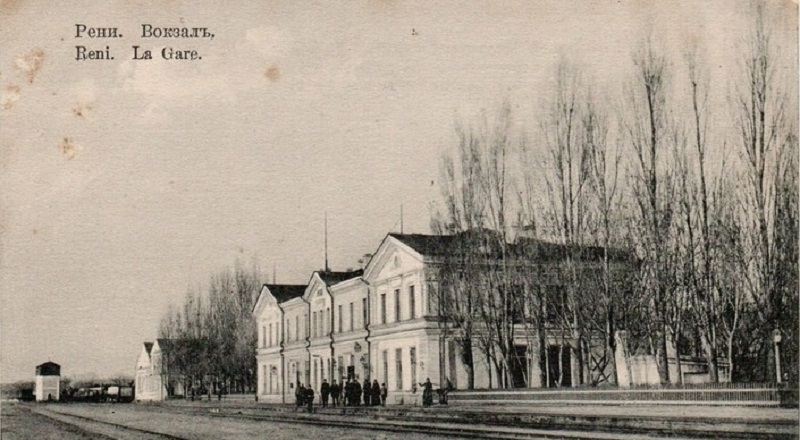
Reni railway station. IMAGE: violity.com
Reni merchants demanded additional railroad lines to Izmail and Kiliya to divert cargo from Bender. But the government did not allow their construction because of "the inexpediency of spending on secondary facilities that would not contribute to a significant increase in port capacity." During 1884-1889, the Izmail Municipal Council repeatedly raised the issue of building a railway line from Izmail to Troianiv Val or Izmail to Leipzig. The Council explained its decision by the need to increase the transportation of Bujak grain to Izmail. However, in October 1889, the Southwestern Railways Administration denied the request due to the lack of "economic benefit." In general, in 1897, the Danube lands accounted for an average of 77.5 railroad tracks, while the average in the province was 102.7 tracks.
In the early twentieth century, the situation with railroad transportation did not change. According to Ion Pelivan, the Izmail and Akkerman districts of Bessarabia accounted for 40.9% of the railroad tracks in the south of the province. While the Reni - Bendery branch was 230 versts long, the Akkerman - Bessarabka branch was 100 versts long, and the Bendery - Varnitsa branch, which was logistically close to Budzhak, was only 5 versts long. In particular, the branches to the north of the province were much longer: Ungheni - Bendery - 157 miles, Rybnitsa - Nova Sulitza - 328 miles.
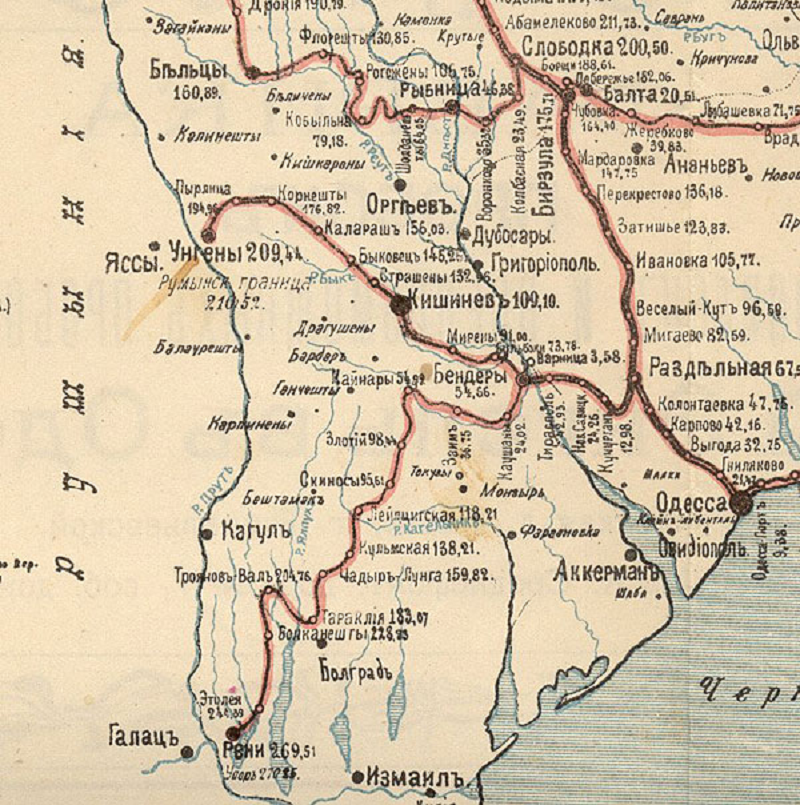
Railroad branches of the Budzhak. MAP: vulcanesti.md
The problems of railroads were mostly dealt with by the city authorities. In 1904, Mykola Sposito, a Kherson grain merchant, signed an agreement with the head of Akkerman, Oleksandr Belikovych, to build a horse-drawn railway for passenger and freight transportation in the city.
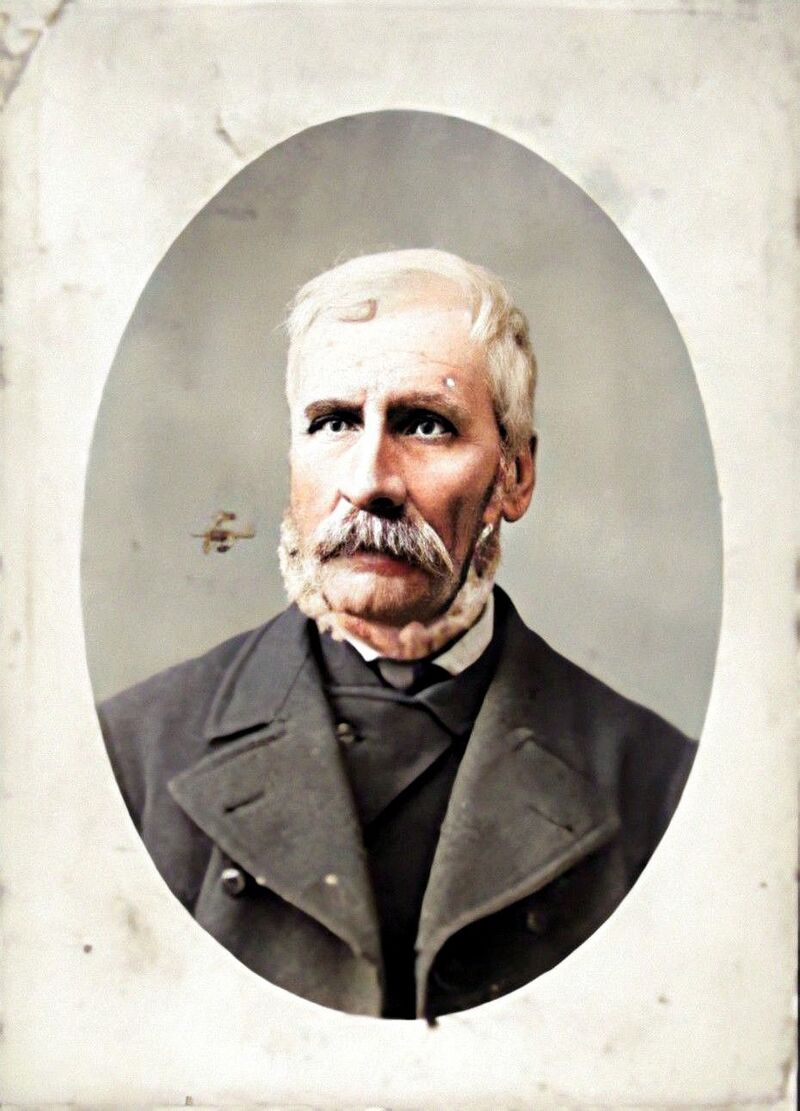
Nikolai Sposito. Image: Akkermanika
On June 7, 1905, the railroad was opened. It transported grain from Webster's and Anathra's wharves to stores and barns and vice versa. In 1907, a steam locomotive was used. Thanks to the introduction of the horse-and-railroad, the profitability of the city's wharves increased from 5200 to 21700 rubles. In 1909, Sposito sold the road to Prince Ivan Lobanov-Rostovsky. However, in April 1912, the profitable business went bankrupt due to the closure of the Dardanelles to trade as a result of the outbreak of the Italo-Turkish War. In June 1913, the city authorities terminated the contract.
In 1910-1912, the Izmail city authorities raised the issue of building the Izmail-Reni branch line to increase the supply of grain from the villages along the Pryprut to Izmail. The provincial government refused because of the low profitability of the possible branch. This was too little for the exporting district of Budzhak, especially since the Akkerman-Bessarabka railroad was completed only in 1914 and only for military purposes.
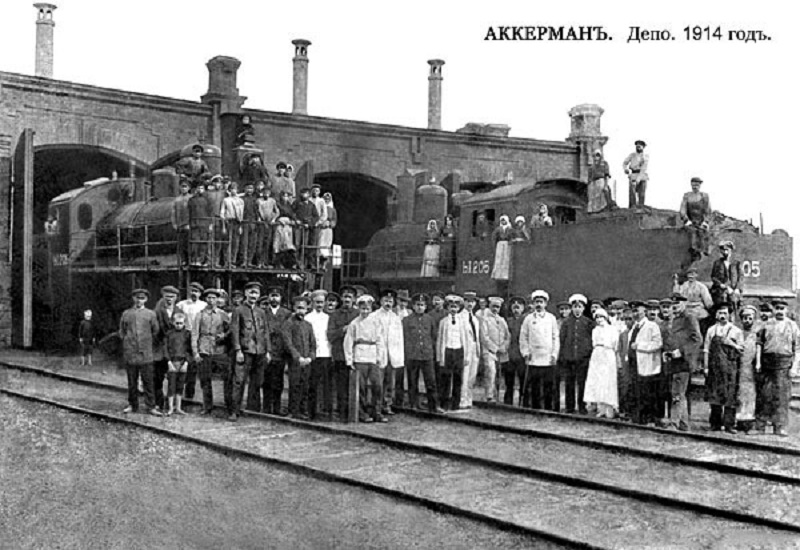
The depot in Akkerman. IMAGE: Wikipedia
In this way, the imperial government solved two important issues: it did not allow the railroads to divert bread cargo from Odesa and provided orders to the northern Bessarabian railroads.
Highways became an alternative to railroad transportation. They were mostly built in the north of the province to transport cattle to Odesa and Austria-Hungary. In 1863, the traveler Oleksandr Afanasiev-Czuzhbynski spoke about the expediency of building a highway as an alternative to unstable navigation on the Dniester: "Both the right and left banks of the Dniester need highways... If the Bessarabian nobility undertook to cover the entire region with roads, they would receive significant profits from the use of each mile of roads. If not today, then tomorrow, we can expect a decrease in cargo on the Dniester, and roads do not depend on wind and navigation."
In 1899, the first road from Criuleni to Chisinau was built. In 1900, more than 55 layers of roads were built in the province, 45 of which were in the northern Khotyn and Soroca counties. Thanks to the Akkerman county zemstvo, 132.5 miles of roads were built in 1907, most of them in the Akkerman county. According to Ivan Pukhalskyi's estimates, 10 million poods of various goods and 170,000 heads of cattle were delivered to Akkerman by unpaved roads, which were then sent to Odesa.
In 1901-1903, the county zemstvo reported on the construction of a stone bridge near the village of Starokozache and an earthen embankment near the village of Moldivka to improve the traffic on the route No. 10 Akkerman-Starokozache. In 1905-1910, the Akkerman city authorities raised the issue of overhauling this road, which passed through the villages of Turlaki and Liuba. According to government officials, the arrangement of this road would somewhat increase the city's transit capacity. Due to the lack of additional money in the provincial treasury, this project was not funded.
In addition to the highway connections in the Akkerman district, there was the Reni - Galati road built by the Romanians in the 1860s. In 1879-1882, the Cahul - Prut highway was designed, but it did not go beyond the development of a plan and calculations of construction costs. To improve the transportation of goods, the Izmail city authorities requested permission from the Russian Ministry of Finance to build the Izmail-Bolhrad highway. At the beginning of the twentieth century, only 12 of the 60 miles had been laid.
Except for this highway, there were only dirt roads that could not be used to transport large quantities of commercial products.
Due to the financial delays of the Russian government, cargo was transported to the Danube ports exclusively from the nearest counties. Usually, the cargo was transported by cart, and a small amount was transported by railroad and dirt roads from Akkerman. Therefore, the problem of railroads in the region was not solved until Soviet times.
Андрій Шевченко